
Race to the Ring: The Sausages Finally Reached the World Series
Milwaukee’s Famous Racing Sausages spent more than three decades making fans laugh. On October 23, 2026, they finally got their first World Series race — and Italian Sausage took the crown.
On October 23, 2026, five enormous sausages crossed a baseball field in Milwaukee, and an ordinary sixth-inning tradition suddenly became part of World Series history. The Milwaukee Brewers’ Famous Racing Sausages had finally reached the Fall Classic, thirty-three years after their first live race and forty-four years after the franchise’s previous World Series appearance.
Bratwurst, Polish Sausage, Italian Sausage, Hot Dog and Chorizo lined up at American Family Field as the Brewers hosted the Tampa Bay Rays in Game 1. It was an absurd scene by design — and a deeply meaningful one for people who had grown up watching the characters race between innings.
Italian Sausage won the inaugural World Series edition of the race. Milwaukee also won Game 1, defeating Tampa Bay 3–2. For Brewers supporters, the evening combined the serious stakes of championship baseball with one of the city’s most familiar and delightfully unserious rituals.
The First Sausage Race in World Series History
The event took place during the traditional sixth-inning break in Game 1 on Friday, October 23. Five oversized mascot costumes moved around the field in front of a crowd already immersed in the Brewers’ first World Series since 1982.
This was not a newly invented postseason promotion. The race was a familiar part of Milwaukee baseball that had simply never shared the stage with a World Series game before.
The competition itself was almost comically difficult. Each costume is approximately seven feet tall, with limited vision and a shape that makes sprinting considerably harder than the runners make it appear. The racers move around the infield route while trying to keep their balance, with tumbles and awkward turns part of the tradition’s charm.
Italian Sausage emerged victorious in the first World Series race, giving the competition its own small historical footnote separate from the baseball result.
Milwaukee waited 44 years for another World Series. Its racing sausages had waited their entire existence.
See the Historic World Series Sausage Race
The original race was documented by local Milwaukee news outlets and shared by Major League Baseball on social media. The visuals show the familiar oversized characters taking part in a tradition that had finally arrived on the game’s biggest stage.

The 2026 race itself is available in WISN 12’s original video report, published shortly after Game 1. The footage provides a direct record of the first World Series edition of the tradition.
From Scoreboard Cartoon to Milwaukee Institution
The Racing Sausages did not begin as people running around a Major League Baseball field. Their earliest form was an animated race on the scoreboard at Milwaukee County Stadium in the early 1990s.
The idea evolved into a live event on June 27, 1993. Milwaukee graphic designer Michael Dillon helped bring the concept onto the field with handmade costumes constructed from foam rubber, adhesive and paint.
Dillon wore the Bratwurst costume in the inaugural live race, competing against Italian Sausage and Polish Sausage. Bratwurst won that first event.
Over the following decades, the race became part of the Brewers’ identity. Hot Dog and Chorizo joined the lineup, expanding the group to the five characters familiar to modern supporters.
The race survived changes in stadium, roster and baseball eras. Eventually, it became something that generations of Milwaukee fans expected to see at a home game regardless of the standings.
The FOX6 Milwaukee feature published during the World Series provides additional background on the five characters and the tradition’s history.
Race to the Ring: Turning the Sausage Race Into a Championship Graphic
There is a natural tension at the center of the phrase “Race to the Ring.” The racing sausages are a comic tradition, while the World Series championship is the most serious pursuit of the baseball season.
Bringing them together creates a graphic that recognizes the way Milwaukee’s identity stretches beyond the players on the field. The mascots are not competing for an actual championship ring, but they are part of the crowd’s experience of the Brewers’ pursuit of one.
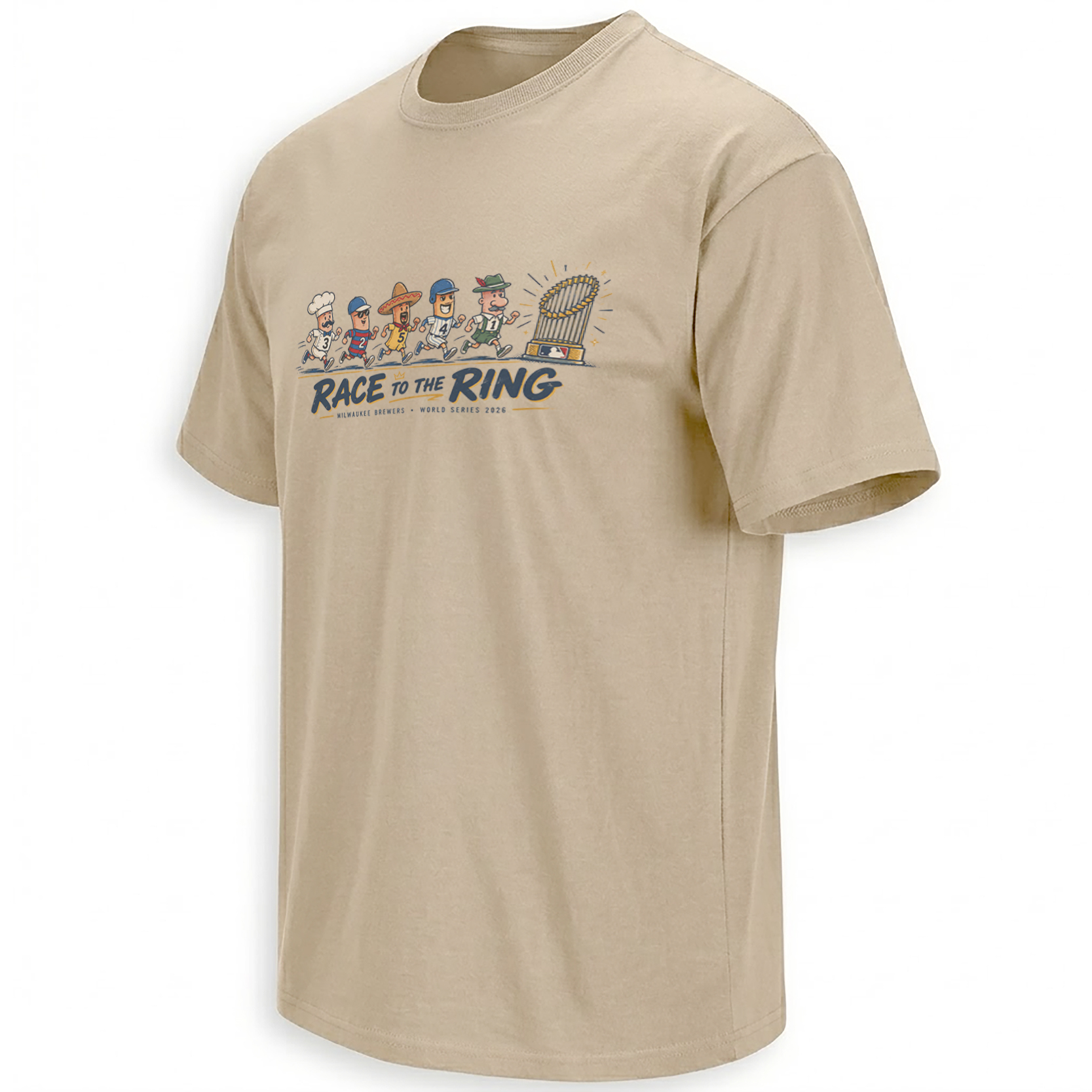
A playful World Series-era baseball graphic celebrating the Brewers’ Famous Racing Sausages and their historic Fall Classic appearance.
Explore the sausage race graphic →The Race to the Ring Shirt treats these beloved characters as part of Milwaukee’s championship-era visual landscape. The mascot imagery brings humor and familiarity, while the title provides the postseason context.
This distinction is important: the graphic references the Brewers’ pursuit of the 2026 World Series title. It does not claim that the Brewers have already won the championship.
Why Milwaukee’s Mascots Matter Beyond the Game
Baseball has always created room for rituals that exist alongside its competitive structure. Ballpark songs, seventh-inning traditions, local food and unusual mascots become ways for supporters to identify a place as their own.
In Milwaukee, the Famous Racing Sausages connect directly with the city’s food heritage and self-aware sense of humor. They are a local reference that national audiences may encounter only occasionally, but Brewers supporters know intimately.
The characters also have unusual continuity. Individual players come and go, managers change, and postseason opportunities can be separated by decades. The sausages remain part of the ballpark experience.
That explains why their first World Series race mattered. It was evidence that a tradition born long after the 1982 Brewers had finally accompanied the modern franchise onto the championship stage.
A Small Race Inside a Very Big October
Milwaukee’s 2026 World Series appearance carried decades of anticipation. Its last trip to the Fall Classic had come in 1982, when the franchise lost to the St. Louis Cardinals in seven games.
The Brewers’ return in 2026 made their everyday ballpark rituals newly visible to a national audience. A sixth-inning mascot race that might normally be treated as background entertainment became a story about thirty-three years of community memory.
And there was another charming detail: the race took place during the same game the Brewers opened with a 3–2 victory over the Tampa Bay Rays. Milwaukee began its championship series with both an on-field result and a ceremonial milestone.
The Internet Found the Wurst Kind of World Series History
The race quickly became a subject for local news, national sports coverage and social-media discussion. MLB circulated the original footage, while journalists revisited the event’s unusual origins.
The Milwaukee Journal Sentinel and USA TODAY highlighted how long the characters had waited for this stage. The Italian Sausage victory gave the story a concrete result, while viewers who missed the race on the main broadcast sought out clips online.
Not all fan discussion was about which sausage won. Some fans were amused that one of Milwaukee’s most recognizable traditions had finally entered World Series coverage at all.
That combination of history and absurdity is why the moment works so well as a sports-culture story. A championship game was serious business. Five oversized sausages racing across the field were not. Milwaukee’s identity made room for both.
Where the Racing Sausages Fit in Brewers Fan Culture
The Milwaukee Brewers collection reflects the many forms that baseball loyalty can take: player moments, city identity, postseason slogans and playful designs inspired by traditions like the Sausage Race.
The broader MLB collection provides a similar visual record across the league, where local traditions turn into symbols recognized far beyond the stadium.
For Milwaukee, the Sausage Race is not simply a novelty between innings. It has become part of what makes a Brewers home game unmistakably different from another team’s ballpark experience.
Frequently Asked Questions
When did the Brewers’ Racing Sausages first race at the World Series?
The Famous Racing Sausages made their World Series debut on October 23, 2026, during the sixth inning of Game 1 between Milwaukee and Tampa Bay at American Family Field.
Which sausage won the first World Series Sausage Race?
Italian Sausage won the first World Series race on October 23, 2026.
What are the five Milwaukee Brewers Racing Sausages?
The five characters are Bratwurst, Polish Sausage, Italian Sausage, Hot Dog and Chorizo.
When did the Famous Racing Sausages tradition begin?
The characters began as a scoreboard animation in the early 1990s. Their first live race was held on June 27, 1993, at Milwaukee County Stadium.
Who created the original live Sausage Race?
Milwaukee graphic designer Michael Dillon helped develop the live-action race and its original costumes. He participated as Bratwurst in the first race.
Did the Brewers win Game 1 of the 2026 World Series?
Yes. Milwaukee defeated Tampa Bay 3–2 on October 23, 2026, the same night the Racing Sausages made their World Series debut.
What does Race to the Ring mean?
The phrase combines Milwaukee’s famous Sausage Race with the Brewers’ pursuit of a World Series championship ring. It is a playful cultural reference, not a claim that the title has already been secured.
The Race to the Ring design celebrates Milwaukee’s Famous Racing Sausages reaching the World Series for the first time. It belongs alongside the broader Brewers visual archive, where baseball’s serious ambitions and the city’s playful traditions share the same history.
Race to the Ring Shirt celebrates the Milwaukee Brewers’ Famous Racing Sausages making their World Series debut on October 23, 2026. The playful graphic brings the Bratwurst, Polish, Italian, Hot Dog and Chorizo mascots into Milwaukee’s historic Fall Classic atmosphere.
Editorial sources: WISN 12 / Historic Race Video · FOX6 Milwaukee / Tradition History · Milwaukee Journal Sentinel · USA TODAY / Historical Reporting.