Bitchy Attitude Disorder: The Fake Diagnosis That Refuses to Apologize
“I have an attitude” is ordinary. “I have B.A.D.” sounds suspiciously official for about half a second — and that false seriousness is exactly where the joke begins.
The letters look official enough to make you pause. B.A.D. could be an organization, test result or line buried inside paperwork. Then the shirt explains the acronym: “Bitchy Attitude Disorder.” Any illusion of medical seriousness disappears instantly.
That setup belongs to a long-running category of novelty humor built around fake diagnoses, mock warning labels and invented conditions. The structure is useful because it turns an ordinary personality description into something exaggeratedly formal. Instead of simply admitting to impatience or sarcasm, the joke pretends a professional has assessed the situation and reached a documented conclusion.
The second line pushes the parody further: “Symptoms may worsen around stupid people.” Now the wearer is no longer responsible for the condition getting worse. Environmental factors have apparently entered the chart.
This is not a real diagnosis — and that distinction is the joke
“Bitchy Attitude Disorder” is not a recognized medical or psychological condition. There is no clinical definition, diagnostic criterion or legitimate acronym behind B.A.D. in this context.
The wording works precisely because it borrows the visual and verbal authority of medical language without claiming any actual health information. “Disorder,” “symptoms” and “may worsen” sound formal. The behavior being described is anything but.
Searches show the wording across sarcastic apparel and novelty merchandise, but no reliable source establishes one celebrity, comedian, meme page or viral creator as the definitive origin. Treating it as long-running attitude humor is more accurate than inventing an attribution.
The acronym makes the setup look official. The definition makes sure nobody takes it seriously.
Why personality-first shirts make sense again in 2026
Fashion has become unusually comfortable with clothes that speak for the wearer again. After years dominated by minimalist palettes and “quiet luxury,” graphic and slogan T-shirts have moved back into both runway and street-style conversations.
That shift is visible outside fashion shows too. Current street-style photography regularly catches people using T-shirts as a literal caption — a sentence or joke that tells strangers something about the wearer before the rest of the outfit does.

B.A.D. fits naturally into that environment because the shirt does not need viewers to recognize a celebrity, team or current-event reference. The wearer is the character. The sentence supplies the personality.
“I HAVE B.A.D.” creates curiosity because the acronym initially looks more serious than the joke deserves.
“BITCHY ATTITUDE DISORDER” and the symptoms line convert the formal setup into blunt, self-aware sarcasm.
The red-and-black design behaves like a warning label
The I Have B.A.D. Shirt makes the acronym impossible to miss. “I HAVE” appears above the center, but the giant B.A.D. lettering owns the composition.
That is the correct hierarchy because the viewer has to notice the mysterious letters before discovering what they mean.
Underneath, narrow condensed typography spells out “BITCHY ATTITUDE DISORDER.” Decorative dotted dividers create the appearance of a notice or label before the lower copy delivers the second punchline: “SYMPTOMS MAY WORSEN AROUND STUPID PEOPLE.”
The vivid red shirt and black print make the entire thing feel slightly confrontational. It resembles a warning placard more than a soft inspirational quote, which suits the humor perfectly.
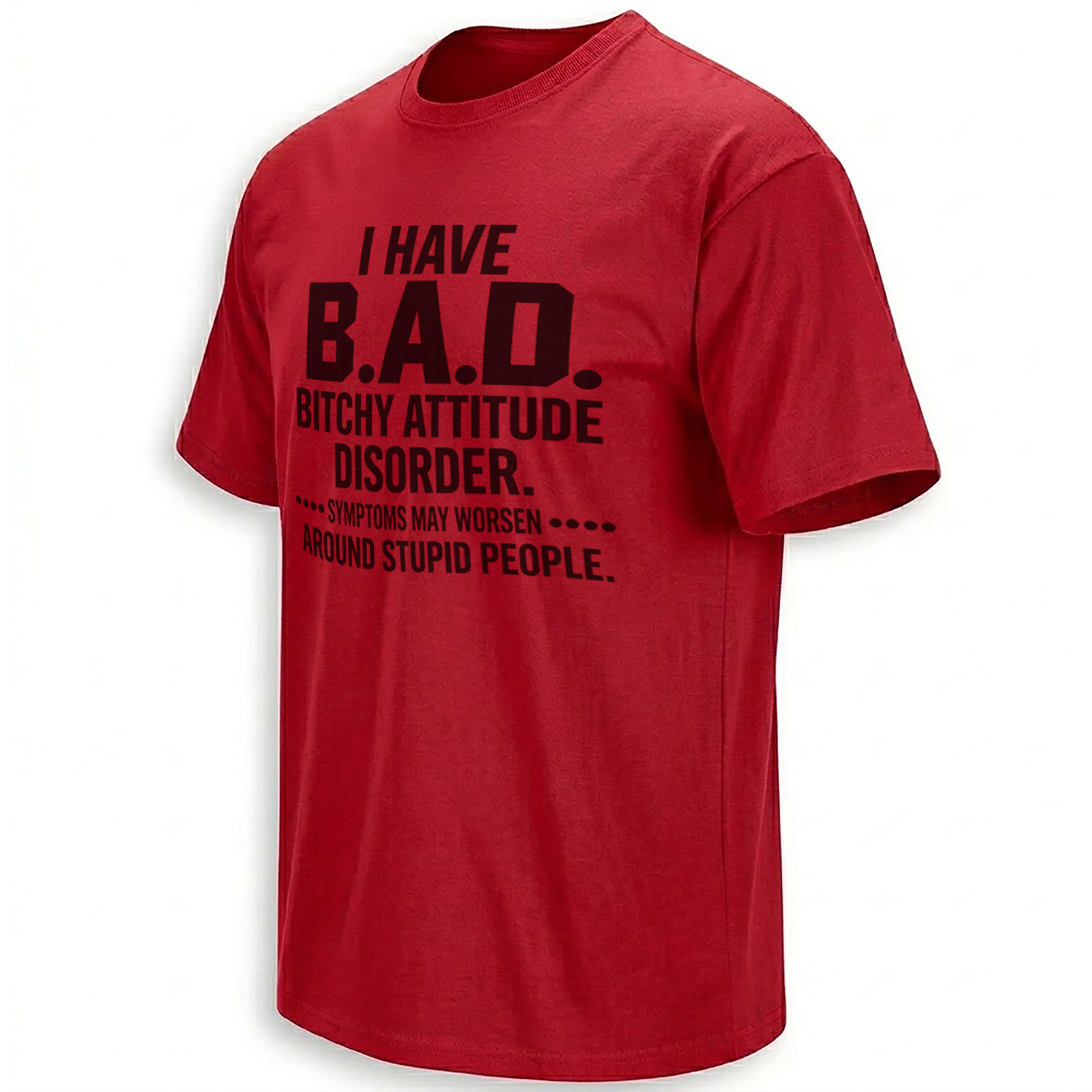
Giant B.A.D. lettering, condensed diagnosis text and a fake “symptoms may worsen” warning turn everyday attitude into mock-official documentation.
View the design →Why the “stupid people” line makes the whole joke better
Without the final sentence, Bitchy Attitude Disorder is mostly self-deprecating humor. The wearer admits to the attitude and laughs at themselves.
“Symptoms may worsen around stupid people” changes the direction. The joke suddenly points outward.
Instead of apologizing, the wearer jokingly argues that other people are aggravating the condition. That reversal brings the design closer to reaction-meme culture: side-eye, low tolerance for nonsense and the familiar fantasy of having an official excuse for being done with somebody.
It also gives the phrase staying power. There is no election date, game result or celebrity scandal required. As long as people continue annoying one another, the punchline has somewhere to live.
Where B.A.D. belongs inside Ellie Shirt
The current product page confirms the design inside Ellie Shirt’s Newest collection. No narrower confirmed sarcasm collection is necessary, so this article keeps the internal linking structure clean rather than inventing a category that may not exist.
Bitchy Attitude Disorder FAQ
What does B.A.D. mean on the shirt?
B.A.D. stands for “Bitchy Attitude Disorder,” a fictional sarcastic phrase used as personality humor.
Is Bitchy Attitude Disorder a real medical condition?
No. It is not a recognized medical or psychological diagnosis. The entire “diagnosis” format is part of the joke.
What does “symptoms may worsen around stupid people” mean?
It jokingly suggests that frustrating people cause the wearer’s sarcastic or blunt attitude to become stronger.
Who originally created the Bitchy Attitude Disorder phrase?
No reliable single creator, celebrity or viral post has been established as the definitive origin.
Why does the design make B.A.D. so large?
The acronym is the setup. Viewers notice the letters first and then discover the deliberately ridiculous definition underneath.
B.A.D. survives because the joke does not need much context. It takes one recognizable personality type, dresses it in fake official language and lets typography do the rest. More newly released attitude and culture graphics can be found in Ellie Shirt’s Newest collection.
I Have B.A.D. Shirt turns “Bitchy Attitude Disorder” into a mock diagnosis with a second warning that symptoms may worsen around stupid people — sharp, text-first sarcasm built for 2026’s slogan-tee revival.