
Atlanta Dream’s All-Star Trio Turned Reserve Selections Into a Team-Culture Moment
Rhyne Howard, Allisha Gray and Angel Reese did not need starter labels to make Atlanta feel central to the 2026 WNBA All-Star conversation. The Dream arrived in Chicago with three names, three styles and a team identity that suddenly looked bigger than one roster announcement.
The 2026 WNBA All-Star reserve announcement gave Atlanta a clean cultural headline: the Dream had a trio. Rhyne Howard and Allisha Gray were both back in All-Star territory for the fourth time, while Angel Reese added her third selection and first as an Atlanta Dream player. In a league season defined by star power, expansion energy and constant online debate, Atlanta suddenly had a simple argument: three players, one city, one All-Star weekend.
That matters because the Dream’s representation did not arrive as a quiet footnote. Earlier starter conversations had already triggered debate around Atlanta visibility, and the reserve list gave fans a different emotional release. The team may not have controlled the starter graphic, but it controlled the next conversation: Howard, Gray and Reese all headed to Chicago.
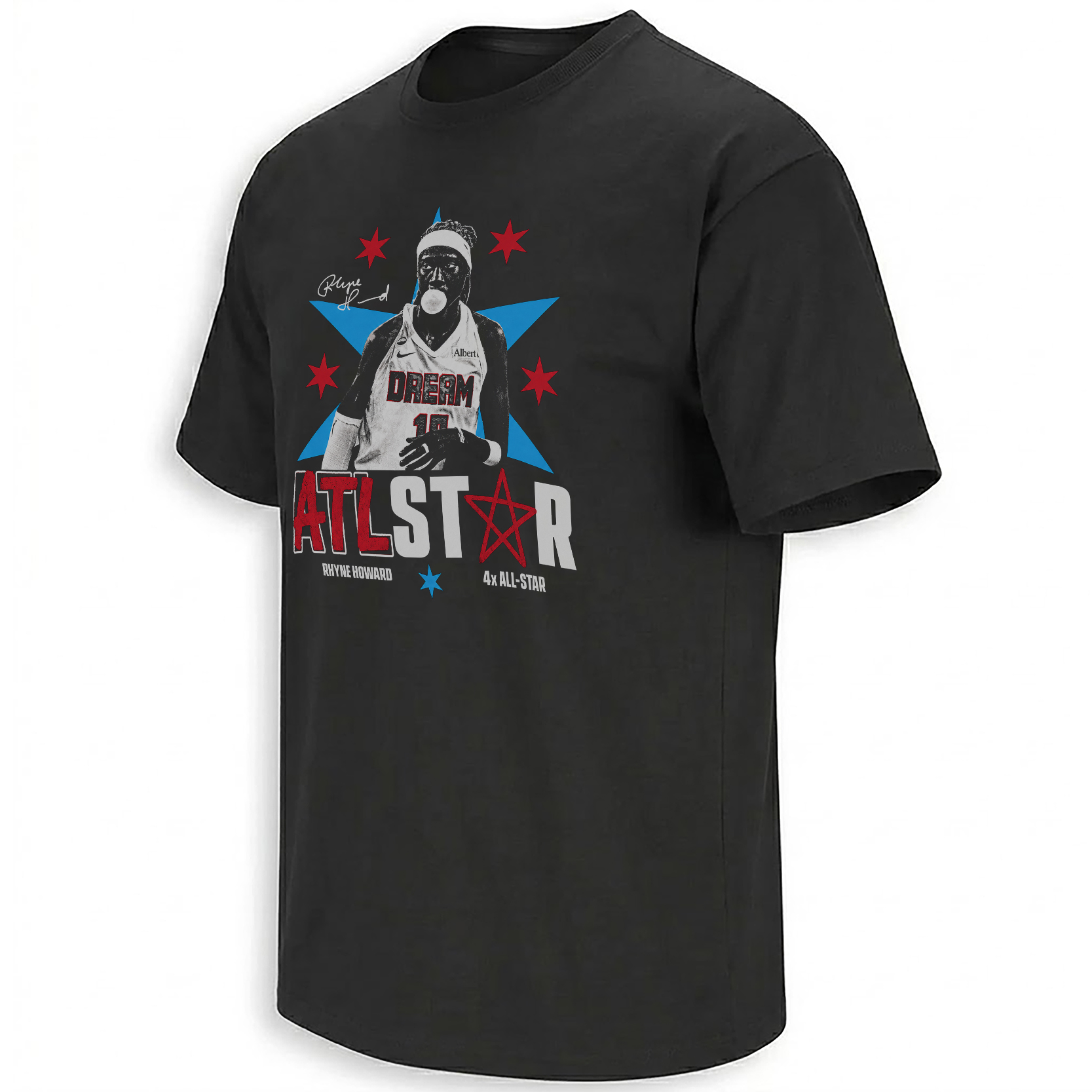
The two shirts work as paired artifacts of that shift. The ATLSTAR Rhyne Howard design isolates the individual star — the 4X All-Star guard whose name already carries Atlanta franchise weight. The All-Star Dream Trio shirt widens the frame, turning Gray, Reese and Howard into a group image of what this Dream era is trying to become.
Atlanta did not just send names to All-Star Weekend. It sent a shape of the franchise: Howard, Gray and Reese as one visible Dream statement.
Why Rhyne Howard’s 4X All-Star Label Carries Weight
Rhyne Howard has long represented the Dream’s modern ceiling: shot-making, two-way pressure, franchise responsibility and the expectation that Atlanta’s future would eventually become more than a rebuild phrase. A fourth All-Star selection gives that story a harder edge. It makes the recognition feel less like a breakout and more like sustained identity.
The ATLSTAR design understands that. It does not present Howard as a background member of a group. It gives her the clean star-poster treatment: name, city energy, All-Star language and a visual mood that treats the 4X marker as proof of repetition. The joke in “ATLSTAR” is light, but the résumé behind it is serious.
The Trio Graphic Changes the Story From Star to System
The All-Star Dream Trio design does something different. It is not only about Howard’s personal recognition. It presents Allisha Gray, Angel Reese and Rhyne Howard as a collective image — a gray-shirt archive of Atlanta’s 2026 identity at midseason.
Gray brings veteran scoring and two-way steadiness. Reese brings rebounding gravity, personality and a new Atlanta chapter after her move from Chicago. Howard brings the franchise-star spine. Put together, the trio graphic turns the Dream from a team with individual names into a team with a visible All-Star structure.
A player-focused Atlanta All-Star graphic built around Howard’s 4X recognition and franchise-star presence.
Open the design →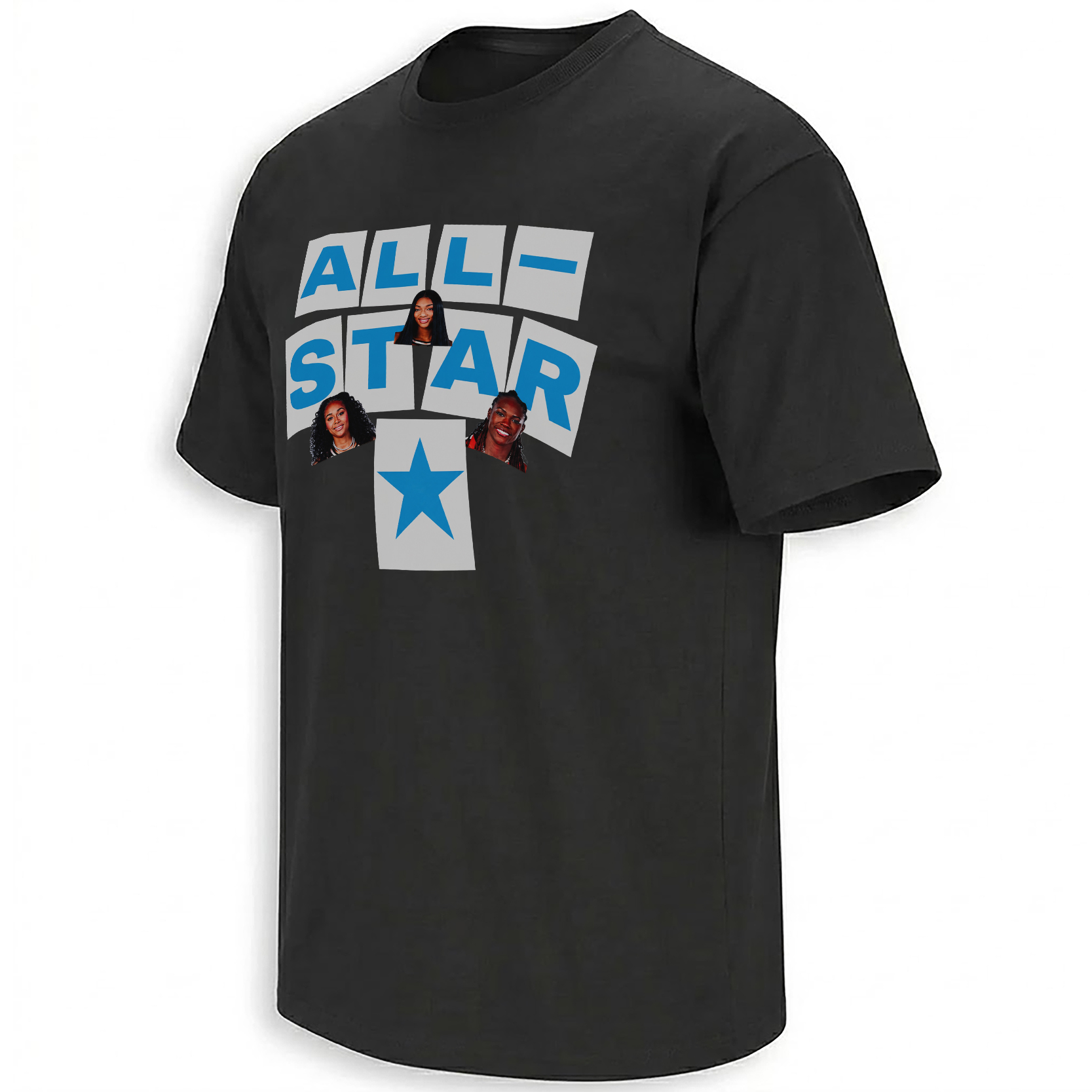
A team-culture graphic that frames Gray, Reese and Howard as Atlanta’s 2026 All-Star identity.
Explore the trio →Why Atlanta’s All-Star Moment Feels Internet-Native
The WNBA’s current discourse moves quickly because the league is not only watched through box scores. It is watched through voting debates, starter snubs, player brands, tunnel imagery, clips, rivalry language and fan arguments about visibility. Atlanta’s All-Star trio landed directly inside that environment.
That is why the designs feel timely. They are not generic Dream graphics. They are responses to a specific All-Star conversation: recognition, representation and the feeling that Atlanta’s stars had earned a louder visual moment. In fan spaces, the story was not simply “who made it.” It was “why did the Dream need the reserve list to get their flowers?”
The ATLSTAR graphic works like an individual recognition poster, while the trio design works like a team snapshot. Together, they turn Atlanta’s All-Star selections into both a player milestone and a franchise mood board.
Where the Pieces Fit in the WNBA Archive
Because a confirmed Atlanta Dream team-specific collection URL was not available here, the safest broader internal path is the WNBA collection, where league-wide player moments, All-Star designs and women’s basketball culture pieces can sit together without forcing an unverified team URL.
The All-Star Dream pieces also belong in the Newest collection, because the value of the graphics comes from timing. They preserve a live 2026 conversation: Atlanta’s stars being recognized, Chicago All-Star weekend approaching, and Dream fans turning a reserve list into a celebration.
Frequently Asked Questions
What is the ATLSTAR Rhyne Howard Shirt about?
It is an Atlanta Dream All-Star graphic built around Rhyne Howard’s 4X All-Star recognition and her role as one of the franchise’s defining modern stars.
Who appears on the All-Star Dream Trio Shirt?
The trio design centers Allisha Gray, Angel Reese and Rhyne Howard as Atlanta Dream representatives tied to the 2026 WNBA All-Star conversation.
Why did Atlanta’s All-Star selections become a fan-culture moment?
The Dream had three prominent All-Star names after reserve selections were announced, turning earlier visibility debates into a team-wide celebration.
Why does the trio design matter beyond one roster announcement?
It shows Atlanta as a collective force, not just a team with one star, by placing Gray, Reese and Howard together in one All-Star-era image.
How do these shirts fit the 2026 WNBA season?
They capture the midseason moment when All-Star recognition, league growth and Atlanta Dream fan energy converged around Howard, Gray and Reese.
The ATLSTAR Rhyne Howard Shirt and All-Star Dream Trio Shirt preserve two sides of the same All-Star moment: Howard’s individual 4X recognition and Atlanta’s collective Dream identity.
Atlanta Dream All-Star graphics capture Rhyne Howard’s 4X recognition and the 2026 trio of Allisha Gray, Angel Reese and Howard as a live WNBA culture moment built around visibility, team identity and All-Star pride.