Atlanta Dream’s Historic Finals Run Meets OutKast and Peanuts Fan Culture
A franchise-first Finals win, Atlanta hip-hop history and playful cartoon imagery reveal how women’s basketball is becoming part of the city’s wider creative identity.
Atlanta finally has a victory to call its own in the WNBA Finals. On October 19, 2026, the Dream defeated the Golden State Valkyries 79–65 at Chase Center, securing the franchise’s first Finals game win and tying the championship series at 1–1. Angel Reese’s 30 points and 16 rebounds gave the night an unforgettable individual performance, but the larger story belongs to a city learning what its next generation of basketball history looks like.
After losing Game 1, the Dream responded with the defensive aggression that helped carry them through the postseason. Rhyne Howard recorded six steals, while Jordin Canada contributed 13 points and 10 assists. Atlanta now returns home for Game 3 at State Farm Arena on October 21, with a crowd and a cultural moment waiting for it.
Why This Atlanta Dream Moment Feels Bigger Than Basketball
The Dream’s first Finals victory arrives during a period when Atlanta’s women’s basketball identity is becoming increasingly visible. The franchise has established a recognizable core, added championship experience and earned its place on the WNBA’s biggest stage. Its next home game will take place downtown at State Farm Arena rather than the smaller Gateway Center Arena traditionally associated with the team.
That arena move is culturally significant. A basketball organization that has spent years fighting for visibility now has the opportunity to fill one of the city’s landmark sports venues during the championship series. Starting in 2027, State Farm Arena will become the Dream’s permanent home, making this Finals run a preview of the franchise’s next chapter.
Atlanta’s basketball story is beginning to look as distinctive as the city’s music, art and neighborhood culture.
OutKast and the Sound of Atlanta Basketball
There are few better cultural reference points for Atlanta than OutKast. André 3000 and Big Boi helped redefine Southern hip-hop, establishing a musical identity that was unapologetically regional while reaching a global audience. Their songs, imagery and visual experimentation remain deeply tied to the city’s creative reputation.
That legacy makes the phrase “So Fresh and So Dream” instantly recognizable. It plays on OutKast’s “So Fresh, So Clean,” a song from the duo’s 2000 album Stankonia. During the 2026 Finals, the same phrase also appeared in a reported OutKast–Atlanta Dream apparel collaboration, demonstrating how naturally the musical reference connects with the team.
The EllieShirt interpretation approaches the phrase with a basketball-hoop visual concept. Rather than presenting a replica of the reported collaboration, it uses the song reference as an entry point into Atlanta’s broader creative language: streetwear typography, sports illustration and the pleasure of connecting two familiar cultural worlds.
The EllieShirt graphic is an independently presented design. The reported OutKast x Atlanta Dream retail collaboration is a separate project, and this article does not claim that the EllieShirt version was produced or endorsed by OutKast, the Dream or another retailer.
Peanuts, Lucy and a Different Kind of Basketball Attitude
The second design moves in a completely different direction. Where the OutKast-inspired concept is rooted in a specific musical tradition, the Lucy basketball illustration draws on a character associated with decades of American newspaper comics and animated storytelling.
Lucy van Pelt is recognizable for her assertiveness, stubbornness and expressive personality. Placing that attitude inside a basketball scene creates a different emotional reading of the Atlanta Dream: confidence, mischief and a refusal to be underestimated.
The connection should be understood as visual parody and fan interpretation, not evidence of an official Peanuts partnership. Its effectiveness comes from the contrast between an old-fashioned comic character and the contemporary intensity of WNBA basketball.
Two Visual Interpretations of the Same Atlanta Moment
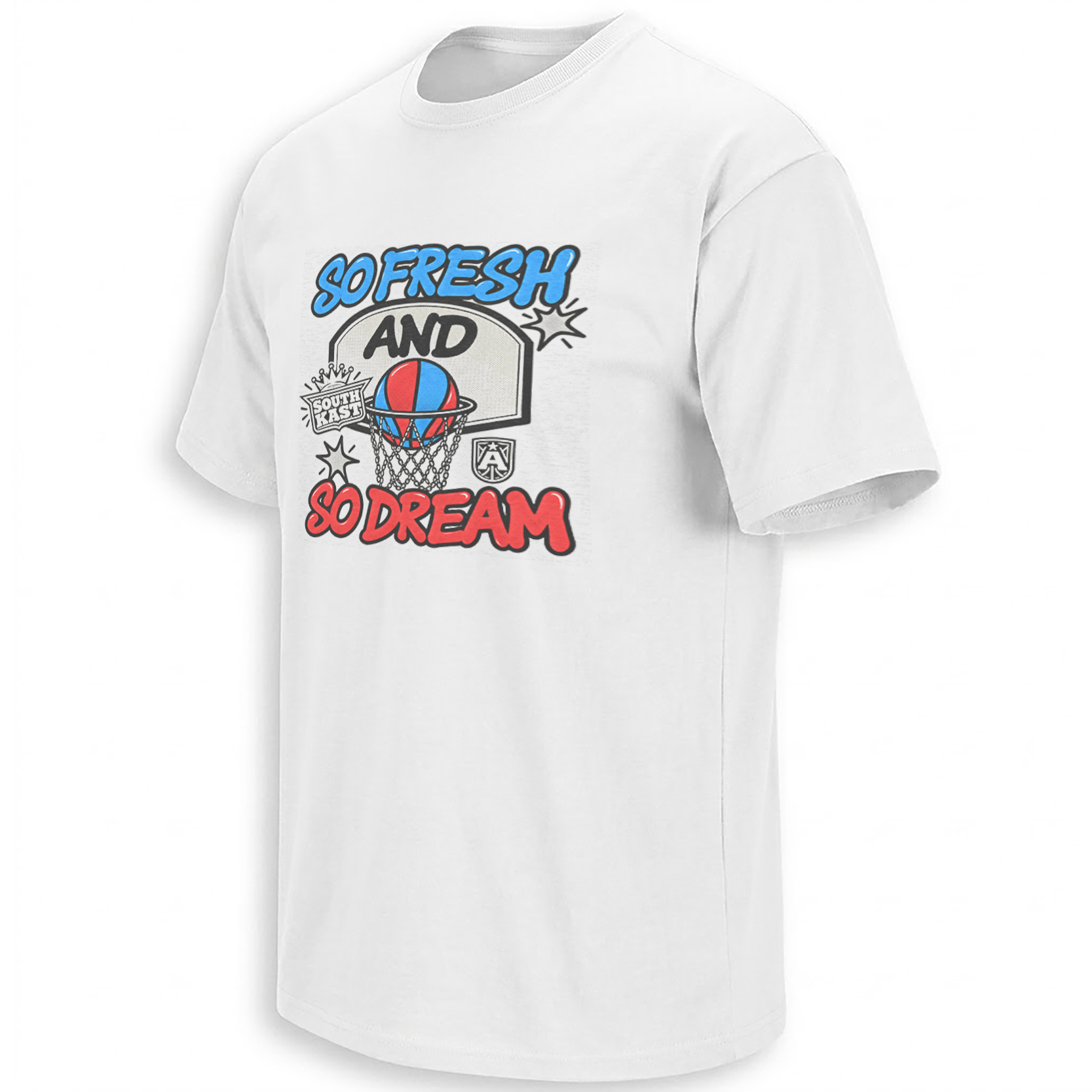
A basketball-hoop concept built around Atlanta’s connection to OutKast and the language of Southern hip-hop.
Explore the cultural graphic →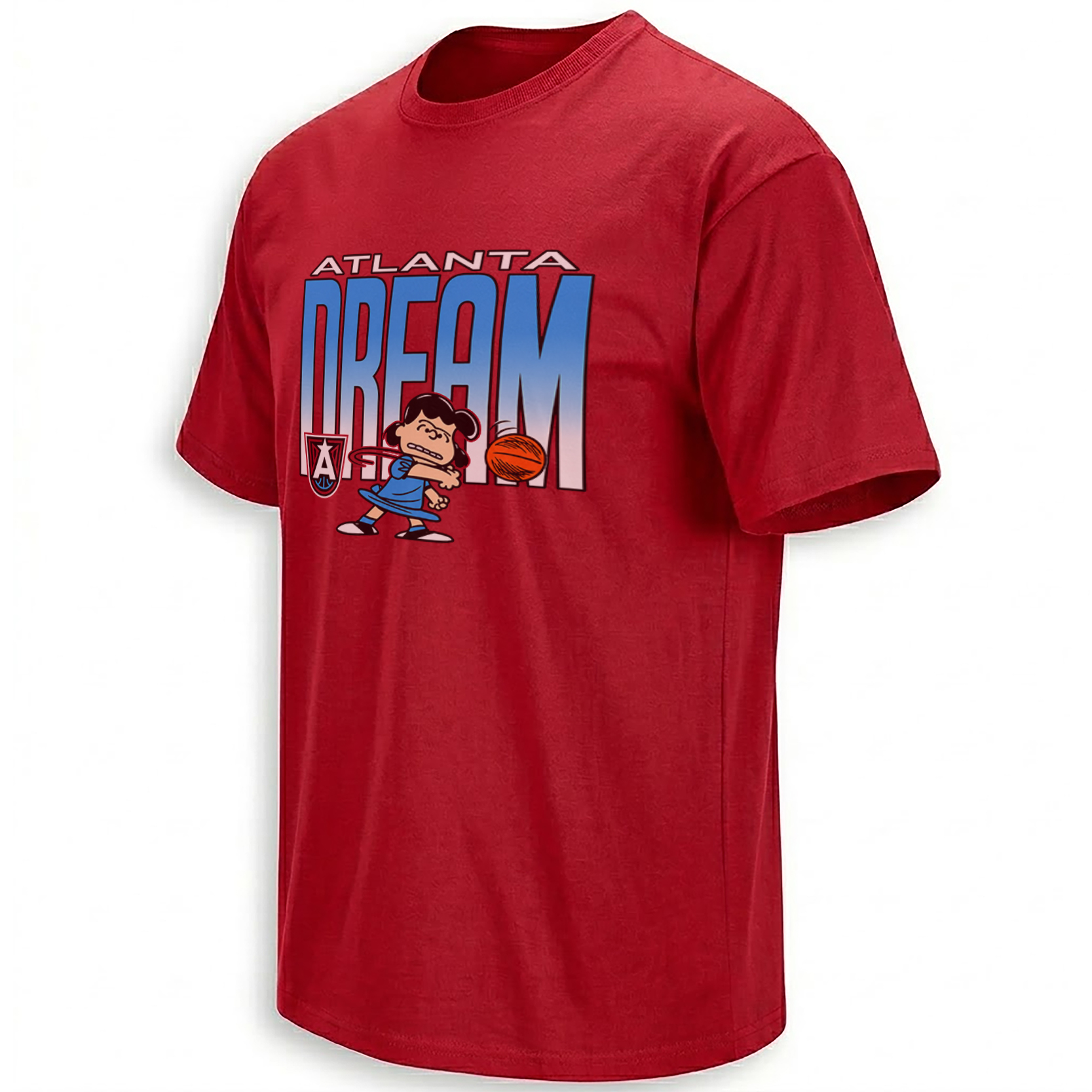
Classic comic-book personality enters modern basketball culture through a playful shooting illustration.
Explore the cartoon graphic →A Photographic Record of the Dream’s Breakthrough
The cultural interpretations make more sense when placed beside documentary coverage of the actual basketball story. The Dream’s first Finals victory follows a semifinal run that transformed State Farm Arena into a stage for women’s basketball celebration.
Open original photo gallery ↗
The image archive supplies a factual counterpoint to the illustrated designs. It shows the real people, arena environment and celebrations behind the visual language of the team’s postseason resurgence.
What Fans Are Celebrating Beyond the Final Score
After Game 2, conversation around the Dream has understandably centered on Reese’s performance, Atlanta’s defensive turnaround and the question of whether the team can take control of the Finals at home. The stage is now larger than a single highlight: Atlanta is hosting championship basketball in a major downtown venue, and the city’s cultural identity is part of the atmosphere surrounding it.
This helps explain the appeal of music and cartoon references in sports graphics. Fans do not experience teams through statistics alone. They remember songs heard before games, familiar characters reimagined in team colors and the creative expressions that make a season feel distinctly local.
The broader Atlanta Dream collection records those team-specific visual ideas, while the WNBA collection connects them to the league’s expanding culture of fashion, fandom and memorable postseason moments.
Frequently Asked Questions
When did Atlanta win its first WNBA Finals game?
The Atlanta Dream defeated the Golden State Valkyries 79–65 on October 19, 2026, earning the franchise’s first WNBA Finals game victory.
What does So Fresh and So Dream reference?
The phrase is a play on OutKast’s song “So Fresh, So Clean,” connecting Atlanta hip-hop history with Atlanta Dream basketball culture.
Is the Lucy basketball artwork an official Peanuts collaboration?
No official Peanuts collaboration is established here. The illustration is discussed as Peanuts-inspired fan artwork rather than licensed team merchandise.
Why is Atlanta playing Finals games at State Farm Arena?
The Dream arranged to host its 2026 Finals home games in the larger downtown venue, with Game 3 scheduled for October 21. State Farm Arena will also become the team’s permanent home in 2027.
From OutKast-inspired basketball graphics to playful comic illustration, the Dream’s Finals era invites different kinds of creative expression. Explore the So Fresh and So Dream artwork, the Lucy basketball illustration and the larger Atlanta Dream visual archive.
Atlanta Dream’s historic 2026 WNBA Finals breakthrough meets OutKast’s Southern hip-hop legacy and Lucy-inspired cartoon culture through two distinct basketball graphics celebrating Atlanta’s creativity.