
Auburn Takes Down No. 1 Georgia: The 27–24 Upset That Changed Everything
A 14-point deficit, a fourth-quarter comeback, a critical fumble and Alex McPherson’s walk-off field goal turned the Deep South’s Oldest Rivalry into one of college football’s defining scenes of October 2026.
With the clock at zero inside Sanford Stadium on October 17, 2026, the number beside Georgia’s name suddenly meant nothing. Auburn had arrived in Athens as an unranked underdog facing the nation’s No. 1 team. The Tigers left with a 27–24 victory, a rivalry streak broken and another chapter added to college football’s long history of improbable Saturday afternoons.
The final moment belonged to kicker Alex McPherson, whose 34-yard field goal sailed through the uprights as time expired. His teammates poured onto the field, while Georgia’s hopes of protecting the top spot disappeared in the space of one kick. The final score was close, but the implications were enormous.
Georgia had led 14–0. Auburn responded with 24 consecutive points, briefly taking control before the Bulldogs tied the contest in the final minutes. What happened next turned an entertaining rivalry game into a national headline: a late Georgia fumble, one final Auburn possession and the kick that ended the argument.
From 14–0 Down to a Historic Upset
The opening quarter offered few clues about the ending. Georgia quickly established a 14-point advantage behind a touchdown run from Dwight Phillips and a scoring pass from Gunner Stockton to Lawson Luckie. Against a top-ranked team playing at home, that start could easily have become a long afternoon for the visitors.
Instead, Auburn quarterback Byrum Brown helped change the direction of the game. Keshaun Singleton scored on a 24-yard halfback pass from Christian Neptune, and Chas Nimrod later hauled in a touchdown from Brown to level the score. McPherson’s 49-yard field goal gave Auburn a 17–14 halftime advantage.
Auburn extended that lead to 24–14 early in the third quarter on Brown’s five-yard touchdown run. He finished the afternoon with 115 rushing yards, 150 passing yards and touchdowns both through the air and on the ground. Those numbers explain why Georgia struggled to contain a quarterback who could turn broken plays into first downs.
But Georgia did not vanish. Peyton Woodring’s field goal and a four-yard touchdown pass from Stockton to London Humphreys eventually erased Auburn’s 10-point cushion. With 2:58 remaining, the score was tied at 24–24.
The Fumble, the Kick and the Image That Remained
The decisive sequence began with a defensive play. Cody Sigler forced a fumble by Stockton, and Sylvester Smith-Reed recovered the football at Auburn’s 44-yard line. That turnover gave the Tigers the opportunity to create one last scoring drive.
Brown moved the offense into range. Auburn advanced to Georgia’s 19-yard line, placing the outcome on McPherson’s right foot. The kicker delivered from 34 yards, ending the game with no time left.
“The thing I’m most proud of is that nobody flinched.”
— Auburn head coach Alex Golesh, official postgame recapGolesh’s reaction captured an important aspect of this victory. Auburn did not control the entire afternoon; it survived different versions of the same challenge. The Tigers fell behind, built a lead, lost that lead and still found the final answer.
Why This Victory Meant So Much to Auburn
For Auburn supporters, the emotional weight extended well beyond the national rankings. Georgia had defeated Auburn in nine consecutive meetings entering Saturday. The Tigers had not won in Athens since 2005, and the rivalry had increasingly become associated with Bulldog dominance.
That context made the result unusually satisfying. This was a win over the No. 1 team on the road, against an opponent that had repeatedly frustrated Auburn in recent seasons. Auburn also became the first unranked team since 2007 to win on the road against an AP No. 1 opponent.
The victory recalled earlier moments in Auburn football history when the Tigers became the team that spoiled a national championship contender’s expectations. The 2017 Iron Bowl victory over No. 1 Alabama is an obvious comparison, although the setting and circumstances of the two games were different.
Across college football, the upset also became part of a larger ranking shakeup. Georgia was the second consecutive AP No. 1 team to lose to an unranked opponent, following Texas’ defeat against Oklahoma the previous week. The Auburn result arrived during a Saturday when five of the AP poll’s top seven teams lost.
How “No. 1 Not Anymore” Became the Perfect Headline
Some sports moments need long explanations. Others can be captured in a single sentence. “Auburn Has Taken Down No. 1” belongs to the second category. It communicates the winner, the scale of the achievement and the emotional surprise without requiring a full statistical breakdown.
“No. 1 Not Anymore” expresses the same event with a sharper rivalry tone. It converts a ranking into the setup for a punchline. Because the opponent actually entered the game ranked first, the phrase carries historical specificity rather than generic trash talk.
The 27–24 score is equally important. It immediately distinguishes this game from Auburn’s other notable victories. The exact numbers allow a design to function like an old newspaper front page: the result itself becomes a timestamp that fans recognize long after the original celebration ends.
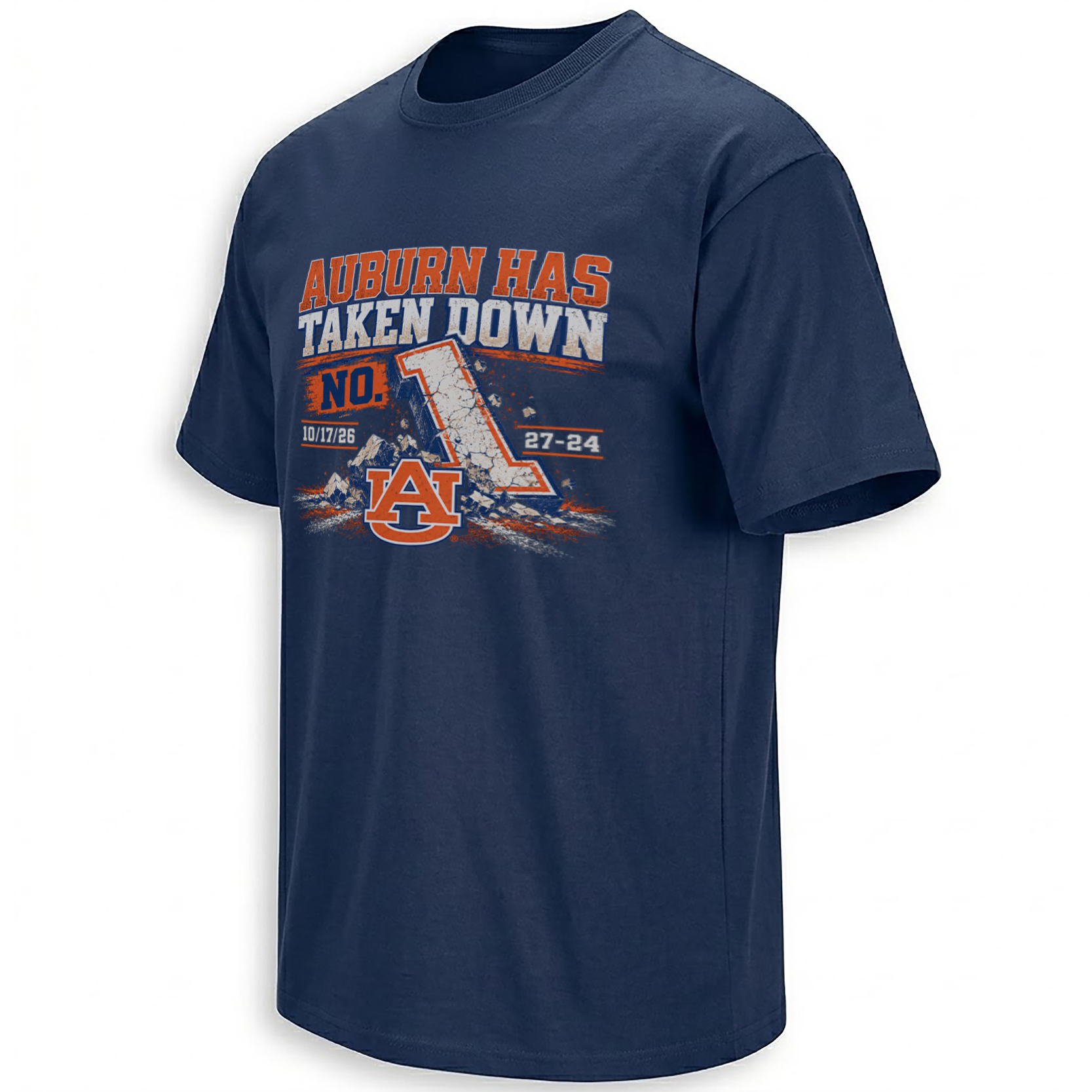
A direct declaration of the upset, styled around the language that defines a season-changing college football result.
View the headline design →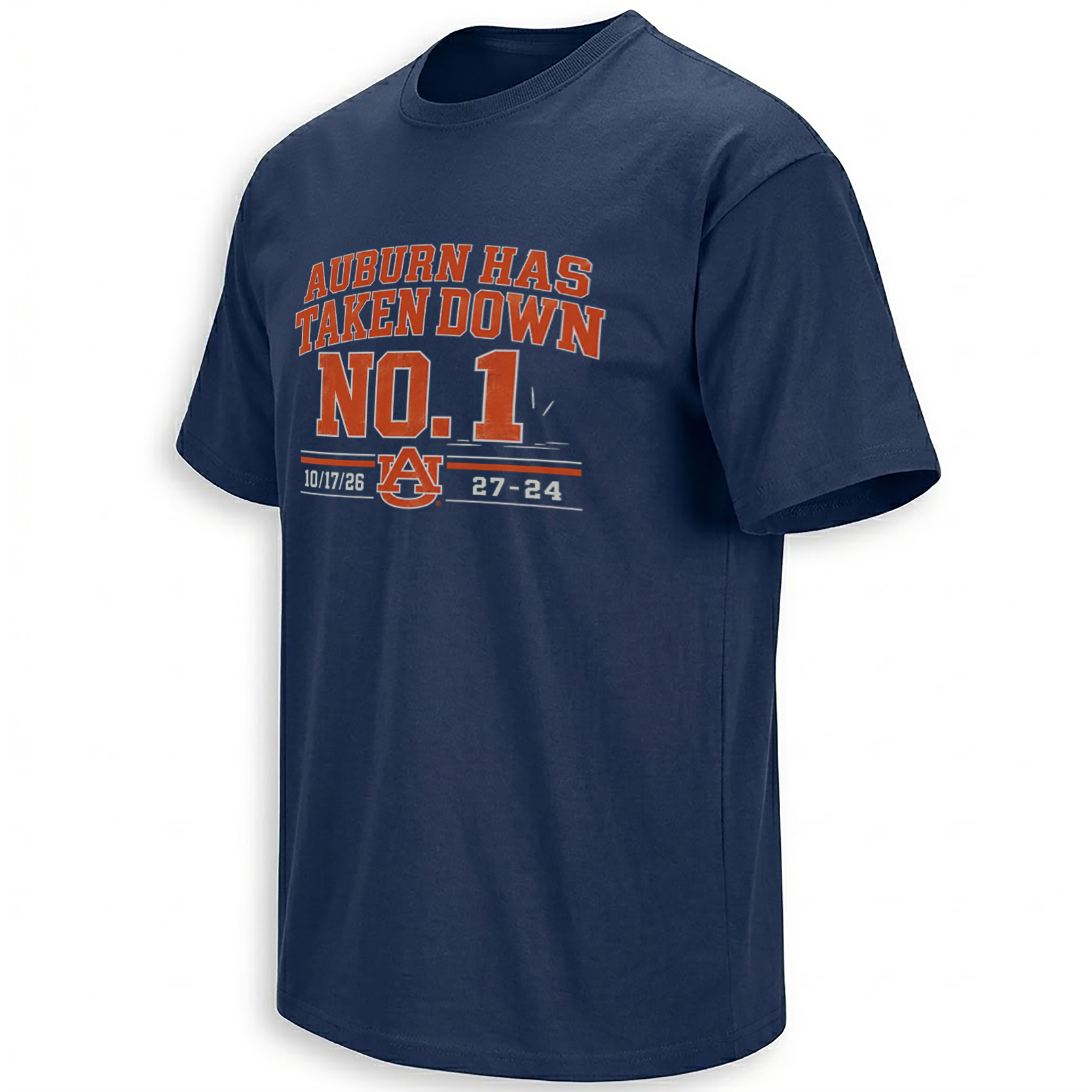
The final score receives the central emphasis, preserving the result like a permanent photograph of the last seconds in Athens.
View the scoreboard design →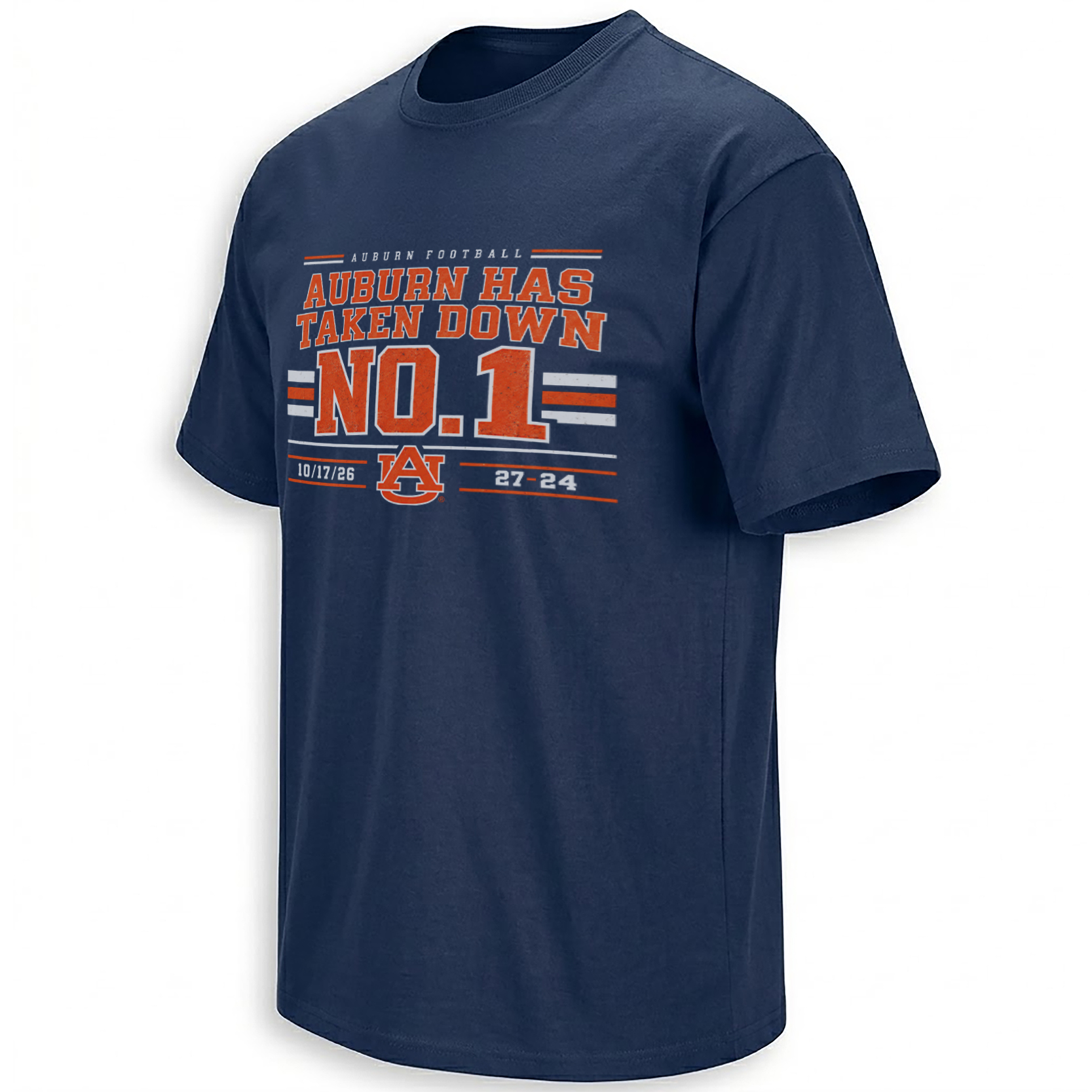
Classic collegiate striping gives the victory a traditional campus-sports appearance, closer to an archive piece than a fleeting game-day graphic.
Explore the varsity edition →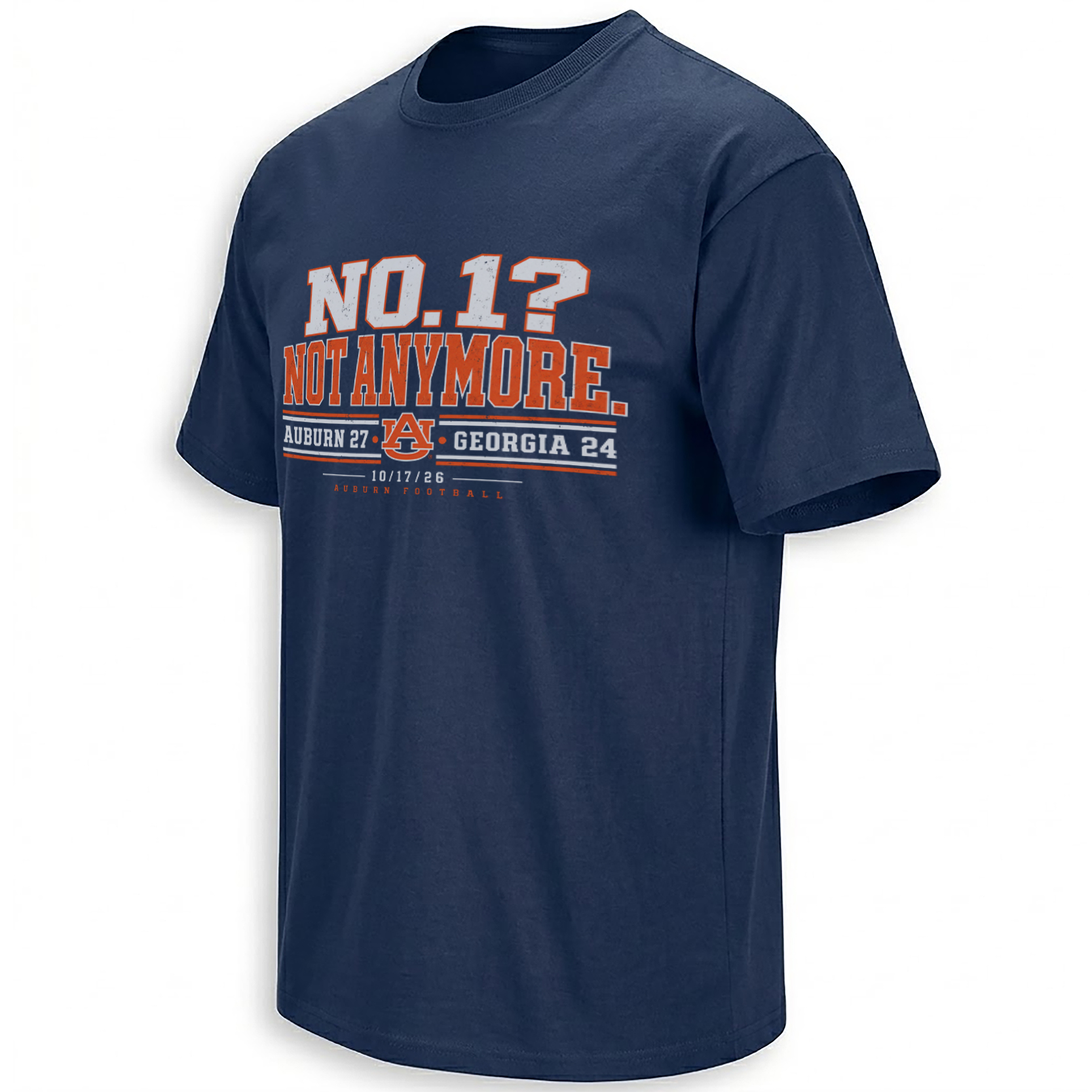
A shorter, more confrontational interpretation of the same result, built around the ranking Auburn removed from Georgia’s identity.
View the rivalry design →Four Designs, One Saturday in Athens
The four graphics approach the moment through different kinds of sports memory. The headline version emphasizes the announcement itself, while the scoreboard edition preserves the numbers. Varsity stripes introduce traditional collegiate visual language, and the “No. 1 Not Anymore” version focuses on rivalry emotion.
That range reflects how supporters remember a famous win. Some recall McPherson’s kick. Others remember the comeback, Brown’s physical performance, the final turnover or simply the sight of a top-ranked opponent losing at home. The designs do not have to recreate every play to remain connected to the same event.
Each shirt refers to Auburn’s verified October 17, 2026 victory over top-ranked Georgia. The wording and graphic presentation are commemorative interpretations; they should not be confused with an official team-issued postgame headline.
What the Georgia Upset Means for Auburn’s Season
The victory improved Auburn to 4–2 overall and 2–2 in Southeastern Conference play. It did not automatically solve every question about the Tigers’ season, but it dramatically changed the conversation around their potential. A team capable of winning at Sanford Stadium against the nation’s top-ranked opponent has demonstrated a level of resilience worth taking seriously.
For Georgia, the loss ended a perfect start and pushed the Bulldogs from No. 1 to No. 5 in the following AP Top 25. The distinction matters: Auburn defeated the No. 1 team at kickoff, regardless of how the rankings shifted afterward.
Auburn’s next challenge is sustaining the performance rather than allowing one spectacular result to become the season’s endpoint. That is a football question. For supporters, however, the historical record of October 17 is already complete.
The wider Auburn Tigers collection preserves different expressions of that team identity, while the NCAA collection connects this upset to the wider culture of college rivalries, rankings and unforgettable finishes.
Frequently Asked Questions
Did Auburn beat No. 1 Georgia in 2026?
Yes. Auburn defeated top-ranked Georgia 27–24 on October 17, 2026, at Sanford Stadium in Athens, Georgia.
Who kicked the winning field goal for Auburn?
Alex McPherson made a 34-yard field goal as time expired to secure Auburn’s 27–24 victory over Georgia.
How did Auburn come back against Georgia?
Auburn overcame an early 14–0 deficit by scoring 24 unanswered points. Georgia later tied the game, but a late forced fumble and McPherson’s field goal sealed the upset.
When had Auburn last won at Georgia?
Auburn’s previous victory in Athens came in 2005. The 2026 win also ended Georgia’s nine-game winning streak in the rivalry.
What does “No. 1 Not Anymore” mean?
The phrase refers to Auburn’s victory over Georgia when the Bulldogs held the No. 1 national ranking. It is a rivalry-inspired way of commemorating the October 2026 upset.
Auburn’s 27–24 victory is now part of the Tigers’ rivalry history. Explore the No. 1 Not Anymore graphic or follow the broader Auburn Tigers visual archive as the 2026 college football season continues.
Auburn Has Taken Down No. 1 captures the Tigers’ historic 27–24 upset of Georgia on October 17, 2026. Four commemorative designs preserve Alex McPherson’s walk-off field goal, the famous final score and the rivalry-defining moment when Georgia’s No. 1 ranking fell.