
José Ramírez’s Home Run Pitch: The 0.74-Foot Swing That Sent Cleveland to the ALCS
On a pitch barely above the dirt, Cleveland’s superstar transformed a longtime clubhouse joke into the defining swing of the Guardians’ 2026 postseason comeback.
There are pitches hitters are supposed to drive out of a ballpark. And then there are pitches that seem nearly impossible to turn into home runs.
José Ramírez turned the second kind into Cleveland’s biggest hit of October.
On October 10, 2026, the Guardians third baseman reached down for a Sean Burke curveball just 0.74 feet above the ground and sent it over the right-field wall at Progressive Field. His two-run home run delivered the only scoring in a 2-0 victory over the Chicago White Sox, completing Cleveland’s comeback from a 2-0 ALDS deficit.
When asked about the pitch afterward, Ramírez returned to a familiar joke that had become part of his personality: Home Run Pitch.
For years, those words had made Cleveland fans laugh. After Game 5, they described one of the most extraordinary swings of the postseason.
What happened during José Ramírez’s 2026 ALDS Game 5 home run?
The stakes could hardly have been higher. Cleveland and Chicago had split the first four games of their Division Series, leaving one deciding contest at Progressive Field.
The Guardians had fought back from two losses in Cleveland by winning Games 3 and 4 in Chicago. They now needed one final victory to reach the American League Championship Series.
The score remained 0-0 into the bottom of the fourth inning. Steven Kwan reached base, bringing Ramírez to the plate against White Sox right-hander Sean Burke.
From the stands, a chant rose around the ballpark. Cleveland supporters called Ramírez’s first name in unison.
Burke delivered a 78 mph knuckle curveball that dropped well below the strike zone. Ramírez lowered his swing, reached the baseball and lifted it toward the right-field wall.
The ball barely cleared the fence, traveling approximately 348 feet according to MLB’s Statcast reporting. Kwan scored ahead of him, giving Cleveland a 2-0 lead.
Those two runs were enough. Gavin Williams and the Guardians bullpen kept Chicago scoreless, completing a remarkable series comeback.
The crowd’s reaction was extraordinary. Stadium lights flashed, fireworks exploded and Ramírez later received a curtain call from the Progressive Field faithful.
Why was the 0.74-foot pitch historically unusual?
The distance between the baseball and the ground is what separates this home run from an ordinary postseason highlight.
Statcast measured the ball’s height at just 0.74 feet above ground level when Ramírez made contact.
According to MLB, that was the lowest pitch hit for a postseason home run in the pitch-tracking era, which began in 2008.
The achievement is impressive because the swing mechanics required to reach such a low breaking ball are different from those needed to drive a pitch near the middle of the strike zone.
Burke’s knuckle curve was designed to drop below the hitting area. A hitter might normally be expected to let that pitch pass rather than attempt to generate power from its location.
Ramírez did the opposite, demonstrating the bat control and adaptability that have made him one of Cleveland’s most important players.
The pitch was only 0.74 feet above the ground — yet it became the swing that decided the series.
The remarkable location also explains why the home run attracted such widespread attention. The moment was about more than pressure or timing. It challenged ordinary expectations about which pitches can be hit out of a major league ballpark.
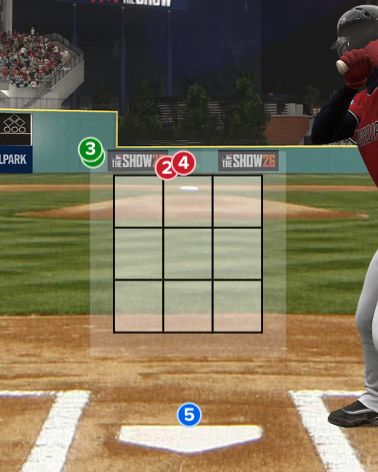
The diagram provides a visual reference for the extraordinarily low pitch Ramírez converted into a home run during the decisive ALDS game.
Source: MLB / Statcast, October 11, 2026. Read the original game analysis →Where did José Ramírez’s Home Run Pitch catchphrase come from?
The phrase didn’t begin with the 2026 playoffs.
For years, Guardians on-field reporter Andre Knott regularly asked Ramírez what type of pitch he had hit for a home run during postgame interviews.
Rather than provide a technical explanation, Ramírez developed a simple and humorous response: “You know, bro. Home run pitch.”
The reply became a recognizable part of his relationship with Cleveland media and fans.
It worked because the answer was completely literal. The actual pitch classification mattered less than what had happened to the baseball.
Whether a pitcher threw a fastball, slider or curveball, Ramírez’s joke reduced the entire discussion to one outcome: it was a pitch he had hit out of the park.
MLB discussed the expression in a September 2025 feature about Ramírez’s growing comfort speaking English in public interviews.
That article documented how the familiar exchange with Knott had become one of the rare moments when fans regularly heard Ramírez speak English directly.
The phrase therefore carried more meaning than an ordinary locker-room joke. It expressed his sense of humor and gave supporters a recognizable way to celebrate his hitting ability.
The original MLB feature about Ramírez’s interviews provides the history behind the expression.
Why did Home Run Pitch become unforgettable in October 2026?
The connection between the phrase and the Game 5 home run almost seems written for a baseball comedy.
One of the lowest pitches ever hit for a postseason home run should have required a complicated technical explanation. Instead, Ramírez answered with the same simple words he had used for years.
After the game, he smiled and called it a home run pitch.
The moment connected the humor of his past interviews with a historic postseason achievement.
That is why the phrase works so naturally as a cultural reference. Fans familiar with the interviews understood the joke immediately, while the record-breaking pitch gave newcomers a reason to learn its history.
MLB published an official video of the decisive two-run homer, including the pitch and swing that gave Cleveland its 2-0 lead. Watch José Ramírez’s Game 5 home run →
The visual evidence is unusually powerful. Viewers can watch Ramírez reach down toward a breaking ball that appears to be dropping into the dirt and still generate enough contact to clear the outfield wall.
The catchphrase then provides the punchline to something that was already remarkable on film.
How did the home run complete Cleveland’s ALDS comeback?
Cleveland began the series with two losses at Progressive Field. Facing elimination, the Guardians responded by winning two games at Chicago’s home ballpark.
Ramírez played a central role in that recovery, hitting a pivotal home run in Game 4 before delivering the decisive swing in Game 5.
He finished the final three games of the series with five hits, including two home runs and seven RBIs.
But the comeback required more than one hitter.
Gavin Williams struck out 12 White Sox batters in the deciding game, and the Guardians pitching staff combined for 21 strikeouts. Cleveland’s pitchers established a nine-inning postseason strikeout record while allowing no runs.
When the final out was recorded, the Guardians had completed a best-of-five series reversal after trailing 2-0.
Ramírez’s homer supplied the scoreboard difference. The pitching staff ensured those runs were enough.
That combination made the evening one of the strongest expressions of Cleveland’s 2026 postseason identity: a star player delivering a decisive moment within a remarkable team effort.
How the Home Run Pitch artwork represents José Ramírez
The EllieShirt design doesn’t attempt to reproduce the exact Game 5 photograph. Instead, it combines a recognizable baseball phrase, a swinging batter and a Cleveland cityscape.
Two color versions bring different visual personalities to the same concept.
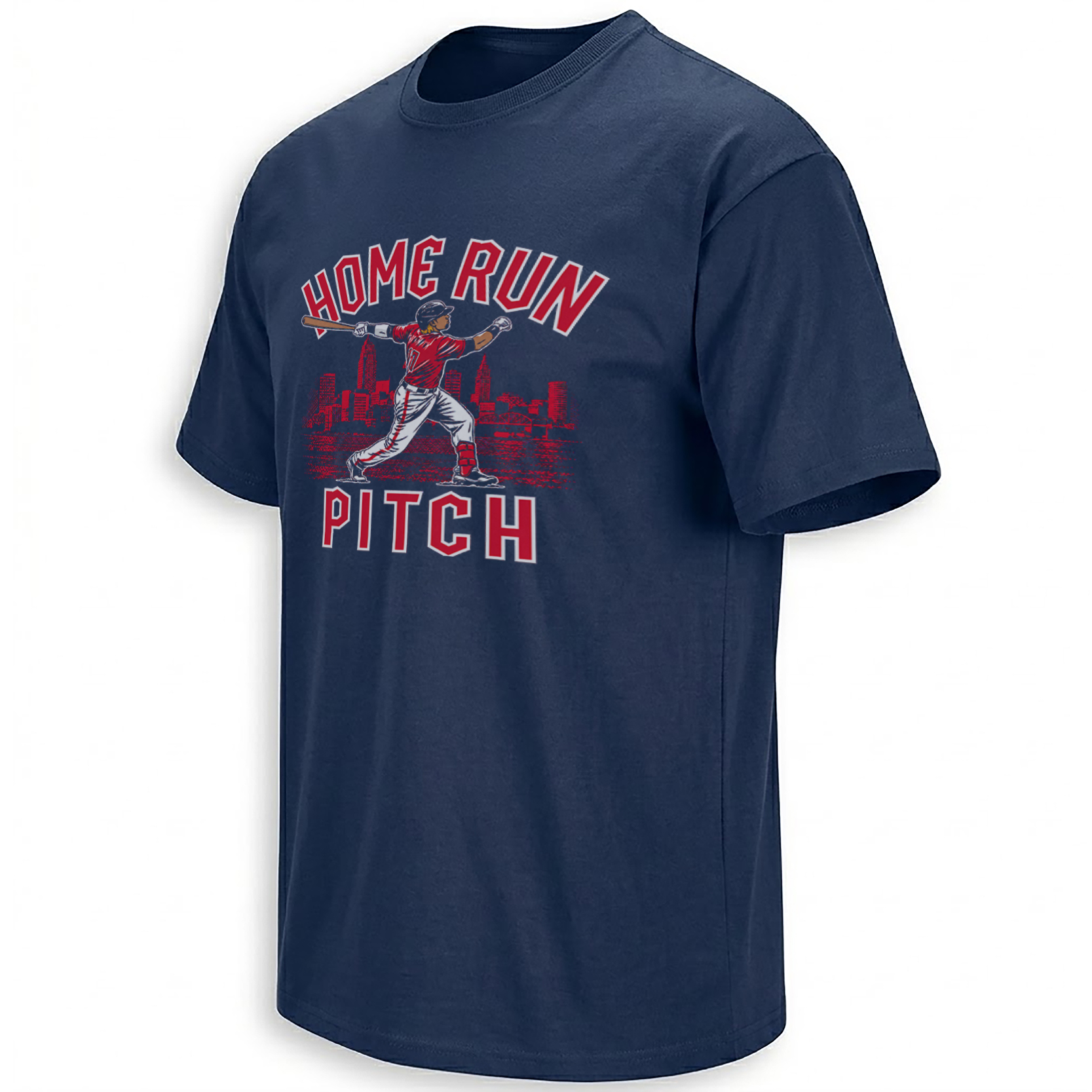
Red-and-white collegiate lettering stands against deep navy, highlighting the hitter and Cleveland skyline.
View the navy artwork →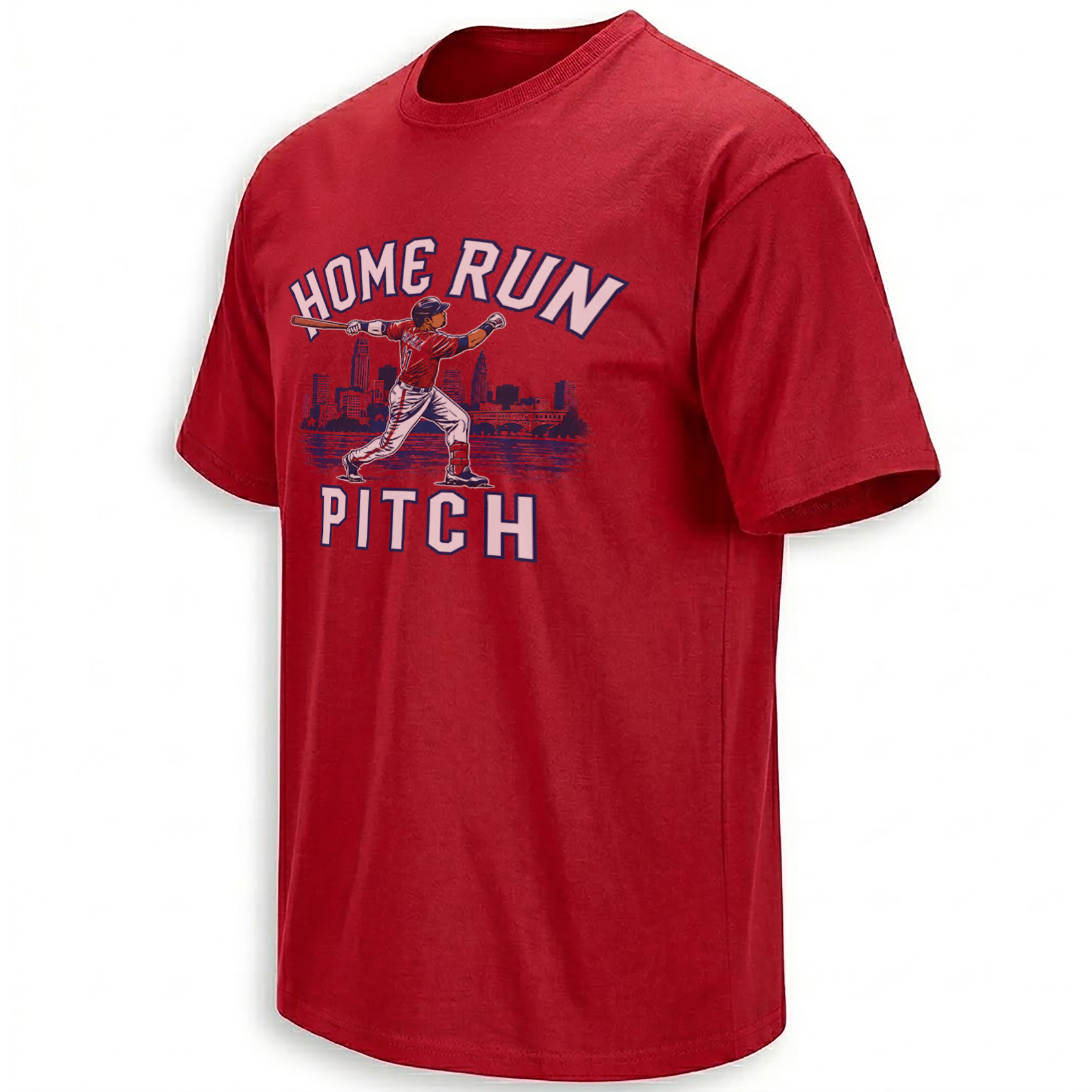
Light lettering outlined in navy changes the balance of the graphic while preserving its vintage baseball composition.
View the red artwork →Both versions place the words HOME RUN above a baseball hitter finishing a powerful swing. PITCH appears below in similarly prominent block lettering.
The central illustration depicts a Cleveland-inspired player in a red jersey, white pants and dark batting helmet, with the bat extended behind him after contact.
Behind the batter is a distressed illustration of downtown Cleveland. Its architectural silhouettes anchor the phrase to the city where Ramírez built his career.
The navy edition provides stronger contrast between the red skyline and dark shirt background. The red edition emphasizes light-colored lettering and deeper navy outlines.
The composition deliberately avoids a specific final score or photograph. Its focus is the combination of Ramírez’s personality, his famous joke and Cleveland baseball culture.
Why the Home Run Pitch moment will outlive the series
Postseason home runs can become attached to particular scores and dates. But the most memorable moments often reveal something about the player as well.
Ramírez’s Game 5 swing did exactly that.
His ability to hit an extraordinary pitch reflects his baseball skill. His playful answer afterward reveals the personality Cleveland supporters have recognized for years.
As of October 14, 2026, the Guardians and Rays are tied 1-1 in the ALCS. The rest of Cleveland’s postseason remains unresolved, but the ALDS victory is already part of the team’s history.
Within EllieShirt’s Cleveland Guardians collection, the Home Run Pitch concept fits alongside other player-driven postseason memories.
The wider MLB collection places the moment within baseball’s broader October culture, while readers can find additional designs through the José Ramírez product archive.
Unlike a generic home-run slogan, these words carry a specific history. Fans who recognize the joke understand why the phrase belongs to Ramírez.
Frequently Asked Questions
What does José Ramírez mean by Home Run Pitch?
It is his humorous response when asked what type of pitch he hit for a home run, a familiar joke from interviews with Guardians reporter Andre Knott.
What happened in Guardians vs. White Sox ALDS Game 5?
Cleveland defeated Chicago 2-0 on October 10, 2026, completing a comeback from a 2-0 series deficit and advancing to the ALCS.
How low was the pitch José Ramírez hit for his Game 5 homer?
Statcast measured the pitch at just 0.74 feet above ground level, the lowest tracked pitch hit for a postseason home run since 2008.
Who threw José Ramírez’s historic home-run pitch?
Chicago White Sox right-hander Sean Burke threw the 78 mph knuckle curveball in the fourth inning of Game 5.
Why does the Home Run Pitch design feature Cleveland’s skyline?
The cityscape connects José Ramírez’s famous phrase and postseason performance to Cleveland’s baseball identity.
What colors are shown for the Home Run Pitch artwork?
The design has navy and red versions, both featuring a baseball hitter, Cleveland skyline and large HOME RUN PITCH lettering.
The simplest explanation for an impossible swing
Sean Burke threw a pitch that should have been extremely difficult to elevate. José Ramírez reached it, drove it over the fence and sent Cleveland into the next round of the postseason.
The record-breaking location made the play extraordinary. The winning context made it unforgettable.
But the phrase that followed gave the moment its personality. Sometimes, when someone asks José Ramírez what kind of pitch he just hit, the answer really is that simple.
Home Run Pitch celebrates José Ramírez’s famous catchphrase and his historic 0.74-foot-high home run in the Guardians’ 2026 ALDS Game 5 victory. Navy and red artwork combines a vintage baseball hitter with Cleveland skyline imagery.