
RAYS SWEEP YANKEES: 95 > 300.
Three games. One massive payroll gap. How Tampa Bay turned its 2026 ALDS sweep into a perfect example of baseball’s most satisfying October contradiction.
On October 7, 2026, the Tampa Bay Rays finished something the New York Yankees never managed to interrupt: a three-game American League Division Series sweep. At Yankee Stadium, Victor Mesa Jr.’s sixth-inning home run gave Tampa Bay the decisive advantage in a 4–3 victory. The Rays were moving on to the ALCS. New York’s season was over.
The financial contrast made the result especially painful for Yankees supporters. Tampa Bay operates with one of baseball’s smaller payrolls, while New York routinely commits hundreds of millions of dollars to its roster. Yet over three October games, the expensive team could not find a single victory.
That imbalance now has an unusually compact expression: 95 > 300. It reads like incorrect mathematics until the reader understands that these are baseball payroll figures, and the greater-than sign refers to results rather than money.
Payroll figures in millions of dollars, simplified for the graphic. The symbol represents Tampa Bay’s better postseason result, not a financial calculation.
How the Rays Swept the Yankees in Three Games
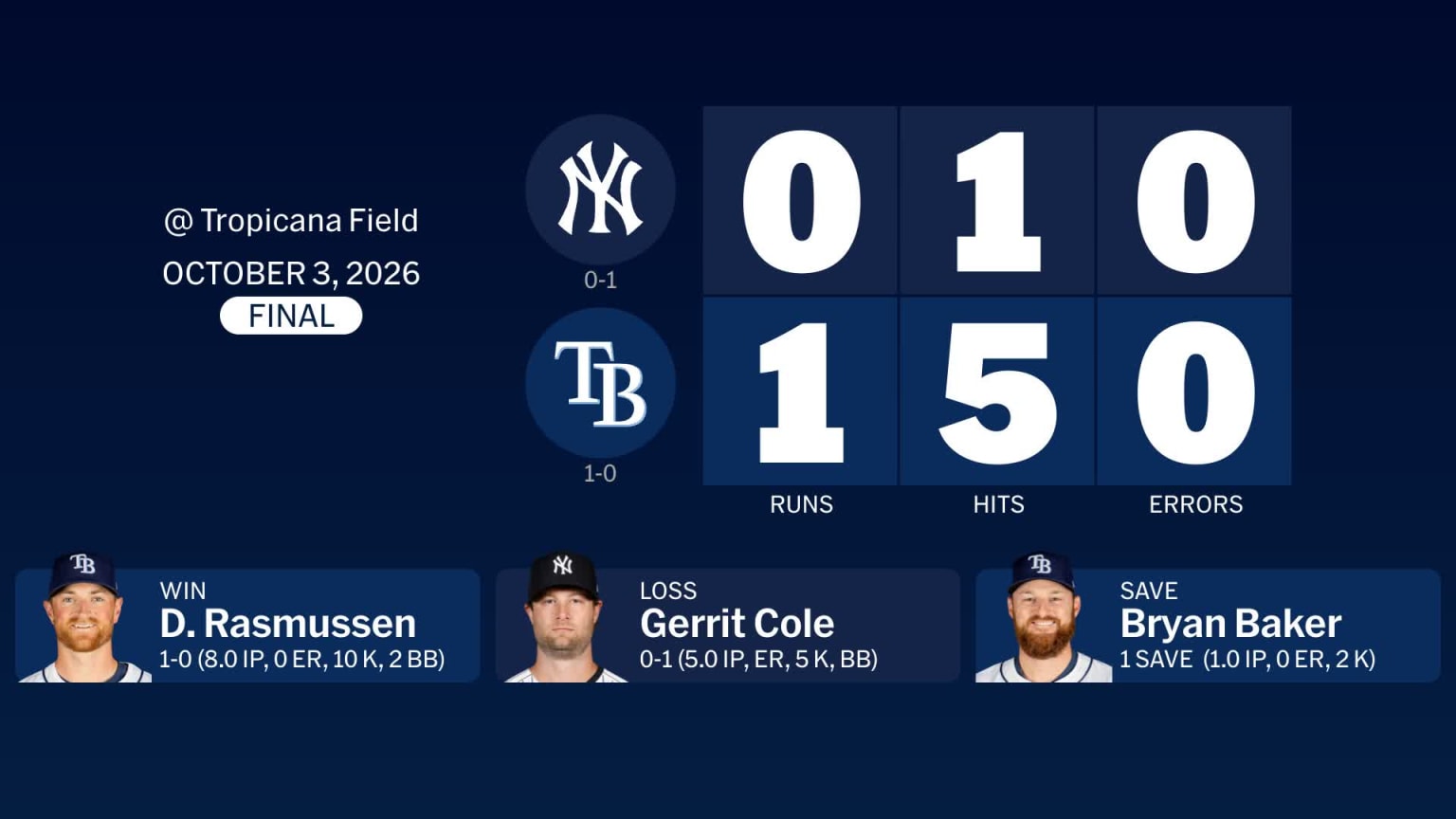
Game 1 on October 3 established the tone. Drew Rasmussen delivered eight scoreless innings, and Jonathan Aranda supplied the game’s only run with a home run. Tampa Bay won 1–0, leaving New York almost completely helpless against Rays pitching.
Game 2 on October 5 brought a different kind of collapse. The Yankees committed four errors, and Richie Palacios contributed a crucial two-run single as Tampa Bay won 5–2. By the time the series moved to the Bronx, the Rays needed only one more victory.
In Game 3, Ryan Vilade homered before Mesa Jr. delivered a two-run shot off Max Fried in the sixth inning. A controversial fan-interference review later changed Anthony Volpe’s apparent game-tying homer into an RBI double. Tampa Bay protected its one-run lead, and Bryan Baker secured his third save of the series.
New York had the bigger payroll. Tampa Bay had all three wins.
The Images Behind Tampa Bay’s October Statement
The Rays’ advantage began with pitching and execution, not a sudden explosion of offense. Their Game 1 shutout and Game 2 pressure on New York’s defense gave the series its identity before the decisive night at Yankee Stadium.
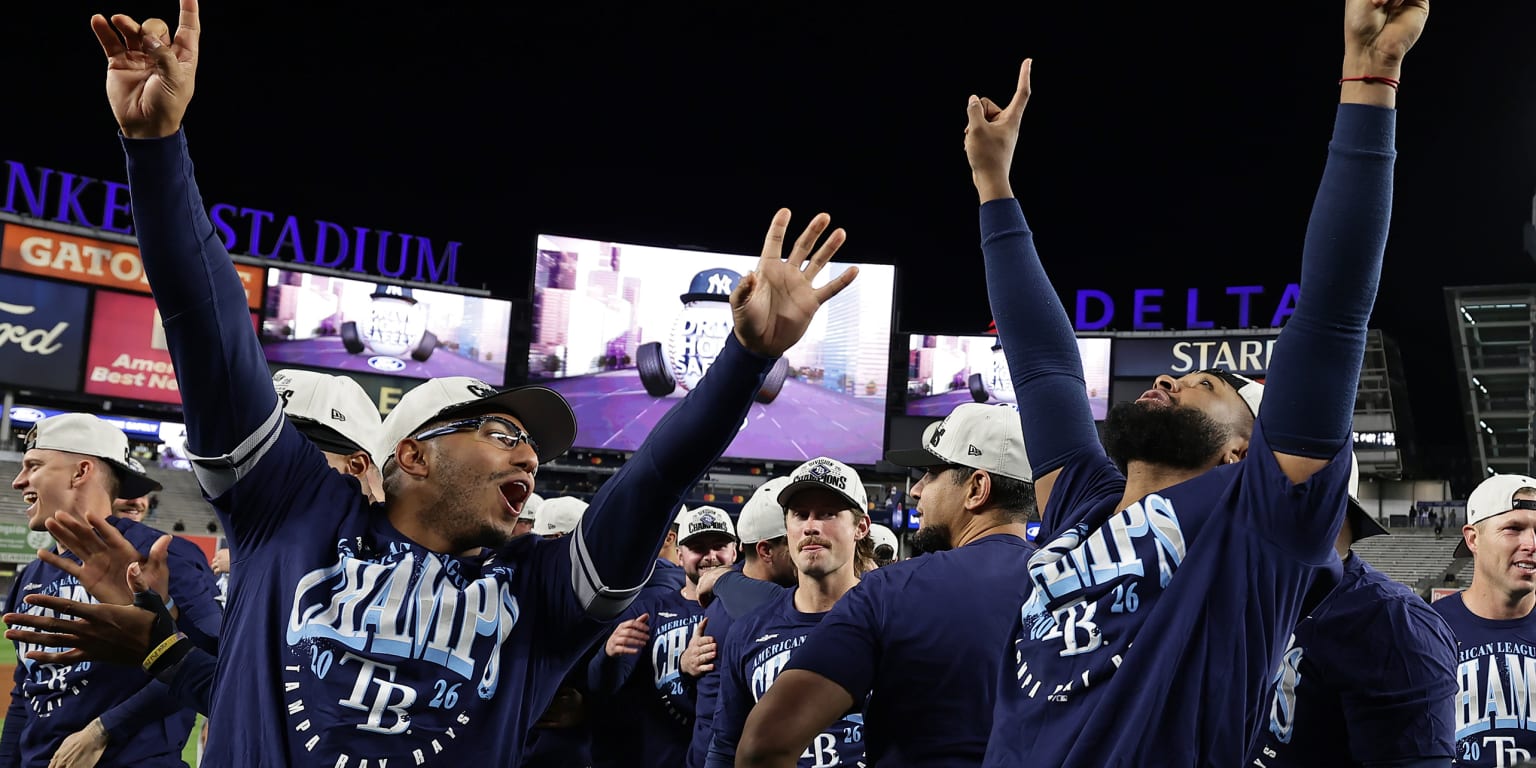
The rivalry had already produced another major Tampa Bay celebration in September, when the Rays clinched the AL East at Yankee Stadium. That earlier triumph provided the emotional backdrop for October’s return to the Bronx.
For footage of the actual series-ending moment, MLB’s October 7 Game 3 highlights show Mesa’s pivotal swing and Tampa Bay’s final 4–3 victory.
What Do 95 and 300 Really Mean?
The two numbers represent simplified 2026 team payroll amounts in millions. SB Nation cited approximately $95 million for Tampa Bay and $308 million for New York when discussing the elimination. Other published estimates differ because payroll measurements can include different salary obligations and accounting conventions.
That distinction matters. The graphic’s figures should not be presented as exact audited totals. Its purpose is to communicate the enormous spending gap in a way fans can recognize immediately: the team with far fewer financial resources eliminated the organization with one of MLB’s largest budgets.
A larger payroll provides opportunities to recruit established players and absorb expensive contracts. It does not guarantee healthy stars, perfect defense, clutch hitting or postseason victories. The 95 > 300 equation represents the outcome of this specific series, not proof that smaller payrolls are always better.
Why “Money Can’t Buy October” Works as a Baseball Meme
Baseball’s postseason compresses a six-month season into a few decisive games. New York’s spending could not prevent Rasmussen’s shutout, the defensive problems of Game 2 or Mesa’s Game 3 homer. The Yankees also entered the series without injured captain Aaron Judge, another reminder that talent and availability are different things.
The 95 > 300 design reduces the entire argument to one inequality sign. The blue-and-gold 95 represents Tampa Bay, while the larger white-and-gray 300 recalls New York’s baseball identity. Beneath the figures, “ALDS 2026” fixes the historical context, and “MONEY CAN’T BUY OCTOBER” delivers the punchline.
There are no portraits or celebratory player illustrations. The design deliberately lets the numbers carry the story. Its varsity-style lettering resembles an old sports scoreboard, while the navy and black versions create two different levels of visual contrast.
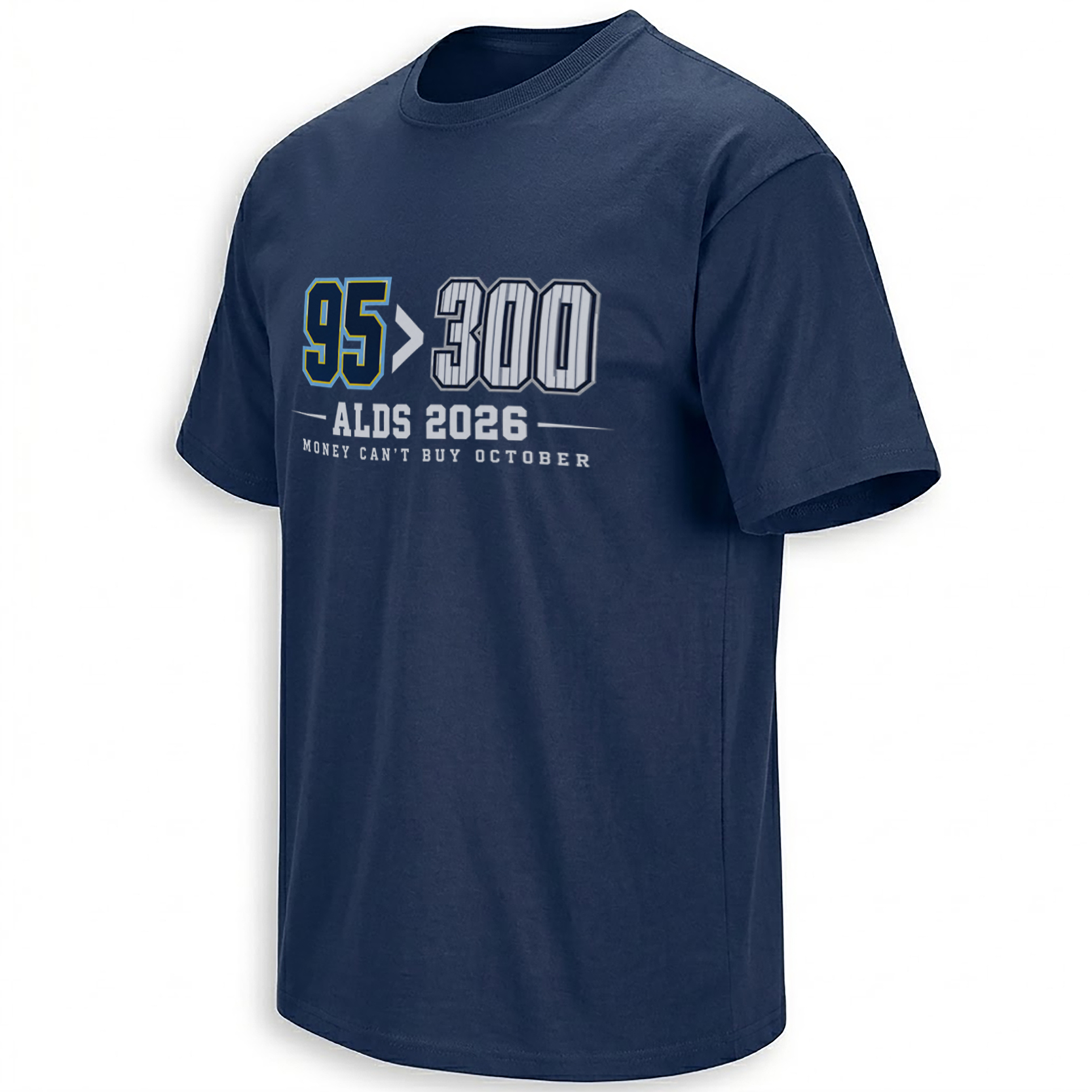
The traditional navy background emphasizes Tampa Bay’s blue and gold against New York-inspired gray numerals.
View the navy graphic →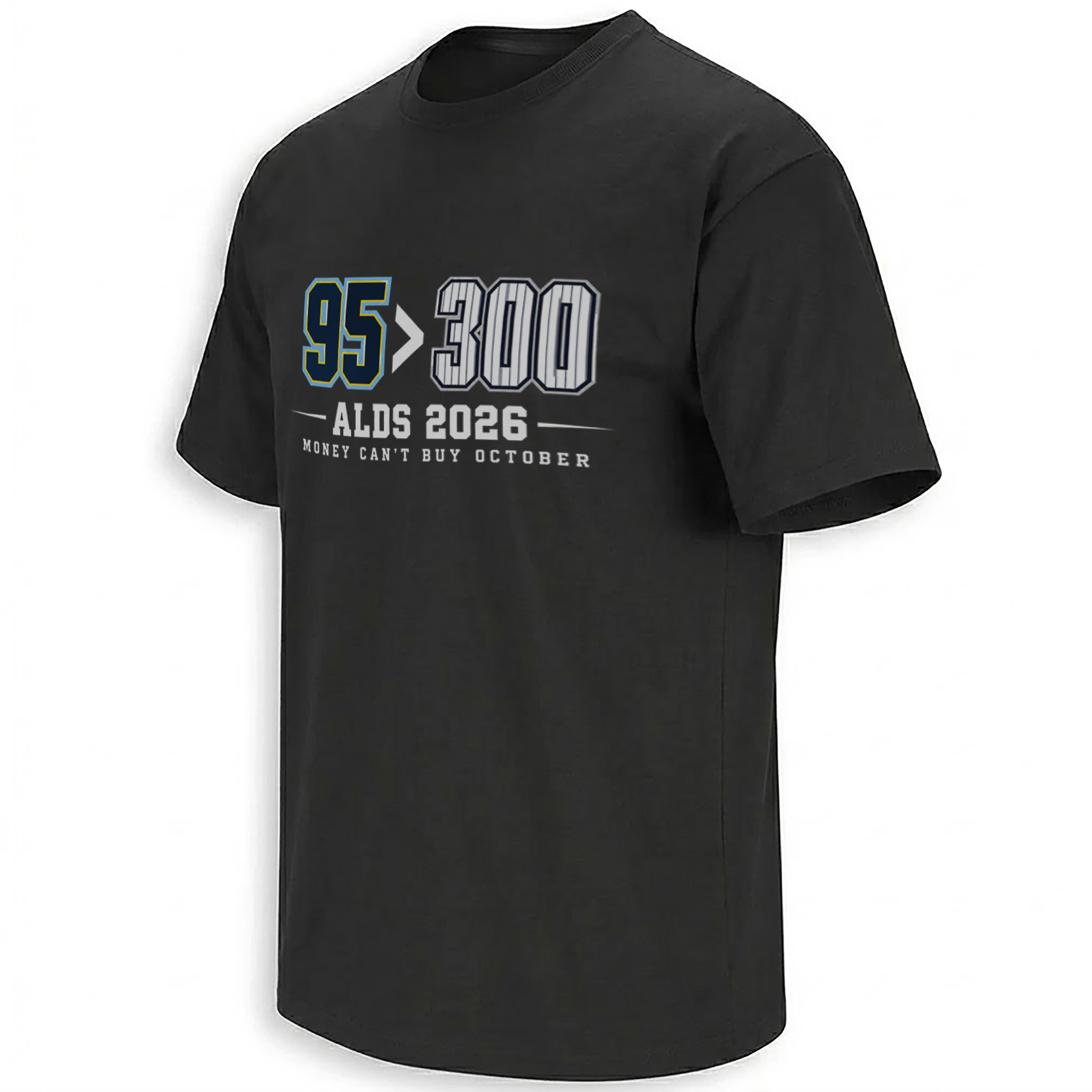
A sharper, high-contrast version of the same payroll rivalry statement, with the October slogan beneath.
View the black graphic →How Baseball Fans Reacted to the Sweep
The fan response quickly moved beyond scores. On Reddit’s r/tampabayrays, supporters celebrated the team’s first ALCS appearance since 2020, repeated familiar anti-Yankees chants, and posted broom references. Meanwhile, a separate r/baseball discussion about playoff payrolls questioned what the success of lower-spending teams means for baseball’s economic arguments.
That enthusiasm is understandable. Tampa Bay reached its third ALCS in franchise history after sweeping its richest division rival. Yet the club’s success does not settle the broader debate about payroll inequality. Money still influences roster depth and long-term competitiveness. This October series simply demonstrated that spending power cannot dictate every postseason outcome.
The rivalry belongs naturally in the Tampa Bay Rays collection, alongside the wider New York Yankees collection and MLB baseball archive. The 95 > 300 graphic preserves one particularly sharp chapter of their 2026 history.
Frequently Asked Questions
What does 95 > 300 mean in Rays baseball?
It compares simplified payroll figures in millions, celebrating Tampa Bay’s superior result against the higher-spending Yankees in the 2026 ALDS.
Did the Rays sweep the Yankees in the 2026 ALDS?
Yes. Tampa Bay won the best-of-five Division Series 3–0, with victories of 1–0, 5–2 and 4–3.
Who hit the decisive home run in Game 3?
Victor Mesa Jr. hit a two-run homer off Max Fried in the sixth inning on October 7, giving the Rays the lead they never surrendered.
Are $95 million and $300 million exact payroll totals?
No. They are simplified comparison figures used in the design. Published 2026 payroll estimates vary depending on accounting methods.
What does Money Can’t Buy October mean?
It means that a large baseball payroll cannot guarantee postseason victories, as demonstrated by Tampa Bay sweeping the Yankees despite a substantial spending gap.
The 95 > 300 graphic preserves the result in its simplest form: Tampa Bay advanced, New York went home, and October reminded baseball that a payroll is not a final score.
95 > 300 Rays Yankees ALDS 2026 Shirt commemorates Tampa Bay’s three-game sweep through a symbolic payroll comparison, varsity-style typography and the Money Can’t Buy October rivalry slogan.