
The Lane Train Has Left the Station. LSU Is Already Moving Fast.
Lane Kiffin arrived in Baton Rouge carrying one of college football’s most recognizable coaching personalities. One game later, LSU had 51 points, 644 yards, a top-10 ranking and enough new fan language to fill an entire platform: Lane Train, In Our Lane Era and Geaux Lane Geaux.
LSU did not need to invent “Lane Train” after hiring Lane Kiffin. The nickname had followed him through earlier stops in college football. What changed in Baton Rouge was the destination — and, after September 5, the speed.
Kiffin’s first LSU game ended with the Tigers overwhelming Clemson 51-10 inside Tiger Stadium. LSU produced 644 yards of offense and a school-record 38 first downs, while quarterback Sam Leavitt accounted for 343 total yards and three touchdowns. The debut was convincing enough to move LSU from No. 11 to No. 8 in the first regular-season AP poll.
That performance transformed the offseason’s coaching excitement into something visible. “Lane era” was no longer a hiring announcement. It had a scoreboard.
LSU itself supplied the perfect ending to its pregame Kiffin feature: punch the ticket, fasten the seatbelt — the Lane Train had officially left the station.
“Lane Train” Is Now Official LSU Vocabulary
That distinction gives the current wave of Lane Kiffin graphics more cultural weight than a random coach pun. In its September 5 feature on Kiffin’s arrival, LSU Athletics explicitly used the train metaphor while explaining why the coach embraced the pressure of the job.
Kiffin described LSU’s expectations as being as high as anywhere in sports and said that discomfort matched his personality. The program also arrived at Week 1 with a No. 1-rated transfer portal class, a top-10 high-school class and enormous public interest surrounding the hire.
LSU says Kiffin’s arrival generated more than 40,000 new season-ticket requests. That is why the train image works: it describes movement that was already happening before the first snap.

Four Designs Capture Four Versions of the Same Era
The strongest part of this group is that the four graphics do not simply repeat Lane Kiffin’s face. Each translates the coaching change into a different kind of LSU fan language: a literal train, a minimalist rally slogan, an “era” statement and Louisiana’s familiar Geaux vocabulary.
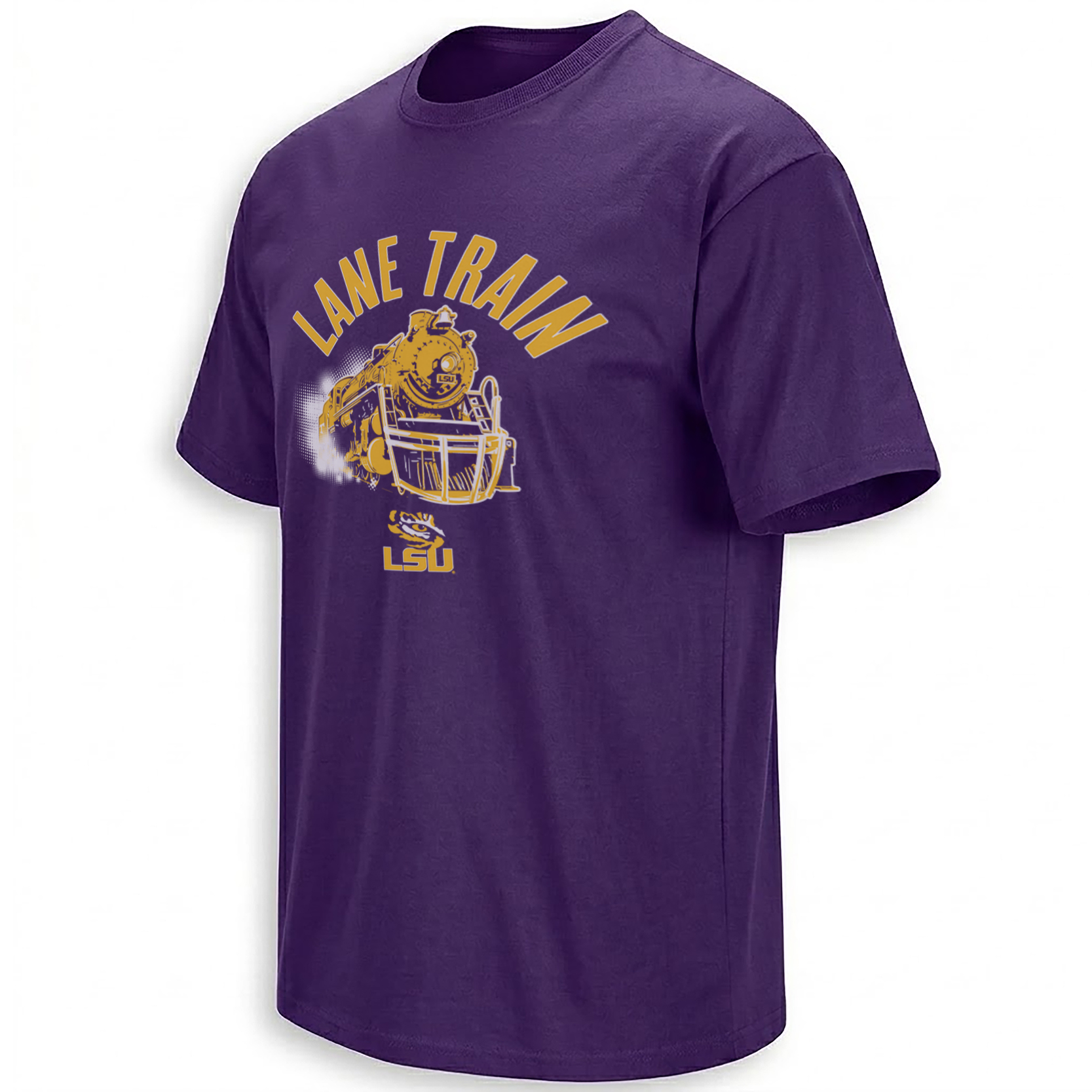
A gold steam locomotive with football-facemask details makes Kiffin’s long-running nickname literal while purple and gold relocate the train to Baton Rouge.
Board the Lane Train →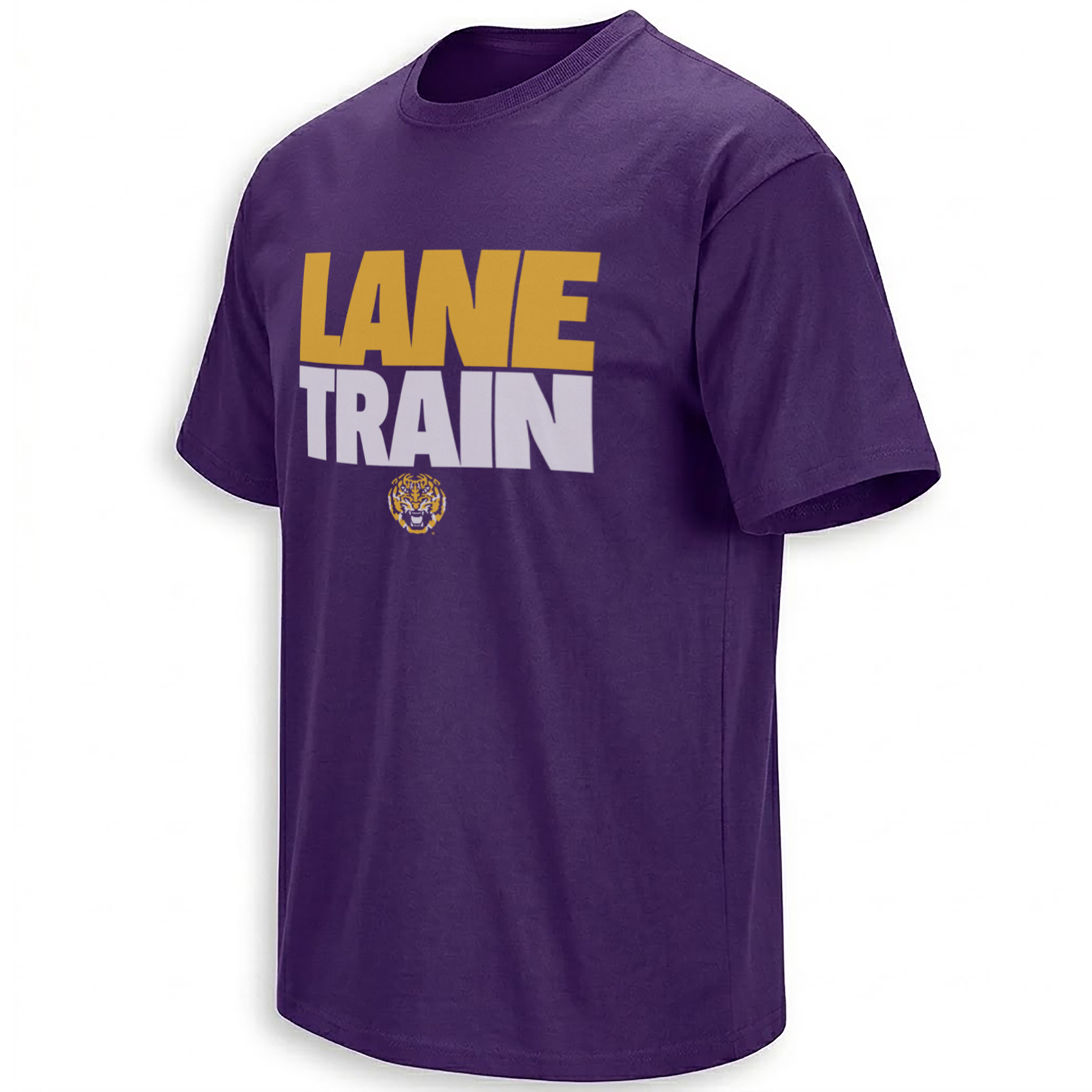
Giant gold LANE and white TRAIN lettering strip the nickname down to a stadium-readable statement, with the phrase carrying the entire concept.
View the rally version →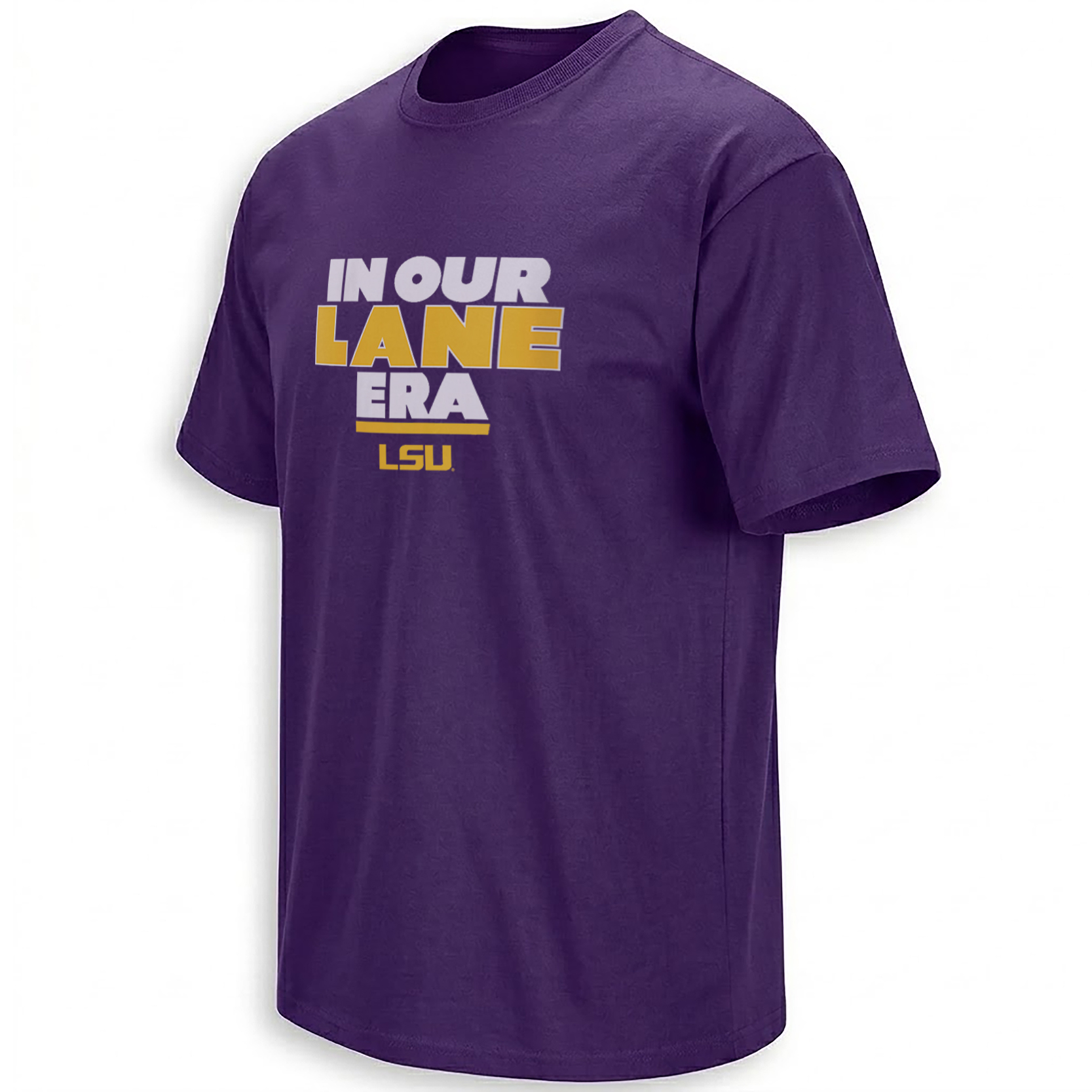
A typography-first graphic turns Kiffin’s first name into the centerpiece of an entire LSU chapter rather than tying the design to one result.
Enter the Lane Era →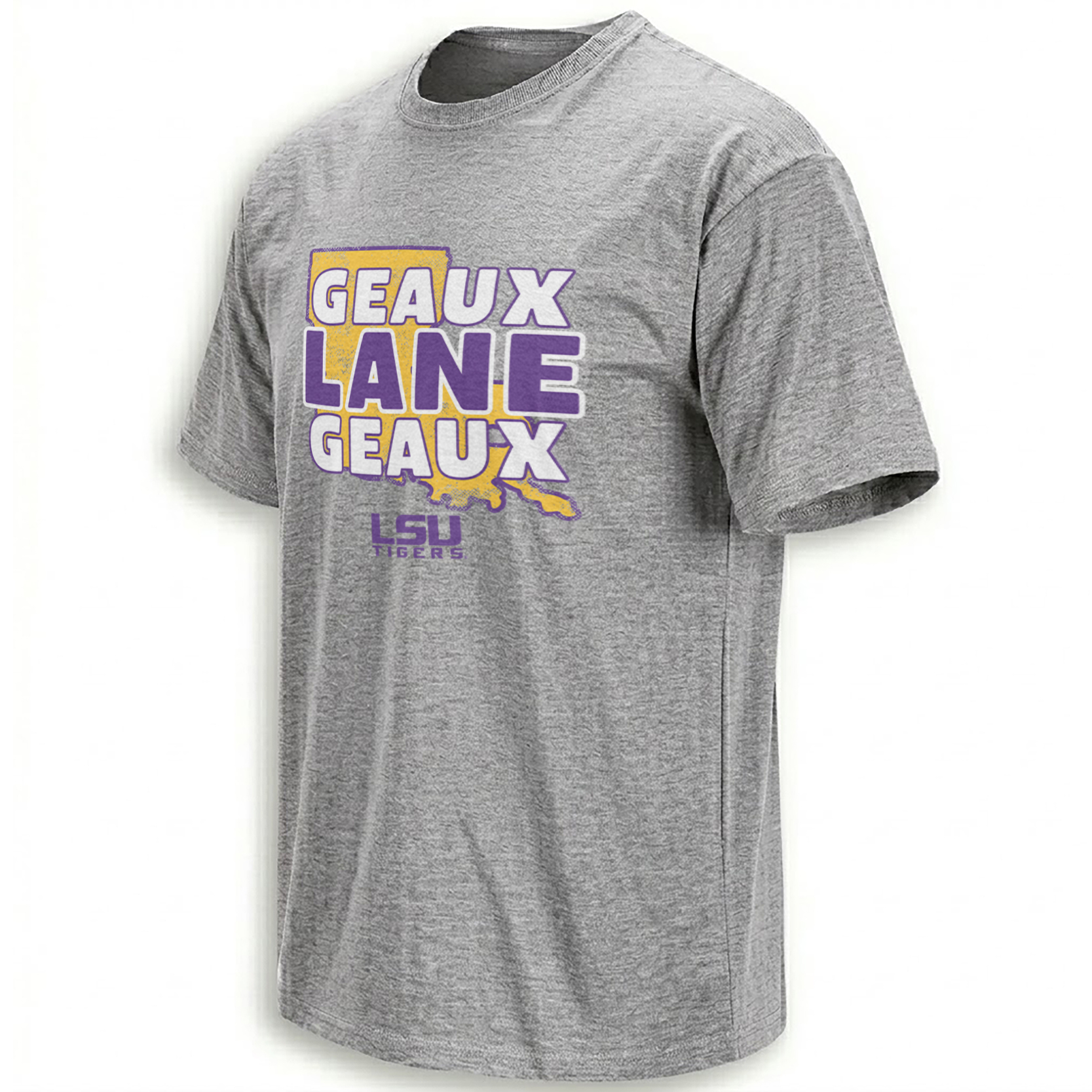
GEAUX / LANE / GEAUX places the coach inside Louisiana football language, with the state silhouette making the Baton Rouge connection unmistakable.
See the Louisiana version →“Geaux Lane Geaux” May Be the Most Louisiana Version
“Lane Train” belongs to Kiffin. “Geaux” belongs to the culture he has entered. Putting Lane between two GEAUX lines changes the nickname from a national college-football reference into something that sounds naturally at home around Tiger Stadium.
The design reinforces that shift with a Louisiana silhouette rather than another coach portrait. It says the story is not simply Lane Kiffin getting another job; it is Lane Kiffin being absorbed into a specific football language.
The four pieces form a useful progression: locomotive momentum → rally typography → new-era identity → Louisiana localization. Together they document how quickly one coaching hire has generated an entire visual vocabulary around LSU football.
The First Major Return Trip Is Already Waiting
LSU hosts Louisiana Tech on September 12, but the game that gives this story its obvious second act comes one week later. On September 19, LSU travels to Oxford to face Ole Miss.
Kiffin spent six seasons leading the Rebels and won 55 games there before taking the LSU job. LSU’s own schedule announcement highlighted the matchup specifically as his return to Oxford. Whatever happens, it guarantees another national wave of Lane-versus-former-program discussion.
That is why these designs have more runway than a normal opener shirt. None of them requires “51-10” to remain meaningful. The Clemson win simply supplied proof of concept.
Even the Noise Around Kiffin Fits the “No Comfort Zone” Era
The first week has not been quiet away from the field either. LSU and the SEC have been locked in a high-profile eligibility dispute over Kiffin’s attempt to add former NFL signees. LSU ultimately left those players off its final football roster, and reports on September 10 indicated that an SEC vote on LSU’s membership was no longer expected.
That developing story should not be confused with the meaning of these shirts, but it reinforces something LSU said about Kiffin before his debut: comfort is not the defining feature of this era. On the field or off it, the new coach has immediately placed LSU near the center of the national college-football conversation.
More designs from the same program can be found in Ellie Shirt’s LSU Tigers collection, while the broader NCAA collection connects the Lane Era to the rest of college-football culture. Readers following Kiffin specifically can also browse the Lane Kiffin product archive.
Frequently Asked Questions
Is “Lane Train” really associated with Lane Kiffin?
Yes. The nickname predates LSU, and LSU Athletics itself used “Lane Train” language in its September 5 feature introducing Kiffin’s first season in Baton Rouge.
How did Lane Kiffin’s first LSU game end?
LSU defeated Clemson 51-10 while producing 644 total yards and a school-record 38 first downs.
What does “In Our Lane Era” mean?
“Lane” refers directly to Lane Kiffin, while “era” frames his arrival as a larger LSU football chapter rather than a reference to one game.
What does “Geaux Lane Geaux” reference?
It remixes LSU’s familiar Louisiana-style “Geaux Tigers” language by placing Lane Kiffin’s first name at the center of the rally phrase.
When does Kiffin return to Ole Miss?
LSU is scheduled to play at Ole Miss on September 19, 2026, in Oxford.
From the literal Lane Train locomotive to In Our Lane Era and Geaux Lane Geaux, these graphics record the moment LSU’s coaching change became its own fan language.
Lane Kiffin’s LSU era is already producing its own football vocabulary. Lane Train, In Our Lane Era and Geaux Lane Geaux capture the momentum surrounding a 51-10 Clemson debut, LSU’s rise to No. 8 and Kiffin’s looming return to Ole Miss.