
Boomer Badass Generation Shirt Meets an 80-Year Milestone
The skull, crossed drumsticks and distressed lettering are loud by design—but the dates printed beside them tell a real demographic story.
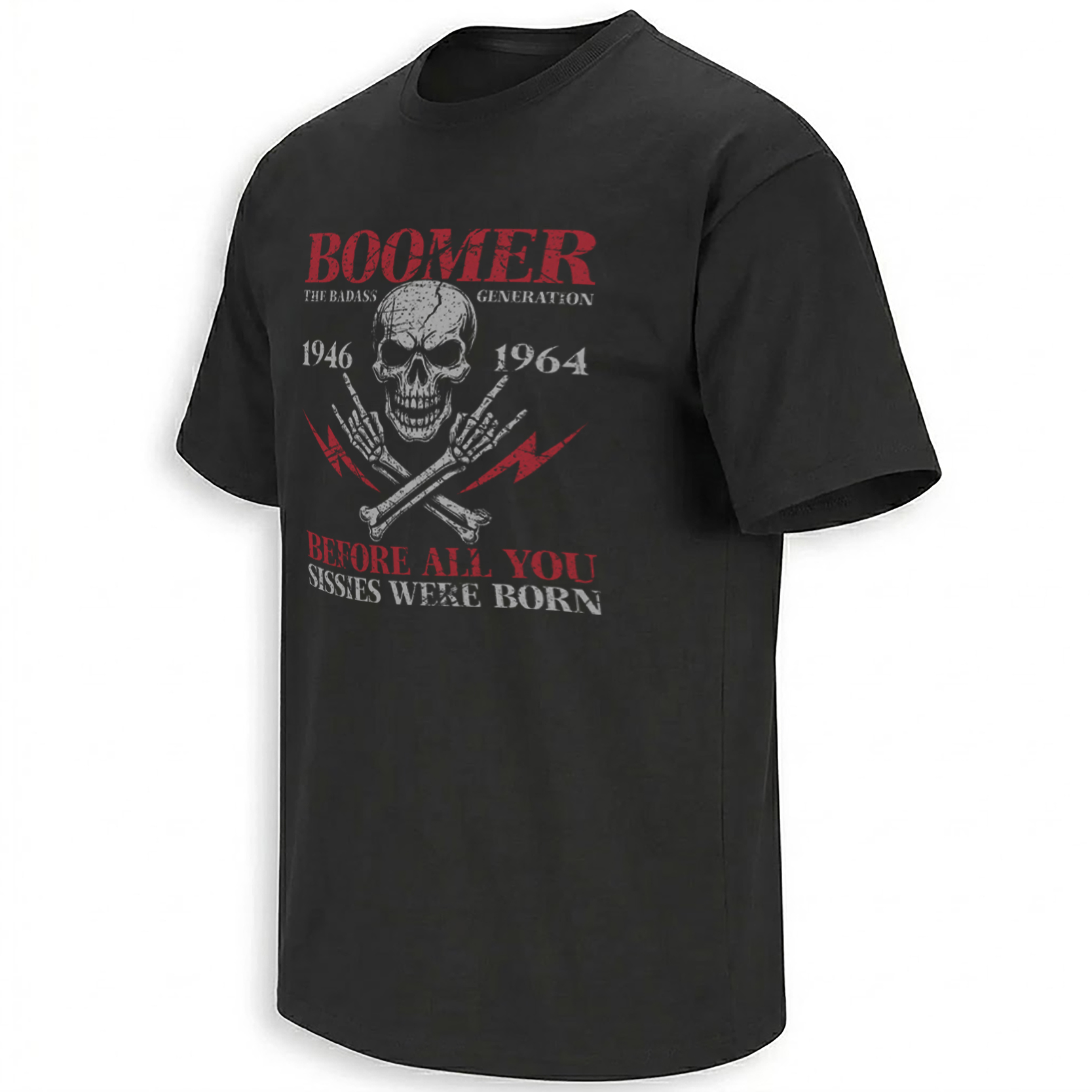
The Boomer Badass Generation Shirt is built like a rock-club poster, but 2026 gives the design unusual historical weight. This is the year the first members of the postwar Baby Boom turn 80—eight decades after the opening date printed beside the skull.
Why 1946 and 1964 appear on the shirt
Baby Boomers are commonly defined in the United States as people born from 1946 through 1964. The opening year followed the end of World War II, when returning service members, renewed economic confidence and postponed family plans contributed to a sharp rise in births. The final year marks the end of that sustained demographic surge.
Generational boundaries can become fuzzy when they are treated as personality tests, but the Baby Boom has a clearer statistical foundation than many later labels. Pew Research Center, the U.S. Census Bureau and other major institutions consistently use the 1946–1964 range. That is why the dates in this artwork are more than decorative numbers: they establish who the message is addressing.
A generation reaches another threshold
In 2026, Americans born in 1946 begin turning 80. That milestone changes the cultural meaning of “Boomer.” Online, the term is frequently reduced to an insult, a meme or a shorthand for generational conflict. In demographic reality, it describes a vast cohort whose lives stretch from postwar childhood through television’s rise, the space race, civil rights struggles, Vietnam, Watergate, personal computing, the internet and the smartphone era.
Early Boomers and late Boomers did not experience all those events at the same age. Someone born in 1946 could remember the 1950s directly and reach adulthood during the cultural upheaval of the 1960s. Someone born in 1964 was still a child during Watergate and may feel closer to Generation X in music, work and family experience. The shirt deliberately sets those differences aside and uses the full demographic span as one collective badge.

Why the artwork uses rock imagery
The black shirt base immediately places the design closer to a concert tee than a soft-focus nostalgia souvenir. “BOOMER” appears in oversized distressed red capitals. Beneath it, the smaller phrase “THE BADASS GENERATION” divides around a centered gray skull. The years 1946 and 1964 sit to either side, while skeletal hands, crossed drumsticks, angular red bolts and rough lettering fill the lower composition.
The drumsticks are a particularly effective visual choice. Rock and roll did not begin with the Baby Boomers, but the generation became the mass audience that helped transform youth music into a central commercial and cultural force. The Beatles’ American arrival, Motown, psychedelic rock, stadium concerts, hard rock and the expansion of FM radio all belong to the broader soundtrack of Boomer life.
The design does not ask to be treated delicately. It turns a demographic category into a battle-worn rock identity.
The skull also changes the tone. It can signify age and mortality, especially in the year the oldest Boomers turn 80, but within rock iconography it more often signals defiance, endurance and refusal to become visually polite. The skeleton hands maintain the same attitude long after flesh-and-blood hands would supposedly have slowed down.
The slogan and generational humor
The lower phrase—“Before All You Sissies Were Born”—is intentionally confrontational. It belongs to a familiar tradition of age-based teasing in which every generation claims it survived harder conditions than the one that followed. The line should therefore be read as swaggering generational humor, not as a neutral historical judgment about younger people.
That distinction matters because the Baby Boomer story is complicated. The cohort benefited from periods of economic expansion, but its members also lived through military drafts, political assassinations, inflation, oil shocks, industrial decline and enormous technological disruption. No single slogan can represent tens of millions of individual lives. The artwork instead captures one recognizable posture: older, louder, still here and unwilling to disappear quietly.
What makes this more than a birthday graphic?
Because the design uses the full generational range rather than one personalized birth year, it works as a cohort statement. A person born in 1949, 1957 or 1963 can recognize the same identity without changing the artwork. It is less about marking one birthday than claiming membership in an era.
The strongest cultural products often hold two ideas simultaneously. Here, one idea is comic exaggeration: the skull, drumsticks and insult are knowingly excessive. The other is a genuine historical transition. America’s postwar generation is entering its eighties while remaining influential in politics, wealth, work, music and family life. The shirt turns that sober demographic milestone into something noisy enough to match the generation’s popular mythology.
Wear the dates as a generational badge
See the complete Boomer Badass Generation Shirt. Related cultural, birthday and identity-driven releases can be found through Ellie Shirt’s newest collection.