
Canada’s Answer to “Lake America”: It Is Still Lake Ontario
Trump’s federal rename created a new label in Washington. In Canada, it produced almost the opposite effect: a sudden wave of attention toward the history, language and identity already contained inside the words “Lake Ontario.”
Donald Trump could order American federal agencies to change a map. He could not order Canadians to change their memory. Within hours of the August 27 “Lake America” executive order, Canadian Prime Minister Mark Carney responded by doing something strategically different from Trump: instead of inventing a new name, he explained where the old one came from.
Carney pointed to the Wendat word “Ontari’io,” commonly rendered as meaning “the lake is beautiful, the lake is big,” and noted that the name has been used for more than four centuries — older than Canadian Confederation and older than the United States itself.
Ontario Premier Doug Ford went even shorter. For Canadians and the rest of the world, he said, it is Lake Ontario “now and forever.” That phrase captured the emerging Canadian reaction: not panic, but refusal mixed with humor.
A disputed new name made the old one more visible. “Lake Ontario” suddenly stopped sounding ordinary and started sounding like a declaration of continuity.
Carney Turned the Naming Fight Into a History Lesson
The Canadian response mattered because it changed the frame of the story. Trump’s argument centered American power and federal naming authority. Carney’s answer centered duration: people were calling this body of water Lake Ontario long before either modern country existed in its present form.

Mark Carney’s response moved the discussion from Trump’s map to the much older Indigenous and Canadian history behind the name Lake Ontario.
“Still Lake Ontario” Became the Counter-Slogan
A political rename creates one obvious graphic response: simply refuse it. That is the logic behind the “Still Lake Ontario” designs. Their tone is less theatrical than “Lake America.” Instead of inventing institutions and tourism seals, they use the visual language of permanence: maps, maple leaves, sunset horizons, hockey and phrases like “Since Forever.”
Those elements matter because they reposition the story away from Washington. The lake is not only an object on a federal database. It is the water beside Toronto, Kingston and communities along the Canadian shore; it is winter weather, shipping, fishing, hockey imagination and one of the names from which the province itself derives its identity.
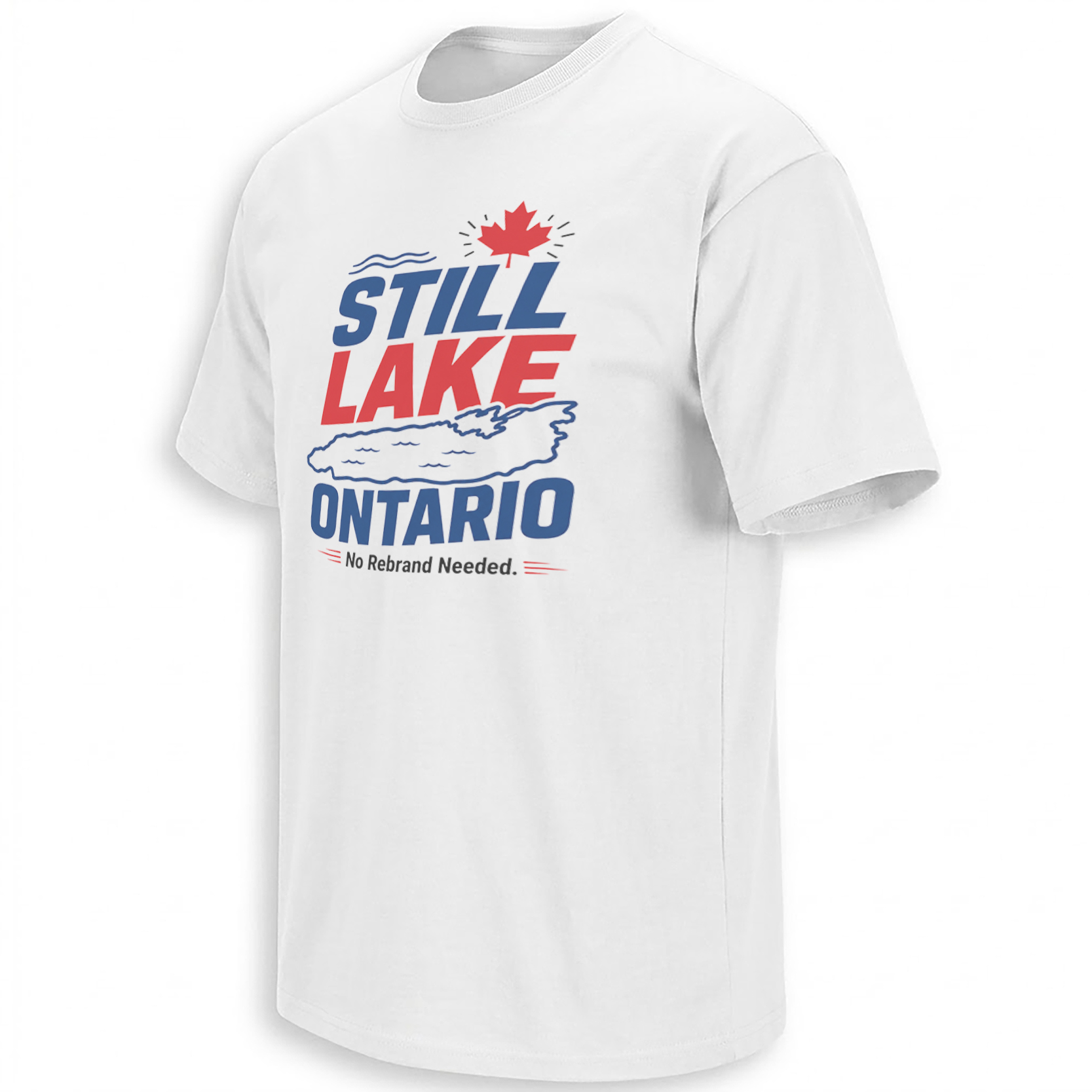
A deliberately plain rebuttal: the old name does not need a marketing campaign to justify itself.
View the piece →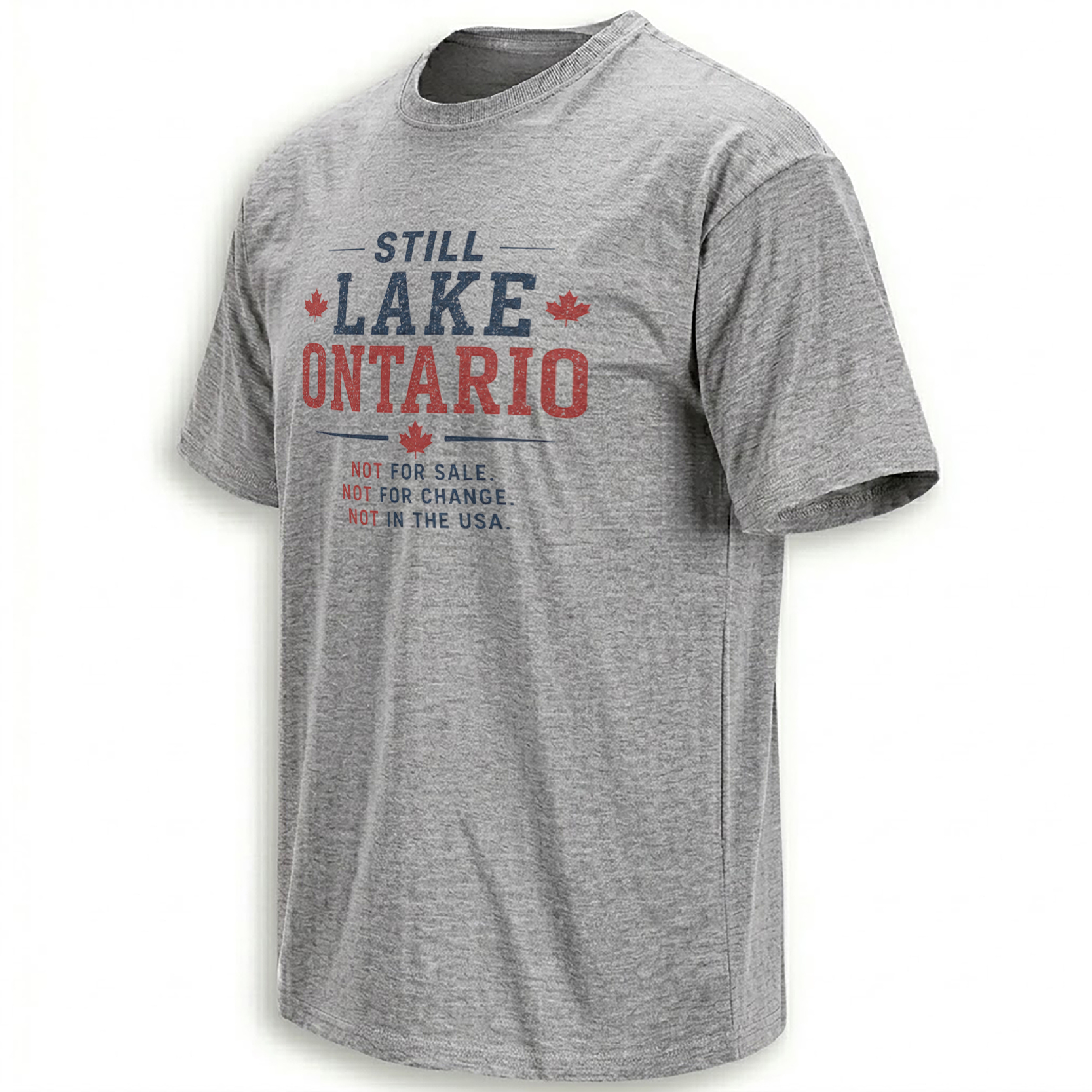
The slogan pulls the map dispute into the wider Canadian conversation about sovereignty and U.S. pressure.
Explore the graphic →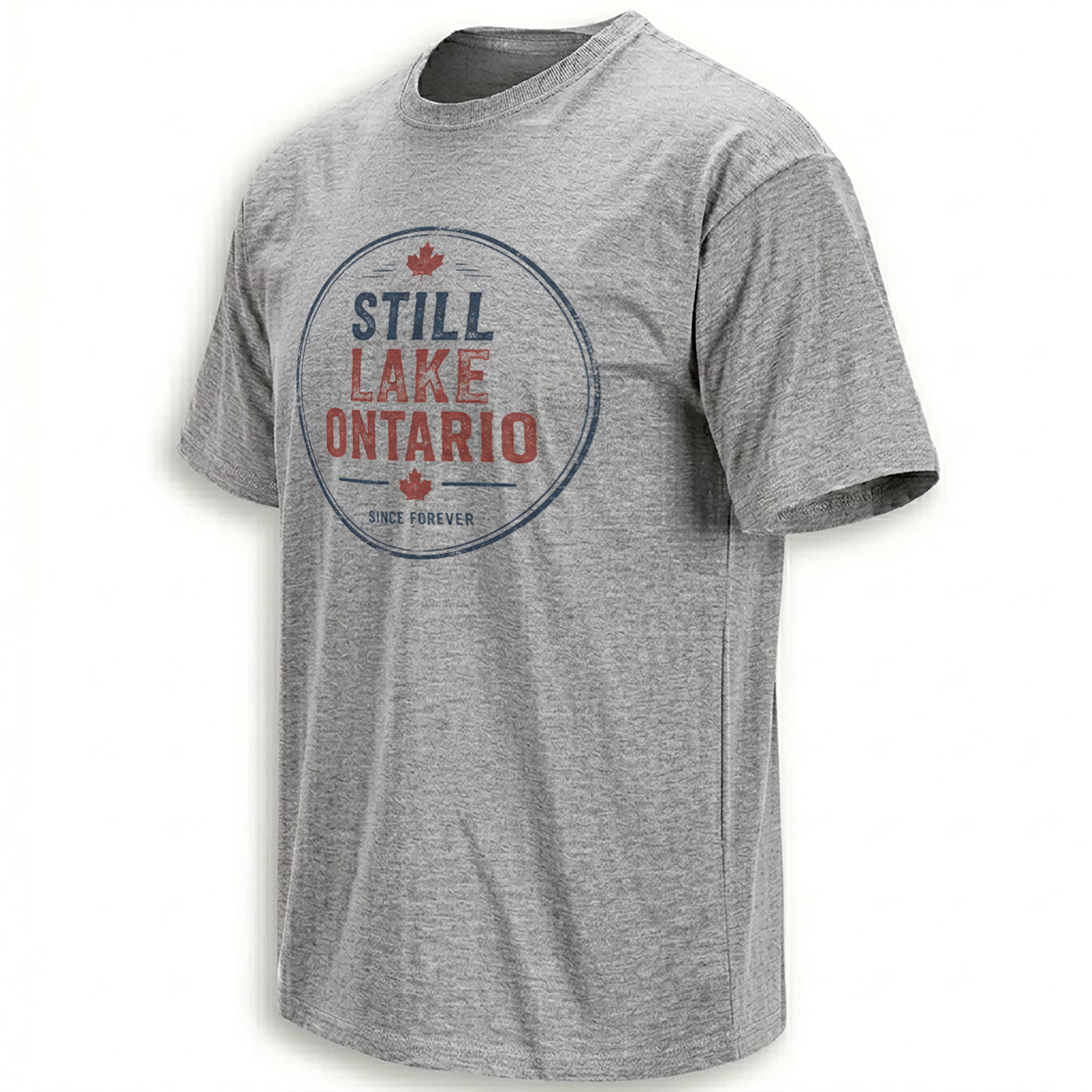
The intentionally informal phrase “Since Forever” translates historical continuity into dry internet-era Canadian humor.
See the visual →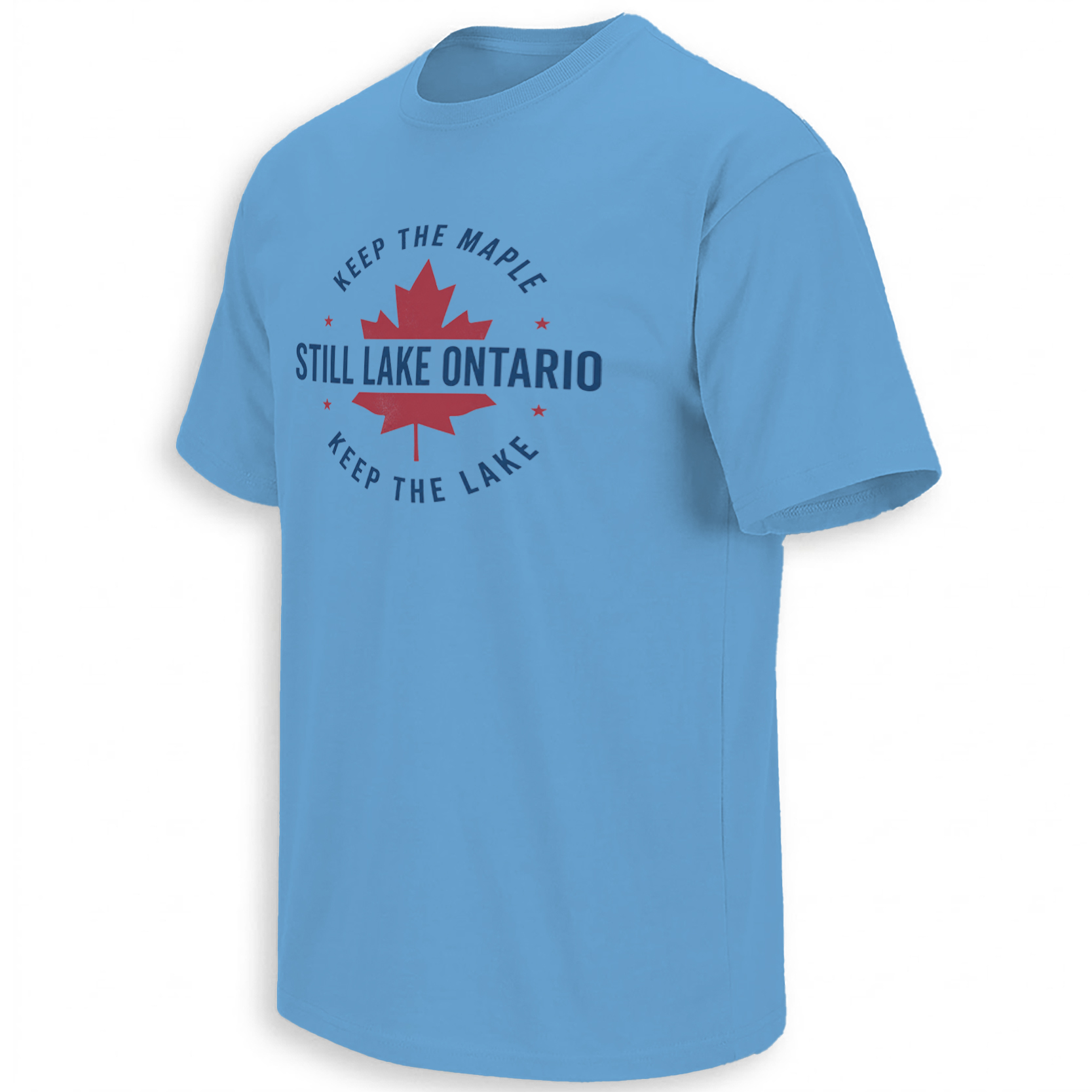
The maple leaf turns a naming disagreement into recognizable Canadian identity without needing a long political explanation.
Open the design →Hockey, Winter and the Version of Ontario That a Map Cannot Rename
One of the strongest designs in the Canadian group does not argue directly with Trump at all. The frozen-hockey sunset piece uses the lake as cultural scenery rather than a political battlefield.
That distinction is useful. A name survives not only because governments preserve it, but because ordinary life keeps repeating it. People say Lake Ontario when they discuss the weather, the shoreline, a drive, a ferry, a hockey memory or the view across the water toward Toronto.

Hockey silhouettes, cold water and sunset color turn the lake into lived Canadian scenery — an identity that exists independently of the current political argument.
Explore the lake visual →Where History Ends and Satire Begins
The dispute has also produced slogans that intentionally exaggerate historical continuity. One design says “1,000 Years, 1 Name.” That should be read as rhetorical artwork rather than a literal historical claim: the documented Lake Ontario name discussed by Canadian officials is more than 400 years old, not a verified thousand-year continuous English-language label.
That distinction is important because the strongest political graphics often trade in emotional truth rather than archival precision. The design is expressing “this name feels ancient and established,” while journalism still needs to separate that sentiment from the historical record.
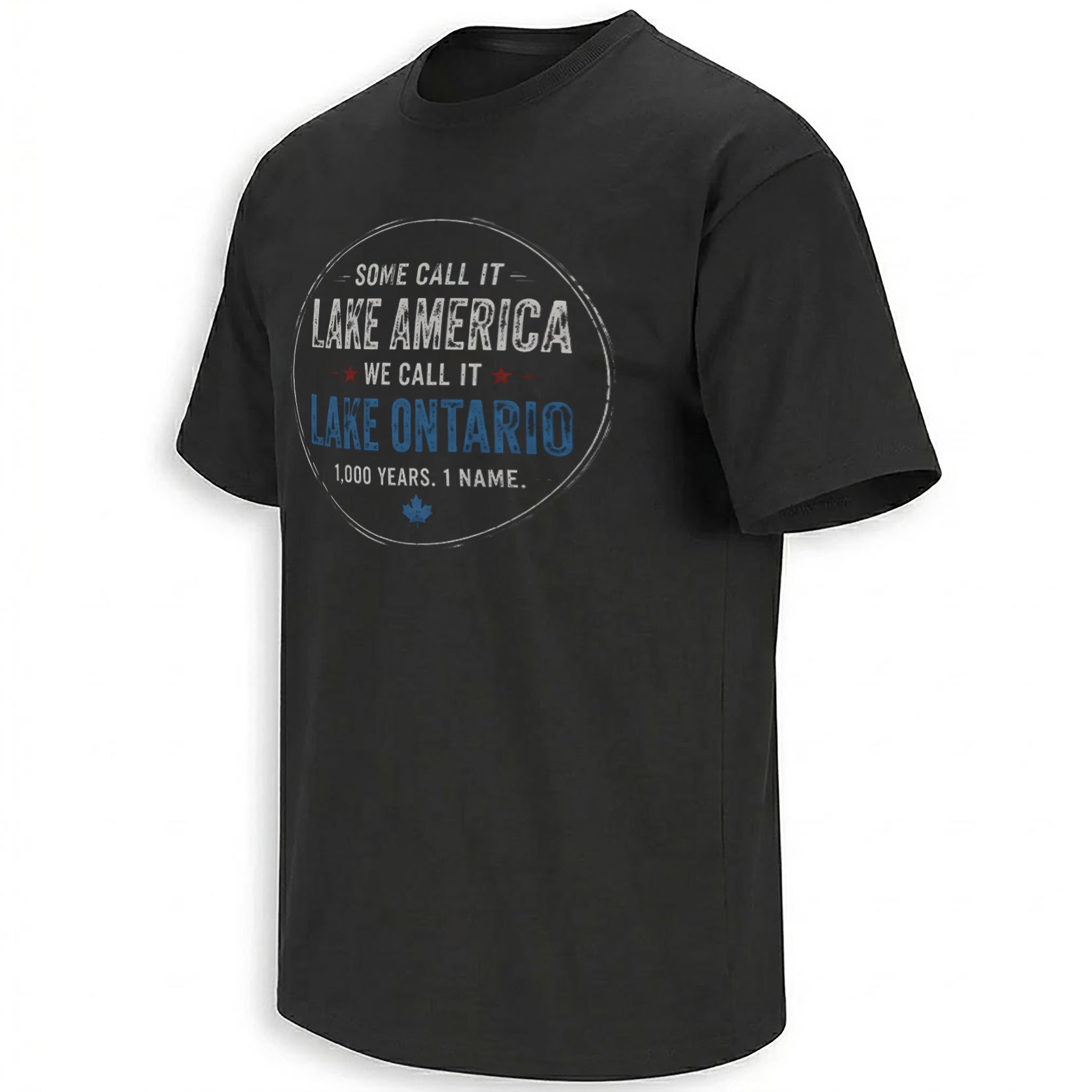
The “1,000 Years” line functions as exaggerative heritage rhetoric; the verified name history cited by Canada exceeds four centuries.
View the design →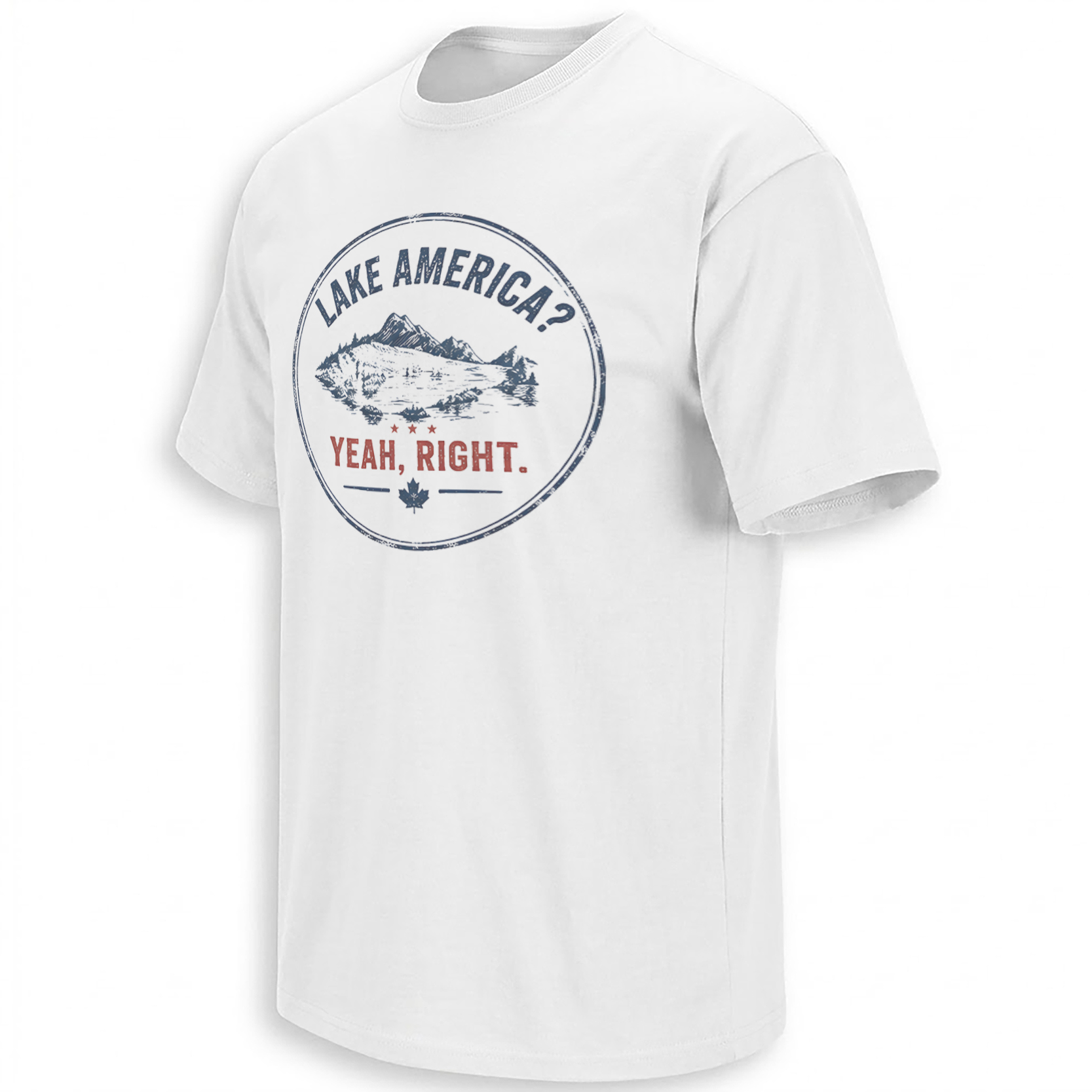
Canadian disbelief compressed into the shortest possible response to Washington’s new terminology.
See the satire →The current political dispute should not erase the deeper naming history. Canadian leaders have emphasized the Wendat origin “Ontari’io” and more than 400 years of use. The lake’s name predates the province of Ontario itself.
The Real Conflict Is Over Who Gets to Define Shared Space
A lake straddling an international border is a particularly revealing place for a naming fight. The United States can change federal terminology on its side. Canada can reject that terminology entirely. Neither action changes the shape of the water.
That is why “Still Lake Ontario” resonates beyond a basic anti-Trump slogan. It is fundamentally about continuity. Political administrations change; naming conventions can change; maps can even display different labels depending on which side of a border a user is standing on. Local memory is harder to administrate.
The full Lake Ontario political collection places these Canadian heritage pieces beside the competing Lake America tourism and meme graphics, creating a visual archive of both sides of the August 2026 naming fight. Because Trump remains the catalyst for the controversy, readers can also follow the broader Donald Trump design search for related political graphics.
Frequently Asked Questions
Why is Canada still calling it Lake Ontario?
Trump’s executive order controls U.S. federal naming usage. Canada is not required to adopt the new name and Canadian leaders have explicitly rejected doing so.
Where does the name Lake Ontario come from?
Canadian Prime Minister Mark Carney highlighted the Wendat word “Ontari’io,” commonly translated as “the lake is beautiful, the lake is big,” and said the name has more than 400 years of history.
What does “Still Lake Ontario” mean in the current political moment?
It is a counter-slogan rejecting the U.S. federal “Lake America” terminology and emphasizing historical continuity, Canadian identity and the idea that a political order does not automatically rewrite shared cultural memory.
Is the “1,000 Years, 1 Name” design a literal historical claim?
It is better read as rhetorical satire. Current Canadian statements cite more than 400 years of documented name history; the graphic uses “1,000 Years” to exaggerate the sense of permanence.
Why do hockey and maple imagery appear in Lake Ontario reaction designs?
They shift the conversation from a federal naming dispute toward recognizable Canadian cultural identity, connecting the lake to place, winter, sport and national symbolism.
The Lake Ontario archive captures that response through maple imagery, hockey, dry humor and the simplest counter-message of the entire controversy: whatever appears on a U.S. federal map, Canadians are still calling it Lake Ontario.
Still Lake Ontario designs capture Canada’s response to Trump’s 2026 “Lake America” order through Wendat name history, maple symbolism, hockey culture and the refusal to treat a federal U.S. rebrand as shared reality.