
Mickey Gasper Went From Depth Piece to The Legend of Mickey Gas
Eight days were enough to completely rewrite Mickey Gasper’s late-season identity. After returning from Triple-A Worcester, the versatile Red Sox catcher and utility bat suddenly started hitting home runs at a pace that made “Mickey Gas” feel less like a joke and more like an August baseball folk tale.
Baseball has always loved the player who arrives from the margins and briefly bends the season around himself. Mickey Gasper entered that tradition almost overnight. Boston recalled him from Worcester on August 16, and what followed looked nothing like the statistical profile most fans had attached to his Major League career.
Gasper had spent years showing patience, contact ability and versatility in the upper minors, but he was not arriving in Boston with a reputation as a feared Major League slugger. MLB noted that when he came to Fenway on August 20, he owned only two home runs across his first 92 big-league games. Then he homered for a third consecutive game.
Five days later in Miami, the story became stranger. Gasper launched two solo home runs against the Marlins for the first multi-homer game of his career. By then, he had five homers in eight games after going without one in his first 107 at-bats of the season. A depth player had become one of the hottest bats in Boston’s lineup while the Red Sox were pushing through an important late-August stretch.
Baseball folklore does not always need years to form. Sometimes it needs one player, one week and a nickname that arrives exactly when the ball starts leaving the yard.
The Strange Speed of a Baseball Reputation Change
Gasper’s run is compelling because the previous version of the story was so ordinary. He had bounced between organizations, spent long stretches in Triple-A and functioned primarily as useful roster depth. That type of career produces respect inside baseball, but rarely instant mythology outside it.
August changed the frame. A homer in one game can be dismissed as a good swing. Another the next day creates a pattern. A third consecutive homer starts generating a nickname. Then a first career two-homer game arrives and suddenly the same player is being discussed as one of Boston’s most unexpected late-season weapons.
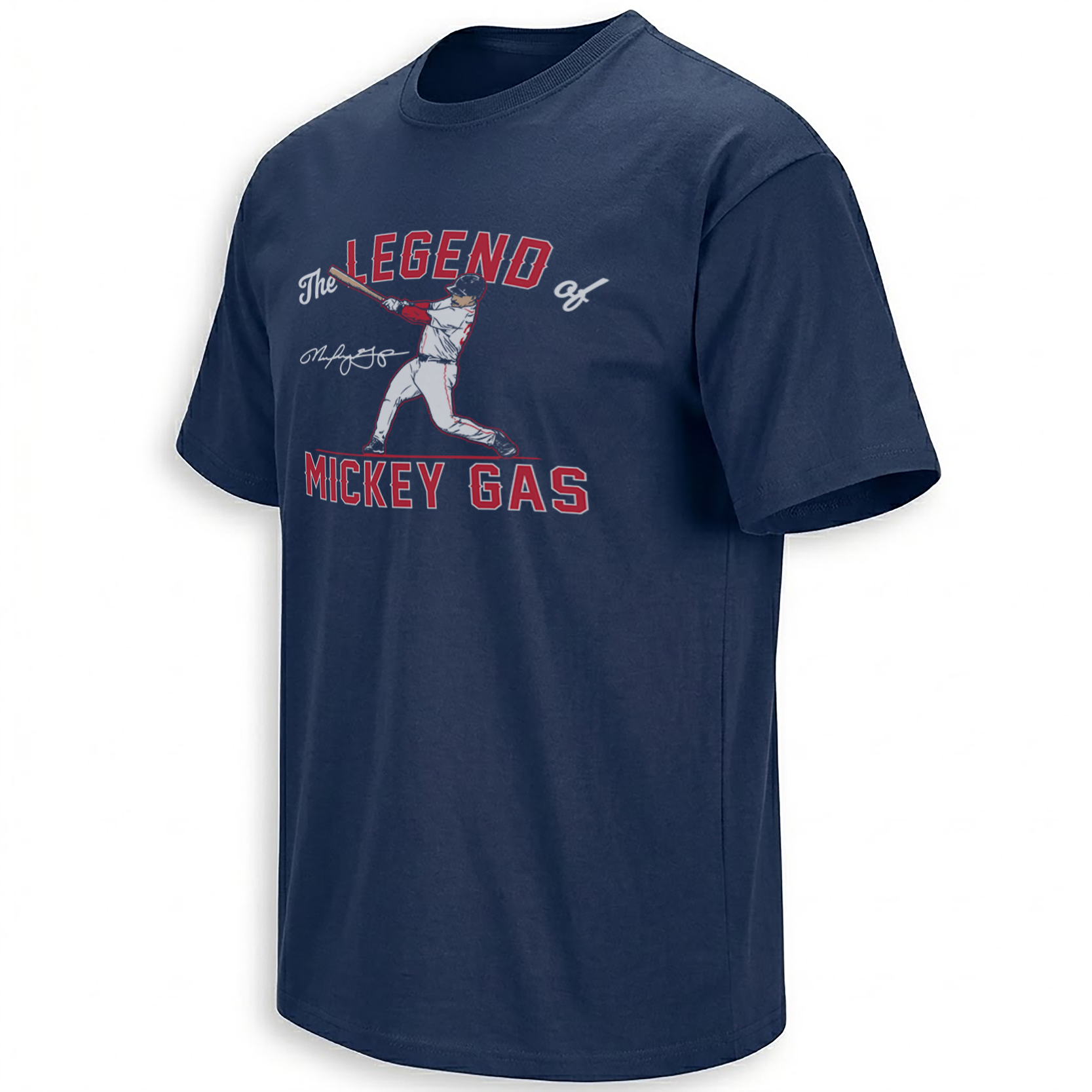
That is where the The Legend of Mickey Gas design fits into the moment. It exaggerates deliberately. Gasper has not spent a decade collecting Boston records; the humor comes from presenting an eight-day eruption with the visual seriousness of an old baseball legend.
The Real Mickey Gas Power Surge
The shirt’s swing imagery has real game action behind it. On August 25, Gasper went deep twice in Miami, once in the second inning and again in the sixth. The two solo shots helped Boston stay alive in a game eventually decided by Jarren Duran’s grand slam in the 11th inning.
That performance brought Gasper’s home-run count during the hot stretch to five. The broader numbers were just as eye-catching. Baseball Savant’s August split showed an extraordinary short-term surge in average, on-base percentage and slugging, while his recent Triple-A production suggested he had already been swinging well before the recall.
MLB video source: Gasper’s first career two-home-run game against Miami on August 25 — the clearest game-action expression of the “Mickey Gas” power story.
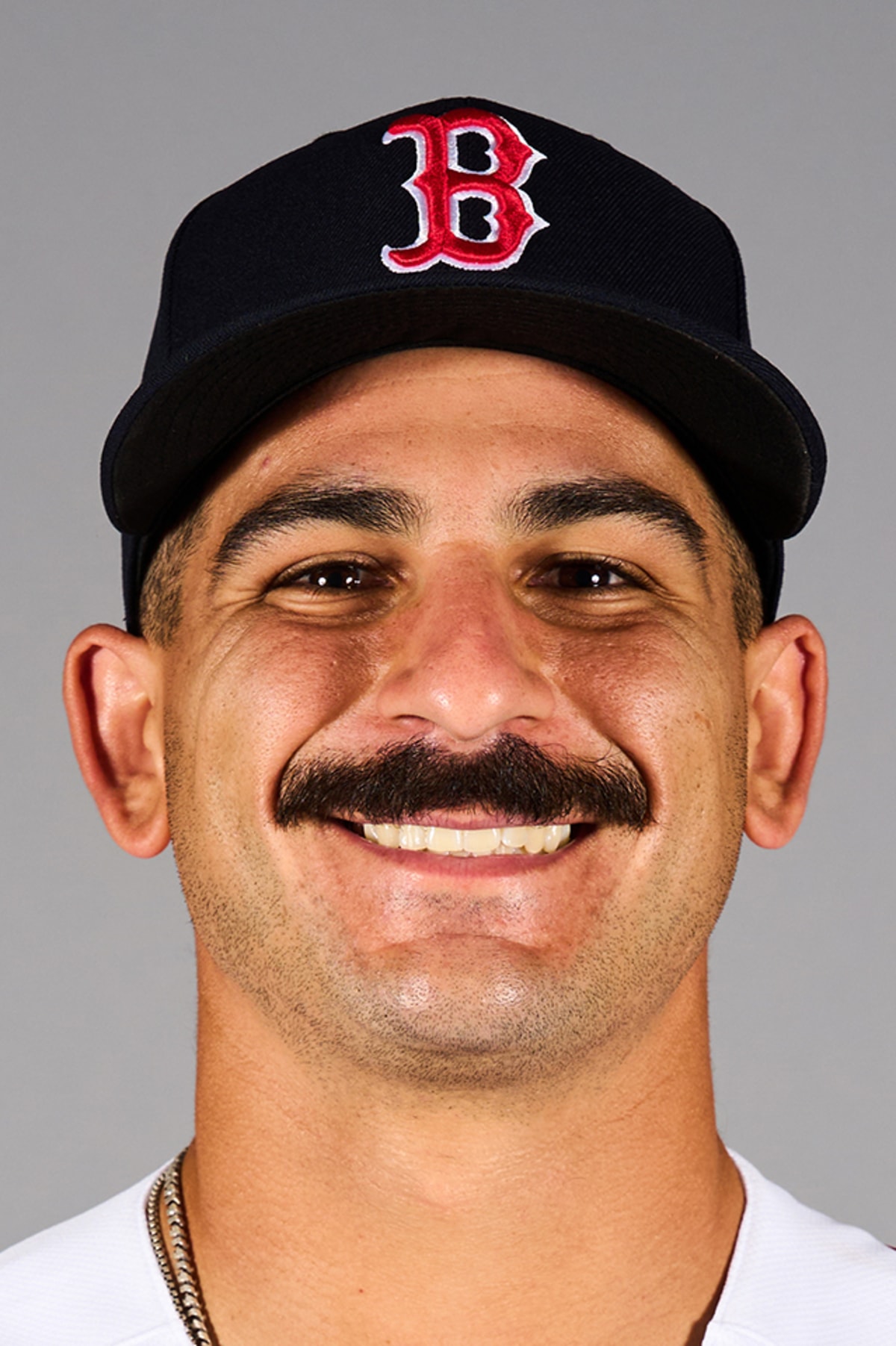
Gasper’s official MLB player imagery connects the folk-hero treatment of the graphic with the real Red Sox utility player who suddenly became one of Boston’s hottest August bats. Open Gasper’s MLB profile →
Why “Mickey Gas” Works as Fan Language
The nickname works because it requires almost no explanation. Gasper naturally compresses into “Gas,” and baseball already uses the word to describe velocity, force and something operating at full power. When the hitter attached to the name suddenly begins driving balls over the fence, the association becomes automatic.
Boston fan culture is especially receptive to this kind of character. Fenway history is filled not only with superstars, but also with players whose brief bursts become disproportionately memorable because they happen at the right point in a season.
“The Legend of Mickey Gas” understands that exaggeration. The word “legend” is being used in the same spirit as a barroom story that gets better every time someone retells it. The joke is that everyone knows how suddenly this happened.
Collegiate red lettering, a dark Boston navy base, signature-style detailing and a full follow-through swing give the piece the feel of an old baseball card enlarged into a fan poster. The visual language says “established legend” while the story itself remains gloriously new.
Why the Timing Matters for Boston
Gasper’s eruption would have been entertaining on any roster, but Boston’s circumstances increased its value. The Red Sox were navigating injuries and lineup changes while trying to stay inside the American League postseason conversation. At that point, production from unexpected places was not merely fun; it was useful.
That is why Gasper’s hot streak became part of a wider Red Sox identity rather than an isolated player curiosity. Boston had already shown an ability to reinvent itself during the season, including a franchise-record 27–3 stretch earlier in the summer. Gasper became another example of a roster finding offense from somewhere opponents were not necessarily planning around.
It is still reasonable to treat an eight-game power surge cautiously. Baseball is built on regression and changing adjustments. But cultural moments do not require certainty about what happens next. They only require something memorable enough that fans recognize the exact week being referenced.
Boston’s Running Visual Archive
The wider Boston Red Sox collection follows those kinds of changing player identities, nicknames and game-specific moments rather than treating every season as one generic team logo.
The broader MLB collection expands the same idea across baseball, where breakout weeks, unlikely heroes and fan phrases can become recognizable pieces of a season before anyone knows how the year will ultimately end.
More pieces centered specifically on Gasper can be found through Ellie Shirt’s Mickey Gasper search .
Frequently Asked Questions
When did Boston recall Mickey Gasper in 2026?
The Red Sox recalled Gasper from Triple-A Worcester on August 16, 2026.
Why did Mickey Gasper suddenly become a Boston storyline?
Gasper went on an unexpected home-run surge immediately after his recall, including a three-game homer streak and five home runs within eight games.
When did Mickey Gasper have his first career two-home-run game?
He hit two solo home runs against the Miami Marlins on August 25, 2026.
What does “Mickey Gas” mean?
The phrase shortens Gasper’s surname into “Gas,” giving his sudden power surge a compact nickname that naturally fits baseball’s language of energy and hard contact.
Why does the design call Mickey Gasper a legend?
The wording intentionally exaggerates the way fan culture can turn an unexpected hot streak into instant folklore while the moment is still happening.
The The Legend of Mickey Gas graphic preserves Boston’s sudden Gasper power story while the wider Red Sox archive tracks the players and phrases shaping the club’s 2026 season.
The Legend of Mickey Gas Shirt captures Mickey Gasper’s sudden August 2026 Red Sox power surge through a vintage Boston baseball layout, oversized Mickey Gas lettering and a full-swing folk-hero graphic.