
“Paul Revere” at 40: the Beastie Boys’ Backward Western Still Sounds Wrong in the Best Way
As Licensed to Ill approaches its 40th anniversary in November 2026, “Paul Revere” remains one of the album’s strangest achievements: a fake Western origin story riding across a drum beat that literally runs backward.
Forty years after Licensed to Ill arrived on November 15, 1986, the loudest memories usually begin with the obvious singles: “Fight for Your Right,” “No Sleep Till Brooklyn,” “Brass Monkey.” But tucked at track nine is the record’s miniature outlaw movie — a horse, a sheriff’s posse, beer going warm in the sun and three young New Yorkers rewriting their own meeting as if hip-hop had suddenly wandered onto a dusty Western set.
“Paul Revere” is absurd on purpose. It does not document how Ad-Rock, MCA and Mike D actually met. It invents a mythology in which the Beastie Boys enter history as comic fugitives. That decision is what gives the song unusual staying power: instead of introducing the group with a résumé, they introduce themselves through a tall tale.
In 2026, with the 40th anniversary of Licensed to Ill approaching, the song feels especially useful as a reminder that early Beastie Boys records were built from experimentation as much as attitude. Beneath the jokes is one of the album’s cleverest pieces of production.
“Paul Revere” sounds like three rappers telling a Western around a campfire while the drum machine underneath them is moving through time in reverse.
The Backward Beat Is the Real Horse Under the Song
The production trick behind “Paul Revere” remains wonderfully physical. This was before a producer could reverse a drum pattern instantly on a laptop. Mike D later recalled MCA asking what an 808 beat would sound like backward. Adam Yauch recorded the rhythm to tape, flipped the tape and bounced the reversed result back onto the multitrack.
The effect is subtle enough that a casual listener may not immediately identify it as backward audio. What they hear instead is imbalance. The kick and snare seem to pull in unusual directions, giving the track a sliding, slightly unnatural gait.
Roland’s history of the track credits Yauch’s tape experiment with creating the defining rhythm. That technological limitation is part of the sound: “Paul Revere” was not made strange with a preset. Someone physically reversed recorded tape to hear what might happen.
That crooked rhythm is ideal for storytelling. A normal drum pattern might have made the tale sound like a standard rap narrative. The reversed 808 makes the imaginary desert feel slightly unreal before the lyrics even begin.
“One Lonely Beastie I Be” Is a Whole Character in Six Words
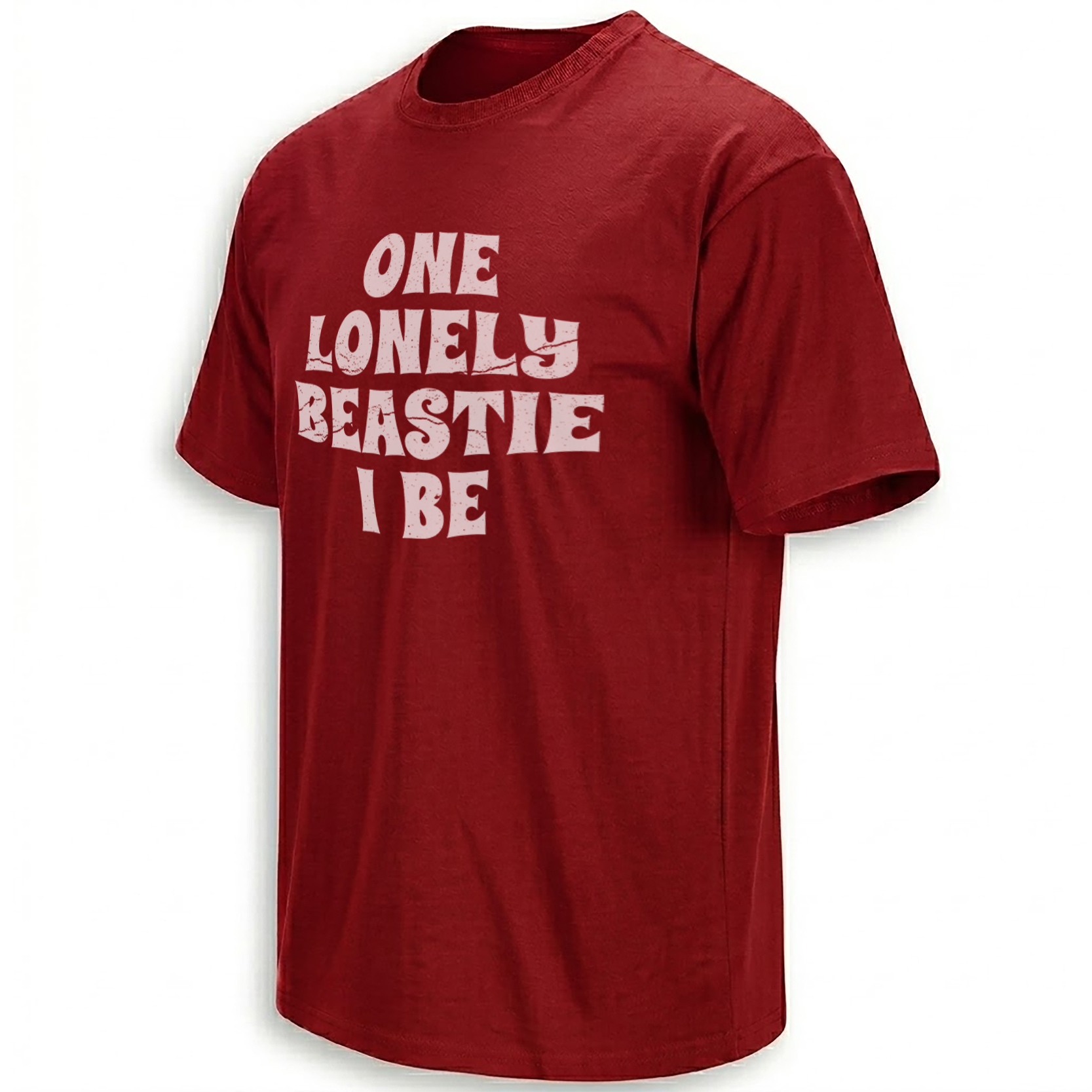
The design phrase comes from one of the song’s most memorable stretches, when the narrator is moving alone through the heat before running into MCA. On paper, “One Lonely Beastie I Be” looks almost childlike. Inside the record it works like character narration from a comic book.
That mix of mock toughness and deliberate silliness is central to early Beastie Boys language. The group could sound threatening for half a line and ridiculous by the end of it. “Paul Revere” exaggerates that contrast by placing hip-hop bravado inside cowboy imagery.

The Song Invents an Origin Story Instead of Explaining One
Hip-hop has always understood self-mythology. MC names, crews, neighborhoods and origin stories allow artists to enlarge ordinary biography into something more memorable. “Paul Revere” takes that instinct to cartoon scale.
The Beastie Boys are not musicians who meet through clubs, rehearsals and downtown New York. They become wandering outlaws. The historical Paul Revere barely matters; his name functions as a doorway into horses, pursuit and intentionally inaccurate Americana.
That is why the track still feels visually rich. Listeners can see dust, hats, sheriffs, firearms, open land and three figures gradually forming a crew. The story behaves like a music video even without an official narrative video attached to it.
Why the Graphic Works Like a Lost Roadside Illustration
The One Lonely Beastie I Be Shirt turns the lyric into an image rather than trying to summarize the whole song. That restraint helps. The phrase already contains loneliness, character and an odd grammar that unmistakably sounds like a remembered rap line.
Licensed to Ill at 40 Is More Complicated Than Pure Nostalgia
Licensed to Ill became the first rap album to reach No. 1 on the Billboard album chart, but the group’s relationship with its early persona changed dramatically over time. Some of the album’s humor aged badly; the Beastie Boys later openly reconsidered parts of the attitudes they performed in their twenties.
That makes the record’s 40th anniversary more interesting than a simple celebration. The album is both historically enormous and visibly tied to young artists who would later evolve. “Paul Revere” survives particularly well because its main engine is imagination rather than cruelty or shock value.
The track points forward, too. The willingness to manipulate tape, build stories from fragments and treat records as playgrounds would explode on Paul’s Boutique three years later. The backward 808 almost sounds like an early signal that the Beastie Boys were already becoming more curious than their party-boy reputation suggested.
Why Fans Still Remember Individual Lines
“Paul Revere” is written for retelling. Voices trade positions, phrases arrive like punch lines, and the story moves in clear scenes. Even people who have not heard the album front-to-back in years often remember isolated lines because each one feels like an illustration caption.
“One Lonely Beastie I Be” is especially suited to visual culture for that reason. Removed from the full verse, it still has personality. It can read as a Beastie Boys reference, a funny statement of solitude or simply an old-school hip-hop phrase with enough weirdness to make someone look twice.
Readers looking for other pieces connected to the trio can use Ellie Shirt’s Beastie Boys search archive without requiring an unconfirmed music collection URL.
Frequently Asked Questions
When was Beastie Boys’ “Paul Revere” released?
“Paul Revere” appears on Licensed to Ill, released November 15, 1986. The album reaches its 40th anniversary in November 2026.
Why does the beat on “Paul Revere” sound unusual?
Adam Yauch created its signature feel by recording a TR-808 drum pattern to tape and reversing it, giving the rhythm its strange backward movement.
Is “Paul Revere” the real story of how the Beastie Boys met?
No. The track is a fictional and deliberately exaggerated Western-style origin story featuring Ad-Rock, MCA and Mike D as outlaw characters.
What does “One Lonely Beastie I Be” refer to?
It comes from the section of “Paul Revere” where the narrator is traveling alone before encountering MCA, and it has become one of the track’s recognizable lyric fragments.
Why is “Paul Revere” still important to Beastie Boys history?
The song combines the trio’s early humor with technical experimentation, group storytelling and a backward 808 rhythm that hints at the adventurous production ideas they would pursue later.
The One Lonely Beastie I Be graphic preserves one memorable fragment of “Paul Revere,” while the Beastie Boys archive connects the lyric to other visual references around the trio.
One Lonely Beastie I Be Shirt turns the Beastie Boys’ “Paul Revere” lyric into a vintage hip-hop Western graphic, connecting Licensed to Ill’s coming 40th anniversary with its famously backward 808 beat.