J Dilla & MF DOOM Lived in the Same Strange Beat Universe
Twenty years after Donuts, the connection between J Dilla and MF DOOM feels even clearer: chopped samples, crooked rhythms, cartoon logic and an underground belief that perfection was often less interesting than personality.
In 2026, J Dilla’s Donuts is no longer simply an influential beat tape discussed by producers. It is twenty-year canon. Stones Throw has marked the anniversary with a new audiophile pressing, another reminder that the album Dilla completed during a brutal period of illness now occupies the kind of historical space once reserved for classic jazz and rock records.
MF DOOM sits naturally beside that legacy even though the two artists never completed the large collaborative project fans might wish existed. Their connection lives instead in fragments: DOOM rapping over Dilla’s beats, unfinished plans, posthumous releases and a shared approach to hip-hop that valued the weird corner over the obvious center.
That history makes a J Dilla–MF DOOM cartoon pairing much more interesting than a simple “two legends” collage. They actually crossed musical paths, and the overlap reveals something about the entire underground ecosystem that surrounded them.
Dilla bent time inside the beat. DOOM bent language across it. Neither sounded interested in standing perfectly straight.
Donuts at 20 Has Made Dilla’s Influence Easier to Hear
Donuts was released February 7, 2006, on James Yancey’s birthday. He died three days later. That timeline made the record emotionally inseparable from his final chapter, but focusing only on tragedy can hide how playful and technically radical the music remains.
Dilla’s sequencing makes fragments feel unstable. Soul vocals arrive and vanish. Drums sit slightly outside the places listeners expect them. Samples are chopped until their original emotional meaning mutates. Tracks appear to end before an ordinary producer would have finished introducing them.
Two decades later, that language has spread everywhere from underground rap to lo-fi production, neo-soul, experimental beat scenes and bedroom samplers. What once sounded “wrong” became vocabulary.
DOOM Did Not Merely Admire Dilla — He Rapped on the Beats
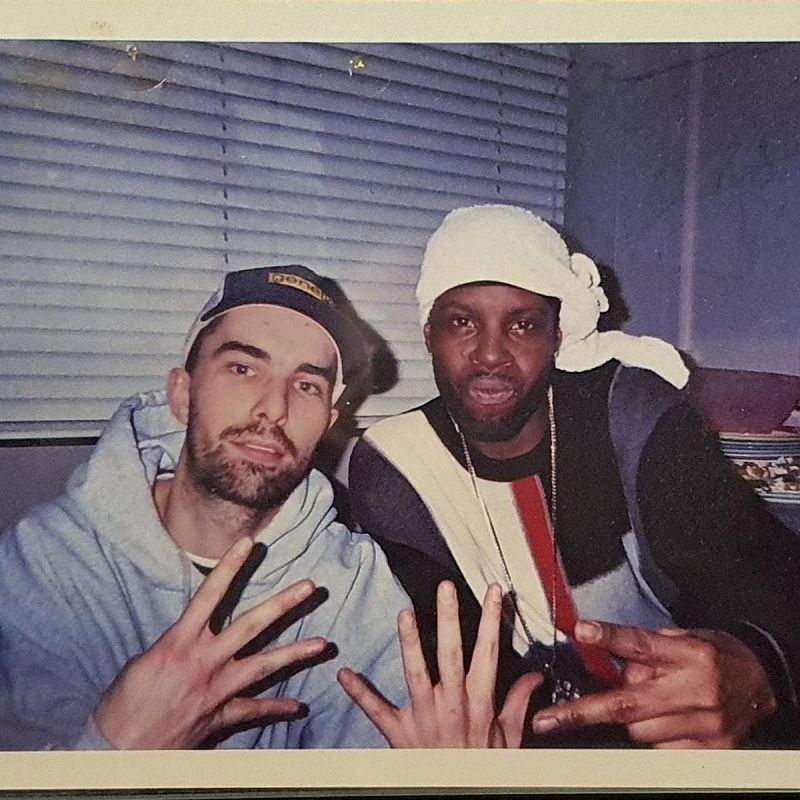
The historical connection is concrete. Stones Throw says that in late 2005 MF DOOM and Ghostface Killah were recording vocals over music from the instrumental project that became Donuts. A planned Dilla–DOOM project was ultimately postponed after Dilla’s death.
Several pieces survived. “Mash’s Revenge” reworked “Mash.” “Sniper Elite” used “Anti-American Graffiti.” “Lightworks” later appeared on DOOM’s 2009 album Born Like This. “Gazzillion Ear” also carried Dilla production into DOOM’s world.
The pairing makes sense the instant the records play. Dilla often removed the obvious count from a beat. DOOM routinely wrote rhymes that seemed to land beside the expected pocket rather than inside it. Together, instability became groove.
Their relationship was not a formal duo like Madvillain or Jaylib. It was an unfinished creative intersection — one that survives through recordings where DOOM’s dense internal rhymes move across Dilla’s fragmented, elastic production.
Why Both Artists Became Heroes to Crate-Digging Culture
Sampling culture depends on a specific kind of curiosity: hearing usefulness where other listeners hear leftovers. Dilla and DOOM both possessed that instinct, although they expressed it differently.
Dilla could transform a tiny piece of soul into rhythm architecture. DOOM, who also produced under the Metal Fingers identity, treated cartoon themes, old records, dialogue, jazz, soul and unexpected television fragments as material for a private universe.
Neither artist behaved as though polish was the ultimate goal. Hiss could stay. A strange cut could stay. A vocal could arrive early. A rhyme could spill beyond the clean end of a bar. Their work rewarded listeners who enjoyed finding seams rather than pretending those seams did not exist.
The Cartoon Pairing Is More Accurate Than It First Looks
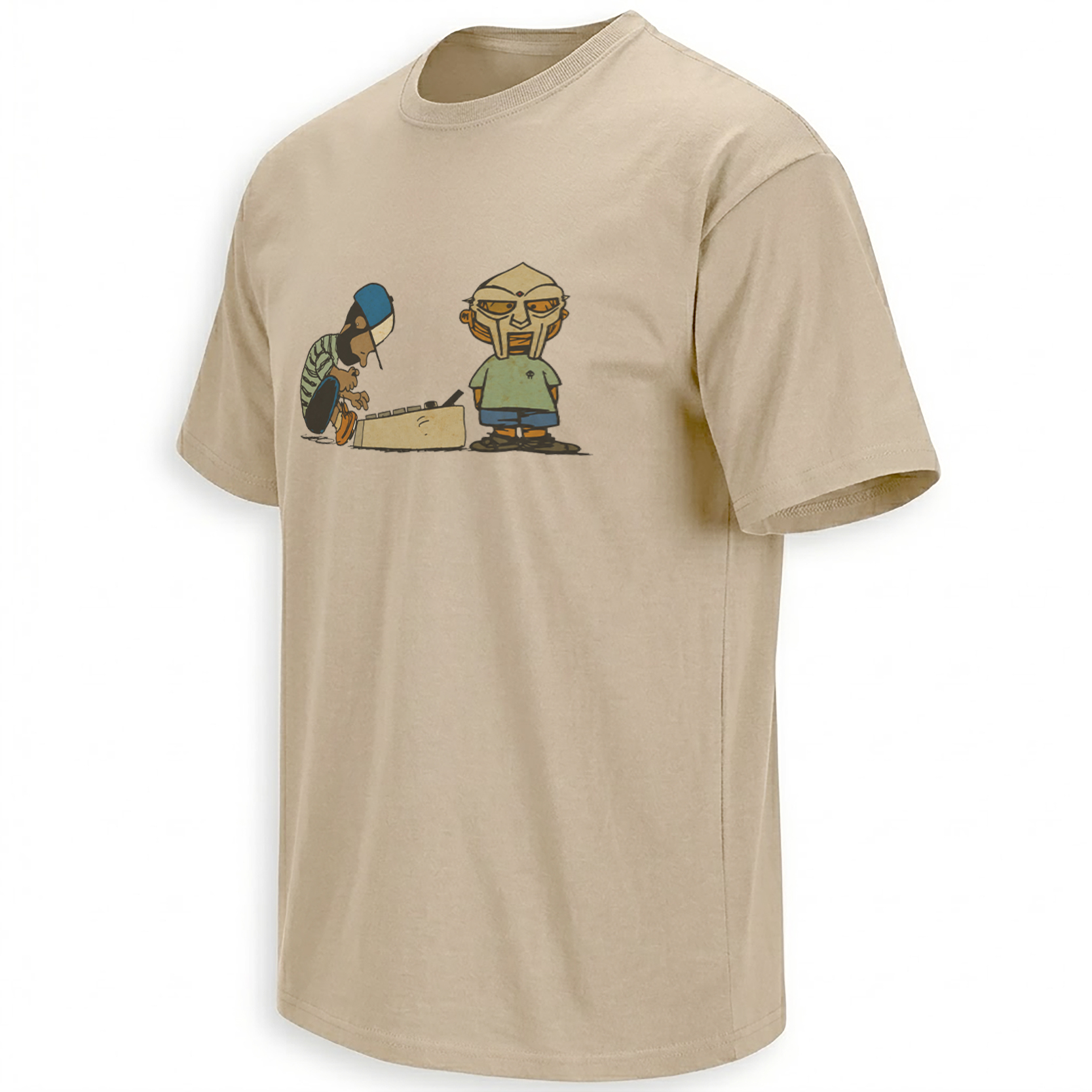
The J Dilla MF DOOM Shirt Vintage Cartoon uses illustrated character language instead of photographic realism. For these two artists, that choice is unusually appropriate.
DOOM deliberately built his public identity through comic-book villain mythology, masks and alter egos. Dilla’s visual legacy, meanwhile, became strongly attached to objects: MPC-style beat machines, records, the Donuts cover and the mythology of the producer quietly constructing a universe behind the rapper.
Why Vintage Texture Matters Here
Clean vector perfection would miss the point. Much of the mythology around both artists lives in dusty records, photocopied artwork, independent-label sleeves, old sampler screens, compressed audio and physical objects handled repeatedly by collectors.
A faded palette, distressed edges and cartoon print texture can therefore carry cultural information. They make the image feel discovered rather than freshly rendered — closer to something pulled from a crate, a box of old flyers or the back wall of a record shop.
That is also why muted browns, olive tones, rust and black suit the design better than glossy contemporary color. The palette belongs to paper, vinyl, cardboard sleeves and machines with years of fingerprints on them.
2026 Is an Especially Good Year to Revisit the Connection
The twentieth anniversary of Donuts has brought another cycle of Dilla listening, reissues and producer discussion. Stones Throw’s anniversary edition treats the record with audiophile seriousness while retaining the strange visual world that always surrounded it.
DOOM’s catalog remains similarly active through anniversary editions, archival releases and a fan culture that treats the mask almost like an underground hip-hop emblem. A recent July 2026 MF DOOM collector thread on Reddit showed exactly how physical that fandom has become: vinyl variants, cassettes, tribute records, alternate covers and limited editions functioning like pieces of a larger mythology.
That collector mentality is one reason designs combining Dilla and DOOM work. Fans of both artists tend not to experience the music only as isolated streaming files. Covers, samplers, labels, sleeves, cartoons and physical artifacts are part of how the culture remembers them.
Two Legacies That Keep Teaching People How to Listen Differently
J Dilla’s influence often appears in rhythm before listeners know his name. MF DOOM’s influence appears in language, visual identity and the idea that a rapper can construct an entire fictional framework instead of presenting himself transparently.
Their crossover matters because it places those innovations on the same recordings. The beats do not flatten for DOOM, and DOOM does not simplify himself for the beats. Both personalities remain visible.
Ellie Shirt’s J Dilla search archive and MF DOOM search archive provide direct person-level pathways without inventing an unconfirmed hip-hop collection URL.
Frequently Asked Questions
Did J Dilla and MF DOOM ever work together?
Yes. MF DOOM recorded vocals over several J Dilla productions, and Stones Throw has said that a larger Dilla–DOOM project was planned but remained unfinished after Dilla’s death.
Which MF DOOM songs use J Dilla beats?
Notable examples include “Sniper Elite,” “Mash’s Revenge” and “Lightworks,” while Dilla production also appears in the musical history around “Gazzillion Ear.”
Why is Donuts important in 2026?
J Dilla’s Donuts turned twenty in 2026, prompting anniversary reissues and renewed attention to the album’s influence on beat-making and sample culture.
Why do J Dilla and MF DOOM fit together visually?
DOOM’s comic-book mask and alter-ego mythology pair naturally with the sampler, record and crate-digging imagery associated with Dilla’s producer legacy.
Why does vintage cartoon styling fit this design?
Both artists are strongly associated with independent-label artwork, sampling culture, physical records and intentionally unconventional aesthetics, making worn cartoon-print language feel culturally appropriate.
The J Dilla MF DOOM graphic turns their unfinished but genuine musical intersection into a visual beat-culture artifact, while the J Dilla and MF DOOM archives connect the design with related pieces.
J Dilla MF DOOM Shirt brings two underground hip-hop legends into one vintage cartoon beat-culture graphic, connecting Donuts, sampler history, DOOM’s masked mythology and their real musical crossover.