Muncy Libre: Max Muncy Sent One 461 Feet Into the Denver Night
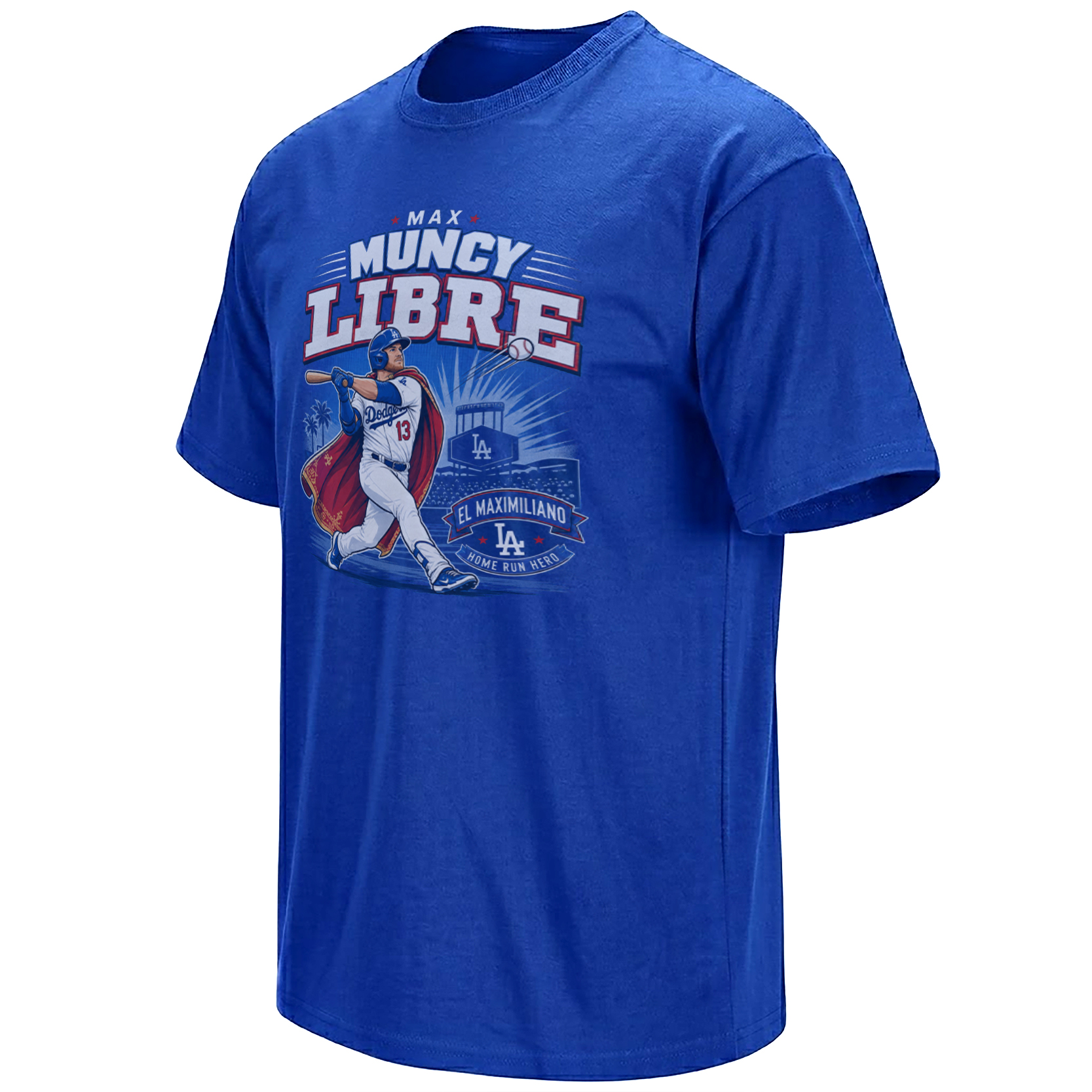
Max Muncy’s third-inning home run at Coors Field on August 17 did not need a wrestling mask to feel theatrical. The ball traveled a Statcast-projected 461 feet, became the longest Dodgers homer of the 2026 season and helped Los Angeles break out offensively in an 11–5 win over Colorado. “Muncy Libre” simply gives that power moment the visual language it deserves.
Sports wordplay works best when the joke and the athlete already share the same energy.
“Muncy Libre” bends Max Muncy’s surname toward lucha libre, the colorful Mexican wrestling tradition built around masks, characters and dramatic physical spectacle. It is not an official Muncy nickname. That is exactly why the design works as fan culture rather than team branding.
Then August 17 supplied the kind of baseball moment that makes an exaggerated wrestling treatment feel strangely appropriate.
Muncy stepped in with two runners aboard during the third inning in Denver, fought his way through a difficult at-bat and sent the next pitch an estimated 461 feet.
The mask is the parody. The 461-foot home run is the part nobody had to exaggerate.
461 feet made Muncy the night’s first heavyweight
Coors Field has a reputation for long home runs, but distance still has to be earned. Muncy’s blast became the longest Dodgers homer of the season at that point.
That distinction lasted through a night when Shohei Ohtani would later hit a 452-footer of his own. Even Ohtani’s longest blast of the game stopped nine feet short of Muncy’s mark.
The sequence created a strange internal power contest inside one Dodgers lineup: Muncy at 461, Ohtani at 452, and Colorado pitchers watching Los Angeles turn the thin Denver air into a home-run runway.
The at-bat mattered almost as much as the distance
The home run was not a first-pitch ambush.
Muncy fell behind, dealt with splitters below the strike zone and worked his way back into the confrontation. He spoiled a two-strike fastball, stayed alive and then punished the next pitch.
That sequence is why Dodgers manager Dave Roberts focused on the at-bat after the game. The value was not only that the ball traveled 461 feet. It was that Muncy refused to let the pitcher finish him when the count initially favored Colorado.
There is an accidental lucha-libre rhythm to that story: absorb the disadvantage, stay in the contest, then deliver the exaggerated finishing move.
The Dodgers needed a swing that felt oversized
Los Angeles entered Colorado after losing three of four games to Milwaukee at Dodger Stadium. The offense had not looked like the version expected from a lineup carrying this much talent.
Denver changed the tone quickly.
Muncy’s three-run homer became part of an early burst, while Ohtani eventually added two homers and four hits. Blake Snell gave the lineup enough stability from the mound to keep the game from turning into a typical Coors Field chaos contest.
The final score, 11–5, mattered because it felt like an offensive release.
Dodgers blue remains the anchor, but red and gold push the artwork into wrestling-poster territory. The visual trick works best when the mask, explosive lettering and “461 FT” energy feel theatrical without pretending Muncy actually has a lucha-libre persona.
Why “Muncy Libre” is better than simply printing 461
A distance statistic records the moment. A character phrase gives fans something to repeat.
“Muncy Libre” can survive after the exact box score fades because the concept attaches Max Muncy’s power-hitting identity to a playful alter ego. The 461-foot homer provides the origin story, but the visual joke does not need a scoreboard every time it appears.
That distinction matters for cultural-moment designs. If the artwork depends entirely on one number, it becomes historical quickly. If the number helps create a character, the moment can live longer.
Muncy’s power has always supported a little exaggeration
Muncy has never looked like the stereotypical sleek superstar, which has always been part of his visual appeal. His game is built around plate discipline, leverage and the ability to produce enormous damage from a compact frame.
That makes the wrestling treatment funnier than it would be for a generic power hitter. The design exaggerates a quality fans already associate with him rather than inventing one.
Readers looking specifically for Max Muncy graphics can continue through the Max Muncy product search.
The 461-footer now shares a night with Ohtani’s bullpen meme
The August 17 game produced two separate Dodgers cultural moments.
Muncy supplied the longest homer of the season. Ohtani later supplied the bizarre bullpen punch line when his 452-foot homer landed in Kyle Hurt’s glove.
That makes the game unusually useful as a snapshot of how modern baseball fandom works. One highlight becomes a power statistic. Another becomes a meme. Both emerge from the same scoreboard.
The Los Angeles Dodgers collection connects those overlapping moments, while the MLB collection places Muncy’s wrestling-style parody inside the wider culture of baseball nicknames, visual jokes and one-night legends.
Frequently Asked Questions
How far did Max Muncy’s August 17 home run travel?
Statcast projected the home run at 461 feet at Coors Field.
Was 461 feet the Dodgers’ longest homer of 2026?
Yes. At the time of the August 17 game, Muncy’s 461-foot blast was the longest Dodgers home run of the 2026 season.
What does “Muncy Libre” mean?
It is fan-created wordplay combining Max Muncy’s surname with lucha libre, using wrestling-style visual language to exaggerate his power-hitting persona.
How many runs did Muncy’s homer score?
It was a three-run home run in the third inning against Colorado.
Did Shohei Ohtani also homer in the same game?
Yes. Ohtani hit two home runs in the Dodgers’ 11–5 victory, including a 452-foot shot later caught by Kyle Hurt in the bullpen.
The Muncy Libre graphic turns one of Max Muncy’s biggest 2026 swings into lucha-style baseball mythology, while the Dodgers archive tracks the larger Los Angeles season around it.
Muncy Libre Shirt captures Max Muncy’s 461-foot three-run homer at Coors Field on August 17, the longest Dodgers blast of the 2026 season at the time, through a playful lucha-libre-inspired baseball identity.