
Chiefs Barbell: Kansas City’s Strength Standard Is Still Being Built
Kansas City opened the 2026 preseason with a 20–12 loss to the Rams, then went straight back into one of the toughest stretches of camp. On August 17, the Chiefs practiced in pads for two hours and 25 minutes — their ninth padded session — turning the Barbell idea into something much closer to a training-camp document than a generic gym crossover.
A dynasty reputation can distort the way people look at August. When a franchise has spent years associated with Patrick Mahomes, playoff runs and postseason expectations, training camp can feel like a formality before the “real” Chiefs appear.
The 2026 camp tells a different story. Kansas City has repeatedly put the roster through long padded sessions in St. Joseph, building up from shorter practices to full two-hour-and-25-minute workloads. The team reached that duration on August 5 and returned to the same load on August 17 after the preseason opener.
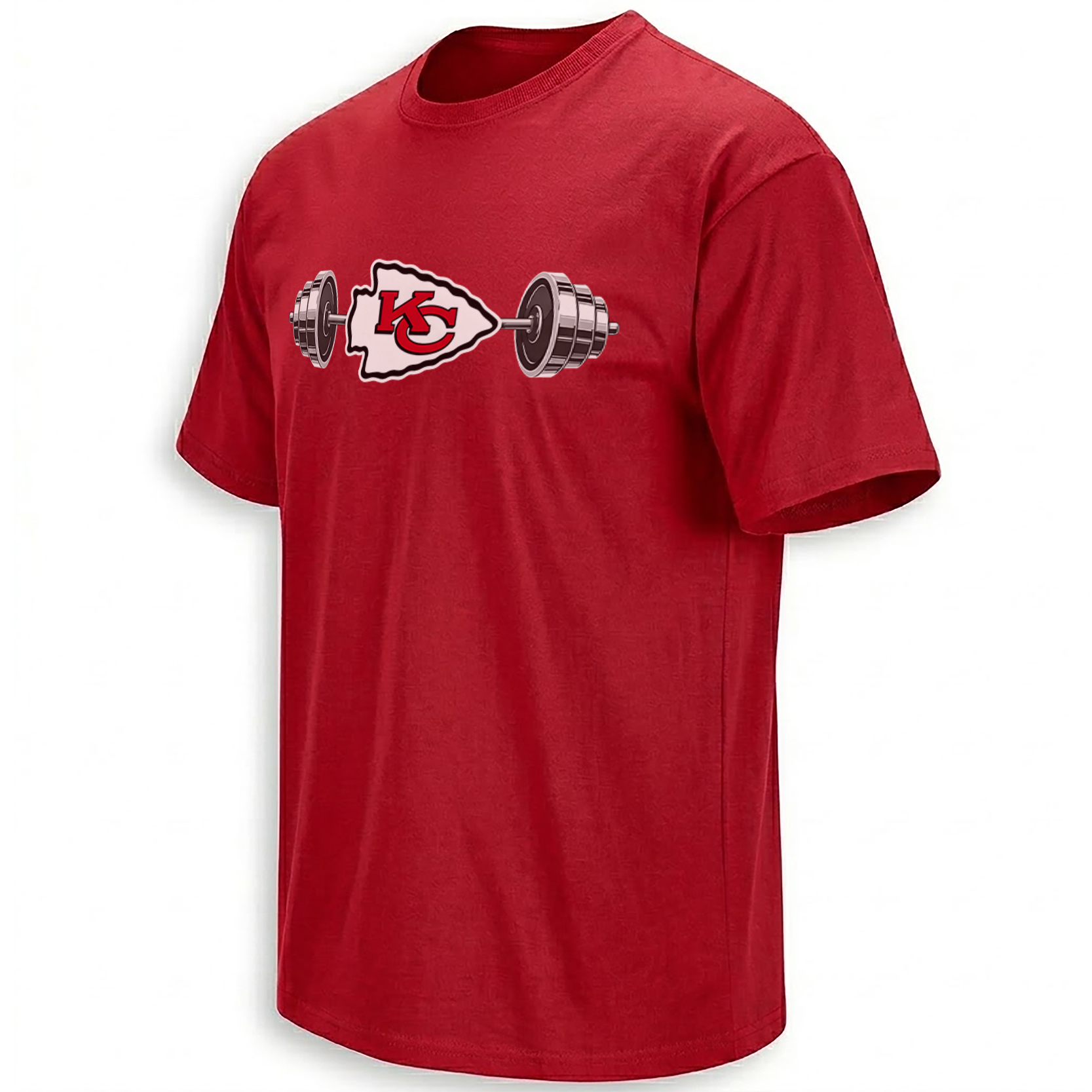
That pattern makes Chiefs Barbell culturally useful. The graphic strips away rings, highlights and scoreboard mythology and points toward a simpler foundation: repeated physical preparation under load.
Kansas City’s Barbell story is not about celebrating strength as an image. It is about repeating the work long enough that strength still functions when camp reaches its hardest stretch.
Two hours and 25 minutes changes the meaning of “training”
The number sounds ordinary until it is placed inside NFL camp. Full pads. Multiple 11-on-11 periods. Red-zone work. Pass protection. Run fits. Special teams. Recovery between reps. Then another snap.
On August 5, Kansas City completed its ramp-up to full-length padded practices with a two-hour-and-25-minute session, the third consecutive padded day. Andy Reid’s camp structure was deliberately building players toward longer periods of football stress instead of introducing the entire load at once.
By August 17, the Chiefs were back at the same duration after playing the Rams two days earlier. The team described that part of camp as one of the more difficult stretches because the roster had to move from game preparation back into demanding padded practice rather than simply coasting toward the end of St. Joseph.
The offensive line is where Barbell strength becomes visible
The easiest mistake with football-strength graphics is treating the weight room as the destination. In football, it is only the laboratory. The result has to show up somewhere else.
For offensive linemen, the translation is unusually clear. Strength becomes anchor against a bull rush, movement on a double team, control through the hips and enough balance to stay attached to a block while the play changes direction.
Kansas City’s August 5 practice offered a clean example when Trey Smith produced a major block on a screen that helped Ken Walker get into space and reach the end zone. The play brought several layers of offensive structure together: the quarterback delivered the ball, the runner read space, and a lineman turned strength and timing into the lane that made the play possible.

Red and gold change the mood of the NFL Barbell series
Kansas City should not look like Las Vegas with brighter colors. The Raiders version naturally belongs to steel, black rubber plates and industrial shadows. Chiefs Barbell needs a different emotional temperature.
Red provides speed and intensity. Gold carries the visual memory of championship-era Chiefs football without requiring the design to reference one specific Super Bowl. Cream and warm neutrals soften the page enough that the result feels like an old athletic-program poster rather than a retail category.
That distinction is important across the broader Barbell project. The bar itself remains recognizable from team to team, but the cultural language around the load changes.
Kansas City red supplies the impact, warm gold gives the composition an old training-program feel, and the centered barbell creates a visual bridge between modern Chiefs Kingdom and the timeless football idea of earning power through repeated work.
Patrick Mahomes makes the contrast more interesting
Mahomes is usually interpreted through creativity: off-platform throws, improvised movement, strange arm angles and the ability to turn collapsing structure into offense. That makes him almost the opposite of the visual rigidity of a barbell.
But that contrast actually helps explain the design. The spectacular improvisation fans remember sits on top of months of repeatable preparation. Even creative football still depends on the body being strong enough and conditioned enough to reproduce difficult movements late in a game.
Readers looking specifically for Mahomes-related pieces can continue through the Patrick Mahomes product search, while Chiefs Barbell remains a broader Kansas City strength identity.
The Chiefs’ official social feed shows the work still moving
Kansas City’s training-camp reporting has been paired with a continuous official social stream from St. Joseph. On August 17, the team posted from the final week of camp while the roster was back in pads, giving fans another immediate visual layer beyond the written practice report.
The 20–12 loss is useful context, not something to hide
The Chiefs lost the preseason opener to Los Angeles 20–12 at Arrowhead. That result belongs in the story because a culture article should not rewrite the current moment to make merchandise easier to sell.
Preseason, however, is designed to expose depth-chart questions and evaluate players who may not receive the same opportunities when the regular season begins. The score therefore describes what happened without defining what Kansas City’s season will become.
The more interesting Barbell connection came two days later: the roster returned to a two-hour-and-25-minute padded practice instead of treating the first game as the end of the physical build.
Strength culture is also a protection story
Kansas City’s offensive identity will always attract attention to quarterbacks and receivers, but none of those concepts function without protection. That is why the offensive line provides one of the best ways to give a Barbell graphic football meaning.
A guard moving a defender out of the lane, a tackle surviving on an island or a running back picking up a blitz all translate resistance training into a different kind of resistance. The opponent replaces the plates. The movement becomes less predictable. The standard remains control.
That is also why Chiefs Barbell can live naturally inside the Kansas City Chiefs collection without depending on one player or one postseason result. It records a foundational part of Chiefs football rather than a single headline.
Across the broader NFL collection, the design becomes part of a larger visual experiment: one barbell structure, different cities, different palettes and different definitions of football strength.
Frequently Asked Questions
Why does a barbell fit Kansas City Chiefs football culture?
The barbell represents repeated physical preparation, controlled strength and work under load, all of which connect directly with the Chiefs’ extended padded sessions during 2026 training camp.
Why is Chiefs Barbell especially relevant during August 2026?
Kansas City has repeatedly held full-length padded practices lasting two hours and 25 minutes, including its ninth padded session on August 17 after the preseason opener.
Is Chiefs Barbell a Patrick Mahomes design?
No. Mahomes helps illustrate the contrast between spectacular game-day creativity and repeatable physical preparation, but Chiefs Barbell represents the broader team’s strength culture.
Why is offensive-line blocking important to the Barbell concept?
Blocking demonstrates how strength training transfers into football through leverage, positioning, balance and the ability to control an opposing player under resistance.
Does the preseason loss to the Rams change the meaning of Chiefs Barbell?
No. The design is tied to preparation rather than a single result, and Kansas City returned to demanding padded work immediately after the preseason opener.
The Chiefs Barbell graphic turns that hidden workload into a red-and-gold visual artifact, while the Kansas City Chiefs archive tracks the wider players, moments and fan language surrounding the 2026 season.
Chiefs Barbell Shirt turns Kansas City football strength into a red-and-gold weightlifting graphic, connecting Chiefs Kingdom with long padded practices, offensive-line power and the demanding workload of 2026 training camp.