
The WNBA Told Fans to Cover Their Shirts. A Day Later, the League Said That Should Never Have Happened.
The transgender-athlete debate surrounding Sophie Cunningham entered a new phase in Atlanta when arena clothing itself became the story — and the WNBA ultimately said fans on both sides should have been allowed to display their messages.
By overtime of Sunday’s Indiana Fever–Atlanta Dream game, the argument surrounding transgender athletes in women’s sports had moved from television interviews, league memos and protests outside arenas directly onto the bodies of spectators sitting inside State Farm Arena.
At least three fans were approached by WNBA security and asked to conceal messages on their clothing. Two wore shirts expressing the position that girls’ and women’s sports should remain restricted to athletes assigned female at birth. Another wore a shirt supporting transgender people.
On Monday, the league drew a clear line around what happened. Fans should have been free to wear those messages. The security intervention was a mistake.
“This should not have happened.”
WNBA statement after the Atlanta incidentThe Most Important Detail: This Was Not Only About XX-XY Shirts
Early social-media coverage focused heavily on Georgia mother Kasey Thomason and her 17-year-old daughter Annie, who said security told them to cover their XX-XY Athletics shirts or leave during overtime.
Broader reporting from ESPN and the Associated Press added a critical piece of context: a fan displaying support for transgender people was also asked to conceal a shirt.
That changes the strongest way to understand the story. The league’s correction was not simply a decision that one political position had been wrongly censored. It was an acknowledgment that security should not have suppressed peaceful apparel messaging from either side of a contentious debate.
How Sophie Cunningham Turned a Policy Question Into an Arena-Culture Story
The clothing controversy did not begin in Atlanta. Indiana Fever guard Sophie Cunningham pushed the subject deep into the WNBA news cycle in July when she publicly argued against transgender girls and women competing in female sports categories, framing her view around protecting young girls and competitive opportunities.
Her remarks generated two sharply different responses. Supporters praised Cunningham for saying publicly what they viewed as a fairness argument about sex-based athletic divisions. Critics said the framing excluded transgender athletes and contributed to a hostile environment for transgender people.
Supporters of XX-XY messaging generally argue that biological sex should remain a determining factor in women’s competitive categories because those categories were created to preserve opportunities and fair competition for female athletes.
Transgender advocates argue that blanket exclusion can marginalize transgender girls and women and that eligibility rules should account for gender identity, medical transition, human dignity and sport-specific competitive evidence.
Those positions began appearing literally side by side around Fever road games. Supporters wore XX-XY apparel and held signs thanking Cunningham. Other fans wore “Trans Kids Belong” and trans-rights messaging. Minnesota Lynx coach Cheryl Reeve publicly wore a trans-support shirt before playing Indiana.
The WNBA Was Already Trying to Contain a Debate With No Current Player Case
There is an unusual disconnect at the center of the controversy: the WNBA has said there is no immediate transgender eligibility case currently affecting the league, and reporting notes that no transgender woman assigned male at birth has ever played in the WNBA.
The 2026 collective bargaining agreement states that only women are eligible to play in the league, but publicly available language does not further define eligibility by gender identity or sex assigned at birth.
That uncertainty allowed a hypothetical policy argument to become a very real cultural conflict. The league convened discussions through its anti-hate task force, emphasized respectful dialogue and denounced attempts to use the issue to demean or marginalize people.
The current WNBA controversy is primarily a debate about future policy, definitions, fan expression and the boundaries of inclusion and competitive categories. It should not be written as though the league is presently resolving the eligibility of an active transgender woman player, because reporting says no such case currently exists.
Then Clothing Became the Battlefield
In ordinary sports culture, shirts identify teams and players. During this WNBA summer, they began functioning more like portable signs.
An XX symbol could signal support for sex-based competition categories. A trans-rights shirt could answer it from the opposite perspective. The arena became a place where two groups watched the same women’s basketball game while attaching very different meanings to the category “women’s sports.”
That is what makes the Atlanta correction culturally significant. When WNBA security asked spectators to hide peaceful messages, apparel stopped merely reflecting the controversy and became the subject of it.
Four Designs, Four Different Ways the XX-XY Message Is Being Visualized
Ellie Shirt’s current women’s-sports designs do not all communicate the same way. Some reduce the debate to an equation; others frame it through varsity, fairness and female-athlete language.
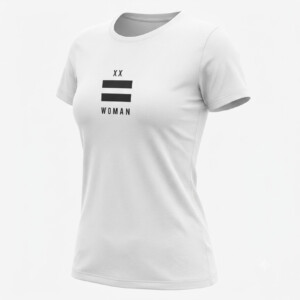
The most stripped-down graphic in the group. It uses the visual certainty of an equation, which is precisely why supporters see it as direct while critics see it as reductive.
View the equation design →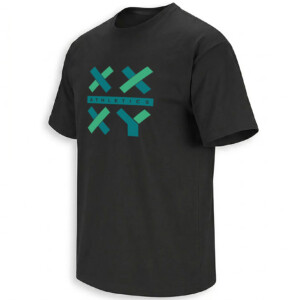
Closest visually to the apparel that has become associated with Cunningham supporters around WNBA arenas, using chromosome symbolism instead of a player portrait.
View the athletic symbol →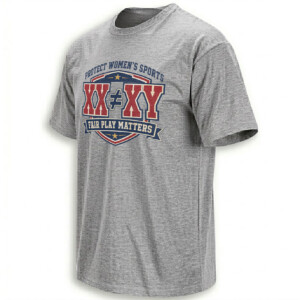
A varsity-style crest places the chromosome statement directly inside the language of competition and “Fair Play Matters.”
View the fair-play graphic →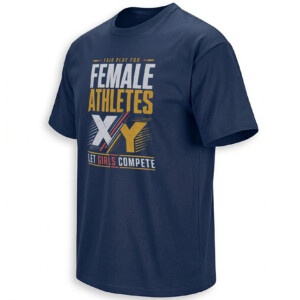
This version shifts emphasis away from an equation and toward athletes themselves, ending with the deliberately competitive phrase “Let Girls Compete.”
View the female-athlete piece →The Atlanta Incident Was Not the First Warning Sign
The Fever guard’s comments about transgender participation turn an existing national sports-policy debate into one of the WNBA season’s most visible cultural conflicts.
Two teenage Cunningham supporters wearing XX-XY Athletics apparel become involved in a confrontation with Seattle Storm minority owner Celeste Keaton. The league later suspends Keaton from five home games.
Fever road games attract supporters and counterprotesters. “XX-XY” apparel appears alongside shirts and signs supporting transgender athletes.
League officials discuss transgender eligibility and online hostility, saying there is no immediate eligibility matter affecting the WNBA while condemning bad-faith efforts to marginalize people.
WNBA security asks fans representing more than one viewpoint to cover apparel messages. The league responds the next day that the intervention should not have happened and tells security personnel they were wrong.
Why This Story Is Bigger Than the Message Printed on One Shirt
The culturally important question after Atlanta is no longer only whether a fan agrees with “XX-XY,” “Trans Kids Belong,” or neither.
It is whether a professional sports arena can host a polarized public conversation without security deciding that a peaceful message must disappear simply because another spectator finds it offensive.
The WNBA’s response suggests the league believes the answer should be yes. That is significant for a league with a long history of players and fans using shirts as political and social expression.
WNBA apparel has previously carried messages about racial justice, voting, LGBTQ+ rights, women’s equality and other causes. The 2026 transgender-athlete debate tests whether that culture of visible advocacy can remain open when the message comes from viewpoints that deeply disagree with one another.
Where Sophie Cunningham Fits — and Where She Doesn’t
Cunningham remains the catalyst for much of the current attention, but the Atlanta security story is no longer exclusively about her.
She did not order fans to wear the shirts. She did not make the security decision. And the league’s later correction covered apparel messages representing opposing perspectives.
Her importance is cultural: her comments gave the sex-category argument a recognizable WNBA face, after which supporters turned up in arenas wearing visual messages that referenced the same debate.
Readers following that specific thread can browse Ellie Shirt’s Sophie Cunningham collection , while the Indiana Fever collection preserves the wider player and team culture surrounding one of the league’s most scrutinized rosters.
The broader WNBA collection places these designs within women’s professional basketball rather than treating a single political dispute as the whole league.
Because Cunningham is central to the story, readers can also use Ellie Shirt’s Sophie Cunningham product search .
Frequently Asked Questions
What happened to fans wearing XX-XY shirts at the Fever–Dream game?
During the August 16, 2026 game in Atlanta, WNBA security asked fans wearing XX-XY-related messages to cover their shirts. At least one fan displaying a transgender-support message was also asked to conceal it.
What did the WNBA say afterward?
The WNBA acknowledged that fans had been asked by league security to cover their shirts and said, “This should not have happened.” The league later informed the security workers that the messages should have been allowed.
Was the Atlanta Dream responsible for telling fans to cover the shirts?
The Dream said its personnel were not involved in the security decisions and stated that the actions taken by WNBA security fell short of the team’s standard for a safe and inclusive environment.
Why is Sophie Cunningham connected to XX-XY shirts?
Cunningham publicly opposed transgender girls and women competing in girls’ and women’s sports, and supporters subsequently appeared at Fever road games wearing XX-XY Athletics apparel and other women’s-sports fairness messages.
Is there currently a transgender woman playing in the WNBA?
Reporting surrounding the league’s 2026 discussions says no transgender woman assigned male at birth has played in the WNBA and that there is no immediate transgender eligibility case currently affecting the league.
What does XX-XY messaging mean in the women’s-sports debate?
Supporters generally use it to argue that biological sex should remain relevant to eligibility for protected female athletic categories. Critics view chromosome-based slogans as overly reductive and exclusionary toward transgender people.
The XX Athletics XY design , XX = Woman piece , Fair Play Matters graphic and Fair Play for Female Athletes design now sit inside a WNBA moment where apparel, league policy and spectator expression became inseparable parts of the same news story.
The WNBA’s August 2026 Atlanta shirt controversy turned the XX-XY women’s-sports debate into a question of fan expression after league security asked spectators on opposing sides to cover their messages — a decision the WNBA later said should not have happened.