Bronx Bombers: How Yankees Home Run Culture Keeps Rebuilding Itself
The Bronx Bombers nickname has survived changing stadiums, generations and styles of baseball because it describes more than power—it describes the expectation that one New York swing can transform an entire night.
“Bronx Bombers” is one of the rare sports nicknames that still sounds active nearly a century after it entered baseball language. It does not feel like a museum label. Every time a Yankees hitter sends a ball toward the right-field seats, the phrase returns as though it had been invented for that exact swing.
That staying power comes from the way Yankee Stadium compresses history. Babe Ruth, Lou Gehrig, Mickey Mantle, Reggie Jackson, Aaron Judge and every new arrival occupy different eras, but the crowd recognizes the same fundamental drama: the pause after contact, the rising sound and the possibility that the baseball will disappear.
In 2026, that identity gained another youthful image when George Lombard Jr. homered for his first Major League hit during his Yankees debut. The swing did not place a rookie beside the franchise’s legends overnight. It demonstrated how quickly a new player can enter the Bronx’s existing language of power.
In the Bronx, a home run is never only one run. It is an invitation to compare the present swing with every swing the stadium still remembers.
Why the Nickname Became Bigger Than One Lineup
The expression emerged from the Yankees’ early power-hitting dominance, but it lasted because New York repeatedly rebuilt its roster around players capable of changing the scoreboard with one swing. The names changed while the expectation remained.
“Bombers” also fits the emotional speed of Yankees baseball. The word is immediate and visual. It converts exit velocity, launch angle and distance into a piece of city language that can be shouted from the bleachers without explanation.
Unlike a nickname tied to a single championship team, Bronx Bombers can belong to almost any Yankees era. It can describe a historic lineup, a two-homer night from a role player or a rookie’s first Major League hit reaching the seats.
A New Generation Enters the Old Language
Lombard’s August 4 debut offered a perfect example of how the tradition renews itself. The Yankees’ top prospect sent a breaking ball into the left-field seats for his first hit in the Majors, then received the kind of Yankee Stadium response usually reserved for a player fans already know.
His younger brother Jacob also homered in his professional debut on the same night. MLB reported that both home runs came in the brothers’ second plate appearances, both were pulled to left field and both left the bat at approximately 100 mph.


The Bleachers Help Complete the Meaning
A Yankees home run is partly defined by where it lands. The right-field porch, Monument Park, the outfield wall and the Bleacher Creatures all turn the ball’s flight into a city ritual.
The player creates the contact, but the crowd completes the image. Arms rise before the ball lands. Phones appear. The roll call shifts into a roar. That instant collective certainty is central to the Bronx Bombers identity.
Home Run Power as New York Visual Culture
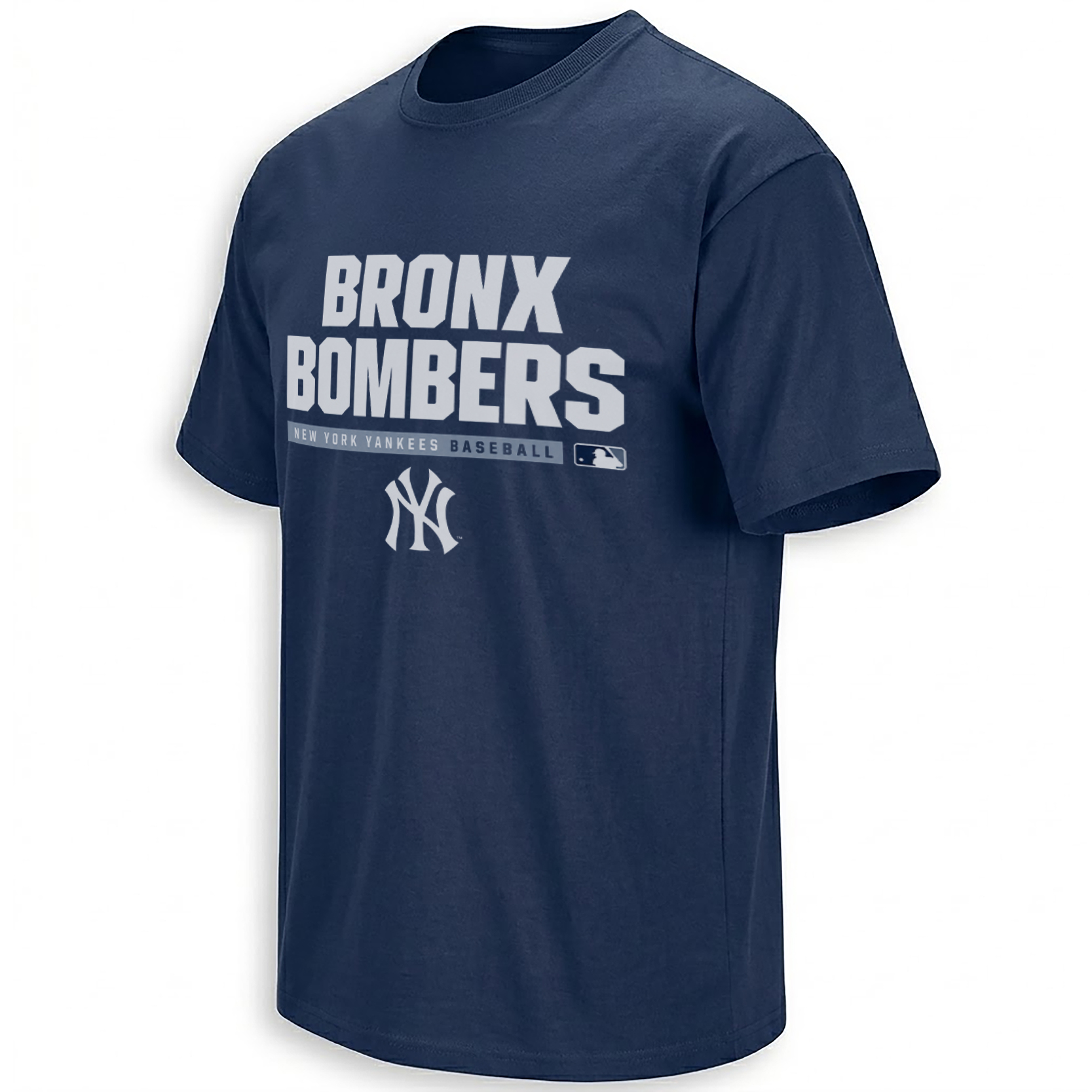
Yankees power imagery has always favored bold simplicity: pinstripes, navy, stadium architecture, towering lettering and the visual arc of the baseball. The Bronx Bombers design follows that tradition rather than attaching itself to a temporary statistic.
Its multi-player composition makes the artwork feel like a lineup poster or stadium program. That matters because the nickname is collective. Even when one player supplies the defining swing, the phrase belongs to the team and its inherited expectation.
Navy and cream provide an archival sports-program base, while red accents and oversized typography introduce the explosive quality associated with a home-run identity.
Why the Phrase Still Works in the Analytics Era
Modern baseball describes power with exact measurements: exit velocity, launch angle, barrel percentage and projected distance. Those figures explain how a home run happened, but they do not replace the emotional shorthand.
“Bronx Bombers” performs a different job. It tells fans what the power means inside Yankees history. A 414-foot home run can be analyzed through Statcast, but the nickname connects that flight to decades of New York expectation.
The wider New York Yankees collection operates as a visual archive of those swings, players and Bronx phrases. The broader MLB collection places the Yankees’ power identity inside baseball’s wider culture of home runs, ballparks and inherited team mythology.
Frequently Asked Questions
Why are the New York Yankees called the Bronx Bombers?
The nickname developed from the Yankees’ history of powerful home-run hitters and their home in the Bronx.
Does Bronx Bombers refer to one specific Yankees team?
No. The phrase has been used across generations and can describe the franchise’s broader home-run identity.
How does George Lombard Jr. connect to the current story?
Lombard homered for his first Major League hit during his Yankees debut, giving the 2026 team a new-generation power moment.
Why is Yankee Stadium important to the nickname?
The ballpark’s dimensions, outfield seats and crowd rituals help turn Yankees home runs into recognizable Bronx cultural moments.
What does the Bronx Bombers design represent?
It presents Yankees home-run power as a continuing heritage connecting historic sluggers, current hitters and future stars.
The Bronx Bombers graphic frames Yankees power as a living tradition, while the New York Yankees archive follows the swings and players adding new chapters.
Bronx Bombers Shirt captures the New York Yankees’ home-run heritage through vintage stadium typography, multi-era power imagery and the Bronx identity connecting historic sluggers with a new generation.