
Gavin Williams Keeps Trucking: Inside the Strikeout Run Powering Cleveland
A rain-shortened attempt at perfection became the latest chapter in Gavin Williams’ transformation from hard-throwing prospect into the engine of the Guardians rotation.
Progressive Field understood what it was watching before the rain arrived. Gavin Williams had retired every Arizona hitter through five innings on August 2, controlling the game with the physical authority that turned “Big Rig” from a broadcast nickname into a complete description of his 2026 season.
A sixth-inning single ended the perfect-game attempt. Heavy rain and a long delay ended Williams’ afternoon earlier than planned. Yet the line remained dominant: 5⅔ scoreless innings, one hit, one walk and 10 strikeouts in Cleveland’s 5–0 victory.
The performance extended a remarkable run. Williams had recorded at least 10 strikeouts while allowing no more than one walk in five consecutive starts, a combination of power and command reportedly matched over such a stretch by only Clayton Kershaw and Chris Sale.
“Big Rig” works because Williams does not look like a pitcher surviving traffic. He looks like the force causing everything else to move aside.
Why the Nickname Fits the Pitching Style
The phrase “Big Rig” has followed Williams because of his 6-foot-6 frame, heavy fastball and direct mound presence. Yet the trucking imagery is most effective when it describes the rhythm of an entire start.
Williams builds momentum. The fastball establishes the lane, the slider changes direction and the strikeout count accumulates with the steady repetition of highway markers. He is capable of overwhelming a hitter on three pitches, but his best outings are not chaotic displays of velocity. They feel controlled and industrial.
That distinction matters. Earlier in his career, Williams’ raw power could be interrupted by command problems and injuries. The 2026 version has increasingly paired the physical force with the ability to stay in the strike zone and pitch deep enough to protect Cleveland’s bullpen.
The Visual Evidence Behind the Breakout
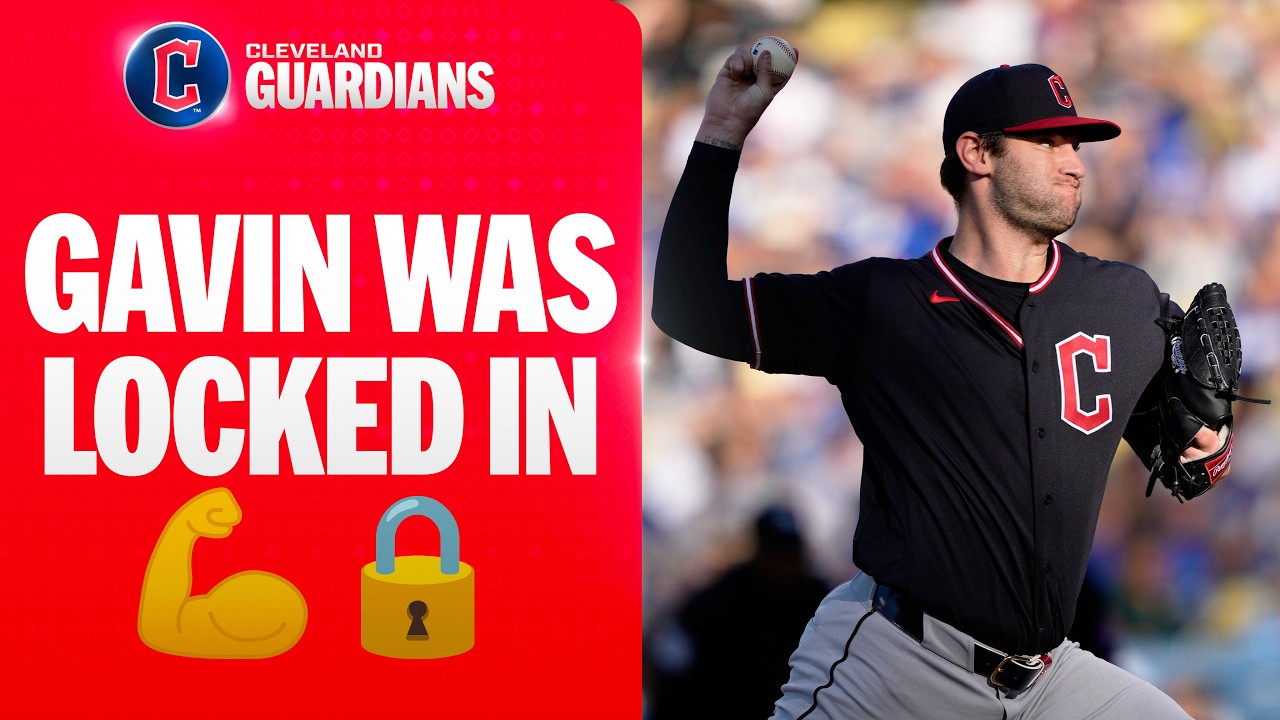
Williams’ season has produced several outings that make the nickname easy to understand. Against the Dodgers in April, he worked seven scoreless innings and struck out 10. By July, he was delivering repeated double-digit strikeout performances while lowering the number of free passes.

From Velocity Prospect to Rotation Engine
Williams entered professional baseball with obvious physical gifts. Cleveland drafted him in the first round in 2021, and his path toward the Majors was shaped by the expectation that a high-90s fastball could eventually lead a rotation.
The difficult part was never identifying the ceiling. It was converting that ceiling into a dependable season. Injuries limited portions of his early career, while inconsistent command sometimes forced him into long at-bats and early exits.
His recent run represents a different stage. Williams is no longer being discussed primarily as a pitcher who could someday dominate. He is dominating in repeatable ways: throwing strikes, generating swings and misses, limiting traffic and giving Cleveland a legitimate ace-level presence.
The truck imagery is not simply about size. It reflects repeatability—the same powerful delivery moving forward, inning after inning, without losing direction.
Why the Five-Start Run Matters
Ten-strikeout games naturally create dramatic headlines. Combining those strikeouts with one walk or fewer reveals something deeper. It shows that Williams was not relying on hitters to chase wild pitches or surviving constant full counts.
He was controlling the strike zone while maintaining elite swing-and-miss power. That combination separates an exciting thrower from a front-line starter. It also explains why Cleveland could trust him to carry a perfect game deep into the afternoon against Arizona.
The accomplishment gained historical texture because the reported comparison group included Kershaw and Sale, two pitchers whose peak seasons combined power, precision and sustained dominance. Williams had not completed their careers, but for five starts he had entered the same statistical territory.
A Pitching Identity Cleveland Understands
Cleveland’s baseball culture has long placed unusual value on starting pitching. From Corey Kluber and Carlos Carrasco to more recent rotation development, the organization’s strongest teams have often been built around the belief that disciplined pitching can keep a low-scoring game under control.
Williams fits that tradition while looking physically different from many of his predecessors. His approach is less subtle on the surface. The fastball is loud, the extension is imposing and the strikeouts arrive with visual force.
Yet underneath that power is the same Cleveland preference for process: repeat the delivery, limit walks, win counts and keep handing the bullpen manageable situations.
Why “Big Rig Trucking” Works as Fan Language
The strongest sports phrases can describe a player without needing a full explanation. “Big Rig Trucking” tells fans that Williams is large, forceful and moving forward. It also creates a framework that can be reused every fifth day.
A strikeout becomes another mile. A scoreless inning becomes another completed route. A deep start becomes evidence that the engine held up under load. The phrase transforms pitching statistics into a narrative fans can repeat throughout a season.
The wider Cleveland Guardians collection records that evolving player language, while the broader MLB collection follows the nicknames, breakout performances and visual identities that grow around baseball’s current stars.
Frequently Asked Questions
Why is Gavin Williams called “Big Rig”?
The nickname reflects his 6-foot-6 frame, powerful fastball, imposing delivery and ability to carry Cleveland deep into games.
What did Gavin Williams do against Arizona on August 2, 2026?
He carried a perfect game into the sixth inning and finished with 10 strikeouts, one hit and one walk over 5⅔ scoreless innings.
Why was Williams’ five-start strikeout streak significant?
He recorded at least 10 strikeouts and no more than one walk in five consecutive starts, combining elite power with unusually precise command.
What number does Gavin Williams wear for Cleveland?
Williams wears No. 32 for the Cleveland Guardians.
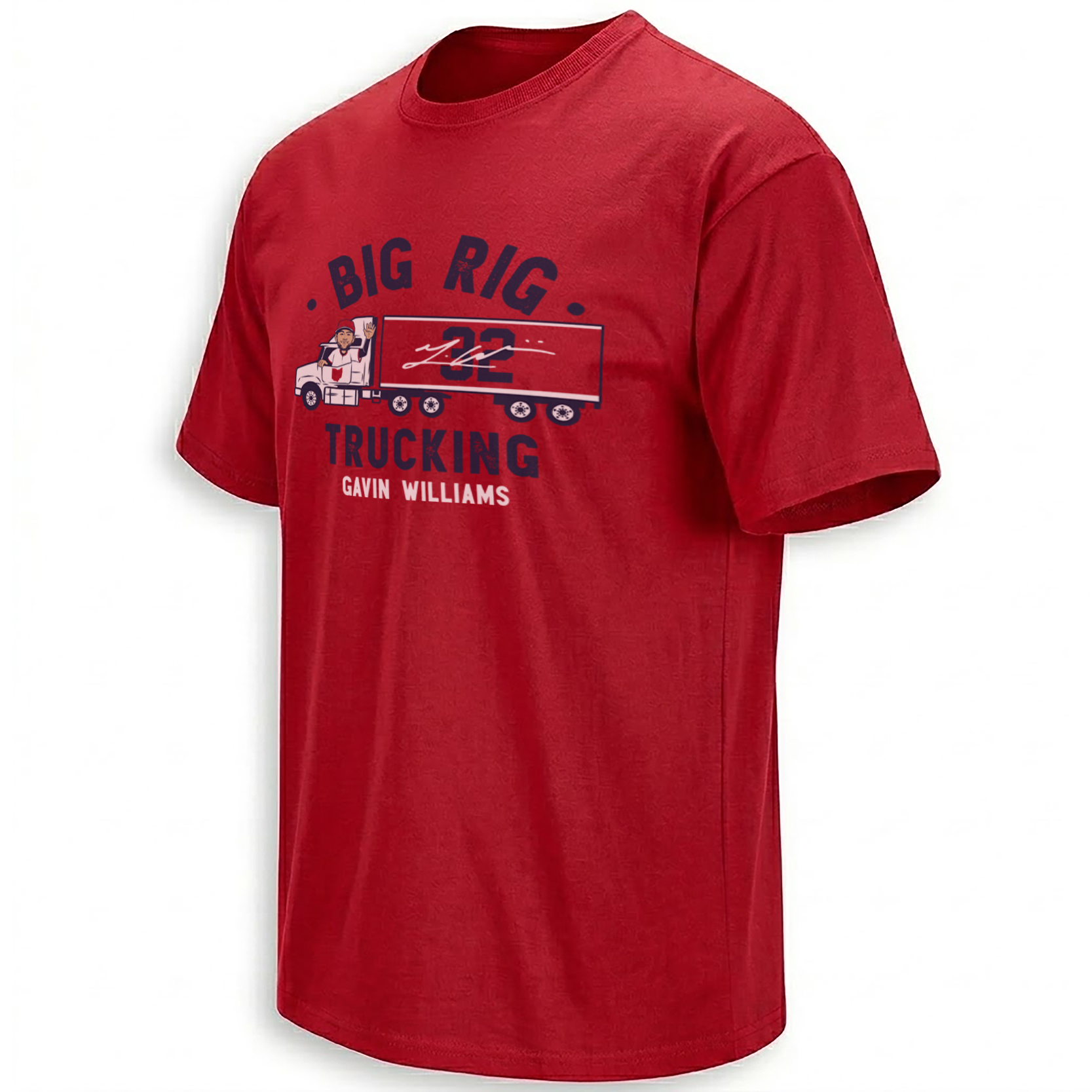
What does the Big Rig Trucking design represent?
The design turns Williams’ size, No. 32 and strikeout-heavy pitching style into a trucking-inspired visual identity tied to his 2026 breakout.
The Big Rig Trucking graphic preserves Williams’ No. 32 identity and strikeout run, while the Guardians visual archive follows the players driving Cleveland’s season.
Big Rig Trucking Shirt captures Gavin Williams’ Cleveland Guardians breakout through No. 32 imagery, industrial road styling and the five-start strikeout run that established him as a rotation engine.