
Las Cucarachas: How an Astros Insult Became Houston’s Rally Cry
Ken Rosenthal intended the comparison to describe a team that refuses to disappear. Astros fans heard the insult, kept the survival metaphor and gave it a Houston identity of its own.
The most durable sports nicknames are not always created by marketing departments. Sometimes they arrive as criticism, an opponent’s joke or a line delivered on a baseball show without any expectation that the targeted fan base will choose to keep it.
On July 27, 2026, baseball reporter Ken Rosenthal described the Houston Astros as “the cockroaches of baseball.” His language was intentionally abrasive. Cockroaches are unwanted, difficult to eliminate and famous for surviving conditions that appear capable of destroying almost anything else.
Rosenthal’s larger point was about persistence. Houston had endured injuries, uneven stretches and repeated predictions that its era of contention was finally ending. Yet the Astros had won five of six games and remained positioned inside the American League West race.
Houston fans did what sports communities often do when an outsider provides a useful insult: they removed the shame, preserved the strength and translated it into a banner. The “cockroaches of baseball” became Las Cucarachas.
“The Astros are the cockroaches of baseball. They’re resilient creatures. They’re disgusting creatures, but resilient.”
The comparison was not praise in a conventional sense. It mixed disgust with reluctant respect. Astros supporters reclaimed the resilience portion of the metaphor, while rival fans could continue reading the same nickname as an insult.
Why Houston Was Ready to Adopt the Name
The Astros have spent most of the last decade inside a cycle of dominance, controversy and attempted burial. Their 2017 sign-stealing scandal permanently changed how opposing fan bases viewed the franchise. Every postseason return since then has carried a second argument about whether Houston’s success should still be respected.
That history made the cockroach comparison unusually compatible with the Astros’ existing identity. Rival fans already viewed Houston as a team they wanted removed from the national baseball conversation. Astros supporters had already developed a defensive “Houston versus everyone” posture in response.
Rosenthal’s wording simply gave both sides a shared creature. Opponents could use the cockroach as an image of contamination and dislike. Houston could use it as an image of survival. Neither side needed to abandon its original feelings for the nickname to spread.
That dual meaning is the source of its power. A safe nickname might have disappeared after one social-media cycle. “Las Cucarachas” stayed interesting because it remained both offensive and complimentary, depending on who was saying it.
Why “Las Cucarachas” Works Better Than the English Version
Translating the nickname into Spanish changes its rhythm and cultural location. “The cockroaches of baseball” sounds like commentary delivered from a studio desk. “Las Cucarachas” sounds like a crew, a neighborhood nickname or a group that has already accepted its reputation.
The Spanish wording also fits Houston’s broader baseball environment. The Astros’ clubhouse, fan base and regional identity are deeply connected to Latin American baseball culture. Spanish is not decorative language placed onto an unrelated concept; it is part of how Houston baseball is heard and experienced.
In fan usage, “Las Cucarachas de Houston” gives the nickname a form that can be shouted, printed and repeated without restating Rosenthal’s full argument. It becomes less about the reporter who introduced the comparison and more about the community deciding what the comparison now means.
This process is common in sports culture. Once a crowd successfully adopts a phrase, the original speaker loses control of its emotional direction. The nickname belongs to whoever can repeat it with the greatest conviction.
The Winning Streak Changed the Joke
Reclaimed insults require results. Had Houston collapsed immediately after the comment, “Las Cucarachas” might have survived only as rival mockery. Instead, the Astros continued winning, including sweeps of the Angels and Rangers after the phrase entered the conversation.
Every additional victory made the resilience metaphor look less accidental. Fans thanked Rosenthal sarcastically, treating the comment as motivational fuel. The team had been compared to a pest that could not be removed, and then proceeded to become even harder to remove from the division race.
The 2026 roster gave that story substance. Houston had spent significant stretches without important players, while Carlos Correa’s ankle surgery initially appeared likely to end his season. By early August, Correa was already running and performing on-field work well ahead of the original recovery schedule.
The Astros did not need every injured player to return for the nickname to make sense. The point was that the organization continued producing enough pitching, offense and replacement depth to remain present when baseball observers expected it to disappear.
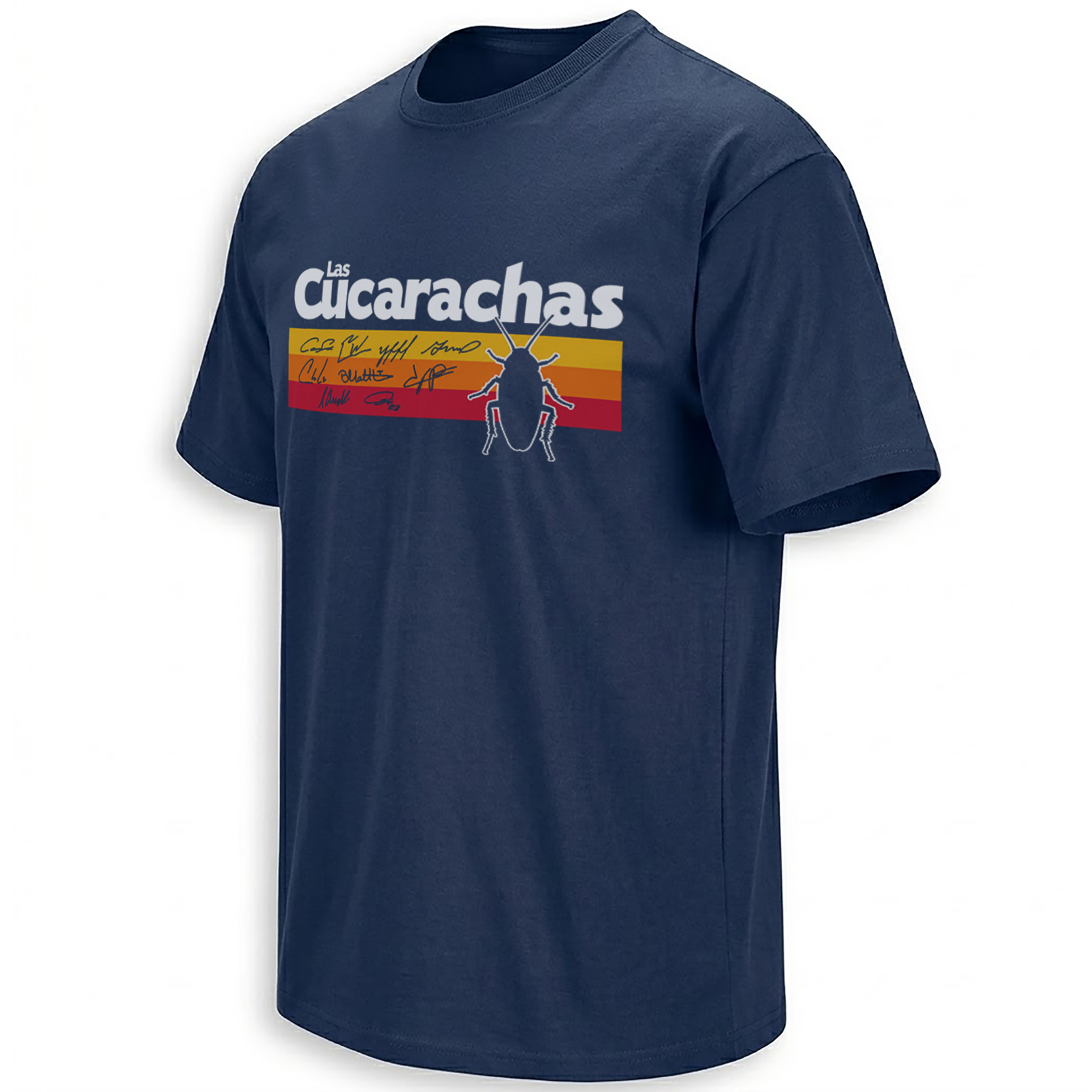
The artwork treats the cockroach as a sports mascot rather than a realistic pest. Orange-and-navy details connect the creature to Houston, while the distressed Spanish typography gives the piece the feel of a street poster, lucha graphic or unofficial clubhouse emblem.
Disgust and Respect Can Exist in the Same Nickname
Rosenthal’s complete comparison matters because it prevents the phrase from becoming falsely wholesome. He called cockroaches resilient, but he also called them disgusting. The tension was not accidental; it reflected the way much of baseball talks about Houston.
Opposing supporters may recognize the Astros’ sustained success while continuing to dislike the organization. They can admit that Houston survives without wanting the team to survive. The cockroach metaphor allows both emotions to exist inside one sentence.
Astros supporters reverse the emphasis. The disgust becomes evidence that outsiders remain emotionally invested, while the survival becomes the central fact. Being liked is optional. Still playing meaningful baseball is what matters.
That attitude turns “Las Cucarachas” into something larger than a temporary joke. It summarizes Houston’s post-scandal relationship with the rest of MLB: repeatedly condemned, repeatedly predicted to decline and repeatedly present when the standings become important.
A New Chapter in Houston’s Fan Vocabulary
Astros culture already contains phrases such as Crush City, Houston versus everyone and the familiar orange-star identity. “Las Cucarachas” enters that vocabulary from a rougher direction. It is not built around power or civic pride. It is built around refusing extinction.
The Las Cucarachas design preserves the moment when a national baseball insult became a local badge. Its value lies not in pretending the phrase was always positive, but in showing how quickly fans changed its ownership.
Within the Houston Astros collection, the graphic joins designs built around player moments, rivalries, Houston defiance and the franchise’s modern dynasty identity.
The broader MLB collection places the nickname alongside other examples of baseball language escaping broadcasts and becoming part of fan culture through memes, signs and wearable graphics.
The nickname originated from Ken Rosenthal’s July 27, 2026 appearance on Foul Territory. Subsequent Houston fan posts documented the rapid adoption of “Las Cucarachas” and connected it to the Astros’ winning run after the comment.
Frequently Asked Questions
Who called the Astros the cockroaches of baseball?
Baseball reporter Ken Rosenthal used the phrase during a July 27, 2026 discussion of Houston’s resilience and continued position in the American League West race.
What does Las Cucarachas mean?
“Las Cucarachas” means “the cockroaches” in Spanish. Astros fans adopted it as a defiant nickname for a team that repeatedly survives injuries, criticism and predictions of decline.
Was Rosenthal praising or insulting Houston?
His comparison contained both elements. He described cockroaches as disgusting but resilient, expressing dislike through the image while acknowledging Houston’s ability to survive.
Why did Astros fans embrace the nickname?
The survival metaphor matched Houston’s existing us-against-everyone identity, and the team continued winning after the comment entered the conversation.
Is Las Cucarachas an official Astros team nickname?
It is better understood as a fan-created and internet-driven nickname than as an official franchise name or marketing campaign.
The Las Cucarachas piece records the week an insult became a Houston baseball identity, while the Astros archive follows the players, rivalries and defiant language keeping the franchise at the center of MLB conversation.
Las Cucarachas Shirt transforms Ken Rosenthal’s “cockroaches of baseball” comparison into a defiant Houston Astros symbol built around resilience, Spanish fan language and a team that refuses to disappear.