
Air Cedric
Takes Flight in Tampa Bay
Cedric Mullins brought more than a veteran résumé to the Rays in 2026. He brought a recognizable visual identity—one built through first-step reads, fearless routes and the brief moment when a center fielder appears to leave the ground.
“Air Cedric” is not tied to a single catch. It is the fan-created shorthand for the athletic style Cedric Mullins has displayed across his career: accelerating into the gap, finding the wall and turning an ordinary fly ball into a frozen image of No. 31 suspended above the warning track.
When Mullins signed with Tampa Bay before the 2026 season, the move carried the feeling of a reset. The Rays committed to a one-year contract with a mutual option for 2027, placing an experienced center fielder inside a roster known for finding value in versatility, speed and overlooked details.
Mullins had already been an All-Star and a 30-home-run, 30-stolen-base player earlier in his career. Yet his Tampa Bay chapter would not be defined only by whether he could recreate an old statistical peak. It would be defined by the useful things he could still do in the present.
A New Uniform, a Familiar Kind of Catch
On June 7 against the Miami Marlins, Owen Caissie drove a ball sharply toward deep center field. Mullins sprinted back, reached the warning track and elevated to make the catch for the second out of the inning.
The play did not decide the final score; Miami eventually won 4–1. But highlight culture does not always wait for a game-winning situation. A single defensive frame can still reveal what a player contributes and why supporters remain emotionally attached to his style.
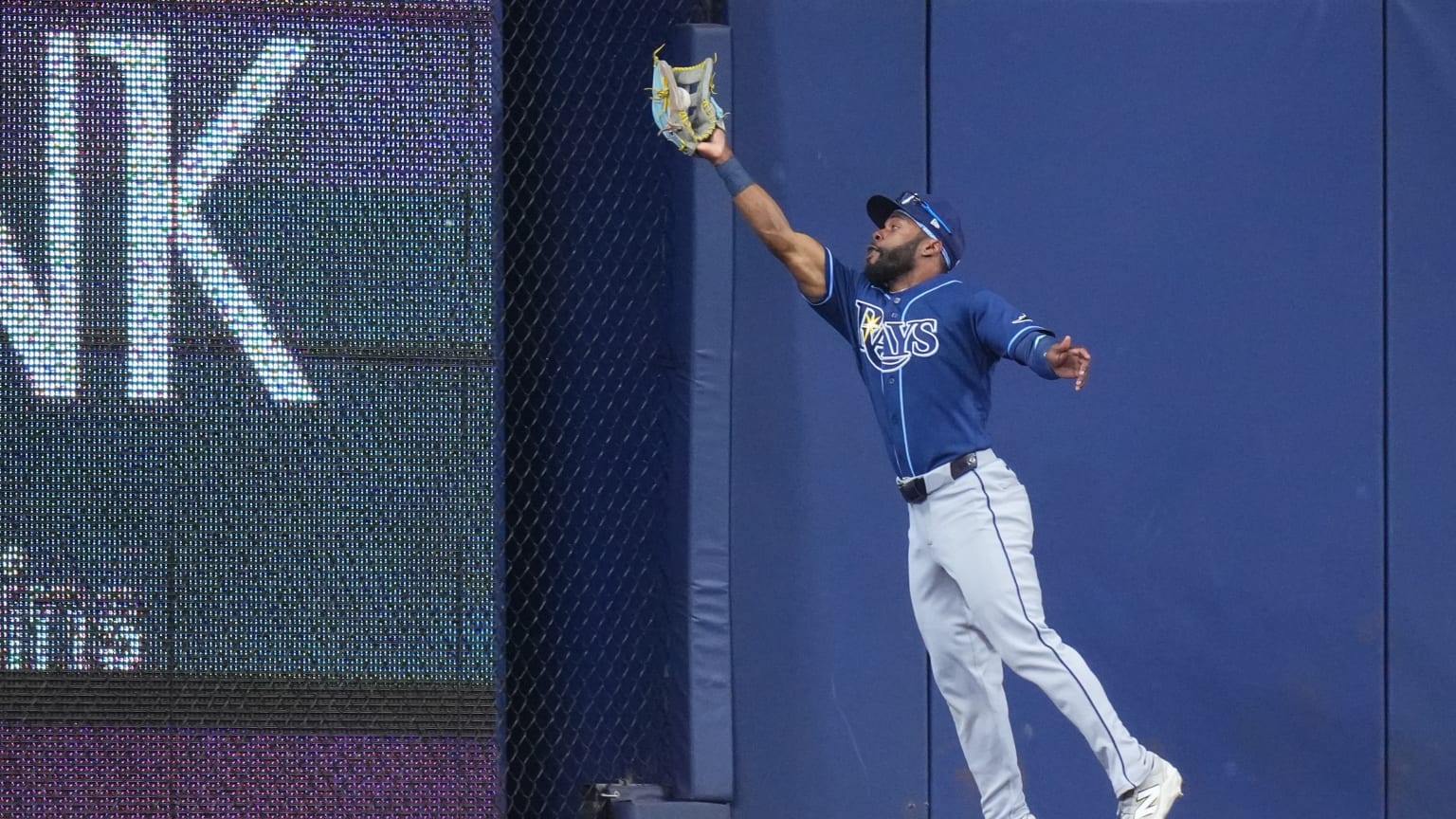
The image provided the essential “Air Cedric” geometry: powder-blue uniform, extended glove, feet separated from the turf and the dark outfield wall behind him. It was simultaneously a baseball play and a ready-made poster.
Why Center-Field Defense Becomes Visual Culture
Most defensive value accumulates quietly. Correct positioning prevents difficult chances from ever looking difficult. Efficient routes turn potential doubles into routine outs. Those skills matter to the game but rarely become social-media images.
Leaping and diving catches are different. They expose the physical margin between an out and a hit. The viewer can see the distance closing, the body extending and the glove arriving at nearly the same instant as the baseball.
This is why an airborne outfielder can acquire a nickname in a way that a technically flawless but visually ordinary play cannot. “Air Cedric” converts range and timing into a compact identity.
The nickname begins with the leap, but it survives because fans remember everything that had to happen before Mullins ever left the ground.
June 26 Shows the Complete Version of Mullins
Against Arizona on June 26, Mullins demonstrated why Tampa Bay’s interest extended beyond one defensive skill. He hit a Statcast-projected 433-foot home run during the Rays’ 6–1 victory, then made an exceptional diving catch in the eighth inning to take a hit away from Corbin Carroll.
That combination matters to the meaning of “Air Cedric.” The nickname is visually rooted in defense, but its cultural strength comes from Mullins being a complete baseball personality: power, speed, baserunning and the possibility of a highlight in center field.
The Veteran Reset
Tampa Bay offered Mullins a new setting after his years in Baltimore and the final months of 2025 with the Mets.
The Familiar Signature
His uniform changed, but the diving routes and airborne catches remained immediately recognizable to longtime baseball viewers.
How a Nickname Travels Between Teams
Many sports nicknames are inseparable from one city or one season. “Air Cedric” proved more portable because it describes motion rather than geography. It can survive a uniform change as long as Mullins continues producing the type of plays that created it.
For Baltimore supporters, the phrase recalls years of catches at Camden Yards. For Tampa Bay fans, it can become part of a new archive: No. 31 in Rays colors, moving across the Tropicana Field outfield or appearing above the wall during a road game.
That continuity is important in modern baseball, where player movement can separate an athlete from the fan base that first shaped his public identity. A strong nickname carries memory forward without preventing a new community from adding its own meaning.
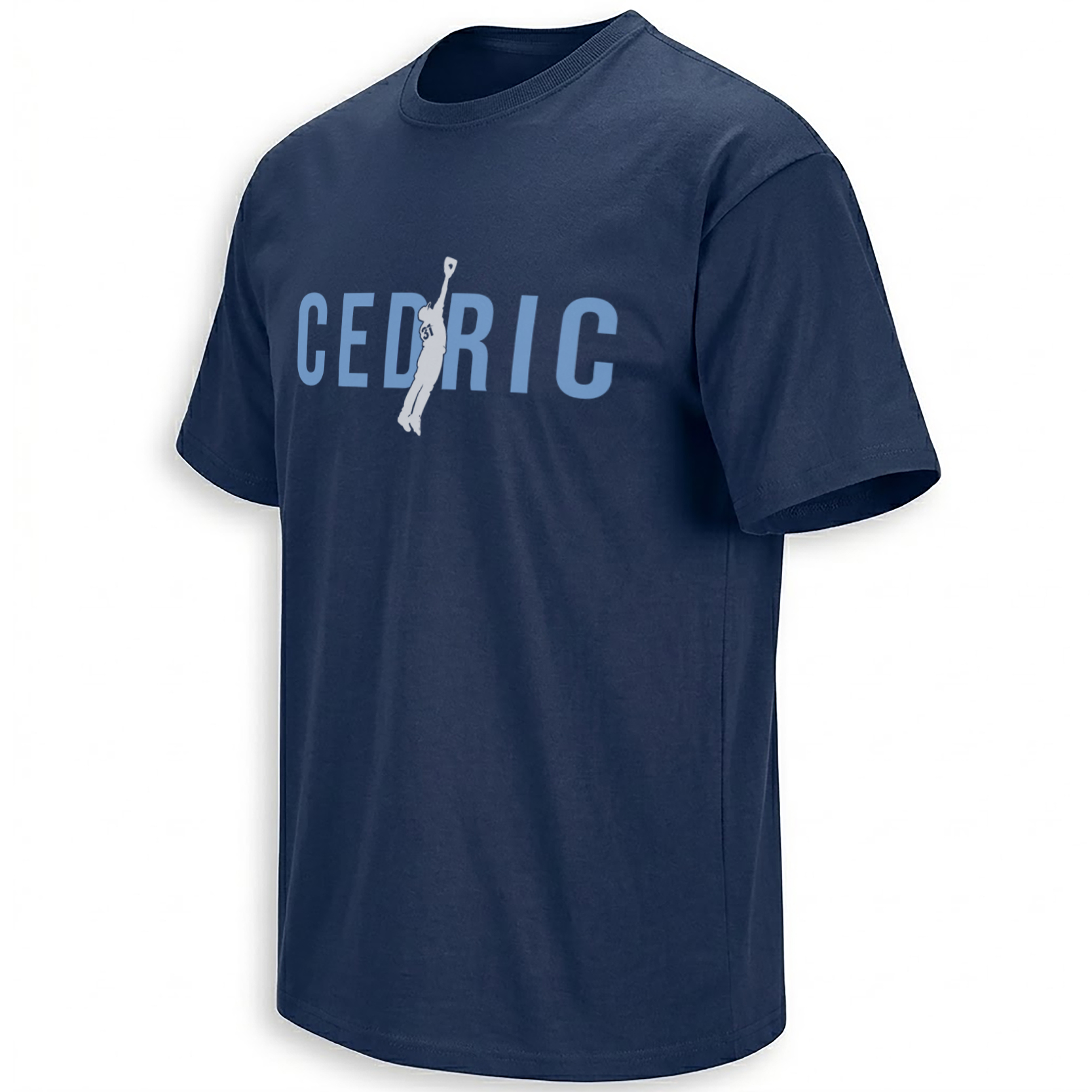
Air Cedric Shirt
The artwork freezes Mullins at the point of maximum extension, placing No. 31 inside the bright flight language of Tampa Bay baseball. It records not one isolated statistic, but the fielding identity he carried into 2026.
Reading the Design as a Baseball Poster
The composition borrows the upward movement associated with vintage basketball and athletic footwear advertising. Mullins is not shown waiting beneath the baseball; his body cuts diagonally through the design, creating the impression that the action continues beyond the frame.
Rays blue provides the atmosphere, while the yellow accents create the visual flash of a stadium light or flight marker. The “Air Cedric” title functions like a player logo, translating one fraction of a second into a repeatable identity.
The result belongs to the tradition of sports graphics that make a human movement feel emblematic. Fans are not simply remembering an out. They are remembering what it looked like when Mullins claimed space that initially appeared unreachable.
Why the 2026 Chapter Matters
Veteran seasons are often described as attempts to return to an earlier version of a player. Mullins’ Tampa Bay year offers a more interesting interpretation. It asks how recognizable skills can be repurposed inside a different club, ballpark and competitive moment.
The answer has appeared in several forms: the June 7 warning-track leap, the June 26 combination of a 433-foot homer and diving catch, and other running plays across the outfield. Each reinforced the idea that Mullins did not have to become his younger self to remain unmistakably Cedric Mullins.
“Air Cedric” therefore works as both nickname and timestamp. It preserves the flight fans already knew while placing that flight inside the powder-blue colors of a new Tampa Bay chapter.
Frequently Asked Questions
What does “Air Cedric” mean?
“Air Cedric” is a nickname inspired by Cedric Mullins’ leaping and diving catches in center field. It reflects his range, timing and airborne defensive highlights.
When did Cedric Mullins join the Tampa Bay Rays?
The Rays officially announced Mullins’ one-year contract on December 6, 2025. The agreement included a mutual option for the 2027 season.
What happened on Cedric Mullins’ June 7 leaping catch?
Mullins sprinted back to the warning track and leaped to catch a sharply hit fly ball from Owen Caissie during the second inning against Miami.
Did “Air Cedric” originate with the Rays?
No. The nickname was associated with Mullins before he joined Tampa Bay, particularly through the airborne defensive plays he made during his Baltimore career.
What did Mullins do against Arizona on June 26, 2026?
He hit a Statcast-projected 433-foot home run and later made a diving catch to take a hit away from Corbin Carroll during Tampa Bay’s 6–1 victory.