Jimothy Night How a Ballard raccoon wandered into Mariners baseball folklore
A five-second neighborhood video created Seattle’s most unlikely summer celebrity. Less than two weeks later, Jimothy had reached the Mariners clubhouse, T-Mobile Park and the visual language of baseball fandom.
Jimothy did not arrive with a marketing campaign, a polished origin story or any apparent interest in becoming famous. He simply emerged from beneath a parked car near Seattle’s Ballard neighborhood, crossed a patch of grass with his unmistakably compact gait and disappeared over a fence.
The encounter lasted only seconds. Kiana Hall reportedly spotted the unusually shaped raccoon near the Ballard Goodwill at about 8:30 p.m. on July 13, 2026. She originally thought the animal beneath the vehicle might be a cat, recorded the unexpected visitor and later uploaded the brief video to Instagram with the name “Jimothy.”
That invented name completed the character. According to People’s account of the original sighting, the five-second clip crossed five million views within hours. Additional footage from another Ballard resident suggested that the same raccoon had already been moving through the neighborhood before the internet noticed him.
Jimothy became a Seattle mascot because nobody designed him to be one. He was local, strange, resilient and completely uninterested in performing for the internet.
Why Jimothy Looked Different
Much of the first wave of attention centered on Jimothy’s small, rounded body, shortened neck and unusual movement. Online observers quickly described him as having “short spine syndrome,” but that conclusion should not be presented as a confirmed medical diagnosis.
Washington State University veterinary specialist Marcie Logsdon reviewed available footage and told People that Jimothy’s appearance could reflect a congenital spinal deformity resembling the rare condition. Without examining the animal directly, however, experts cannot establish exactly what caused his anatomy.
What the videos did show was an agile wild raccoon capable of running, climbing and navigating an urban neighborhood. Reaching his apparent age was itself evidence that he had learned how to adapt. That resilience changed the emotional character of the meme: people were not merely staring at an unusual animal; they were rooting for a small local survivor.
Jimothy remains a wild animal, not a public attraction. Wildlife specialists have advised residents to observe him from a respectful distance rather than approach, feed, capture or relocate him. The best ending to his viral story would be the freedom to continue living normally.
From Five Million Views to the Mariners Clubhouse
Jimothy’s rise moved with unusual speed even by internet standards. Fan art, jokes, edited images and increasingly elaborate character lore appeared almost immediately. The phrase “Hot Jimothy Summer” transformed a neighborhood sighting into a shared seasonal event.
The meme then crossed a significant cultural boundary: it left social media and entered a professional baseball clubhouse. On July 24, MLB.com reported that Julio Rodríguez handed out gray Jimothy batting-practice shirts to Mariners players before a game at Globe Life Field.
The shirts spelled Jimothy’s name in navy lettering and placed the now-recognizable raccoon at the center. Their purpose was partly emotional. Seattle’s clubhouse was navigating an offensive slump and the departure of an assistant hitting coach, and the local meme offered a brief source of levity.
That is how sports culture frequently absorbs an internet character. The subject does not need a traditional relationship to the team. It needs to express something the fan base recognizes in itself. Jimothy was from Seattle, had survived on his own terms and looked unlike any mascot that a committee would have approved.
Why Baseball Was the Perfect Next Stop
Baseball has always made room for eccentric local symbols. Between ceremonial first pitches, rally animals, stadium promotions, regional food traditions and unofficial good-luck charms, the sport gives communities countless ways to turn an accidental moment into collective folklore.
Jimothy fits that tradition without needing to become a conventional mascot. The Mariner Moose is a costumed performer built for a ballpark. Jimothy is almost the opposite: a real animal whose appeal depends on remaining uncontrolled, elusive and slightly mysterious.
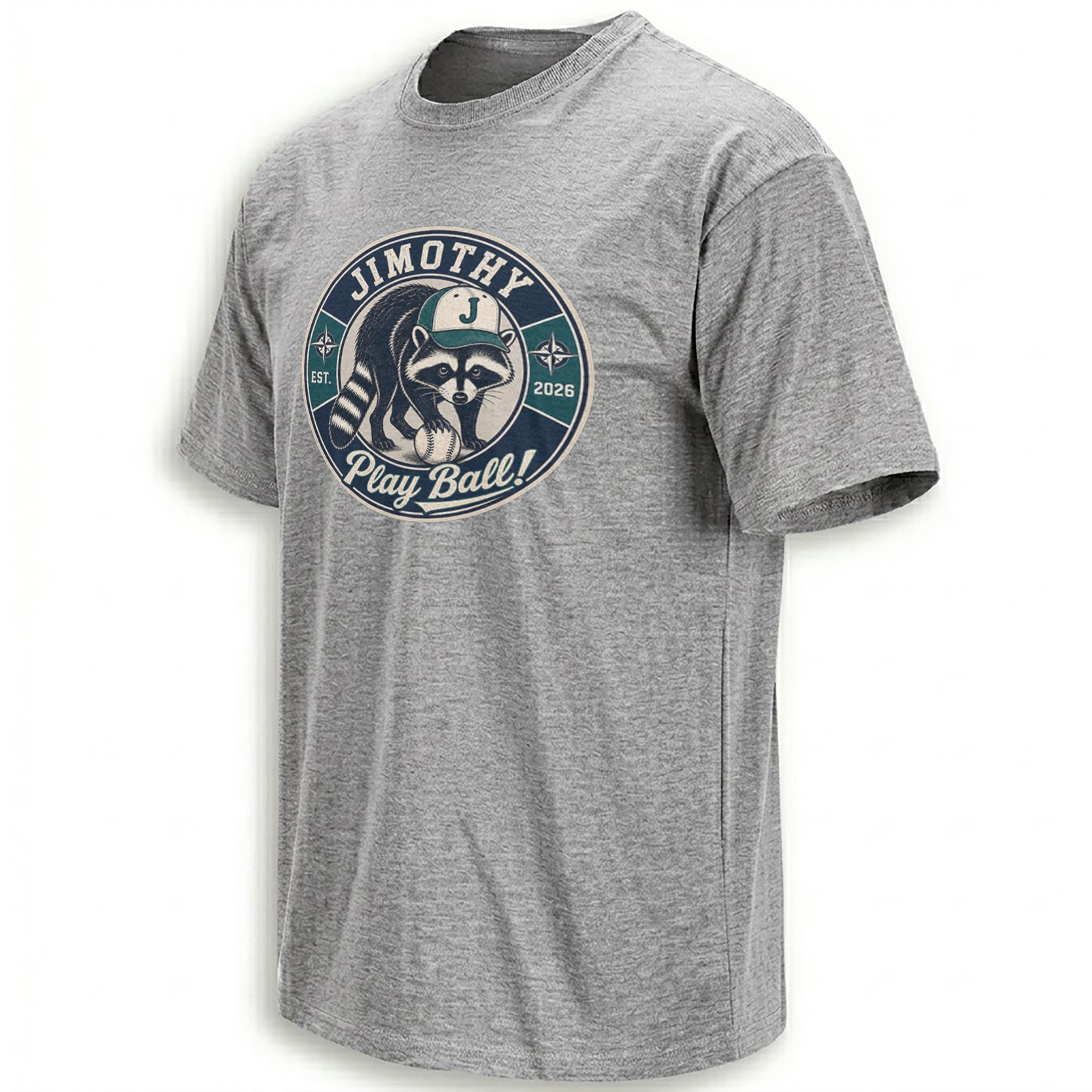
The “Play Ball” treatment works because it imagines what the meme might look like after crossing the foul line. Baseball language gives Jimothy a role without requiring a realistic position, batting average or uniform number. The joke is the invitation itself. If Seattle has claimed him, naturally somebody has to let him into the game.
That fantasy was strengthened when actual Mariners players appeared in Jimothy shirts. Once Julio Rodríguez and the clubhouse acknowledged the meme, every “Jimothy for designated hitter” joke gained a small connection to baseball reality.
Jimothy Night Made the Meme Civic
The Mariners did more than briefly reference the raccoon online. The club scheduled Jimothy Night at T-Mobile Park for Wednesday, August 5, 2026, during a game against the Detroit Tigers.
The special ticket offer included a Mariners-themed Jimothy shirt. The team also announced that $2 from every ticket purchased through the offer would support Ballard Food Bank, connecting Jimothy’s unexpected fame back to the neighborhood where the story began.
That charitable component changed the meaning of the promotion. Jimothy was no longer only an amusing image circulated for attention. His visibility was being used to direct resources toward a Seattle organization providing food and assistance to local residents.
The progression was unusually complete: Ballard supplied the sighting, social media supplied the audience, the Mariners supplied the stadium, and the ticket offer returned part of the value to Ballard.
Two Designs, Two Stages of the Same Story
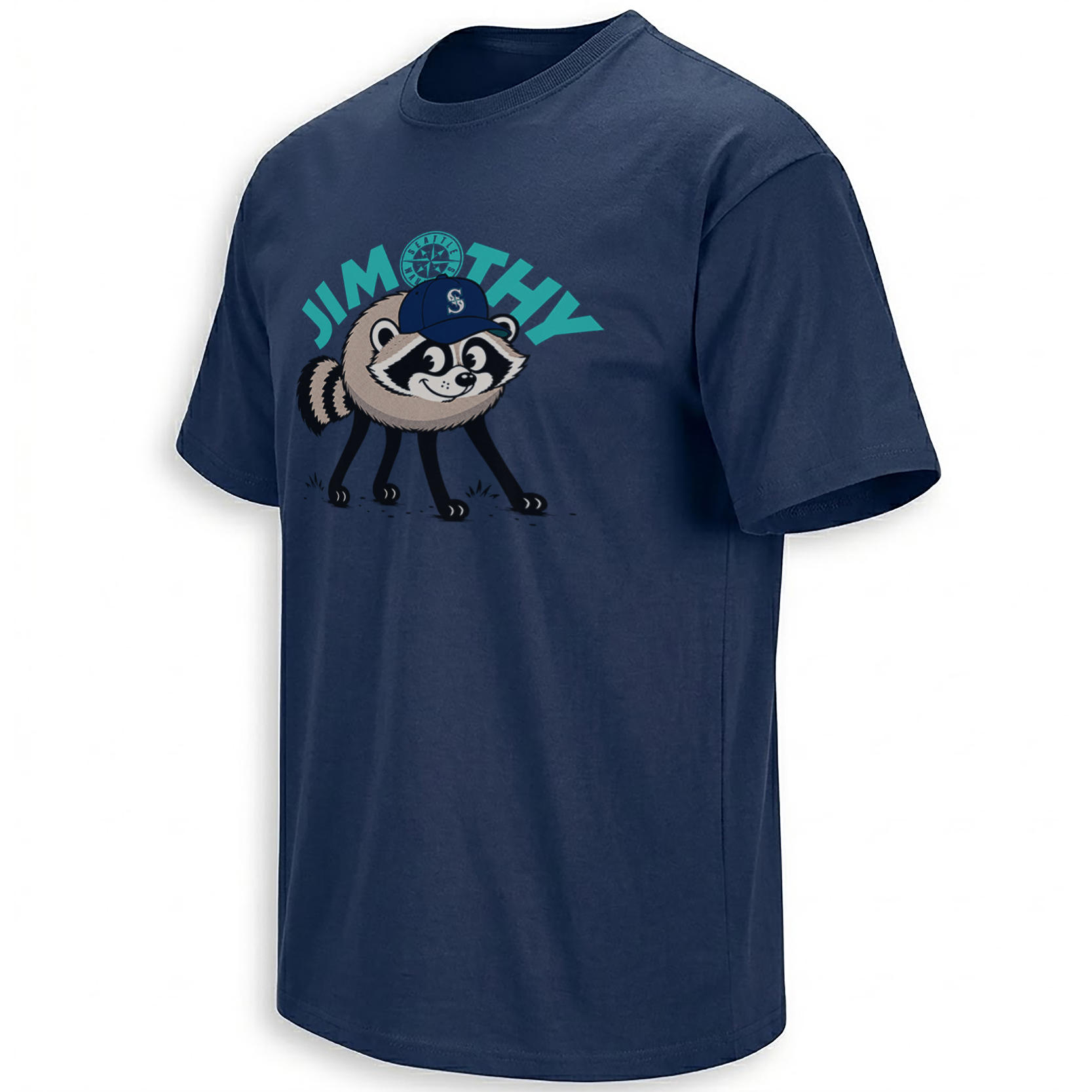
The first Ellie Shirt graphic treats Jimothy as the center of a Seattle baseball event. Its function is documentary: it preserves the exact summer when an unfamiliar silhouette became recognizable enough to occupy the same visual territory as a professional team.
The Jimothy Play Ball design moves one step further into participatory humor. Instead of merely announcing his arrival, it places Jimothy inside the ritual language that begins every baseball game. The phrase turns the raccoon from honored guest into imaginary participant.
Together, the designs trace the meme’s transformation. One remembers Jimothy Night; the other asks what happens after the gates open and Seattle’s strangest new folk hero reaches the field.
These Ellie Shirt graphics are cultural designs responding to the Jimothy baseball moment. The exclusive Mariners x Jimothy promotional shirt is separately associated with the official Jimothy Night ticket offer described by the Seattle Mariners.
Why the Internet Chose Jimothy
Viral animals often become famous because they appear to resist the polished sameness of online media. Jimothy’s body, movement and five-second entrance could not be optimized into conventional cuteness. That difference was precisely what made the video difficult to ignore.
His name also helped protect the story from becoming clinical. “Jimothy” sounds formal and ridiculous at once—a name for an animal who looks as though he has arrived late to an appointment nobody else knew existed.
More importantly, the dominant response was affectionate. Fans produced increasingly imaginative versions of Jimothy not to erase his unusual form but because of it. The meme’s underlying message became simple: a creature does not need to resemble the expected template to become beloved.
That theme explains why Jimothy works beyond the original clip. He became a symbol of being strange without apology, moving awkwardly but successfully through the city and attracting an entire community without asking for its approval.
A Seattle Story Preserved in Baseball Graphics
Most internet phenomena vanish without leaving a physical record. Jimothy’s story acquired batting-practice shirts, a stadium night, a charitable connection and a growing body of fan-created imagery before the original month had ended.
Apparel matters in that transformation because it gives an unstable digital moment a dateable physical form. Years later, a Jimothy baseball graphic can still identify the specific week when Ballard’s unusually shaped raccoon became Seattle’s unofficial summer mascot.
The two featured designs connect naturally with Ellie Shirt’s Jimothy collection, the Seattle Mariners collection and the broader MLB collection. The newest design archive records how quickly contemporary sports culture can absorb a local internet moment.
Frequently Asked Questions
Who is Jimothy the raccoon?
Jimothy is an unusually shaped wild raccoon filmed near Seattle’s Ballard neighborhood on July 13, 2026. Kiana Hall posted a five-second video of him online, where it rapidly attracted millions of views.
Why does Jimothy have such a short, round body?
A veterinary expert who reviewed the footage suggested that Jimothy may have a congenital spinal deformity resembling short spine syndrome. Because he has not been directly examined, that explanation remains an informed possibility rather than a confirmed diagnosis.
What is Seattle Mariners Jimothy Night?
Jimothy Night is a Mariners themed-ticket event scheduled for August 5, 2026, at T-Mobile Park during Seattle’s game against the Detroit Tigers. The official offer includes a themed shirt, with $2 from each eligible ticket supporting Ballard Food Bank.
Did Seattle Mariners players wear Jimothy shirts?
Yes. MLB.com reported that Julio Rodríguez distributed gray Jimothy shirts to Mariners players before batting practice on July 24, helping move the local meme directly into the team’s clubhouse culture.
What does the Jimothy Play Ball Shirt mean?
The design combines Seattle’s viral raccoon with baseball’s traditional opening call. It humorously imagines Jimothy not only being celebrated by Mariners fans but being invited into the game itself.
Should people try to find or feed Jimothy?
No. Jimothy is a wild raccoon. Wildlife experts recommend observing him only from a safe, respectful distance and allowing him to continue moving naturally through his habitat.
The Jimothy Seattle Mariners design and Jimothy Play Ball design preserve two chapters of the same improbable story: the moment an elusive Ballard raccoon became a clubhouse joke, a stadium event and a piece of Seattle baseball folklore.
Jimothy Seattle Mariners shirts celebrate the viral Ballard raccoon whose five-second video inspired millions of views, Mariners batting-practice gear and Jimothy Night at T-Mobile Park. Choose the event-inspired Jimothy design or the playful baseball-themed “Play Ball” version.