
Not a Jack of All Trades—a Hoe of All Hobbies
A deliberately unruly rewrite turns the pressure to master one thing into a comic identity for people interested in almost everything.
The serial hobbyist knows the cycle. One week begins with sourdough starter. The next includes embroidery floss, a secondhand camera, twelve tabs about pottery and a sincere belief that the spare room can become a print studio.
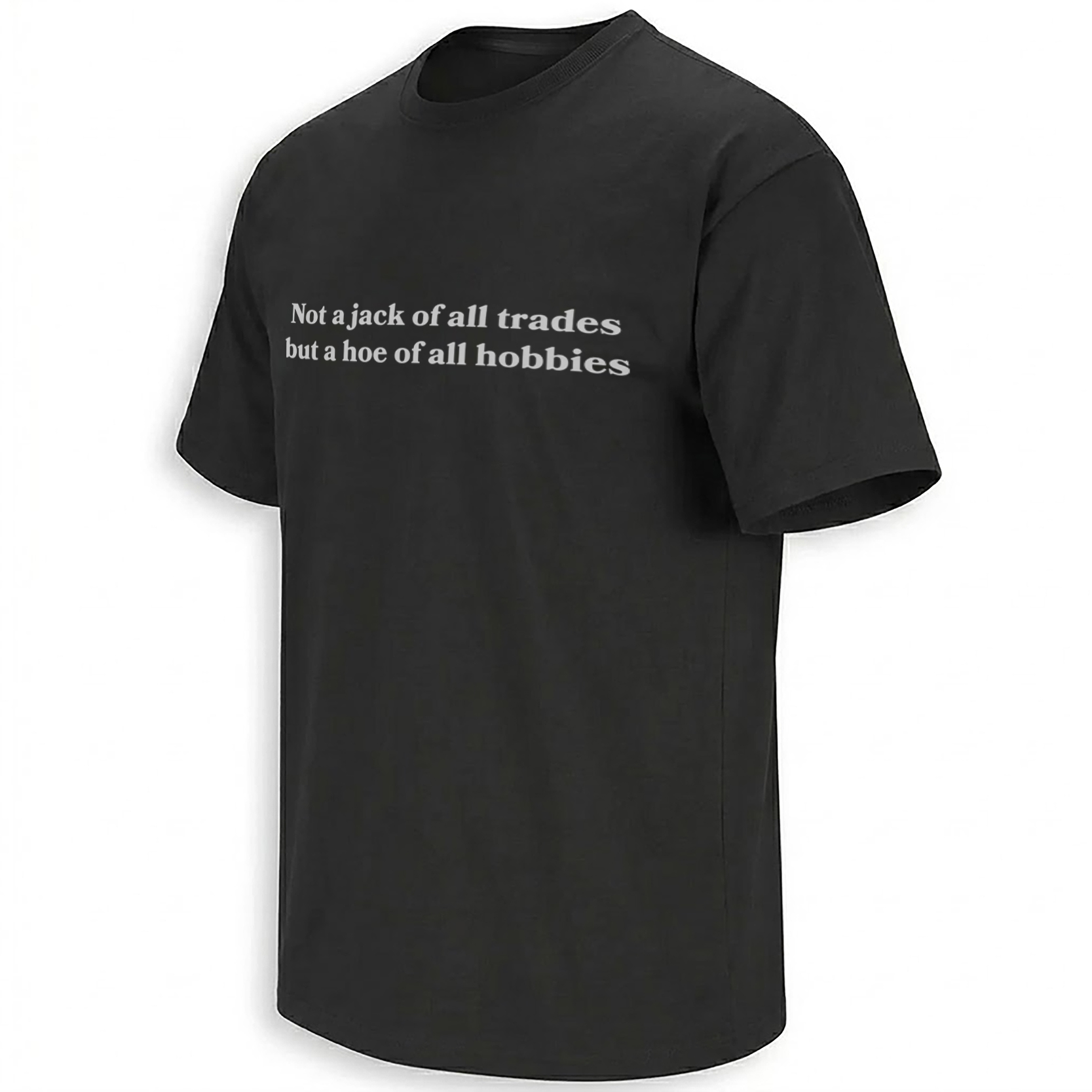
“Not a Jack of All Trades but a Hoe of All Hobbies” gives that pattern a name without trying to make it respectable. The joke is intentionally cheeky, slightly chaotic and proud of curiosity that refuses to stay in one lane.
Versions of “hoe of all hobbies” now circulate across creative reels and posts about gardening, painting, sewing, baking, reading and whatever new interest appeared before the previous supplies were put away. No single reliable origin is established, which makes the phrase feel less like a quotation owned by one creator and more like community shorthand.
The hobby does not have to become a career, a side hustle or a permanent identity before it is allowed to be worthwhile.
Why the Old Phrase Needed a Messier Rewrite
Merriam-Webster defines a “jack-of-all-trades” as a handy, versatile person who can do passable work at various tasks. Add “master of none,” however, and versatility begins to sound like failure: many abilities, no recognized expertise.
The hobbies version refuses the exam entirely. A person can paint badly, make one beautiful loaf, abandon crochet for six months and still have received something valuable from each attempt. The joke removes the obligation to produce a portfolio proving that all those materials were justified.
That attitude fits a wider online reaction against turning every interest into content or income. Creative feeds can make a private pastime feel incomplete until it becomes a brand. “Hoe of all hobbies” restores the pleasure of dabbling—the right to enter a craft because the colors looked good and leave when another curiosity calls.
The Phrase Works Because It Sounds Like a Confession
Internet identity language is strongest when it recognizes a behavior people already laugh about privately. The overfilled craft drawer, unused specialty pan and half-finished project are not presented as evidence of discipline. They are the physical archive of curiosity.
“Hoe” adds comic excess. The speaker is not calmly proficient across a sensible list of activities. They are promiscuously interested in hobbies, vulnerable to every tutorial, market stall and starter kit. The word turns hobby-hopping from an apology into a boast.
It also makes the phrase socially useful. Someone seeing it across a room can identify the type immediately: the friend who owns equipment for five crafts, can explain a surprising number of niche processes and is always ready to recruit another person into the newest fixation.
Being a Beginner Is Part of the Attraction
A new hobby offers something expertise cannot: rapid discovery. The first attempts contain obvious breakthroughs—learning how tension changes a stitch, why dough behaves differently after resting or how light alters a photograph. Progress is visible because nearly everything is new.
That beginner energy can be satisfying even when it does not develop into mastery. Creative exploration provides anticipation, problem-solving and periods of deep attention. An ADHD coach writing for Understood has also warned against monetizing every passion, noting that creative hobbies can lose their enjoyment when forced into work.
Hobbies Are Not Wasted Time
The joke lands because many people carry a quiet suspicion that leisure must defend itself. A pastime is asked to improve health, generate income, create community or demonstrate useful skill before time spent on it can feel legitimate.
Research does suggest genuine benefits. A 2025 systematic review indexed by PubMed found recurring associations between hobby participation and relaxation, pleasure, social connection, quality of life and lower levels of stress, anxiety or depression across the studies reviewed.
The review synthesized 12 articles from 11 studies. It did not argue that every hobby is treatment; it showed why meaningful leisure deserves to be understood as part of well-being rather than dismissed as decorative time.
A serial hobbyist may gain those benefits through variety rather than permanence. Sewing can provide concentration, gardening can create rhythm, a book club can create social connection and cooking can offer sensory pleasure. One person does not need to select a single approved route.
The Graphic as a Club Shirt for the Creatively Restless
The design’s humor depends on typography doing most of the work. The phrase arrives as a declaration, while the visual treatment gives it the informal energy of a craft-room sign or inside joke printed after friends finally named the behavior.
It functions as a small social signal rather than a list of specific crafts. That openness matters. A gardener, reader, baker, painter, home-DIY experimenter and collector of abandoned kits can all recognize themselves without the artwork deciding which hobbies count.
The piece therefore records a particular internet-era attitude toward creativity: unserious about status, serious about enjoyment and willing to treat changing interests as evidence of appetite rather than failure.
View the Hoe of All Hobbies design or browse the newest cultural jokes and graphic ideas inside Ellie Shirt Newest.
Frequently Asked Questions
What does “hoe of all hobbies” mean?
It is a playful description for someone who enthusiastically explores many hobbies, often moving between creative interests instead of specializing in only one.
Is “hoe of all hobbies” a variation of “jack of all trades”?
Yes. It rewrites the older expression as a cheekier internet phrase, shifting the emphasis from practical competence across many trades to enthusiastic curiosity across many hobbies.
Does hobby-hopping mean a person lacks commitment?
Not necessarily. People can gain pleasure, skills, focus and social connection from a hobby without pursuing permanent mastery. Changing interests can reflect curiosity rather than failure.
Where did the phrase “hoe of all hobbies” originate?
No single reliable origin is established. The phrase circulates across creative social posts and is best treated as community language rather than credited to an unverified individual source.
Can hobbies support well-being?
Research reviews have associated hobby participation with relaxation, pleasure, social connection, life satisfaction and lower levels of stress, anxiety or depression, although hobbies are not a substitute for professional care.
Not a Jack of All Trades but a Hoe of All Hobbies Shirt turns serial hobby-hopping into a cheeky badge for curious people who collect crafts, skills and beginner eras.