Caleb Durbin and the Run That Made Boston Believe Again
A go-ahead drive over the Green Monster supplied win No. 14. One day later Boston tied a franchise record at 15, and two pieces of fan wordplay suddenly read like the labels on an extraordinary summer run.
Caleb Durbin’s eighth-inning swing on July 20 did not merely break a 5–5 tie. The ball climbed over Fenway Park’s Green Monster, Boston beat Baltimore 6–5, and a team that had spent late June near the bottom of the American League East suddenly owned a 14-game winning streak.
The Red Sox stretched the run to 15 in the first game of the July 22 doubleheader, tying the franchise mark set by the 1946 club. The streak ended that night, one victory short of a new record, but its work was already done: Boston had moved from a season drifting toward irrelevance to a team forced back into the postseason and trade-deadline conversation.
Durbin became one of the cleanest human symbols of that reversal. He had struggled early, then hit .304 with a .551 slugging percentage across the 44-game stretch beginning May 28. His tenth homer supplied the signature late-inning image, while his own description of Boston—“a city like this where it matters so much”—explained why the moment expanded so quickly beyond one box score.
The streak ended at 15. The feeling it restored—the sense that every Fenway inning mattered again—did not.
Why Durbin fit the identity Boston found
Jarren Duran described the Red Sox identity as scrappy: advance runners, put the ball in play and pressure the defense. Durbin’s appeal lives inside that description. At 5-foot-6, he does not arrive with the physical silhouette usually used to advertise power, but his game keeps producing the small disruptions that change an inning.
The home run against Tyler Wells was dramatic precisely because it came from that profile. Two outs, bottom of the eighth, tied game, cutter over the plate: the compact third baseman produced the largest possible result. Fenway’s scale and sound converted it immediately from a personal highlight into part of the streak’s shared mythology.
Boston left Colorado on June 24 at 32–46, last in the AL East and looking closer to selling than contending.
The Red Sox reached 15 straight wins, matched an 80-year club record and forced the baseball calendar to take them seriously again.
Two jokes, two sides of the same player story
The Boston Runs on Durbin Shirt borrows one of New England’s most instantly recognizable commercial rhythms. Replacing “Dunkin” with “Durbin” is uncomplicated local wordplay, but the timing gives it force: during a 15-game surge, Boston really did appear to run on repeated contributions from its new third baseman.
The Durbinator Shirt uses a different cultural shortcut. Its action-oriented nickname turns a compact infielder into a relentless baseball machine, echoing a label that followed Durbin during his Milwaukee rise before being recolored by his first Boston season.
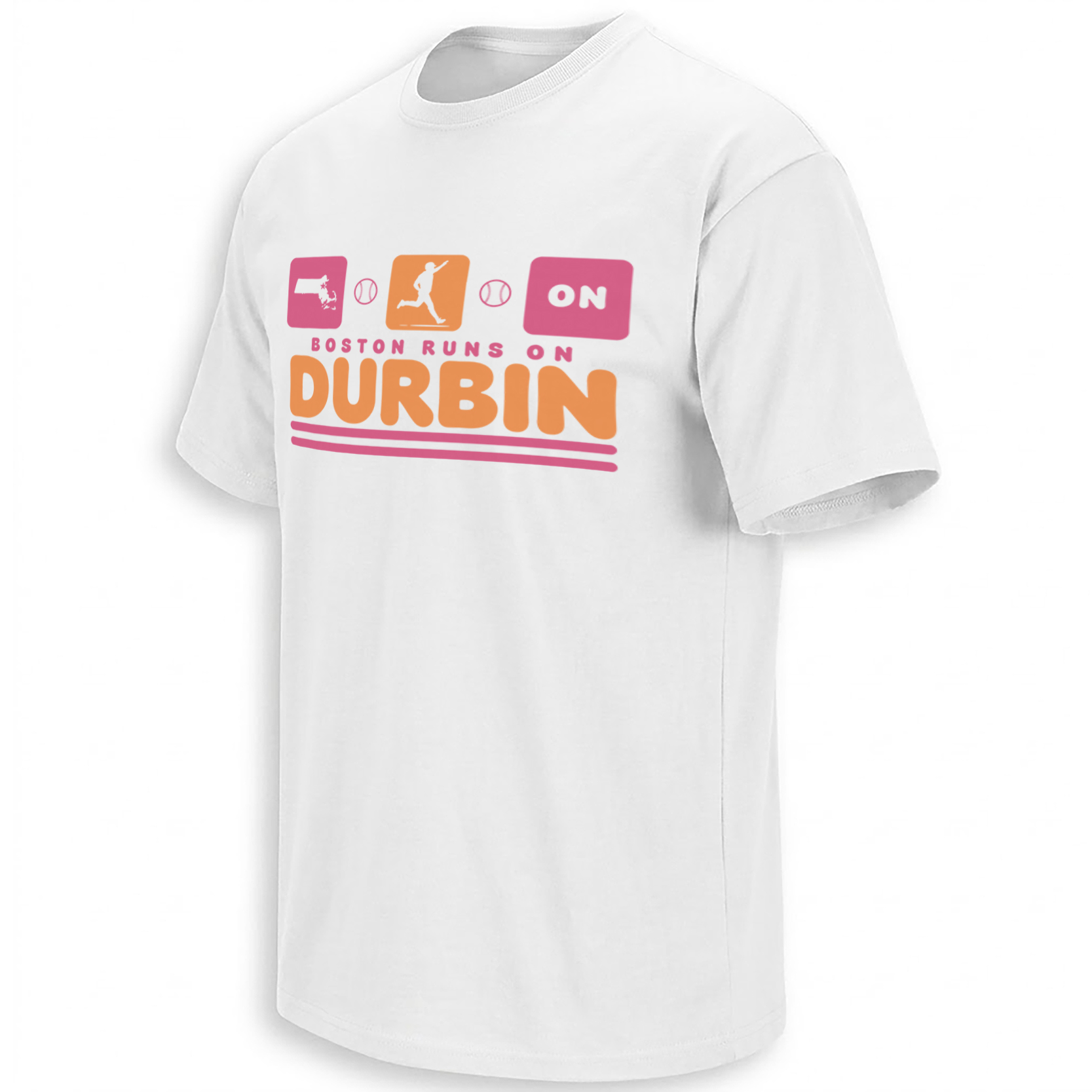
New England brand language becomes a baseball slogan for the player attached to the streak’s defining late swing.
Open the Boston wordplay →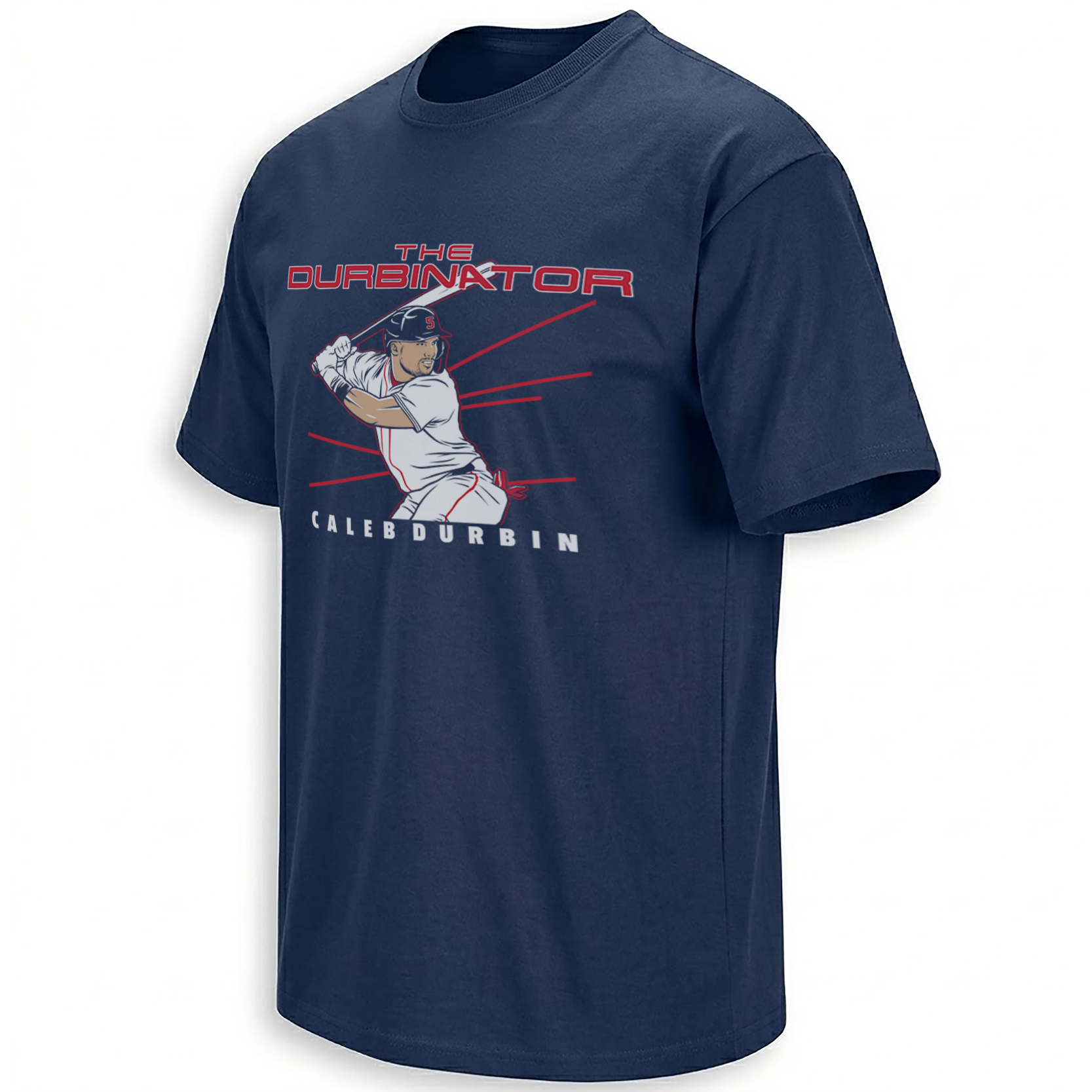
A machine-like nickname translates hustle, compact power and constant pressure into retro action-poster language.
See the Durbinator visual →The design language moves from coffee counter to action poster
“Boston Runs on Durbin” works through familiarity. Its lettering and compact emblem structure are meant to be recognized before the viewer has consciously solved the substitution. That quick recognition is exactly how stadium humor spreads: familiar phrase first, player-specific twist second.
“The Durbinator” is louder. The player illustration, forceful nickname and sports-poster composition turn Durbin’s movement into character branding. One graphic locates him in Boston’s daily visual culture; the other exaggerates the traits fans see on the field.
The graphics do not claim the winning streak would last forever. They preserve the week when a 32–46 team reached 15 consecutive victories and Durbin’s Green Monster homer became its clearest punctuation mark.
What remains after the streak stops
Winning streaks are temporary by definition. Their cultural effect can last because they change the vocabulary around a season. “Lost year” becomes “race.” A role player becomes a character. A home run becomes the replay that explains when belief returned.
That evolving vocabulary now runs through Ellie Shirt’s Boston Red Sox collection, where player jokes and July moments sit beside longer franchise memories. The broader MLB collection shows the same process across baseball: a statistic becomes a nickname, then a graphic, then a record of what a fan base was feeling.
Frequently Asked Questions
What did Caleb Durbin do during Boston’s winning streak?
Durbin hit a go-ahead eighth-inning home run on July 20 to give Boston a 6–5 win over Baltimore and extend the streak to 14 games.
How long did the 2026 Red Sox winning streak reach?
Boston won 15 consecutive games, tying the franchise record established by the 1946 Red Sox before the streak ended in the second game of a July 22 doubleheader.
What does “Boston Runs on Durbin” mean?
It is New England-specific wordplay that replaces “Dunkin” in the familiar phrase “America Runs on Dunkin” with Caleb Durbin’s surname.
Where did the “Durbinator” nickname come from?
The nickname was already associated with Durbin during his Milwaukee period and uses Terminator-style language to describe his relentless, action-oriented game.
Why did the Durbin graphics feel timely in July 2026?
Durbin’s turnaround and decisive homer made him a visible symbol of the same midseason surge that carried Boston from 32–46 to a record-tying 15-game streak.
The two Caleb Durbin graphics preserve different pieces of the same Boston week: the local joke fans could repeat and the action nickname that matched the player helping push Fenway back into a postseason mood.
Boston Runs on Durbin Shirt and The Durbinator Shirt capture Caleb Durbin’s place in Boston’s record-tying 15-game surge, from New England wordplay to the Green Monster homer that delivered win No. 14.