The Yellowstone Bison Toss Went Viral— Then the Full Story Complicated the Meme
One frozen frame showed a man suspended above a Yellowstone campground. The internet saw instant absurdity, but the surrounding story involved an agitated wild animal, a grandfather trying to protect his grandson and a reminder that nature does not follow the moral logic of a viral clip.
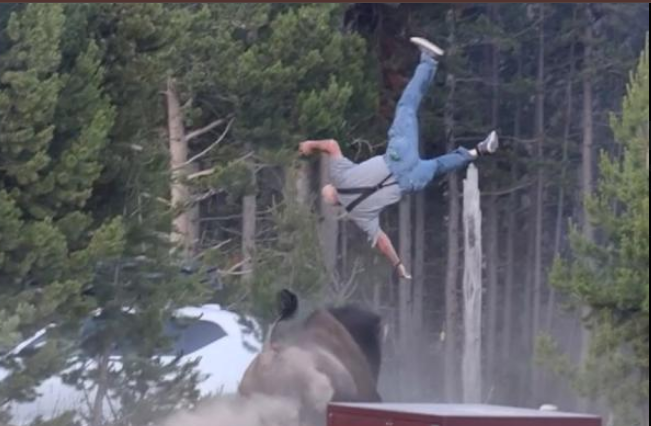
The photograph looked physically impossible. A man in jeans and a gray shirt appeared to float sideways above the trees, one leg pointed toward the sky while the dark mass of a bull bison occupied the ground beneath him. For a fraction of a second, Yellowstone looked less like a national park than the final frame of an action-comedy stunt.
The moment occurred on July 10 at Bridge Bay Campground. Carl Isom-McDaniel, a 65-year-old grandfather from Washington, was walking with his 13-year-old grandson when an agitated bull bison moved through the campground and charged. The animal hooked and tossed him roughly eight feet into the air.
The video spread quickly because the visual was so immediate. Yet reporting and witness accounts soon disrupted the easiest version of the story. This was not presented as another case of someone walking toward wildlife for a close-range selfie. The bison had reportedly been behaving aggressively, and the pair were attempting to move away when the encounter escalated.
The frame became a meme because it looked unreal. The story mattered because the danger was entirely real.
The Frame the Internet Could Understand Instantly
Virality rewards images that require almost no explanation. The Yellowstone frame has a clear subject, extreme physical motion and an outcome the viewer can recognize before learning a single name or location.
The body in midair creates the visual grammar of a cartoon. The forest remains calm. The bison stays grounded. Only the human figure appears to have been released from ordinary physics.
That contrast explains why joke language appeared almost immediately. “Just Bison,” “The Original Yellowstone” and “Do Not Pet the Fluffy Cows” all translate the same shock into familiar formats: sports parody, prestige-TV parody and the long-running Yellowstone warning meme about treating bison like oversized livestock.
The Full Story Was Not the Usual “Touron” Narrative
Yellowstone internet culture has developed a predictable ritual around wildlife videos. A visitor approaches an animal, ignores distance rules and is quickly labeled a “touron,” a combination of tourist and moron.
That template can be useful when reckless behavior is clearly visible, but applying it automatically can erase what actually happened. In this case, photographer Mike MacLeod said the bison was already agitated and charging through the campground. He also said Carl and his grandson had maintained a respectful distance before trying to retreat behind trees.
Carl later described drawing the animal away from his grandson. The bison tossed him, and he suffered severe fractures to his femur near the hip. His grandson escaped without injury.
Even after the initial impact, the danger was not finished. The bison stood over Carl while he was unable to move. Bystanders distracted the animal so emergency responders could reach him. Carl later emphasized that the encounter could have ended much worse because the bison did not gore or trample him while he was on the ground.
A spectacular physical instant that appeared ready-made for screenshots, reaction posts and visual parody.
An agitated animal, attempts to retreat, a grandfather protecting his grandson and injuries requiring surgery.
Wildlife incidents cannot always be reduced to an easy moral about reckless visitors or predictable animal behavior.
Why Bison Are So Easy to Misread
Bison possess a body shape that encourages the wrong assumptions. Their massive shoulders, low heads and slow grazing movements can make them appear heavy, calm and almost prehistoric in their stillness.
That visual calm hides extraordinary speed. Yellowstone warns that bison can run three times faster than humans. The park also notes that bison have injured more visitors there than any other animal.
Their size makes the acceleration especially difficult for people to process. A bear looks dangerous before it moves. A bison can look like part of the landscape until the moment the landscape begins moving directly toward someone.
Summer adds another layer because it overlaps with the bison rut, when bulls may become more restless, territorial and unpredictable. That does not mean every animal will charge, but it makes casual assumptions about body language even less reliable.
Yellowstone requires visitors to remain at least 25 yards from bison and other large wildlife. If an animal approaches, visitors should move away to restore that distance. A calm-looking bison is still wild, fast and capable of changing direction without warning.
Five Designs, Five Ways the Internet Processed the Same Frame
The design series does not simply repeat the photograph five times. Each graphic places the moment inside a different cultural language: minimalist parody, television-title nostalgia, vintage park souvenir design and wildlife-warning humor.
Together, they show how viral images become reusable symbols. The original incident remains one specific event, but its silhouette begins moving through formats that audiences already know how to read.
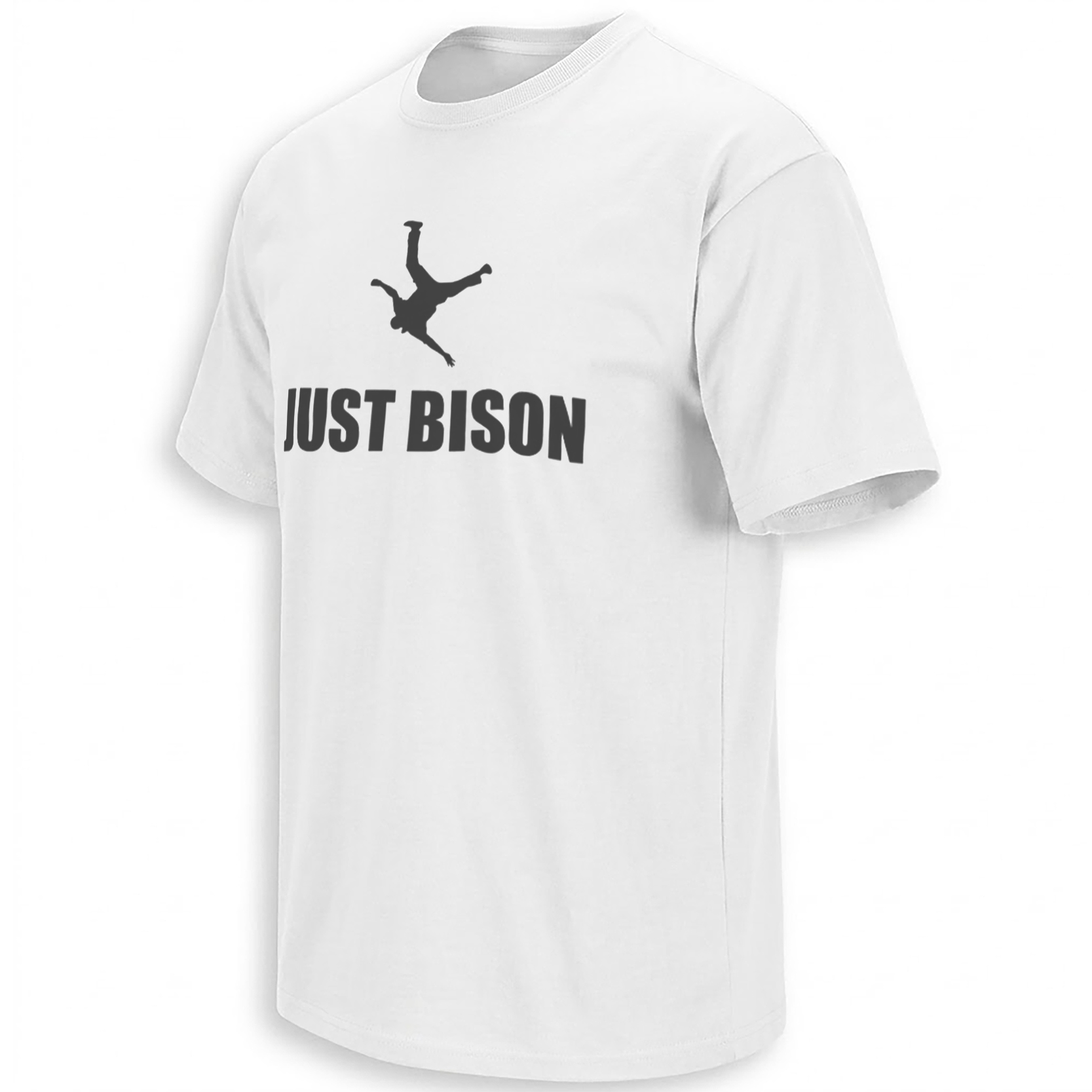
A stripped-down parody that treats the airborne silhouette like a sports logo, turning one chaotic frame into an instantly readable internet emblem.
View the minimalist meme →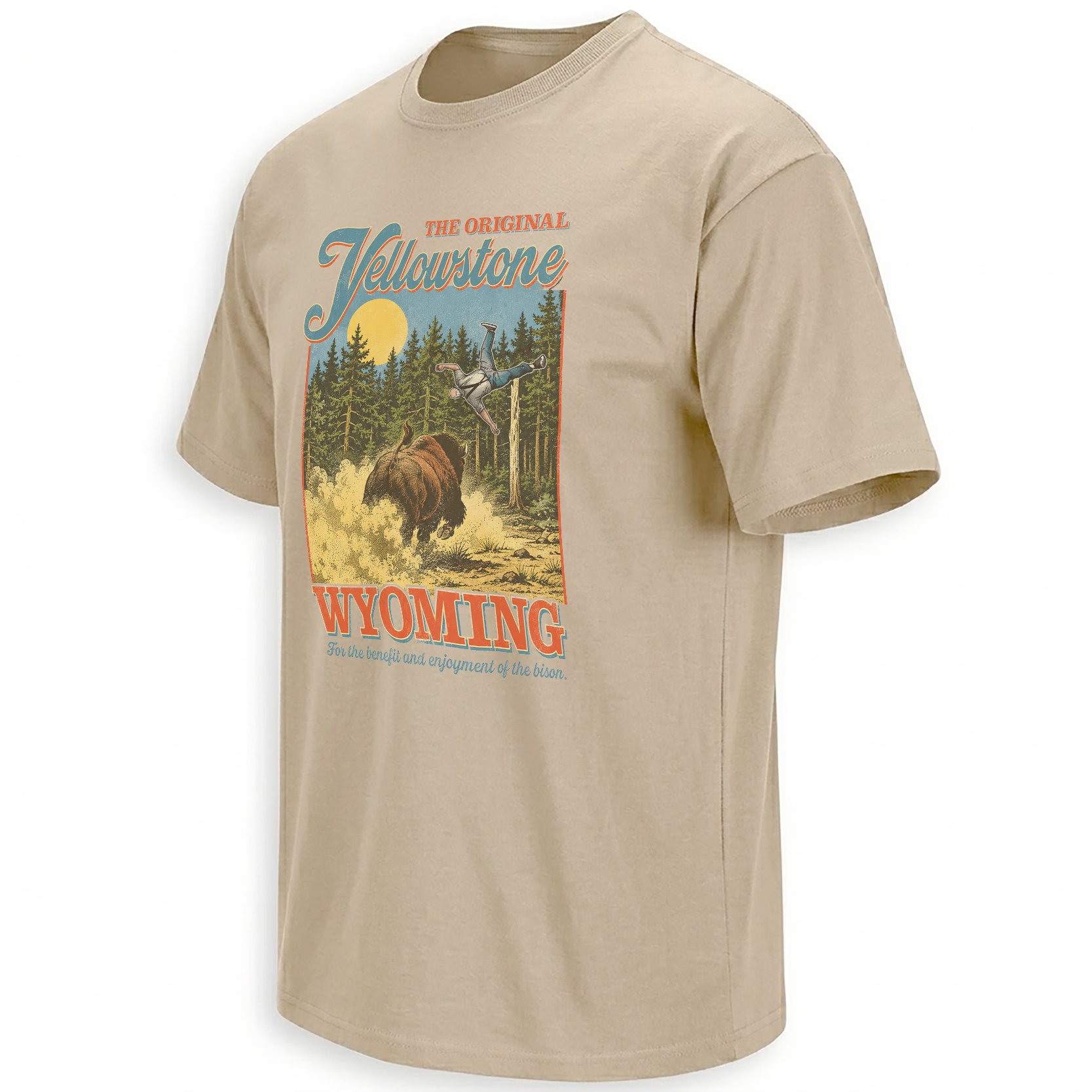
A television-title parody that redirects the word Yellowstone away from fictional ranch drama and back toward the park’s uncontrolled wildlife reality.
Open the vintage parody →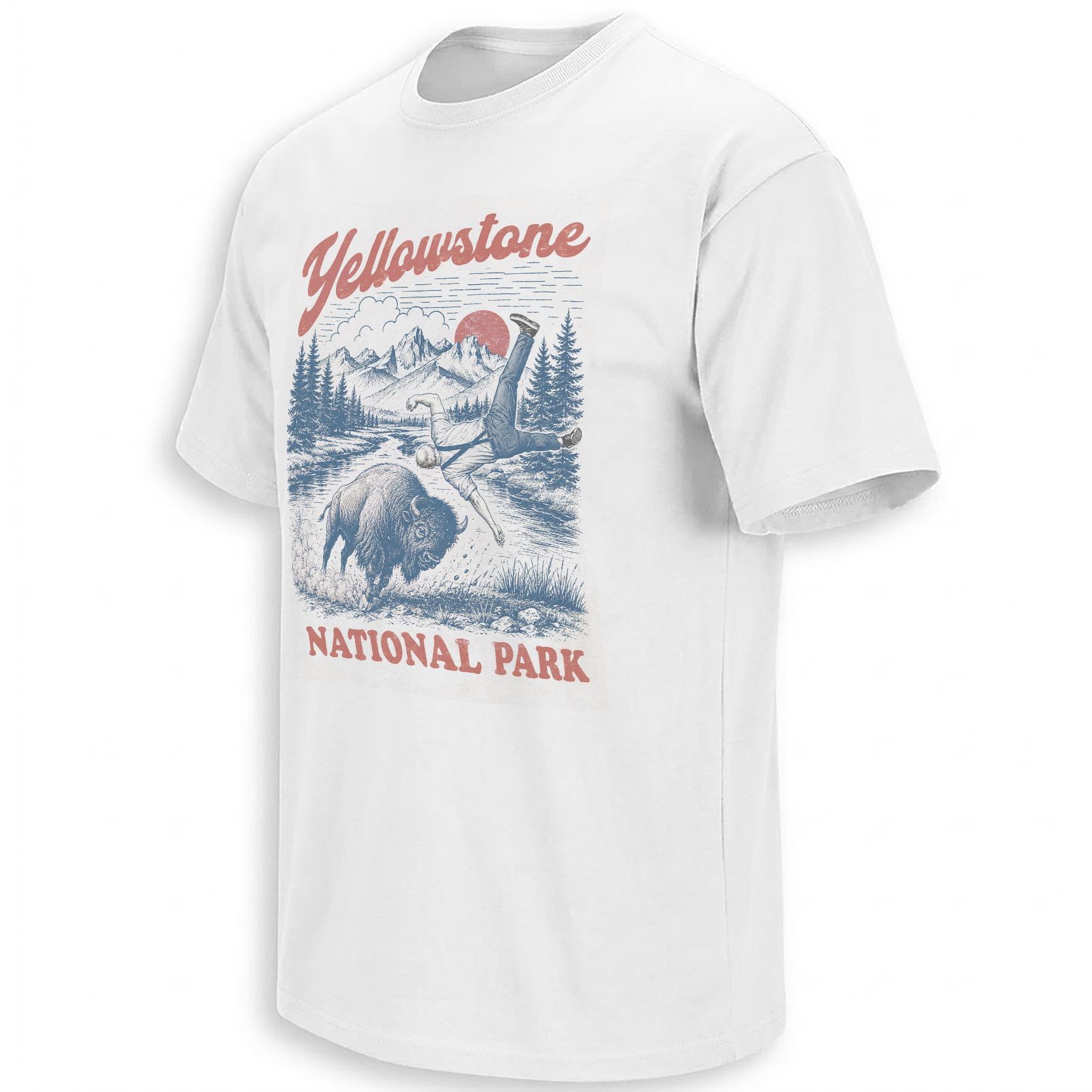
A classic park-souvenir treatment that hides the absurd airborne detail inside the familiar visual language of mountains, wildlife and Wyoming travel graphics.
View the park-poster piece →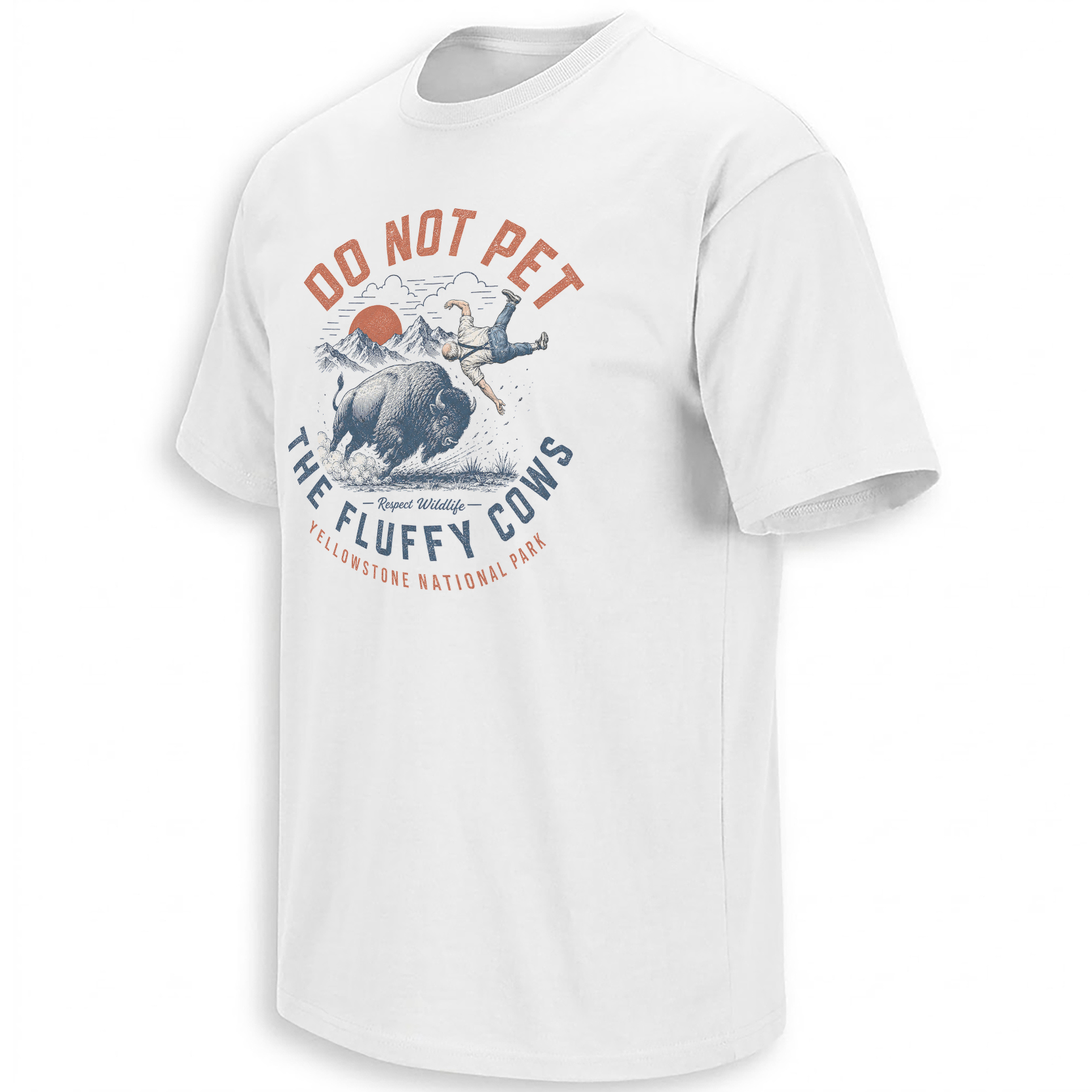
The familiar Yellowstone warning joke gains a new visual consequence, pairing friendly language with the unmistakable evidence that bison are not domestic animals.
See the wildlife-warning graphic →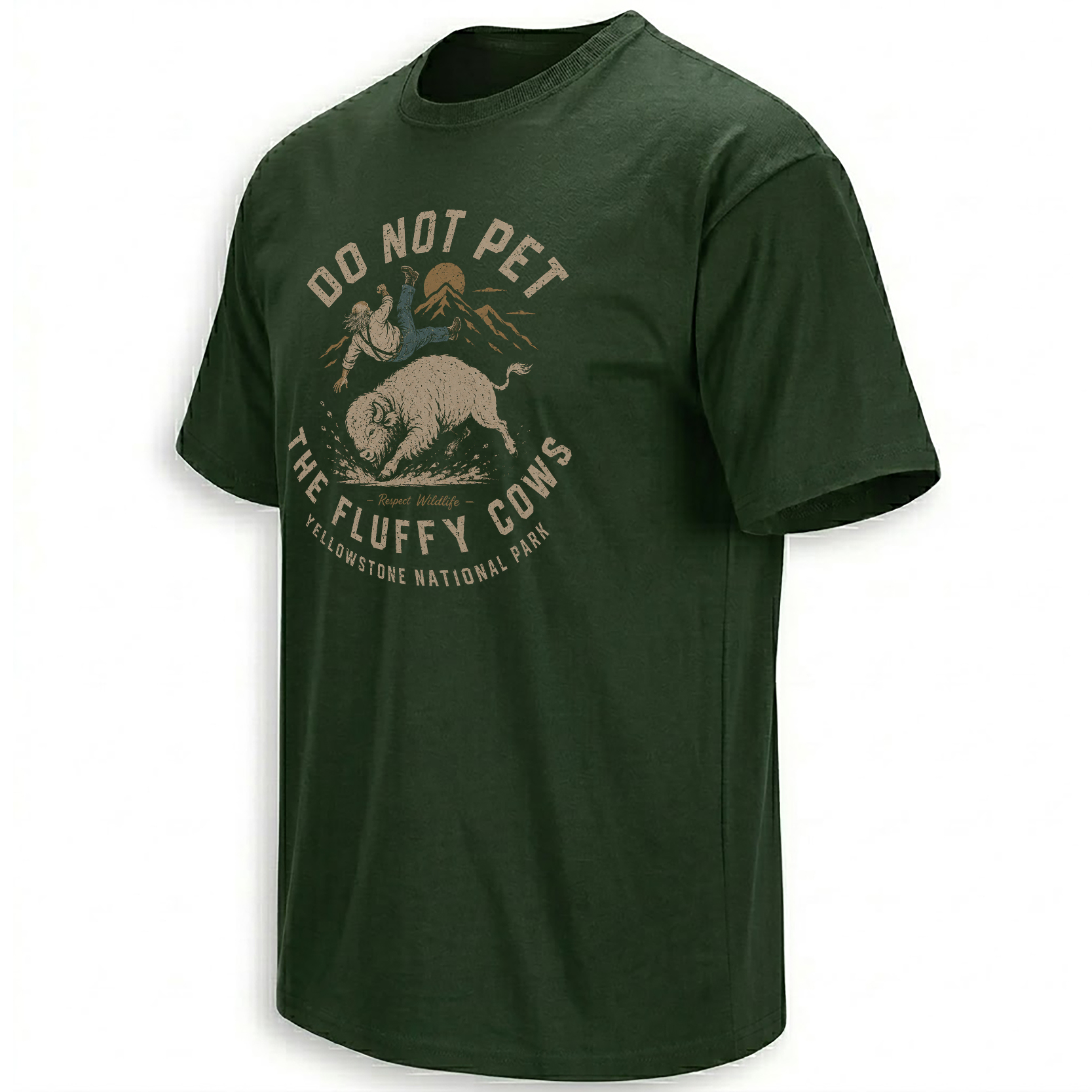
A deeper forest-color edition that feels closer to a ranger sign or vintage national-park field graphic while preserving the same darkly comic warning.
Explore the dark green edition →“Just Bison” Turns the Launch Into a Symbol
The most minimal design removes almost everything except the key relationship: bison below, human above. By simplifying the motion into a logo-like silhouette, the graphic mimics the visual economy of a sports emblem.
That choice matters because the photograph already resembles athletic iconography. The body is extended in midair, the action is frozen at maximum height and the outcome appears to celebrate the power of the animal rather than the control of the person.
“Just Bison” also carries a deliberately flat tone. The phrase offers no explanation and no judgment. It presents the event as though this were simply what bison do when Yellowstone becomes too comfortable for human assumptions.
“The Original Yellowstone” Reclaims the Name From Television
For many viewers, the word Yellowstone now points as quickly toward prestige television and western family mythology as it does toward the national park. The second design plays directly with that overlap.
“The Original Yellowstone” repositions the real park as the wilder version of the brand. There are no controlled ranch disputes, cinematic monologues or carefully staged confrontations. There is a two-thousand-pound animal making an independent decision in a campground.
Vintage distressing gives the artwork the feeling of an older Wyoming souvenir. The joke arrives through the contrast between familiar western branding and a human figure visibly losing control of the scene.
The National Park Version Hides Chaos Inside Nostalgia
Vintage national-park graphics usually promise scenery, wilderness and memory. Their color palettes soften the landscape into something collectible and reassuring.
The Yellowstone National Park bison-toss design preserves that structure but inserts the viral launch into it. From a distance, the composition resembles a conventional Wyoming travel graphic. Closer inspection reveals the body above the animal.
That delayed recognition is the design’s strength. It mirrors the experience of the park itself: beauty first, danger once the viewer remembers that the animals are not part of a managed attraction.
“Fluffy Cows” Is Funny Because the Warning Is Real
Calling bison “fluffy cows” is an internet joke built around visual misclassification. The animals are furry, broad and often seen grazing. The phrase converts them into something familiar, domestic and harmless.
“Do Not Pet the Fluffy Cows” corrects that impulse while borrowing its language. It sounds like a playful sign, but the Yellowstone launch image gives the warning a physical conclusion.
The darker green edition pushes the graphic toward park-sign aesthetics. Forest color, natural tones and warning-style composition make it feel less like a reaction meme and more like unofficial field guidance produced by someone with an unusually dark sense of humor.
How to Use Humor Without Erasing the Injured Person
Viral design always faces a tension when the source moment involves real injury. The image may be visually absurd, but the person inside it experienced pain, surgery and a long recovery.
The strongest interpretation does not need to pretend the event was harmless. Humor can focus on the impossible frame, the overwhelming power of the bison and the broader Yellowstone warning culture without accusing Carl of stupidity or treating his injuries as the punch line.
That distinction becomes more important because the reporting complicates victim-blaming. Witness accounts indicate that the bison was already agitated and that Carl and his grandson were attempting to move away.
The meme therefore works best as a story about human vulnerability inside wild space. The joke is not that one specific man deserved what happened. The joke is that Yellowstone can overturn the illusion of control in a single second.
Yellowstone Is Not a Wildlife Theme Park
National parks create a strange form of proximity. Roads, campgrounds and visitor centers allow people to enter wild landscapes with the infrastructure of ordinary travel. That convenience can make the environment feel more controlled than it is.
Bison do not recognize campground boundaries as safety zones. They move through roads, parking areas and developed spaces according to their own behavior. A picnic table or parked vehicle does not transform a wild animal into part of the visitor experience.
The Yellowstone incident became culturally powerful because it made that mismatch visible. The human figure is literally displaced from the ground while the bison remains where it belongs.
The broader Yellowstone National Park collection preserves the different visual languages created around that moment, from stripped-down internet parody to vintage park graphics and warning-sign humor.
Frequently Asked Questions
What happened in the viral Yellowstone bison video?
On July 10, 2026, a bull bison charged Carl Isom-McDaniel at Bridge Bay Campground and tossed him approximately eight feet into the air while he was visiting Yellowstone with his grandson.
Was the Yellowstone visitor deliberately approaching the bison?
Witness accounts reported that Carl and his grandson had maintained a respectful distance and were attempting to retreat while the already agitated bison moved through the campground.
Was the man seriously injured?
Yes. He suffered multiple fractures to his femur near the hip, underwent surgery and began physical therapy. His grandson was not injured.
How far should visitors stay from bison in Yellowstone?
Yellowstone requires visitors to remain at least 25 yards, or 23 meters, from bison and other large wildlife and to move away when an animal approaches.
Why did the bison toss image become a meme?
The frozen frame has an unusually clear visual subject, extreme midair motion and a surreal contrast between the airborne person, grounded bison and calm forest background.
What does “Do Not Pet the Fluffy Cows” mean?
It is a humorous Yellowstone warning that mocks the tendency to view large, furry bison as harmless livestock even though they are fast, powerful and unpredictable wild animals.
What is the meaning of “The Original Yellowstone” design?
The design contrasts the real national park’s unpredictable wildlife with the polished western drama associated with the Yellowstone television title.
The Just Bison, Original Yellowstone and Fluffy Cows graphics preserve different readings of the same viral frame, while the wider Yellowstone National Park visual archive follows the park humor, wildlife warnings and vintage outdoor language surrounding the moment.
Yellowstone Bison Toss designs capture the viral Bridge Bay launch through minimalist meme graphics, vintage national-park styling, “The Original Yellowstone” parody and the darkly comic warning not to pet the fluffy cows.