
The Schlitt Show Cam Schlittler has turned a Yankees start into appointment viewing
A 13-strikeout night, upper-90s velocity and the confidence to attack without issuing a walk transformed Cam Schlittler from promising rotation arm into one of the Bronx’s most watchable pitching events.
“The Schlitt Show” stopped feeling like playful wordplay on June 19, 2026. Cam Schlittler struck out 13 Cincinnati hitters over six scoreless innings, issued no walks and gave Yankee Stadium the cleanest possible version of his appeal: velocity, command and a lineup repeatedly arriving late.
At 25 years and 134 days old, Schlittler became the youngest pitcher in Yankees history to record at least 13 strikeouts without a walk. The achievement placed one summer start beside a century of franchise pitching history.
More importantly, the night changed the emotional expectations surrounding his appearances. A Cam Schlittler start was no longer simply another rotation assignment. It had acquired the possibility of becoming a performance.
The show begins when velocity creates attention. It becomes real when command leaves the hitter with nowhere comfortable to wait.
A Fastball Can Become a Main Character
Pitching repertoires are usually discussed as collections. A starter needs multiple shapes, speeds and directions to survive several trips through a lineup.
Yet certain pitchers possess one pitch capable of organizing the entire conversation. Schlittler’s fastball does that. It arrives in the upper 90s, carries enough life to miss barrels above the zone and forces hitters to prepare earlier than they would prefer.
Once a lineup begins protecting against that speed, the rest of the arsenal gains space. Cutters and sinkers can move away from the anticipated four-seam path, while secondary pitches become more effective because the hitter’s internal clock has already accelerated.
Why Thirteen Strikeouts Changed the Language
A strong six-inning start can disappear into a season. Thirteen strikeouts create an immediate identity because every out begins resembling the previous one: another hitter behind the fastball, another two-strike count and another walk back toward the dugout.
The absence of walks gave the performance additional authority. Velocity without command can create chaos for both teams. Schlittler’s night against Cincinnati produced controlled aggression.
He forced the lineup to react to him rather than waiting for self-created trouble. That distinction explains why “The Schlitt Show” feels appropriate. The pitcher controlled the sequence, pacing and conclusion.
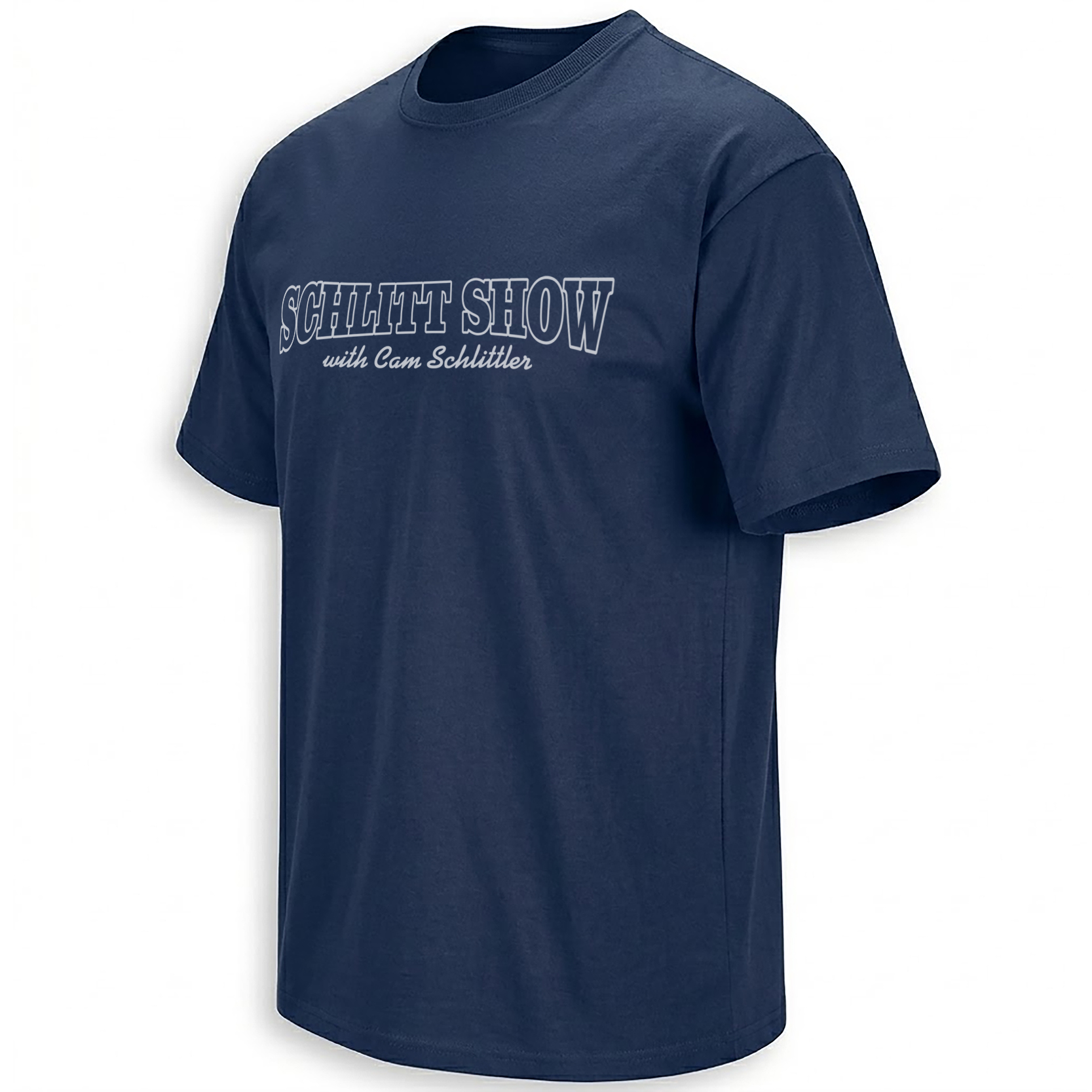
The design uses deep navy and steel tones to echo Yankees restraint, while the red seam accent introduces the violence of the baseball itself. The delivery pose gives the composition forward force, and the title turns one pitcher’s mechanics into a recurring event.
The Name Was Already Built for a Headline
Sports culture naturally searches for phrases that can compress a performance into memorable language. Schlittler’s surname makes that process almost automatic.
“The Schlitt Show” sounds like a television title, arena promotion and fan reaction at the same time. It can appear before a start as anticipation or afterward as a verdict.
That flexibility matters because the phrase does not depend on one exact statistic. A strikeout-heavy outing, a dominant fastball sequence or a major divisional start can all become another episode.
From Rotation Possibility to Rotation Identity
Schlittler entered 2026 competing to establish more than temporary usefulness. Young pitchers in New York are evaluated not only through raw ability, but through how quickly they can survive the pressure created by every inconsistent inning.
His early results made the case increasingly difficult to ignore. By late May, his 1.50 ERA through the first 12 starts ranked among the best openings by a Yankees pitcher since earned runs became an official statistic.
The June strikeout game added spectacle to that reliability. He had already been preventing runs. Now he had produced the kind of outing that gives supporters a specific reason to circle his next turn.
An upper-90s fastball forces hitters to make decisions earlier and creates the visual drama of repeated late swings.
Zero walks against Cincinnati turned raw force into a controlled, historically rare Yankees performance.
Yankee Stadium transforms every emerging pitcher into part of a much older franchise comparison.
The Bronx Changes the Meaning of a Breakout
A young pitcher can develop quietly in many markets. New York rarely offers that protection. Success creates immediate projection, while one difficult outing can become evidence in a larger debate.
Schlittler’s advantage is that his identity is easy to understand. The fastball is visible. The strikeouts are countable. The physical confidence of attacking the zone translates immediately to the crowd.
That does not make development linear. Major-league hitters adjust, workloads increase and every repertoire eventually faces nights when the primary weapon is less dominant. The cultural shift is that supporters now know what the best version looks like.
Why the Delivery Belongs at the Center of the Artwork
Pitching graphics work best when they preserve tension rather than only the result. The most important moment occurs before release, when the body is loaded and the hitter still does not know which pitch is coming.
Schlittler’s pose captures that uncertainty. His movement is directed toward home plate, but the baseball remains inside the sequence. The viewer understands that speed is about to be created without seeing the final destination.
This makes the image feel like the beginning of an episode rather than the summary of one. “The Schlitt Show” remains open-ended, ready to be attached to the next start.
Strikeout Culture Is Built for the Internet
A strikeout is one of baseball’s most portable highlights. It has a clear beginning, an identifiable pitch and an immediate conclusion.
High-velocity strikeouts travel especially well because viewers can understand the imbalance without needing the full game context. The catcher receives the ball, the bat arrives late and the radar reading confirms what the eye has already seen.
Schlittler’s 13-strikeout night therefore produced more than a pitching line. It generated a repeatable series of clips showing essentially the same argument: the fastball was winning.
Why “Show” Does Not Mean the Pitching Is Simple
Spectacle can make dominance appear effortless after the fact. In reality, a start like the Cincinnati performance depends on sequencing, location and constant interpretation of hitter reactions.
The pitcher must understand when to elevate, when to change eye level and when the hitter has begun cheating toward velocity. The catcher and defense also remain part of the structure.
“The Schlitt Show” describes the viewing experience, not a one-man performance detached from the team. The best show occurs when preparation becomes invisible and the result looks inevitable.
The Wider Yankees and MLB Pitching Archive
Yankees pitching history creates a demanding background for every new arm. One great start does not establish a complete career, but it can create the first image supporters use to recognize what might be developing.
The The Schlitt Show design preserves that first major performance identity, while the broader MLB Shirts collection follows the pitchers, strikeout moments and fan language shaping the 2026 season.
Frequently Asked Questions
When did Cam Schlittler record 13 strikeouts?
Schlittler struck out 13 Cincinnati Reds over six scoreless innings at Yankee Stadium on June 19, 2026.
How many walks did Schlittler allow in that game?
He did not issue a walk, giving him 13 strikeouts and zero walks during the 5–0 Yankees victory.
What Yankees record did Schlittler set?
At 25 years and 134 days old, he became the youngest pitcher in Yankees history with at least 13 strikeouts and no walks in one game.
What does “The Schlitt Show” mean?
The phrase turns Schlittler’s starts into fan-facing event language, especially when his fastball, strikeouts and command take control of the game.
What does The Schlitt Show design represent?
The graphic captures Cam Schlittler’s emergence as a watchable Yankees power pitcher through his delivery, Bronx colors and the headline created by his dominant starts.
The The Schlitt Show piece preserves the fastball spectacle surrounding Cam Schlittler, while the broader MLB visual archive follows the pitching performances and fan phrases defining baseball’s summer.
The Schlitt Show Shirt captures Cam Schlittler’s rise as a Yankees power pitcher through his upper-90s delivery, 13-strikeout breakthrough and headline-ready Bronx identity.