
Samuel Basallo’s No. 29 Has Become Baltimore’s New Power Signal
A dominant May, a two-homer night in Anaheim and a rapidly expanding role have transformed Samuel Basallo from Baltimore’s top prospect into one of the most important young left-handed bats in the Orioles’ present.
On June 24 in Anaheim, Samuel Basallo hit two home runs in the first three innings and made Baltimore’s long-term plan feel suddenly immediate. The first drive went to right-center. The second followed an inning later, extending the Orioles’ lead and lifting his season total to 12.
The sequence mattered because Basallo entered 2026 carrying a complicated role. Baltimore already had Adley Rutschman behind the plate, yet Basallo’s bat had become too important to confine to occasional catching duty. The Orioles responded by moving him between catcher, first base and designated hitter.
By the end of May, that flexibility no longer looked like a developmental experiment. Basallo had produced a .338/.376/.597 slash line during the month and helped create the most productive catching tandem in baseball. No. 29 was becoming a permanent part of the lineup.
Basallo’s swing does not look like a prospect asking for space. It looks like a hitter already strong enough to change the shape of Baltimore’s lineup.
The Role Became Larger Than Backup Catcher
Baltimore entered the season describing Basallo as its second catcher, but the phrase never fully captured the plan. His left-handed power made him useful at first base and designated hitter, giving the Orioles several ways to pair him with Rutschman rather than forcing a simple choice between them.
That flexibility became central to the team’s offensive structure. On days when Basallo did not catch, the bat remained available. On days when he worked behind the plate, Baltimore gained a different kind of power profile from the catching position.
The arrangement also changed how fans understood his arrival. Basallo was not waiting for another player’s role to disappear. He was creating his own place through production.
Why the Swing Graphic Fits No. 29
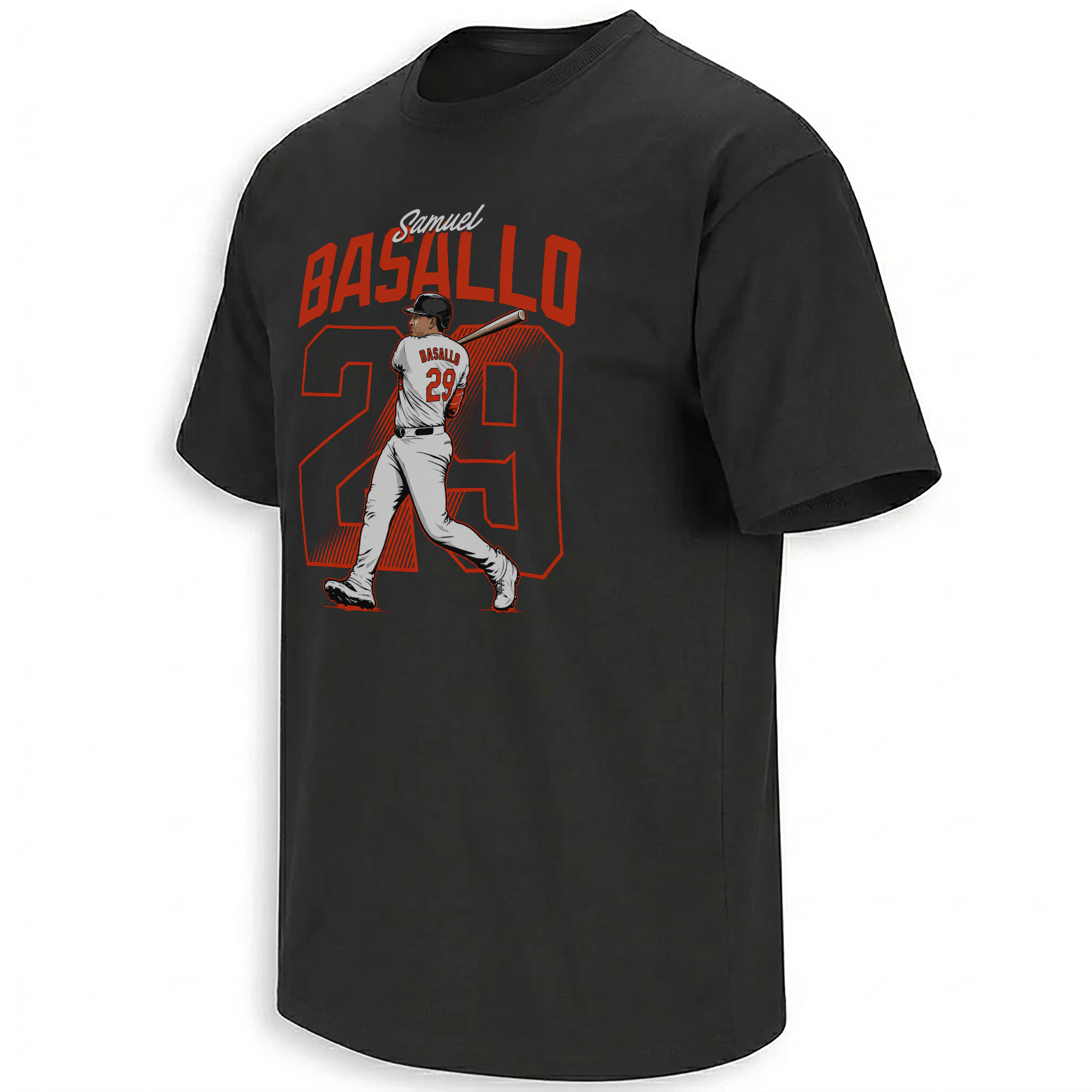
The artwork centers Basallo at the end of a full left-handed swing. His torso is rotating, the bat has crossed the body and the pose captures the fraction of a second when the hitter already knows the ball has been struck correctly.
Large lettering and the prominent No. 29 create the structure of a player-introduction poster. Orange highlights move through the black composition like stadium light, preserving Baltimore’s visual identity without crowding the figure.
The graphic is most effective because it avoids turning Basallo into a generic catcher. The central image is not a mask, chest protector or receiving stance. It is the swing — the reason Baltimore has kept finding new positions for him.
Power Is Only Part of the Breakout
Home runs provide the clearest evidence, but Basallo’s growth has depended on more than distance. His strongest stretches have included better pitch recognition, improved contact against Major League velocity and a more stable approach when pitchers refuse to challenge him directly.
That development matters because young power hitters are often tested through patience. Once the league understands the damage a player can create, the next question becomes whether he will chase pitches designed to exploit that aggression.
Basallo can change a game with one left-handed swing, especially when pitchers leave a fastball or breaking ball inside his damage zone.
His growing ability to remain selective makes the power harder to avoid and gives Baltimore more confidence using him throughout the lineup.
The Dominican Connection Adds Another Layer
Basallo’s rise also belongs to Baltimore’s long relationship with Dominican baseball. His path from international signing to Major League power hitter reflects the global scouting system through which young players enter organizations years before most fans know their names.
That background gives the breakout a larger cultural meaning. Basallo is becoming a Baltimore player while carrying the visual and developmental history of Dominican catching, power hitting and baseball identity.
The wider Baltimore Orioles collection follows that changing roster through current player graphics, Camden Yards references and black-and-orange fan language.
Inside the broader MLB Shirts collection, the No. 29 piece belongs to baseball’s continuing tradition of preserving the season when a highly ranked prospect becomes a recognizable Major League figure.
Frequently Asked Questions
Who is Samuel Basallo?
Samuel Basallo is a Dominican catcher, first baseman and designated hitter for the Baltimore Orioles who entered 2026 as one of baseball’s highest-ranked young prospects.
What number does Samuel Basallo wear?
Basallo wears No. 29 for Baltimore, and the number is a central part of the swing graphic.
Did Samuel Basallo hit two home runs in one game in 2026?
Yes. Basallo hit two two-run home runs against the Angels on June 24, raising his season total to 12.
How are the Orioles using Basallo and Adley Rutschman together?
Baltimore rotates Basallo among catcher, first base and designated hitter so both young catchers can remain in the lineup.
Why does the design focus on Basallo’s swing?
His left-handed power is the skill that has expanded his role and forced Baltimore to create multiple ways to keep him in the lineup.
The Samuel Basallo swing graphic preserves the left-handed force behind his 2026 breakout, while the Orioles visual archive follows the larger Baltimore story developing around its young core.
Samuel Basallo Shirt captures Baltimore’s No. 29 through a powerful left-handed finish, bold black-and-orange poster styling and the emerging identity behind his 2026 breakout.