10 Weeks: How Mike Brown Turned a Knicks Sacrifice Joke Into Parade Folklore
The front said “Sacrifice.” The back said “10 Weeks.” At New York’s championship parade, Mike Brown transformed one of the Knicks’ strangest private motivational stories into a public joke shared by an entire city.
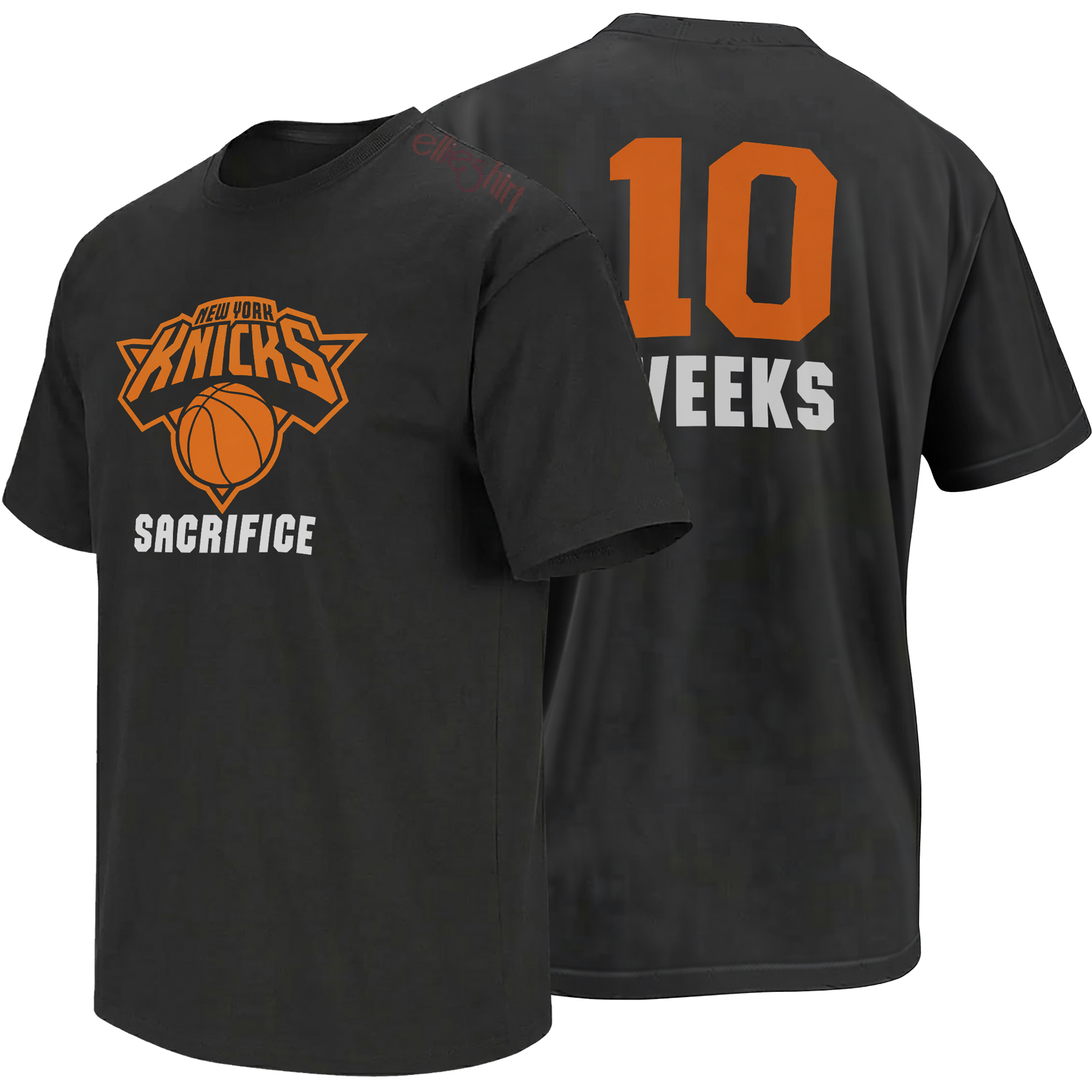
Mike Brown arrived at the Knicks’ June 18 championship parade wearing a message that required the front and back of the shirt to complete the joke. “Sacrifice” appeared across the chest. “10 Weeks” waited behind him.
By then, New York had already completed the difficult part. The Knicks had defeated San Antonio in five games, ended a 53-year championship wait and filled Lower Manhattan with orange, blue and generations of supporters who had imagined this parade long before the current roster existed.
The shirt brought a newly public piece of team folklore into that celebration. During an April meeting before the playoffs, owner James Dolan had reportedly challenged the players to make an unusual ten-week personal sacrifice in pursuit of an edge. Once Jalen Brunson and Josh Hart discussed the story after the title, the mysterious number became an instant piece of Knicks humor.
New York waited 53 years for the parade. Mike Brown needed only two sides of one shirt to turn the strangest story of the title run into its funniest souvenir.
The Joke Began Before the Playoffs Became History
Championship folklore often appears more organized in retrospect than it felt while the season was unfolding. Once a team wins, private meetings, repeated phrases and unusual rituals are retold as though they were always leading toward the trophy.
The ten-week story began during an April 3 meeting, when Dolan addressed the team before the postseason and emphasized complete commitment.
His argument invoked the discipline associated with ancient Spartan warriors. The players were reportedly encouraged to remove personal distractions for the duration of a possible championship run.
The request sounded extreme enough to become memorable immediately, but it remained largely inside the team while the playoffs were being played.
That silence gave the story its eventual power. Fans watched the victories without knowing that one unusually specific number was circulating behind the scenes.
A pre-playoff message asked the roster to treat the championship chase as a period requiring extraordinary discipline and sacrifice.
Ten weeks was long enough to cover the postseason and precise enough to become instantly memorable once the story reached the public.
After the championship, players could retell the request as comedy because the season had already produced the best possible result.
The Front and Back Create a Perfect Delayed Punchline
The 10 Weeks design depends on physical movement. The viewer receives the setup from the front and the answer only after seeing the back.
“Sacrifice” appears serious enough to function as a conventional championship word. Every title run requires pain, time, discipline and personal compromise.
The back changes the meaning. “10 Weeks” does not explain the complete story to an outsider, but anyone familiar with the viral Knicks anecdote recognizes the reference immediately.
This two-stage reading mirrors the way the joke entered fan culture. Supporters first heard that a sacrifice had been requested. The unusual length and intimate nature of that request supplied the punchline.
Mike Brown Understood That the Parade Was the Right Stage
The same shirt would have carried a different tone during the playoffs. Before the title was secure, it might have looked like a distraction or an attempt to turn a private team conversation into public theater.
At the parade, the risk had disappeared.
The Knicks were champions. The sacrifice, however literally each player interpreted it, belonged to a completed story. Brown could wear the reference because nobody could argue with the result.
Parade culture also encourages exaggeration. Players smoke cigars, dance on buses, carry oversized props and wear clothing designed specifically to memorialize moments from the run.
Brown’s shirt fit naturally inside that environment. It turned the head coach into both participant and storyteller.
The story remained a private and potentially distracting example of how intensely the organization wanted the roster to pursue an advantage.
The same story became harmless folklore—a strange request that could be laughed about because the Knicks had already won.
The Number Works Because It Sounds Like a Complete Season
Ten weeks is specific enough to feel unusual but broad enough to represent the emotional scale of a playoff run.
The postseason is not one game or one weekend. It is a long accumulation of film sessions, travel, treatment, pressure and repeated attempts to solve opponents who are also adjusting.
Even without the adult context behind the original request, “10 Weeks” can describe the duration of total competitive focus.
The Knicks spent that period moving through four rounds, surviving momentum swings and carrying the expectations of a city that treated every game like a public event.
That wider interpretation helps the design remain more than one sexual joke. It can also represent the amount of time required to turn an excellent team into a champion.
“Sacrifice” Is the Serious Half of the Design
The front word works because it is true even after the joke is removed.
Brunson absorbed defensive pressure and carried late-game responsibility. Josh Hart played through physical contact and performed the connective work that rarely appears in one headline statistic.
Karl-Anthony Towns adjusted his role across matchups. OG Anunoby supplied elite defense and one of the defining plays of the Finals. Bench players remained ready for minutes that could arrive without warning.
Brown and his staff made tactical decisions under constant public scrutiny. Every loss generated questions, and every victory created another level of expectation.
The title required sacrifice in the conventional basketball sense long before the private joke became public.
The April Message Became Funnier Because the Knicks Actually Won
Had New York been eliminated early, the story might have survived as an example of motivational theater that produced no meaningful result.
Winning changes the emotional category.
A strange speech becomes a legendary speech. An extreme request becomes part of the mythology. A number written on the back of a parade shirt becomes shorthand for the entire postseason.
This does not prove that the request caused anything. Championship teams are shaped by talent, preparation, health, tactical decisions and thousands of possessions.
Folklore does not require direct causation. It requires a memorable story that can be attached to an achievement after the achievement becomes real.
- The owner introduced the idea. Ten weeks became a private symbol of complete postseason commitment.
- The Knicks survived four rounds. The roster turned preparation and sacrifice into the franchise’s first championship since 1973.
- The players revealed the story. Brunson and Hart brought the unusual request into public conversation after the title.
- Mike Brown completed the meme. His parade shirt transformed the story into a front-and-back visual punchline.
The Parade Shirt Revealed Brown’s Relationship With the Team
Coaches are often represented through intensity: folded arms, tactical boards, sideline arguments and press-conference seriousness.
Brown’s parade presence showed another side of leadership. He danced, interacted with supporters and appeared willing to participate in the team’s jokes rather than remain above them.
The shirt suggested that he understood the story belonged to the group. He was not revealing a player’s private embarrassment from the outside. He was wearing the same reference after leading the team through the full run.
That ability to move between authority and humor matters over a long season. Players need a coach capable of making difficult decisions, but they also respond to someone comfortable enough to celebrate beside them once the work is finished.
Mike Brown’s parade image balanced championship authority with self-aware humor, allowing New York fans to see the coach not only as a strategist but as a full participant in the culture surrounding the team.
Why the Design Uses Bold Typography Instead of a Player Collage
The story does not depend on one basketball action. No dunk, jump shot or defensive stop can explain the meaning of ten weeks.
Typography is therefore the correct visual language.
Large block letters make “Sacrifice” feel like a serious team principle. The oversized back number transforms a private duration into the dominant visual element.
Blue and orange connect the shirt to New York immediately, while distressed texture gives the design the feeling of a message created during the run rather than after years of historical distance.
The visual hierarchy is simple enough to remain readable from a parade float, a crowded street or the opposite side of an arena concourse.
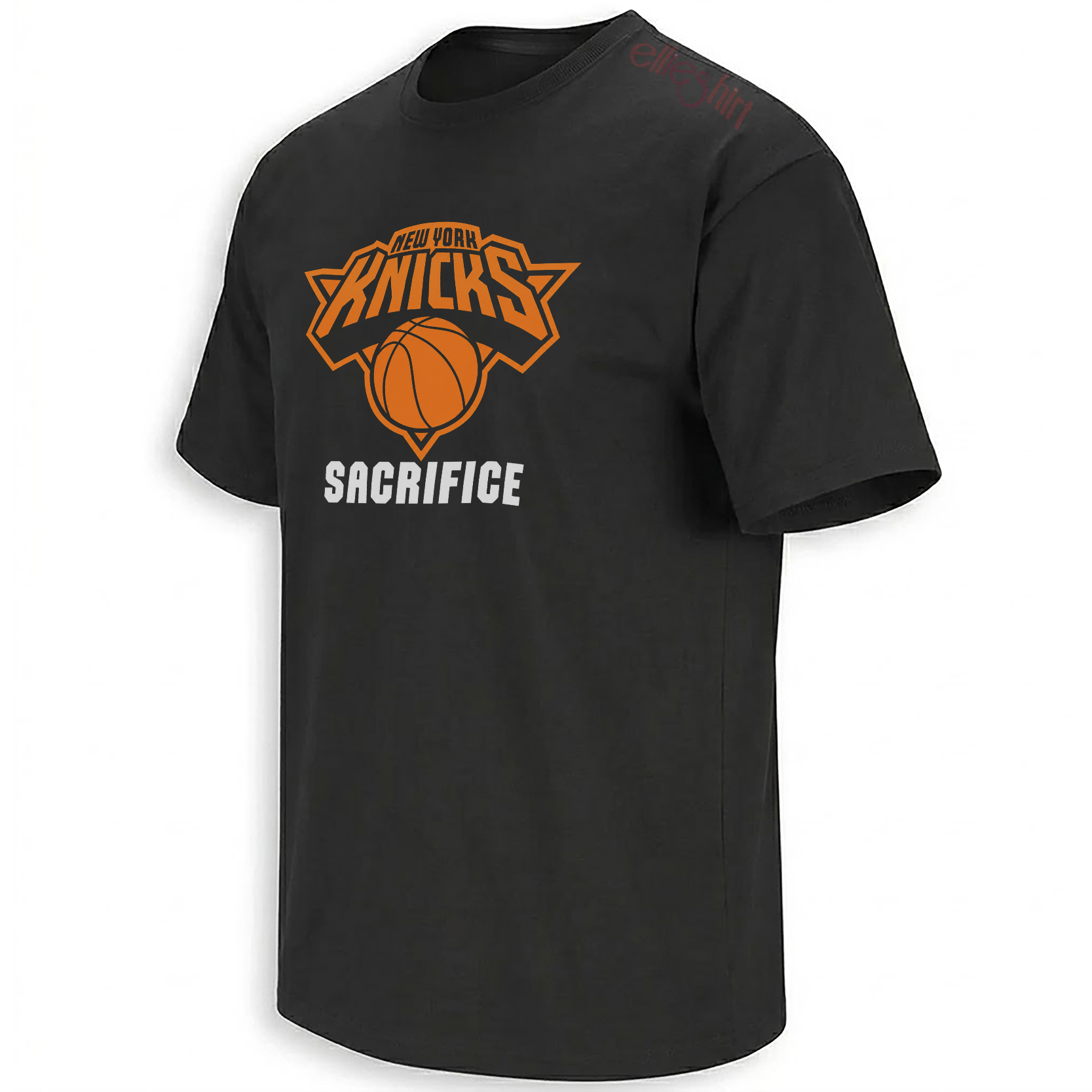
The setup reads like a universal championship principle, using bold New York typography before the specific joke is revealed.
View the front design →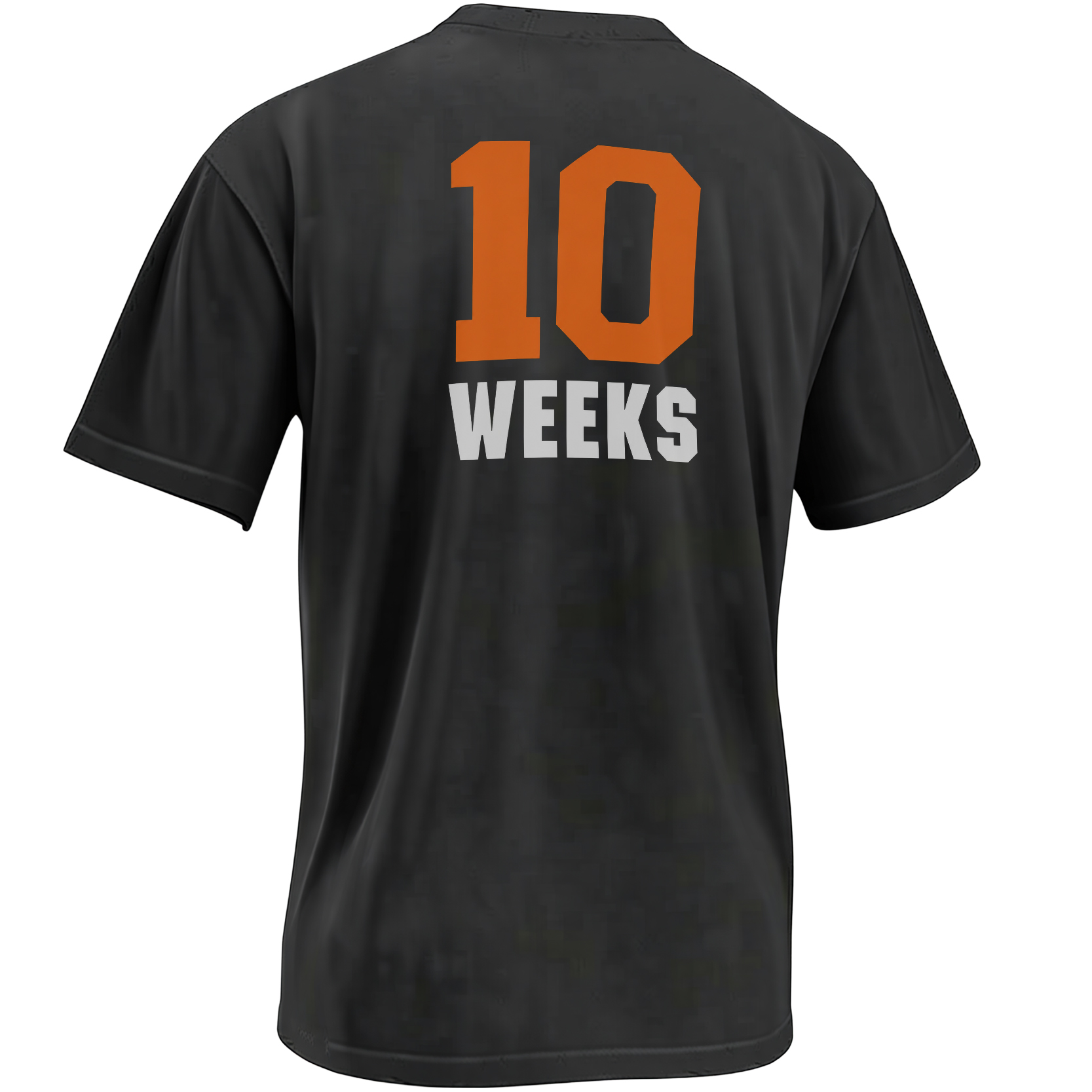
The oversized numerical reference supplies the punchline recognized by fans who followed the viral post-championship story.
View the back design →The Adult Joke Became Safe Through Implication
The design never needs to print the complete request. “Sacrifice” and “10 Weeks” allow the audience to reconstruct the story without explicit language.
This indirect approach makes the shirt stronger.
Fans who know the reference receive the full joke immediately. People unfamiliar with it still see a championship message about dedication across a long postseason.
The two interpretations can coexist. One is a private team anecdote. The other is a general statement about the discipline required to win.
The wearer controls how much explanation follows. That conversational quality gives the design life beyond the first laugh.
The shirt never prints the most controversial part of the story. It trusts Knicks fans to understand exactly what “10 Weeks” is asking them to remember.
The Joke Captures the Absurdity of Championship Mythmaking
Every championship team develops stories that sound more important because the trophy came afterward.
A meal becomes the meal that changed the season. A meeting becomes the meeting that united the roster. A song becomes the soundtrack of the run.
Ten weeks belongs to that category while openly making fun of it.
Nobody needs to believe one unusual request decided the championship. The humor comes from treating it as though the sacrifice was part of a precise formula: remove distractions, survive ten weeks and receive a parade.
Brown’s willingness to wear the formula on his back showed that the team understood the exaggeration.
New York Was the Perfect City for the Story to Explode
New York sports culture turns small details into daily public conversation. A facial expression, press-conference phrase or unusual outfit can remain in the news cycle long after the original event.
The ten-week story contained every ingredient needed to spread: a famous owner, an intimate request, a championship roster and players willing to joke about it afterward.
Brown’s parade shirt gave the story a final visual image. Fans no longer needed to quote an entire podcast explanation. They could share one photograph of the coach and allow the front-and-back wording to carry the reference.
That conversion from anecdote to image is how temporary sports stories become merchandise, memes and long-term fan language.
The Shirt Records More Than Mike Brown’s Parade Outfit
At the most literal level, the design recreates the message Brown wore while celebrating New York’s championship.
At a broader level, it records the strange emotional freedom that arrives after a title. Private tension can become public comedy. Difficult months can be compressed into one number. A coach can laugh about the demands of the journey because the journey ended with a trophy.
The 10 Weeks piece therefore belongs to the parade rather than only the playoffs. It represents the moment New York could finally stop worrying about what might happen and begin joking about everything that already had.
From Championship Discipline to New York Punchline
The strongest sports designs often connect two emotions that appear incompatible.
“Sacrifice” is serious. “10 Weeks” is funny. The championship gives both meaning.
The front respects the work. The back remembers the absurdity. Together they create a complete portrait of playoff culture—an environment where teams search for every possible advantage and later laugh about how far that search went.
Mike Brown did not need a detailed illustration or long explanation. He allowed two phrases, separated by the body of the shirt, to tell the entire story.
The Wider Knicks Championship Archive
The ten-week joke belongs beside the larger images from New York’s historic season: Brunson’s Finals MVP performance, OG Anunoby’s defining Game 4 plays, the trophy lift and the orange-and-blue parade through Lower Manhattan.
The New York Knicks Shirts collection preserves those player moments, championship phrases and fan-created references from across the title run.
The 2026 NBA Finals Champions collection focuses on the exact postseason that transformed 53 years of waiting into one citywide celebration.
Inside the broader NBA Shirts collection , the 10 Weeks piece represents championship culture at its most specific: a joke only this roster, this coach and this parade could have produced.
Frequently Asked Questions
What does the Mike Brown “10 Weeks” shirt mean?
It references a pre-playoff request from Knicks owner James Dolan asking the team to make an unusual ten-week personal sacrifice while pursuing the 2026 NBA championship.
What appears on the front of the shirt?
The front features the word “Sacrifice,” presenting the serious setup for the reference printed on the back.
What appears on the back of the shirt?
The back displays “10 Weeks,” the number connected to the viral Knicks playoff-sacrifice story.
Did Mike Brown wear a 10 Weeks shirt at the Knicks parade?
Yes. Brown wore the front-and-back message while participating in New York’s June 18, 2026 championship parade.
When did the ten-week request reportedly begin?
The request was reportedly made during an April 3 team meeting before the Knicks began their championship postseason run.
Why did the story become public after the championship?
Jalen Brunson and Josh Hart discussed the unusual request after New York won, allowing the private team anecdote to become a public celebration joke.
Why does the design use both a front and back print?
The front creates the serious “Sacrifice” setup, while the back delivers the “10 Weeks” punchline and completes the cultural reference.
The Mike Brown 10 Weeks front-and-back piece preserves one of the funniest stories from New York’s championship parade through bold Knicks colors, delayed visual humor and a reference understood instantly by fans who followed the entire run.
10 Weeks Shirt recreates Mike Brown’s viral Knicks championship parade message with “Sacrifice” on the front and “10 Weeks” on the back. The bold orange-and-blue design turns James Dolan’s unusual pre-playoff request into a funny two-sided souvenir from New York’s historic 2026 title run.