Bryan Woo Pop Art: How Seattle’s No. 22 Became a Four-Panel Mariners Icon
One Bryan Woo portrait communicates a pitcher. Four color-shifted portraits communicate something larger: repetition, recognition and the moment a Seattle starter becomes familiar enough to function like a modern pop-culture image.
Bryan Woo’s June 18 response against Baltimore provided the latest reminder of why his face can support more than a conventional pitcher graphic. Seven scoreless innings, nine strikeouts and only three hits allowed turned a difficult rematch into another example of Seattle’s No. 22 controlling a game through command.
His 2026 season has included normal fluctuations, but the larger identity remains intact. Woo is no longer presented as the young arm Seattle hopes will become dependable. He is an established member of the rotation, a former All-Star and one of the pitchers expected to shape the club’s competitive direction.
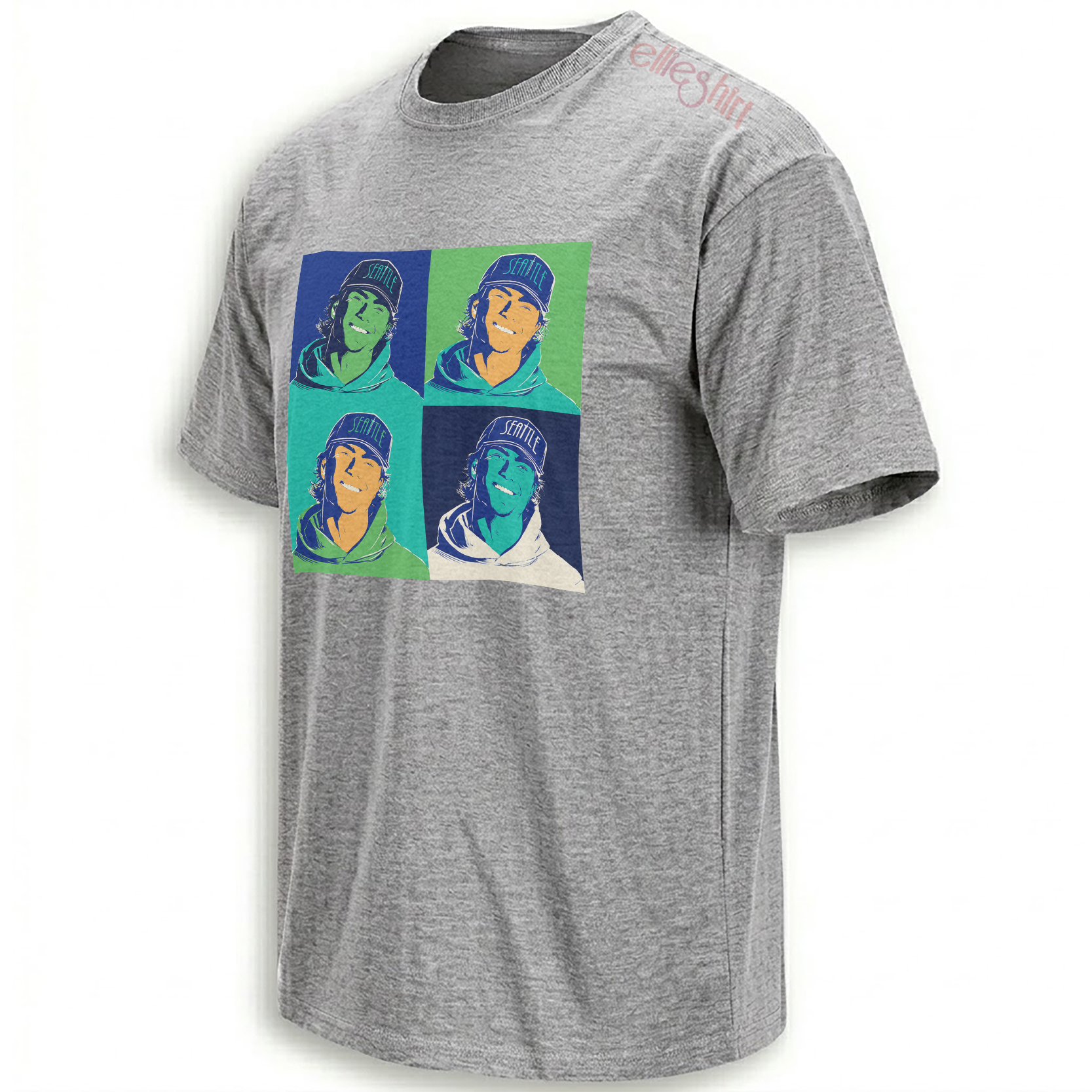
The four-panel pop-art design reflects that change in status. Repetition removes the image from the category of a single baseball photograph and places Woo inside a broader visual tradition in which athletes, entertainers and public figures become recognizable through color, duplication and simplified expression.
Repetition does not make the portrait less individual. It shows that Bryan Woo has become recognizable enough for the image to survive transformation.
Why Four Panels Change the Meaning of One Portrait
A standard sports portrait asks the viewer to study one expression. The face, uniform and lighting remain tied to one photographic moment.
A four-panel arrangement changes that relationship. The same figure appears repeatedly, but each panel uses a different palette. The player remains stable while the visual world around him changes.
This creates a tension between repetition and difference. The viewer recognizes Woo immediately, then begins comparing the colors, contrast and mood of each square.
The sequence also resembles the way athletes now circulate through modern media. One performance can become a television frame, social post, highlight thumbnail, trading-card image and fan graphic within hours.
Woo remains the same person across those formats, but every platform recolors and reframes the public image.
The portrait remains consistent enough that Woo is identifiable even after natural skin, uniform and background colors have been replaced.
Teal, yellow, pink and blue move the image beyond literal photography and allow each panel to create a different emotional temperature.
Repetition suggests that the subject has become a reproducible icon rather than remaining one anonymous player inside a roster.
The Artwork Turns a Pitcher Into a Seattle Pop Figure
The Bryan Woo pop-art design uses a close portrait rather than a full pitching delivery. That decision places the emphasis on identity.
A delivery image explains what Woo does. A repeated face explains who he has become to Mariners supporters.
Strong outlines and flattened colors remove distracting background detail. The face, cap and expression become the complete visual subject, allowing Seattle’s navy and teal to interact with brighter pink, yellow, orange and cyan.
Number 22 is not required inside every square because the portrait itself carries recognition. The player’s identity has become strong enough to survive the absence of a traditional jersey-number composition.
The Calm Expression Makes the Color Feel Louder
Pop-art treatments often become strongest when the subject’s expression remains restrained. The color can provide the visual noise while the face provides stability.
Woo’s public pitching identity already fits that contrast. His best outings are built on smooth mechanics, first-pitch strikes and a pace that rarely appears frantic.
The portrait preserves that composure. Woo does not need an exaggerated shout or mid-delivery strain to hold the center of the artwork.
Bright magenta, aqua, orange and yellow can therefore move around him without making the piece feel uncontrolled. His expression becomes the anchor connecting four otherwise different panels.
A steady expression reflects Woo’s strike-throwing reputation and gives the repeated portrait one consistent emotional center.
Saturated color introduces movement, personality and visual surprise without requiring the player to appear physically in motion.
Pop Art and Baseball Share a Language of Repetition
Baseball is built from repeated actions. A pitcher begins from the same mound, receives the same sign structure and returns to familiar mechanics across dozens of pitches.
The result changes, but the frame remains recognizable.
Pop art uses repetition in a similar way. One image is reproduced until small differences become more important. A color shift that might appear minor in isolation becomes obvious when placed beside three alternatives.
The four-panel Woo portrait therefore connects naturally to pitching. Each square resembles another trip through the delivery: same athlete, same underlying structure, different visual result.
- The portrait establishes the original. Woo’s face and Mariners identity create the visual information shared by every panel.
- Color changes the emotional reading. Teal can feel connected to Seattle, yellow can feel celebratory and pink can make the same expression more playful.
- Repetition strengthens recognition. The viewer encounters Woo four times before leaving the composition.
- The grid creates icon status. One photograph becomes a repeatable cultural image capable of functioning beyond a single game.
The Design Moves Beyond the Traditional Mariners Palette
Seattle baseball is normally identified through navy, teal and silver. Those colors remain essential, but a four-panel pop-art design needs greater variation to make repetition visible.
Teal establishes the first connection to the Mariners. Cyan extends that connection into a brighter, more graphic register.
Yellow and orange introduce warmth that is less common in Seattle’s official visual language. Pink and purple provide the most dramatic departure, turning the pitcher portrait into an image that can appeal beyond conventional team merchandise.
The wider palette does not weaken the baseball identity. It shows that the subject remains recognizable even when the familiar colors are removed.
That is one measure of iconography: the face continues carrying meaning after the normal branding system changes.
The June 18 Start Restored the Image of Control
Pop-art portraits can make a player appear permanently composed, but baseball seasons rarely follow one uninterrupted emotional line.
Woo entered his home rematch against Baltimore after allowing seven runs to the same club one week earlier. The second meeting offered an immediate test of adjustment and confidence.
He responded with seven scoreless innings and nine strikeouts while completing the outing efficiently. The performance restored the version of Woo most familiar to Seattle fans: ahead in counts, strong at the top of the zone and unwilling to let one difficult start become a trend.
That response gives the calm portrait contemporary weight. The expression is not detached from competition. It reflects the control required to return against an opponent that had recently succeeded.
The four portraits look identical because confidence is the constant. The changing colors represent everything a season can place around it.
Five Pitches Give the Real Woo More Variety Than the Portrait Suggests
The artwork simplifies Woo into repeated color blocks. His actual pitching has moved in the opposite direction.
The current arsenal includes a four-seam fastball, sinker, sweeper, slider and changeup. The four-seamer remains the largest part of the mix, but the additional shapes give him more ways to keep hitters from preparing for one visual path.
This makes the pop-art format an interesting metaphor. From a distance, each panel appears to contain the same subject. Closer inspection reveals different combinations and relationships.
Hitters experience a similar problem. Several pitches leave the same hand and can begin with related visual cues before movement separates them.
Repetition creates expectation. Variation defeats it.
The portrait repeats one face through four palettes. Woo repeats one delivery through multiple pitch shapes, using consistency at release to create uncertainty near the plate.
The 2025 Breakthrough Made the Pop-Star Treatment Credible
Player portraits gain cultural strength when the audience already understands why the subject matters.
Woo’s 2025 season supplied that foundation. He earned his first All-Star selection, finished fifth in American League Cy Young Award voting and established a Mariners record by completing at least six innings in each of his first 25 starts.
That combination of excellence and repetition is central to the current artwork. Woo did not become recognizable through one viral strikeout. He became recognizable because Seattle supporters repeatedly saw him provide length, command and a chance to win.
The four-panel portrait reflects that accumulated familiarity. The face appears again and again because the pitcher appeared again and again at the center of meaningful Seattle games.
Why the Design Feels More Like Culture Than Statistics
A statistical graphic could present Woo’s ERA, strikeouts, WHIP or innings. Those numbers would explain performance directly.
The pop-art piece takes another route. It assumes the audience already recognizes the player and focuses on what happens after recognition becomes established.
Color creates mood. Repetition creates fame. The portrait creates familiarity.
This is why the design can remain relevant even as season totals change. It is not tied to one exact number beyond Woo’s player identity. It records the stage at which Seattle’s pitcher became visually important enough to be treated as an icon.
Sport Grey and Sand Produce Two Different Pop-Art Effects
Background color changes how the four-panel palette reaches the viewer.
Sport grey creates a cooler presentation. Teal, cyan and darker outlines feel closer to Seattle’s metallic baseball identity, while pink and yellow appear especially bright against the neutral base.
Sand creates a warmer, more vintage result. Orange, yellow and magenta blend naturally with the garment, giving the composition the feeling of an aged gallery print or retro music poster.
Neither version changes the artwork itself. The garment base simply determines whether the image feels more modern and urban or warmer and archival.
A cooler presentation that strengthens the navy, teal and cyan panels while giving the brighter pop colors sharp contrast.
View the sport grey version →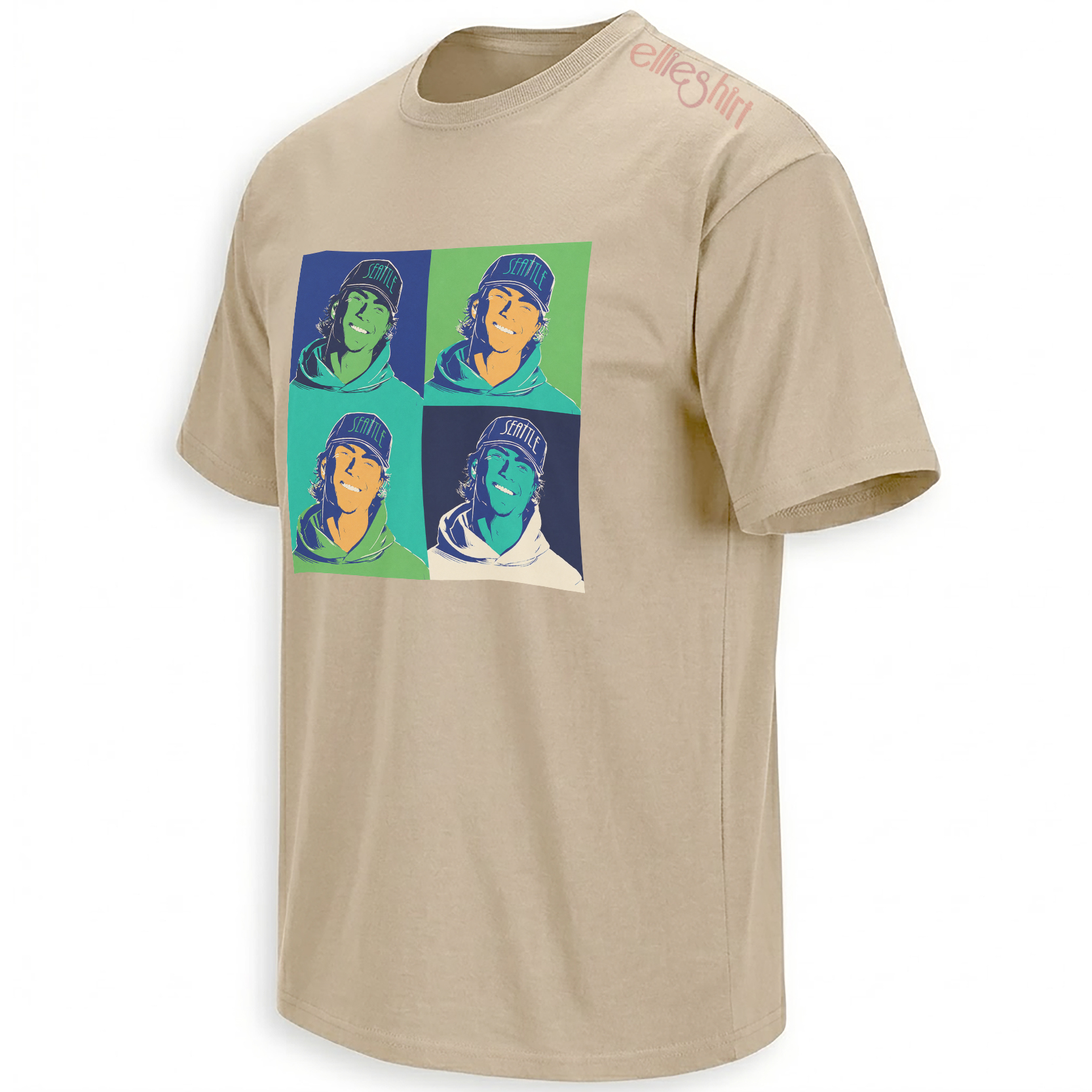
A warmer gallery-print treatment that gives the yellow, orange and magenta panels a softer vintage finish.
View the sand version →The Portrait Bridges Baseball Cards, Posters and Gallery Art
Baseball has always produced collectible player images. Tobacco cards, stadium programs, magazine covers and modern trading cards all isolate athletes from the game and turn them into visual objects.
The Woo grid belongs to that history while changing its scale and color language.
A baseball card normally presents one official version of the player. The pop-art grid presents several emotional versions at once.
The design can therefore feel like a player card enlarged into a poster, then recolored until it begins resembling gallery art.
That movement between categories is central to contemporary fan culture. Sports images are no longer confined to official photography. They circulate through illustration, collage, animation and parody while remaining connected to the athlete.
Why Woo’s Face Works in a Close Portrait
Not every player design needs a full-body action pose. Close portraits become effective when the subject possesses a recognizable expression and a clear connection to the team.
Woo’s composed appearance supports the format because the viewer can focus on facial structure, cap shape and the relationship between shadow and color.
Strong dark areas become useful graphic forms rather than photographic detail. Highlights can shift from natural skin tones into yellow, pink or turquoise without losing the face.
The repeated framing also gives the viewer enough opportunities to learn the portrait. Even someone who does not recognize Woo immediately may understand the identity by the fourth panel.
The Design Complements the “Woo’s Your Daddy” Retro Piece
The two Bryan Woo designs interpret the same pitcher through different eras of baseball culture.
The Woo’s Your Daddy design uses weathered lettering, old-school trash talk and a classic pitcher-poster atmosphere.
The pop-art portrait uses repetition, high-saturation color and the visual language of modern celebrity.
One design imagines Woo as a figure from a vintage ballpark advertisement. The other imagines him as a gallery icon reproduced across mass media.
Together, they demonstrate how completely a player can enter fan culture. The same athlete can support nostalgia, humor, contemporary art and serious baseball identity without losing recognition.
The Wider Seattle Baseball Archive
Woo’s portrait belongs beside the current figures shaping Seattle baseball: the power of Cal Raleigh, the athleticism of Julio Rodríguez, the late-inning presence of Andrés Muñoz and the rotation depth surrounding No. 22.
The wider Seattle Mariners Shirts collection preserves those player identities through retro graphics, local phrases, colorful portraits and fan-created interpretations.
Inside the broader MLB Shirts collection , the Bryan Woo pop-art piece represents the point where baseball portraiture moves beyond the scorecard and enters visual culture.
One face becomes four images. Four images become one icon. The repetition works because Seattle already knows exactly who it is looking at.
Frequently Asked Questions
Who is featured in the four-panel pop-art design?
The design features Seattle Mariners starting pitcher Bryan Woo, who wears jersey number 22.
Why does the artwork repeat Bryan Woo four times?
Repetition turns one player portrait into a pop-culture icon while allowing each panel to create a different mood through color.
Is the design based on a pitching action photograph?
No. It uses a close portrait so the emphasis remains on Woo’s face, identity and transformation across the four color panels.
What colors appear in the Bryan Woo pop-art portrait?
The composition combines Mariners-inspired navy and teal with brighter cyan, yellow, orange, pink and purple accents.
What is the difference between the sport grey and sand versions?
Sport grey gives the artwork a cooler, sharper presentation, while sand creates a warmer vintage gallery-print effect.
What number does Bryan Woo wear for Seattle?
Woo wears number 22 for the Seattle Mariners.
Why is Bryan Woo a strong subject for pop-art treatment?
His All-Star breakthrough, recognizable Seattle identity and composed portrait allow the image to remain identifiable even after natural colors are replaced.
The Bryan Woo four-panel pop-art piece transforms Seattle’s No. 22 from a conventional pitcher portrait into a vivid composition shaped by command, celebrity and the visual rhythm of modern baseball culture.
Bryan Woo Pop Art Shirt reimagines Seattle’s No. 22 through four bold portrait panels in teal, yellow, pink, orange, blue and purple. Available on sport grey and sand, the design blends Mariners identity, gallery-inspired repetition and the composed presence of an All-Star starting pitcher.