Bluey Brunson: How Jalen’s Celebration Became a Playful Symbol of New York’s Championship Joy
Jalen Brunson’s championship story was built through pressure, fourth-quarter control and the most important 45-point game of his career. Bluey Brunson remembers the emotion after the work—the raised arms, wide smile and almost childlike happiness of New York’s No. 11 finally reaching the top.
Jalen Brunson completed the 2026 NBA Finals with the kind of performance that normally produces a serious commemorative portrait. He scored a Knicks Finals-record 45 points in Game 5, led New York past San Antonio and accepted the Bill Russell Trophy as Finals MVP after the franchise’s first championship in 53 years.
The numbers invite gravity. The celebration invites something else.
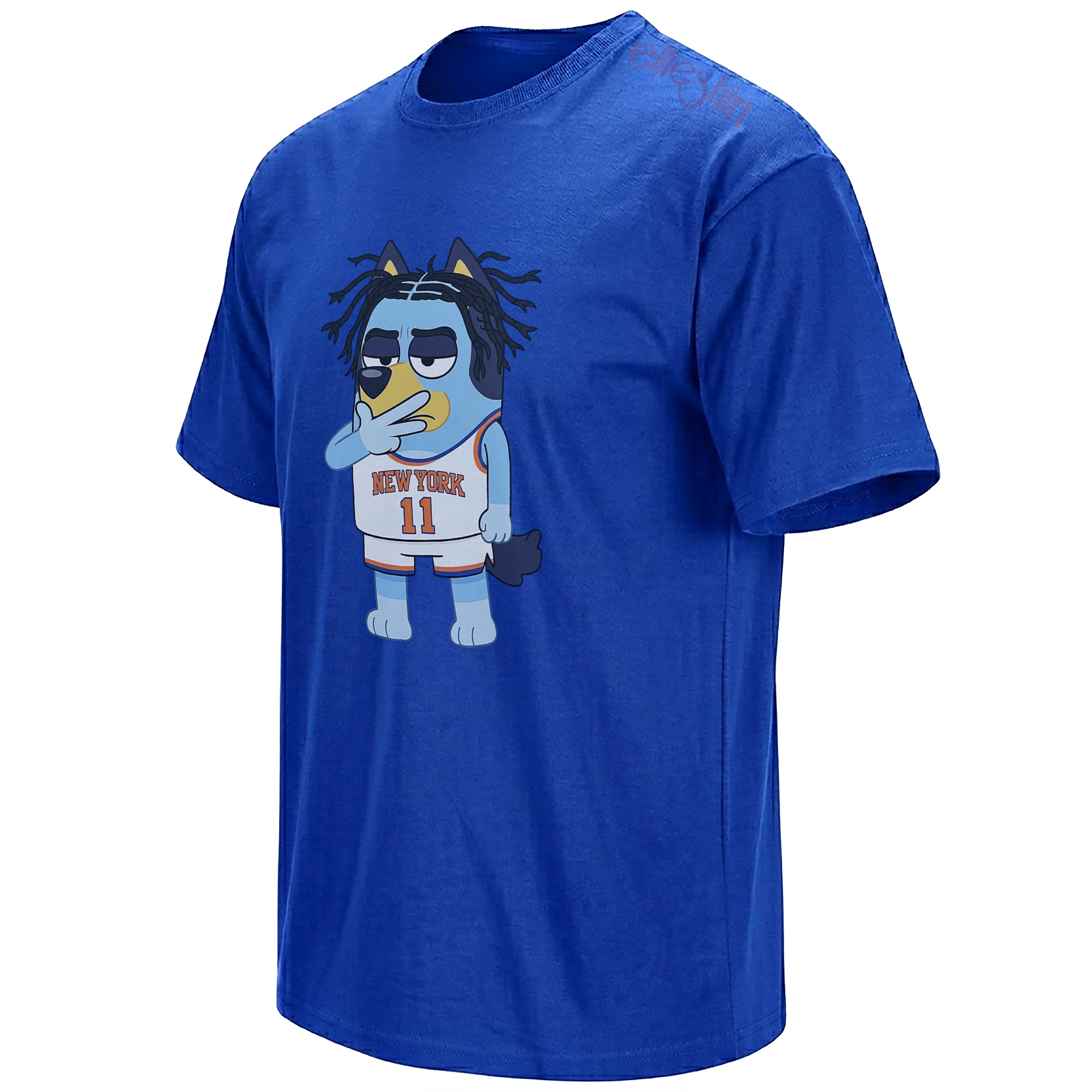
Arms raised, face open and joy completely visible, Brunson looked less like a distant basketball monument than someone finally allowing himself to experience the same happiness spreading through the five boroughs. The Bluey Brunson idea captures that softer side of the moment through rounded cartoon energy, bright colors and a pose that feels instantly welcoming.
The basketball made Brunson a champion. The celebration showed why the championship could feel like a citywide childhood dream finally becoming real.
Why Bluey Brunson Works as a Fan-Culture Nickname
The phrase succeeds because the two names share an easy rhythm. “Bluey” supplies a playful, colorful world associated with warmth and family-friendly imagination. “Brunson” supplies the athlete New York fans had just watched carry the championship offense.
Combining them changes the emotional frame around the player. Brunson is normally discussed through footwork, strength, late-game decisions and the discipline required to create space against larger defenders.
Bluey Brunson shifts attention from competitive calculation to personality. It allows fans to represent their point guard through bright colors, soft cartoon forms and a celebration rather than another intense in-game expression.
That does not diminish his achievement. It demonstrates how completely he has entered New York culture. Once a player becomes a champion, fans no longer need every image to prove his seriousness. They can celebrate him through humor, affection and visual play.
No. 11 remains the center of the image, connecting the playful visual treatment to the point guard who led New York through the Finals.
Raised arms and an open smile preserve the release after years of expectations, playoff pressure and championship pursuit.
Rounded blue forms create warmth and approachability, giving Brunson’s victory pose the visual feeling of an animated family celebration.
The Design Focuses on What Happened After the Final Buzzer
Many Brunson graphics naturally begin with basketball action. He can be shown stepping back, driving through contact, controlling the ball with his left hand or leaning into one of the patient moves that made defenders lose balance.
The Bluey Brunson design begins after those movements have already completed their purpose.
The ball is no longer the emotional center. Celebration is.
This makes the artwork especially connected to the championship rather than merely to Brunson’s general career. The pose belongs to a period when New York was no longer chasing the title, analyzing the matchup or calculating the next possession. The work was finished.
The 45-Point Clincher Gave the Joy Real Weight
Playful artwork works best when the achievement beneath it is unquestionable. Brunson’s Game 5 performance created that foundation.
With the Knicks one victory from the championship, he scored 45 points and set a franchise record for a Finals game. The performance did not arrive after the result was secure. It created the result.
San Antonio understood that New York’s offense would repeatedly return to Brunson. Defenders pressured his handle, attempted to crowd his shooting space and forced him to operate against size.
He continued finding solutions. He changed pace, reached the middle of the floor, converted difficult finishes and controlled the fourth quarter as the title moved closer.
The celebration image therefore contains an invisible sequence of difficult possessions. Every bright color and playful shape sits on top of one of the most serious championship performances in Knicks history.
- New York entered Game 5 with a 3–1 Finals lead. One more victory would end a championship wait stretching back to 1973.
- Brunson became the central offensive answer. The Knicks repeatedly trusted their point guard to create against San Antonio’s pressure.
- He scored 45 points. The total established a Knicks record for a Finals game and placed him at the center of the clincher.
- New York completed the series in five games. The final buzzer transformed the intense competitor into the joyful figure captured by the Bluey Brunson artwork.
Why Brunson’s Smile Became a Championship Image
Brunson’s public basketball identity is normally built around control. His expression changes less than the defense around him. He remains patient when a defender reaches, calm when the shot clock narrows and deliberate when New York needs one possession to stop an opponent’s run.
That restraint makes visible joy more powerful.
A celebration smile reveals the emotional contrast between the player inside the game and the person receiving the result. The point guard who appeared almost impossible to disturb could finally allow himself to be overwhelmed.
The cartoon treatment enlarges that contrast. The smile becomes more immediate, the posture more open and the colors more optimistic than a conventional championship photograph.
Fans are not only remembering that Brunson won. They are remembering what winning looked like on his face.
The Blue Palette Creates More Than a Knicks Color Match
Blue is already essential to New York’s basketball identity, but the artwork uses it with a different emotional purpose.
Traditional Knicks blue can feel bold, urban and competitive when paired with strong orange lettering. In Bluey Brunson, lighter blue tones introduce softness and animation.
Sky blue creates a friendly outer world around the player. Dark navy preserves enough contrast to hold the composition together. Orange reconnects the image to the Knicks, while yellow and coral create the feeling of a celebration taking place in a bright fictional neighborhood.
This wider palette allows the design to speak to several audiences at once: serious Knicks supporters, families celebrating together and fans who prefer playful character-driven artwork over a formal sports poster.
Darker blue grounds the image in New York basketball, preserving the strength and authority associated with Brunson’s No. 11 uniform.
Lighter shades soften the composition and turn the championship pose into a scene that feels cheerful, welcoming and easy to share across generations.
The Artwork Makes Brunson Accessible to Younger Knicks Fans
Championship seasons create new generations of supporters. Children who may not understand salary structures, playoff history or every tactical decision can still recognize a player, a number and the happiness surrounding a victory.
The Bluey Brunson concept meets that audience naturally. The rounded figure and animated expression make the player appear friendly without removing the uniform details that connect him to the team.
Number 11 becomes especially important in this context. Young supporters often learn a roster through numbers before they understand complete biographies. The numeral becomes Brunson’s fastest identity mark.
Families watching the championship together can therefore read the design in several ways. Adults recognize the Finals MVP and the end of a 53-year wait. Children recognize the smiling No. 11 surrounded by bright colors.
A championship creates historical meaning for longtime supporters and first memories for younger ones. Bluey Brunson places both experiences inside the same joyful image.
Number 11 Became One of New York’s Most Recognizable Marks
Jersey numbers become powerful when fans no longer need the name above them. By the end of the championship run, 11 had reached that level across New York.
The number appeared throughout Madison Square Garden, across city streets and along the championship parade route. It could represent the captain, the point guard, the Finals MVP or simply the player supporters trusted with the final possession.
In the Bluey Brunson artwork, the number operates like a character badge. It confirms the subject immediately while helping the playful illustration remain connected to a real athlete.
Its two repeated vertical forms also provide a clean graphic shape. The number remains readable even when the surrounding colors and cartoon details become visually active.
The Design Captures the Difference Between Respect and Affection
Basketball performance can earn respect. Cultural permanence requires affection as well.
Brunson earned respect through production, availability and his ability to control important games. Knicks supporters came to trust that he would remain composed when the arena became loudest.
Affection developed through the wider personality surrounding those performances: his understated confidence, his chemistry with teammates and the contrast between his serious in-game expression and the joy that appeared after major victories.
Bluey Brunson belongs to the affectionate side of that relationship. It does not ask viewers to study the footwork or defend his place in the league hierarchy. It assumes that work has already been completed.
New York respected Brunson because he delivered under pressure. It embraced him because the champion still looked capable of experiencing victory with the same wonder as everyone watching.
The Parade Turned No. 11 Into a Citywide Character
The championship parade expanded Brunson’s image beyond Madison Square Garden. Fans filled Lower Manhattan, reached toward the trophy and treated the Finals MVP as the central figure of a celebration involving generations of New Yorkers.
At City Hall, chants of “MVP” placed his individual award inside the larger public ceremony. Brunson’s remarks acknowledged the expectations surrounding the team while returning attention to the supporters who had carried those expectations for decades.
That environment gave the animated concept additional meaning. A cartoon-style Brunson no longer represented only one athlete. It represented the version of No. 11 that had entered murals, signs, family photographs and children’s championship memories across the city.
The player had become a character in New York’s shared story.
Why Playful Championship Art Can Last
Formal championship graphics establish the essential facts: team name, trophy, year and final result. They operate like official records.
Playful artwork preserves a different layer of memory. It remembers the jokes, expressions, family reactions and visual experiments that grew around the victory.
The Bluey Brunson piece belongs to that second category. Its purpose is not to replace the trophy image. It records the warm, almost animated happiness surrounding the player who lifted it.
Years later, the title will remain a statistic. Artwork like this can preserve what the title felt like before time made the celebration seem inevitable.
From Clutch Point Guard to Championship Folk Hero
Brunson arrived in New York as a major free-agent addition, but his relationship with the city quickly exceeded ordinary roster evaluation.
Each postseason added another layer. Late-game shots created the clutch reputation. Captaincy reinforced his leadership. Eastern Conference and Finals MVP awards gave the journey official recognition.
The championship completed the transformation. Brunson was no longer simply the best player on a successful Knicks team. He had become the central figure in the season that ended one of basketball’s longest and most discussed title waits.
Folk heroes naturally produce many visual forms. Some are serious. Some are exaggerated. Some borrow from cartoons because fans want to see a familiar personality placed inside an imaginative world.
Bluey Brunson is one of those fan-created worlds: bright, affectionate and built around the belief that New York’s basketball hero can also be fun.
The Wider Knicks Championship Archive
Brunson’s celebration belongs beside the trophy lift, the 45-point clincher, the parade bus and the citywide images that defined New York’s championship week.
The wider New York Knicks Shirts collection preserves those moments through player portraits, championship slogans, parade graphics and fan-created visual language.
The 2026 NBA Finals Champions collection focuses on the exact postseason when Brunson, OG Anunoby, Karl-Anthony Towns, Josh Hart and the rest of the roster turned belief into a title.
Inside the broader NBA Shirts collection , Bluey Brunson represents the affectionate side of basketball culture—the moment a Finals MVP becomes recognizable enough to enter parody, animation and family-centered fan art.
Frequently Asked Questions
What does “Bluey Brunson” mean?
Bluey Brunson is a playful fan-art concept combining bright blue cartoon energy with Jalen Brunson’s name, No. 11 uniform and championship celebration.
Why is Jalen Brunson shown celebrating?
The raised-arm pose focuses on the joy following New York’s 2026 NBA championship rather than depicting another serious in-game action moment.
What number does Jalen Brunson wear for the Knicks?
Brunson wears number 11 for the New York Knicks, and the numeral functions as one of the design’s primary player-identification elements.
Did Jalen Brunson win the 2026 NBA Finals MVP award?
Yes. Brunson received the Bill Russell Trophy after leading New York to the championship and scoring a Knicks Finals-record 45 points in the title-clinching Game 5.
Why does the artwork use so many shades of blue?
Dark blue connects the graphic to Knicks basketball, while lighter blue tones create the friendly, animated and family-oriented feeling behind the Bluey Brunson concept.
What makes this different from a standard Brunson player design?
Instead of centering a jump shot, dribble or statistical milestone, the artwork emphasizes Brunson’s smile, raised arms and playful cartoon-style championship personality.
Why does the concept appeal to younger Knicks fans?
The bright palette, rounded character style and recognizable No. 11 identity make the championship hero easy for younger fans to understand and celebrate.
The Bluey Brunson No. 11 celebration piece transforms New York’s championship leader into a bright, playful fan-culture character built around basketball history, family joy and one unforgettable smile.
Bluey Brunson Shirt transforms Jalen Brunson’s No. 11 Knicks championship celebration into a bright cartoon-style fan portrait. The design combines New York orange and blue, raised-arm Finals MVP joy and a playful family-friendly visual energy inspired by the city’s historic 2026 title.