Evil Dead Icons: How a Cabin, Chainsaw and Book of the Dead Built Horror’s Most Recognizable Visual Language
The Evil Dead is remembered through more than plot. A trapdoor, a tape recorder, pale Deadite eyes, a blood-covered chainsaw and a book wrapped in mutilated skin have become a visual vocabulary that horror audiences can recognize before anyone says the title.
Few horror stories have extracted so many permanent images from such a restricted space. The original nightmare begins with a group of young people, an isolated cabin and a recording that should never have been played. From those stripped-down ingredients, The Evil Dead developed an icon system that has remained recognizable across decades of sequels, reinterpretations and fan culture.
The cabin is not merely a location. The book is not merely a prop. The chainsaw is not simply a weapon. Each object carries a different stage of the franchise’s emotional evolution—from raw supernatural terror to frantic survival, grotesque physical comedy and blood-soaked hero mythology.
That is why a collage of Evil Dead symbols can communicate the entire world without recreating one theatrical poster. Fans do not need a complete scene. They recognize fragments: the curved blade of a chainsaw, the eye of a possessed face, the damaged hand, the cellar door and the rough contours of the Book of the Dead.
The franchise did not build its mythology through polished monuments. It built it from damaged objects that looked as though they had barely survived the night.
The Cabin Is a Machine That Produces Horror
The isolated cabin is one of horror cinema’s most familiar settings, but The Evil Dead does not treat it as neutral shelter. Its walls, floorboards, windows and cellar seem to participate in the attack. The building stops separating the characters from the forest and begins delivering the supernatural threat directly to them.
Isolation gives every interior object additional weight. A lamp becomes the only reliable source of light. A door becomes a barrier that may not hold. A trapdoor becomes a line between the characters and whatever is waiting beneath the floor.
The cabin’s visual power comes from compression. There is nowhere safe for the eye to rest. Tight rooms fill with damaged furniture, tools, shadows, blood and handmade objects. The production’s rough physical surfaces give the space the feeling of something discovered rather than constructed.
Later cabin-in-the-woods films would refine the setting into a genre category. The Evil Dead helped establish why the location works so well: it removes ordinary social protection, narrows the available choices and turns architecture into part of the monster.
The Book of the Dead Is Horror Designed as an Object
The Book of the Dead remains disturbing because it refuses the clean visual language of magical artifacts. It does not look precious, scholarly or ceremonial. Its cover appears organic, scarred and hostile, as though the object itself belongs to the same damaged physical world as the creatures it releases.
That design makes the book readable at a glance. The audience does not need to understand every incantation or page. The surface already communicates that the object should not be handled.
Horror often depends on a character crossing a forbidden threshold. In The Evil Dead, the book gives that threshold a physical form. It can be discovered, studied, opened and misused. Its presence converts curiosity into action.
The object also supplies continuity across changing stories. Cabins, cities and families can change, but the idea of recorded words awakening ancient evil remains central. The book operates less like a conventional plot device and more like a portable entrance to the franchise’s supernatural world.
- The cover creates immediate revulsion. The surface looks biological rather than manufactured, collapsing the distinction between a book and a body.
- The pages imply a history larger than the characters. Drawings and ritual text suggest that the nightmare existed long before anyone entered the cabin.
- The recording makes the danger repeatable. Evil can be released without direct understanding; hearing the words is enough to turn archived research into an active threat.
- The book survives its readers. Characters disappear, but the object remains available for another discovery and another disastrous attempt to control it.
Why the Tape Recorder Is More Frightening Than a Spell
A spoken incantation normally requires intention. A tape recorder removes that protection. The person pressing play does not need to believe in the words, pronounce them correctly or understand what they mean.
The machine converts ancient evil into reproducible media. A researcher’s voice, captured during an earlier investigation, carries the threat forward in time. The supernatural does not need a priest, cult or ritual gathering. It needs a button.
That contrast gives the scene its lasting unease. The technology is ordinary, almost reassuring. The voice sounds measured and academic. Yet the content being preserved is uncontrollable. Rational documentation becomes the delivery system for irrational violence.
Within a symbol collage, the recorder may appear less dramatic than a chainsaw or possessed face. Its importance is structural. It is the object that converts the cabin’s buried history into the characters’ immediate present.
The Collage Works Like a Horror Memory Test
A strong franchise collage does not simply place many images together. It controls recognition. The viewer moves across the design, identifying one symbol and then using it to unlock the next.
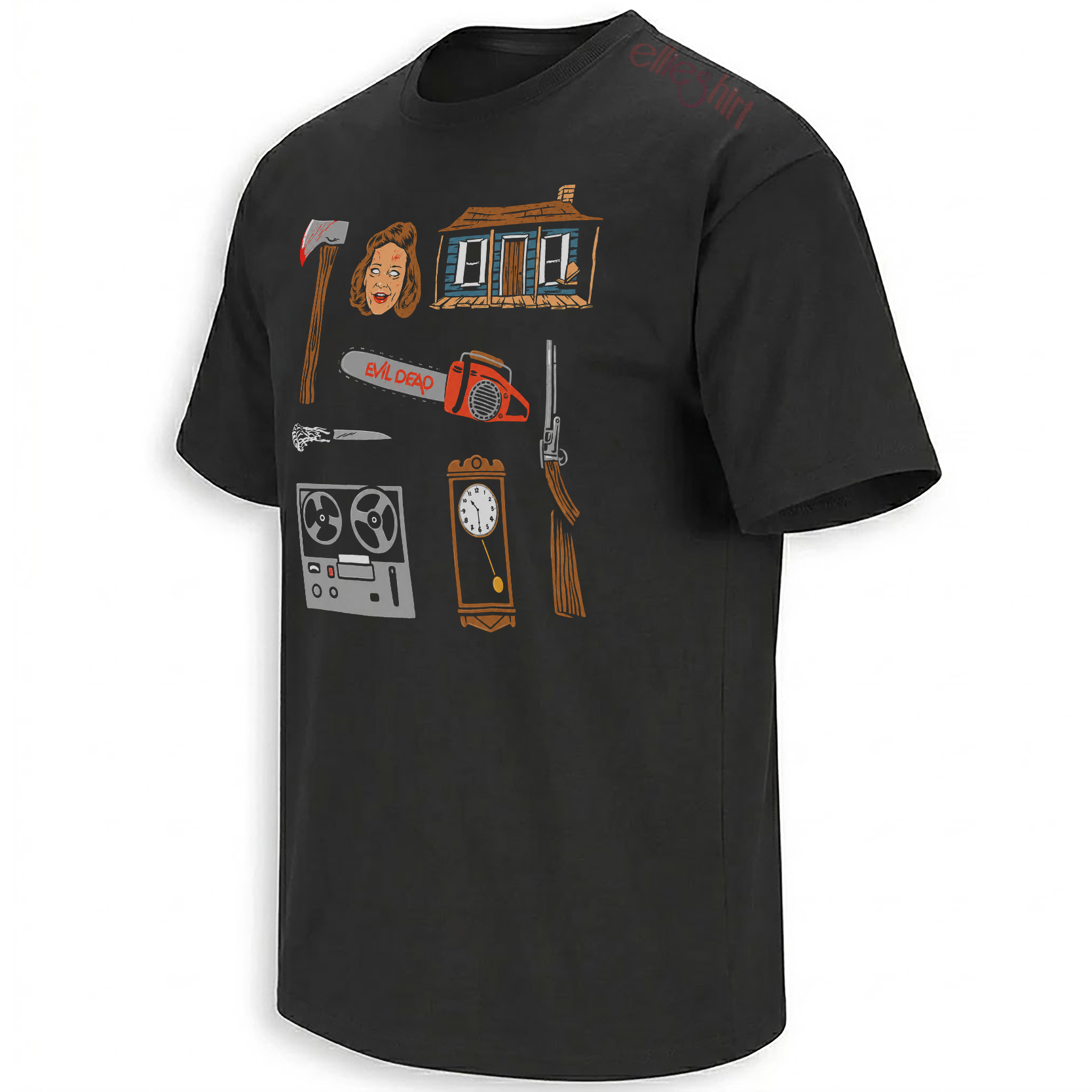
The Evil Dead Icons design arranges the franchise as a field of visual clues rather than a conventional movie poster. There is no single portrait required to explain the composition. The accumulated objects become the subject.
That approach matches how cult films live in fan memory. Viewers rarely retain only a linear summary of the plot. They remember gestures, props, practical effects, sounds and moments of physical transformation. A collage allows those memories to appear at the same time.
Why Ash Williams Is Often Recognized Through Objects
Ash Williams is one of horror’s most recognizable protagonists, but the visual identity surrounding him is unusually dependent on tools and damage. A blue work shirt, a torn sleeve, a mechanical hand, a shotgun and a chainsaw can identify the character even when his face is absent.
That object-based identity reflects Ash’s transformation. He does not enter the cabin as a prepared monster hunter. He becomes one through improvisation, injury and escalating necessity.
The chainsaw represents the most extreme stage of that transformation. It begins as equipment associated with the wooded environment and becomes a replacement for what possession has taken from him. The tool is no longer held in the ordinary sense. It becomes part of the body’s new silhouette.
This is why the chainsaw can sit within a collage as both weapon and portrait. It carries Ash’s presence without needing a complete character illustration. Fans recognize the shape, the posture it implies and the mixture of desperation and swagger that developed around it.
The earliest imagery feels wet, claustrophobic and uncontrolled. Tools are used because the characters have nothing else, and every act of survival appears physically costly.
As Ash evolves, the same tools acquire exaggerated confidence. Horror and comedy occupy the same frame without making the supernatural threat harmless.
The Deadites Turn Possession Into Performance
Possession in The Evil Dead is not quiet. Deadites do not merely stand still with altered eyes. They mock, laugh, distort their voices and weaponize the memories of the person whose body they occupy.
This behavior gives each possessed face a theatrical quality. The creature performs cruelty directly toward the survivors, shifting rapidly between human familiarity and inhuman expression.
Pale eyes remain one of the most efficient elements of the design. They remove the ordinary point of emotional contact while leaving the rest of the face recognizable. The viewer can still see who the person was, but the gaze no longer belongs to them.
In collage form, Deadite faces provide emotional interruption between the objects. The chainsaw, book and recorder can be studied as artifacts. A possessed face looks back. It reminds the viewer what those objects release.
The franchise moves constantly between object horror and facial horror. The book and recorder promise danger; the Deadite face reveals what the danger has done to a person.
Practical Effects Give Every Symbol Physical Weight
The tactile quality of The Evil Dead is essential to its visual legacy. Makeup, prosthetics, fluids, mechanical effects and damaged sets create surfaces that appear to occupy the same physical environment as the performers.
Even when an effect is deliberately excessive, it remains connected to material. Blood hits walls. Furniture breaks. faces stretch. Hands, tools and doors collide with visible resistance.
That physicality allows individual frames to survive as graphic references. The images are not built only from atmosphere or darkness. They contain strong shapes, textures and contrasts that can be isolated, illustrated and rearranged.
A horror collage benefits from those qualities. The viewer can distinguish the rough book cover from metal tools, pale eyes, wooden boards and spilled blood. Every icon possesses its own material identity while remaining part of the same world.
Red, Acid Green and Bone White Create a Modern Horror Palette
The design does not rely on black and red alone. That familiar combination can communicate danger, but using it across every object would flatten the archive into one visual tone.
Bone-white and aged cream provide the feeling of damaged paper, old illustrations and recovered evidence. Blood red supplies violence and immediate contrast. Acid green introduces supernatural contamination—the sense that something unnatural has entered the ordinary world.
Muted violet and cold blue add psychic distance. They allow shadow, possession and nighttime imagery to remain distinct from the warm brown surfaces of wood, leather and decayed pages.
Together, the colors create movement across the composition. The eye does not remain trapped in one dark field. It moves between danger, decay, supernatural energy and archival texture.
Black establishes the night. Red records the violence. Acid green tells the viewer that the danger does not belong to the natural world.
How a Low-Budget Nightmare Became a Design Language
The original film’s influence does not come from visual polish in the conventional sense. Its force comes from invention under pressure. Camera movement, distorted sound, handmade effects and extreme performances create energy that expensive production design alone could not reproduce.
That energy remains visible in the franchise’s symbols. Nothing feels ceremonial or safely contained. The book looks assembled from forbidden material. The cabin appears unstable. The weapons look heavy, loud and dangerous to the person using them.
As the series moved between horror, slapstick and action, the objects acquired new meanings without losing their original roughness. The chainsaw could become heroic and still remain grotesque. The book could appear in a new setting and remain immediately threatening.
This flexibility explains why Evil Dead iconography works so well in fan art, posters, tattoos and apparel. Each symbol can stand alone, but several together restore the rhythm of the entire franchise.
A Collage Is the Right Form for Cult Horror Memory
A traditional poster organizes attention around hierarchy: title, central character, supporting faces and a dramatic background. A collage behaves more like fan memory. Every object competes for recognition.
The format rewards viewers who know the material. One person notices the book first. Another is drawn to the chainsaw. Another recognizes a minor prop connected to a particular scene. The act of viewing becomes a quiet exchange between the design and the audience’s own history with the films.
This is also why the artwork can remain interesting after its main references are understood. The composition invites repeated scanning. Small illustrations operate like hidden details in an archive rather than filler around one large image.
Within Ellie Shirt’s newest culture and movie-inspired designs , the piece functions as a visual index rather than a single-scene reproduction. It preserves the objects through which fans remember the franchise.
Frequently Asked Questions
What are the most recognizable Evil Dead icons?
The best-known symbols include the isolated cabin, the Book of the Dead, the tape recorder, Deadite faces, the cellar trapdoor, Ash Williams’ chainsaw and his shotgun.
Why is the cabin so important to The Evil Dead?
The cabin traps the characters within a confined supernatural environment and turns doors, windows, furniture and the cellar into active parts of the horror.
What role does the tape recorder play in the original story?
The recorder contains a researcher’s reading of forbidden passages. Playing the recording releases the supernatural force connected to the book and the surrounding woods.
Why is the chainsaw associated with Ash Williams?
The chainsaw becomes part of Ash’s survival identity after he adapts it into a replacement for his severed hand, creating one of cult horror’s most recognizable character silhouettes.
What is a Deadite?
A Deadite is a person whose body has been possessed by the demonic force released through the Book of the Dead and its recorded incantations.
Why does Evil Dead imagery work well as a collage?
The franchise is remembered through many distinctive props, faces and practical-effects moments. A collage allows those symbols to function together as a visual archive.
Why does the design use distressed illustration rather than clean photography?
Distressed illustration matches the franchise’s handmade effects, damaged environments and cult-poster history while allowing many symbols to share one coherent composition.
The Evil Dead Icons collage gathers the cabin, book, Deadites, weapons and recordings into one illustrated archive of the images that turned a contained supernatural story into enduring horror mythology.
Evil Dead Icons Shirt assembles the cabin, Book of the Dead, tape recorder, Deadites, chainsaw and other recognizable horror symbols into a distressed illustrated archive. The collage captures the handmade effects, supernatural mythology and blood-soaked visual language that made The Evil Dead a cult horror landmark.