
The Super Knicks Roster Cartoon Exists Because New York Is Turning Every Player Into a Character
The Knicks’ 2026 Finals run has moved past ordinary basketball coverage. With Madison Square Garden back in the Finals and New York carrying a 2-0 lead, the roster now feels like a public cast: argued over, exaggerated, memed, trusted, doubted, and drawn into city memory before the ending is known.
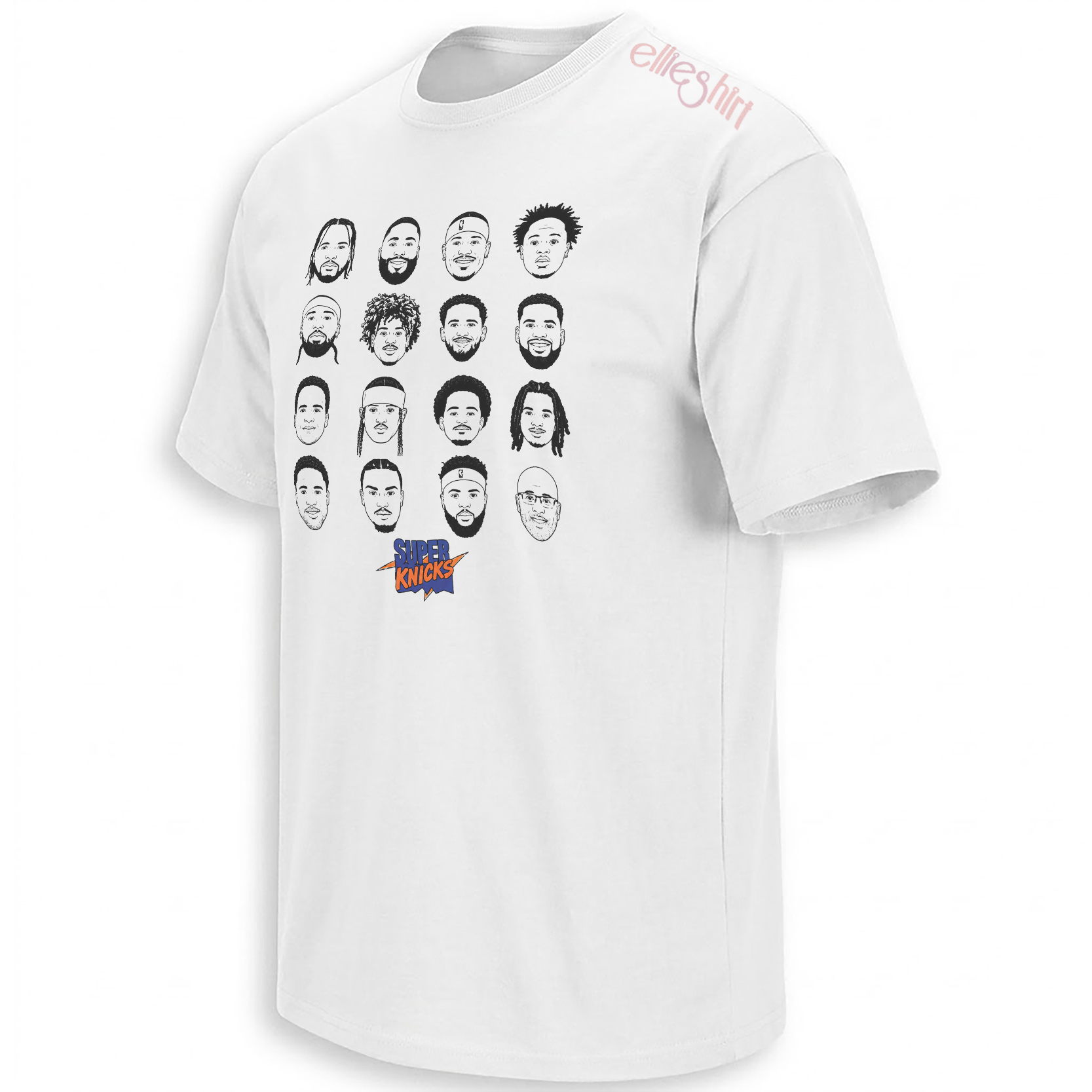
The city started drawing the Knicks before the Finals had an ending. That is what happens when a team returns to a stage New York has been waiting to see again for decades. The game previews talk about matchups, defensive coverages, and half-court decisions. The city talks in faces.
Brunson becomes the calm center of the page. Towns becomes the validation arc. Hart becomes motion and chaos. Bridges becomes the long-limbed swing piece. Anunoby becomes the quiet defensive shape of the run. Robinson becomes the reminder that old Knicks basketball was never supposed to be soft. Around them, the rest of the roster turns into the kind of supporting cast New York fans love to claim as their own.
That is why a Super Knicks roster cartoon feels natural right now. The city is not only watching basketball; it is assigning emotional roles. Every player gets a face. Every face gets a joke. Every joke becomes another way to make the pressure bearable.
Why New York Needed the Whole Roster to Feel Visible
Finals attention usually narrows. It finds the star, the stat line, the late-game shot, the national debate. Knicks culture does the opposite when the moment gets this big. It widens. Suddenly the eighth man matters in a deli conversation. A defensive possession becomes a neighborhood argument. A bench reaction becomes a screenshot. A role player’s body language becomes part of the city’s mood.
The 2026 Finals created exactly that environment. New York’s lead over San Antonio made belief louder, but it also made the stakes heavier. A city that has not seen a Knicks title since 1973 does not experience a 2-0 Finals lead casually. It turns the roster into a collective object because one player alone cannot hold that much history.
In plain terms, this is why the cartoon format works: it visualizes the emotional depth chart New York has already built in public.
The Internet Turned the Knicks Into a Comic Ensemble
The online mood around this Finals run is not clean confidence. It is confidence wrapped in trauma, celebration wrapped in superstition, and jokes that sound funny because fans are trying not to admit how badly they want the ending. That is why the roster has become so memeable. Each player gives the internet a different emotional tool.
Brunson carries the belief system. Towns carries the argument about transformation. Hart carries the manic edge. Bridges and Anunoby carry the language of length, defense, and trust. Robinson gives the whole thing a bruising Garden memory. The Spurs may have the singular futuristic presence of Victor Wembanyama, but New York’s counter-image is collective: a roster drawn as a group because the city is experiencing the series as a group.
Design Language: Roster Faces, Comic Density, and Knicks Color Memory
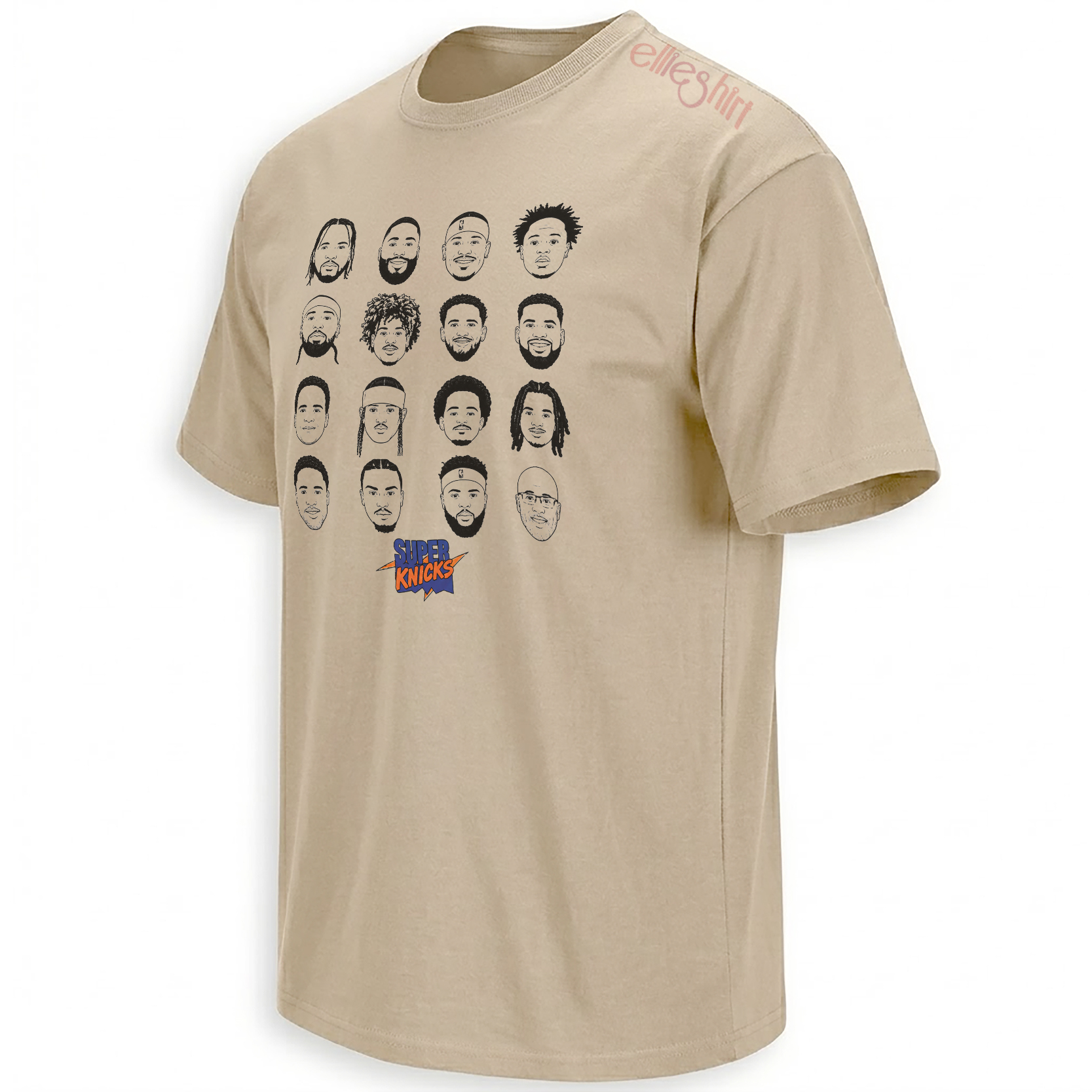
The artwork succeeds because it refuses to make the roster look too formal. It has the density of a fan poster, the exaggeration of a cartoon lineup, and the emotional logic of a city that wants to see everyone at once. A standard team-photo treatment would flatten the moment. A caricature lets it breathe.
The orange and blue are not just team colors here. They are emotional shortcuts. Blue gives the graphic its Garden identity. Orange gives it noise and urgency. The stacked faces make the roster feel like a cast poster for a series New York is watching with the intensity of live theater. The alternate white, sand, and grey versions change the mood slightly, but the central idea stays the same: the team is being archived as characters before the final buzzer of the story.

Why the 1999 Memory Still Shapes the 2026 Mood
The current Knicks story cannot escape 1999 because the Garden cannot escape it either. For a whole generation of fans, the last Knicks Finals appearance is inherited history: replay clips, old jerseys, family stories, jokes about pain, and a sense that the franchise’s biggest stage belonged to another lifetime.
That is why 2026 feels so unstable emotionally. It is happening now, but it keeps dragging older memories into the room. New York is watching Brunson and this roster, but it is also watching every version of itself that waited through the years between Finals games at MSG.
Inside the wider New York Knicks collection, graphics like this feel less like isolated pieces and more like a running archive of the city’s basketball mood. Around the broader NBA shirts and apparel archive, this roster cartoon belongs to the Finals-era visuals that only fully make sense while the city is still nervous.
The Spurs Series Gives the Cartoon Its Tension
The Spurs bring a different kind of image to the series. Wembanyama is not just an opponent; he is a scale problem, a future-facing basketball figure, the kind of player who makes every matchup look like a diagram. That makes the Knicks’ roster-cartoon energy even sharper.
New York’s counter to that singular giant is a collective mythology. The Super Knicks idea does not present one figure floating above the city. It presents a group — exaggerated, crowded, connected, and emotionally argued over. That is exactly how this Finals has felt from the New York side: less like one hero saving the city, more like a cast trying to drag decades of waiting across the finish line together.
The Super Knicks roster cartoon sits inside the moment as a visual record of how quickly New York turned a Finals rotation into city mythology.
FAQ
Why does the Super Knicks roster cartoon fit the 2026 Finals run?
The 2026 Finals have made the Knicks roster feel like a public cast. A cartoon format reflects how New York fans are exaggerating roles, personalities, jokes, and pressure during the run.
Why is Madison Square Garden important to this Knicks moment?
Game 3 brings the Finals back to MSG for the first time since 1999, making the series feel connected to decades of waiting and older New York basketball memory.
Why are fans talking about the whole roster instead of only one star?
Brunson is central, but the run depends on a collective identity. Towns, Hart, Bridges, Anunoby, Robinson, and the supporting cast each carry a different emotional role in the city’s Finals story.
How does the Spurs matchup shape the story?
San Antonio’s Victor Wembanyama gives the series a singular, future-facing figure, while New York’s answer is a collective roster mythology built around depth, roles, and city belief.
A Team Drawing Before the Ending Is Written
The strange thing about Finals culture is that memory starts forming before the result is known. New York is already collecting images, jokes, rituals, and faces because the city can feel how rare the stage is. The roster cartoon belongs to that unfinished archive.
Maybe it becomes part of a championship memory. Maybe it becomes a reminder of how close the city allowed itself to feel. Either way, the Super Knicks image captures the moment before history hardens — when every player still looks like a character and every fan still believes the next panel could change everything.