
For UTSA, Hispanic Heritage Is Not a Side Theme — It Looks Like San Antonio
When the Roadrunners return to the Alamodome on September 26, the schedule does not simply list Colorado State. It identifies the day as UTSA’s Hispanic Heritage game — a natural setting for “Los Correcaminos,” papel-picado-inspired ornament and graphics that connect football with the visual culture surrounding San Antonio.
College football theme games can sometimes feel added onto the season from the outside. UTSA’s Hispanic Heritage game carries a different relationship to place. The Roadrunners play in San Antonio, a city where Hispanic culture is not a decorative footnote to civic identity. It is embedded in language, food, family traditions, music, public celebration and the way the city represents itself.
UTSA’s own history with the event reflects that connection. The athletics department has described its annual Hispanic Heritage Game as a celebration of San Antonio’s rich Hispanic culture and of the university’s status as a Hispanic-Serving Institution. Previous editions have included Mariachi Los Paisanos and Ballet Folklorico San Antonio alongside the football presentation.
For 2026, the moment returns on September 26. UTSA hosts Colorado State at the Alamodome at 11 a.m. CDT on ESPNU. The Roadrunners enter the week 2–1, turning the final nonconference game into both a football checkpoint and a cultural home date.
The strongest UTSA Hispanic Heritage graphics do not paste culture onto football. They let San Antonio’s visual language reshape what a Roadrunners football graphic can look like.
The Roadrunner Is Already a San Antonio Symbol
That is what makes “Los Correcaminos” such a natural starting point. “Correcaminos” is the Spanish word for roadrunners, so the phrase does not replace UTSA’s identity; it translates it. A familiar mascot suddenly sounds at home in another part of the city’s linguistic landscape.
The connection also reaches beyond one T-shirt. UTSA’s athletics culture already relies heavily on the Roadrunner, Rowdy and the “Birds Up” hand sign as shared symbols. Hispanic Heritage gives designers a reason to take those symbols and place them in another visual vocabulary without losing the school identity underneath.

Four Designs, Four Different Ways to Read the Same Moment
The strongest part of this four-piece set is that it does not repeat one artwork four times. Each graphic enters the same Hispanic Heritage conversation from a different visual doorway: language, city identity, celebratory paper ornament and folk-art-inspired border work.

The Spanish name becomes the headline while orange, pink, turquoise, lime and yellow accents turn the Roadrunner into the most playful piece in the set.
View Los Correcaminos →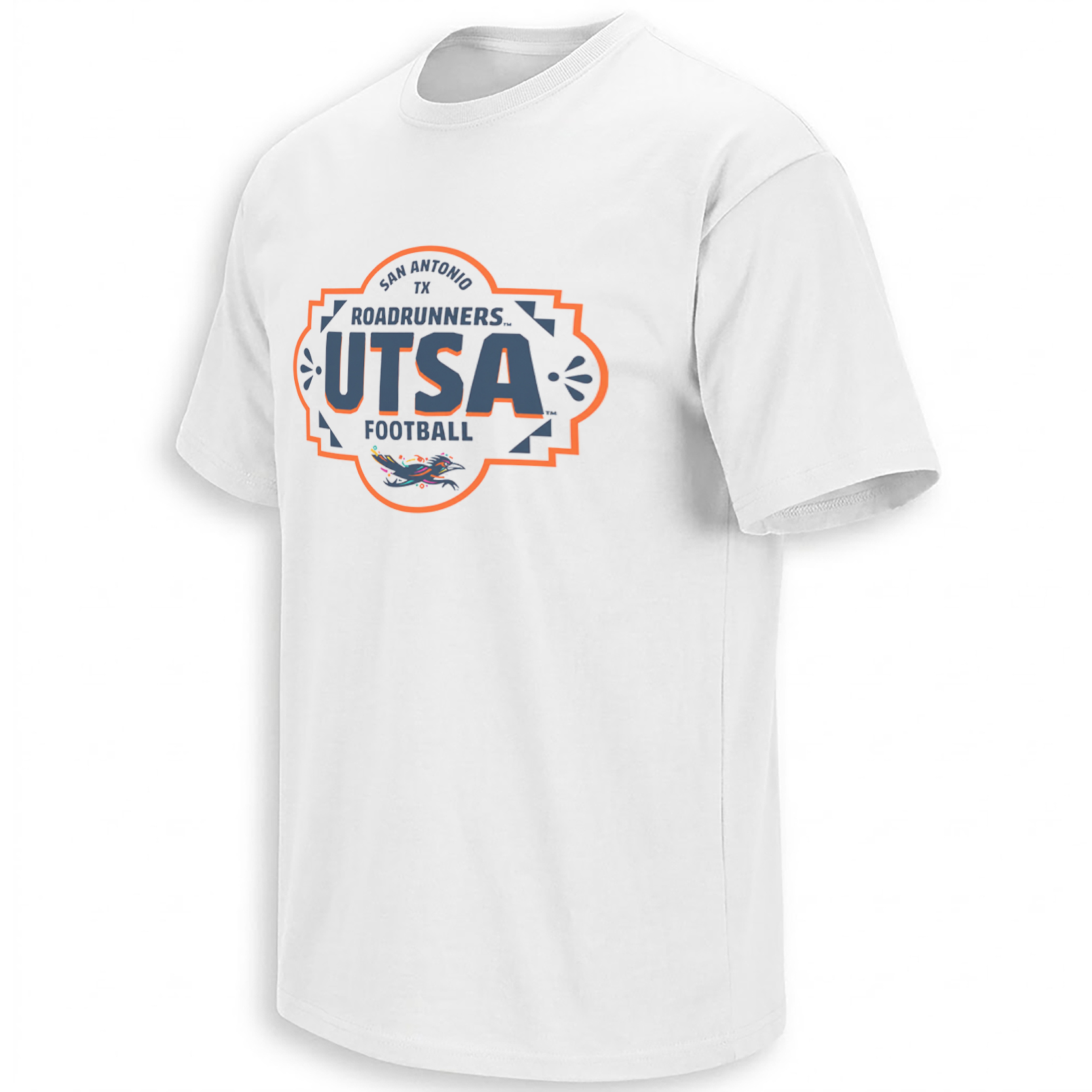
A more structured commemorative badge places “San Antonio TX,” UTSA football and the multicolor Roadrunner inside one compact city-and-program emblem.
View the San Antonio badge →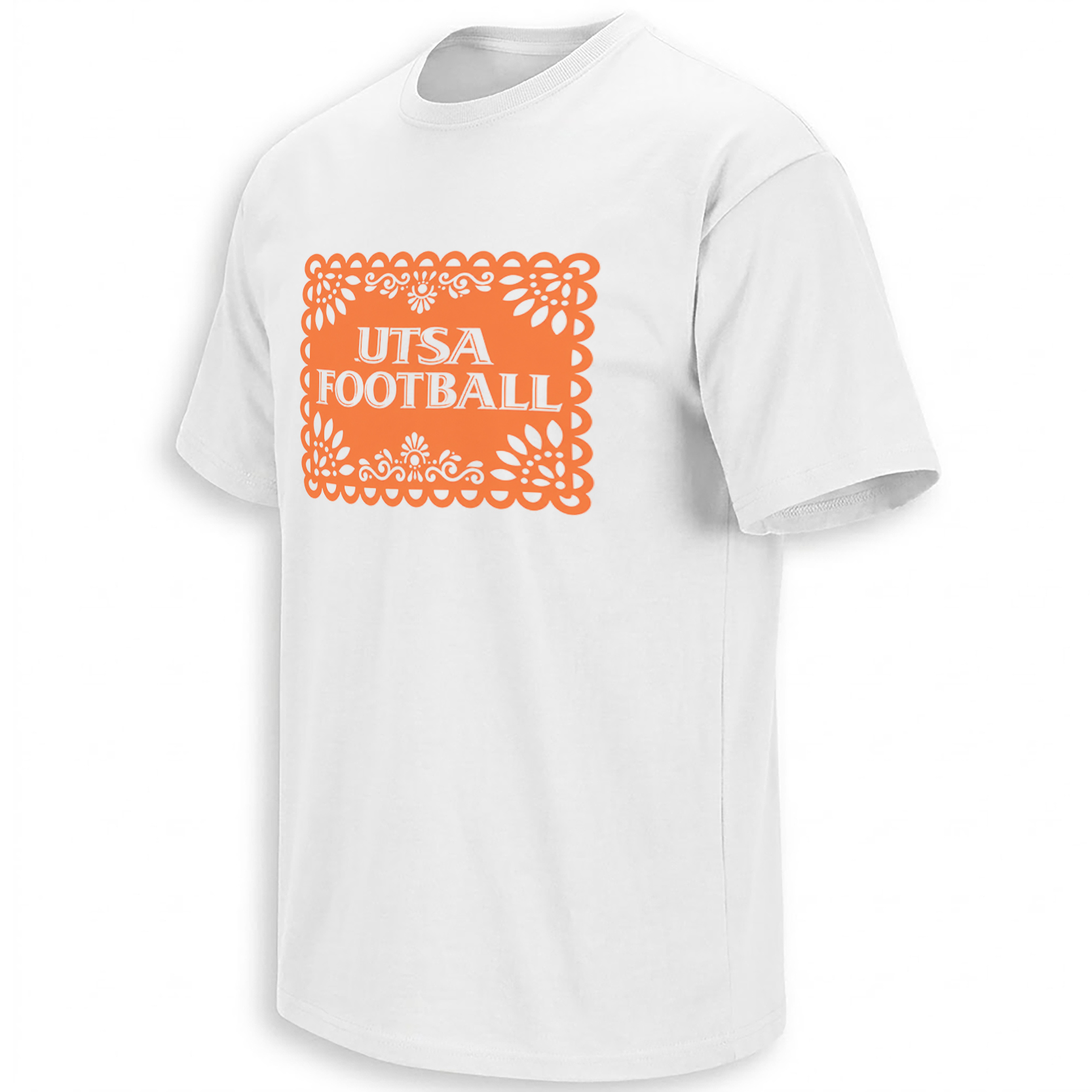
The football name sits inside an orange cut-paper-inspired ornamental frame, allowing decorative rhythm rather than a player image to carry the cultural reference.
Explore the ornamental graphic →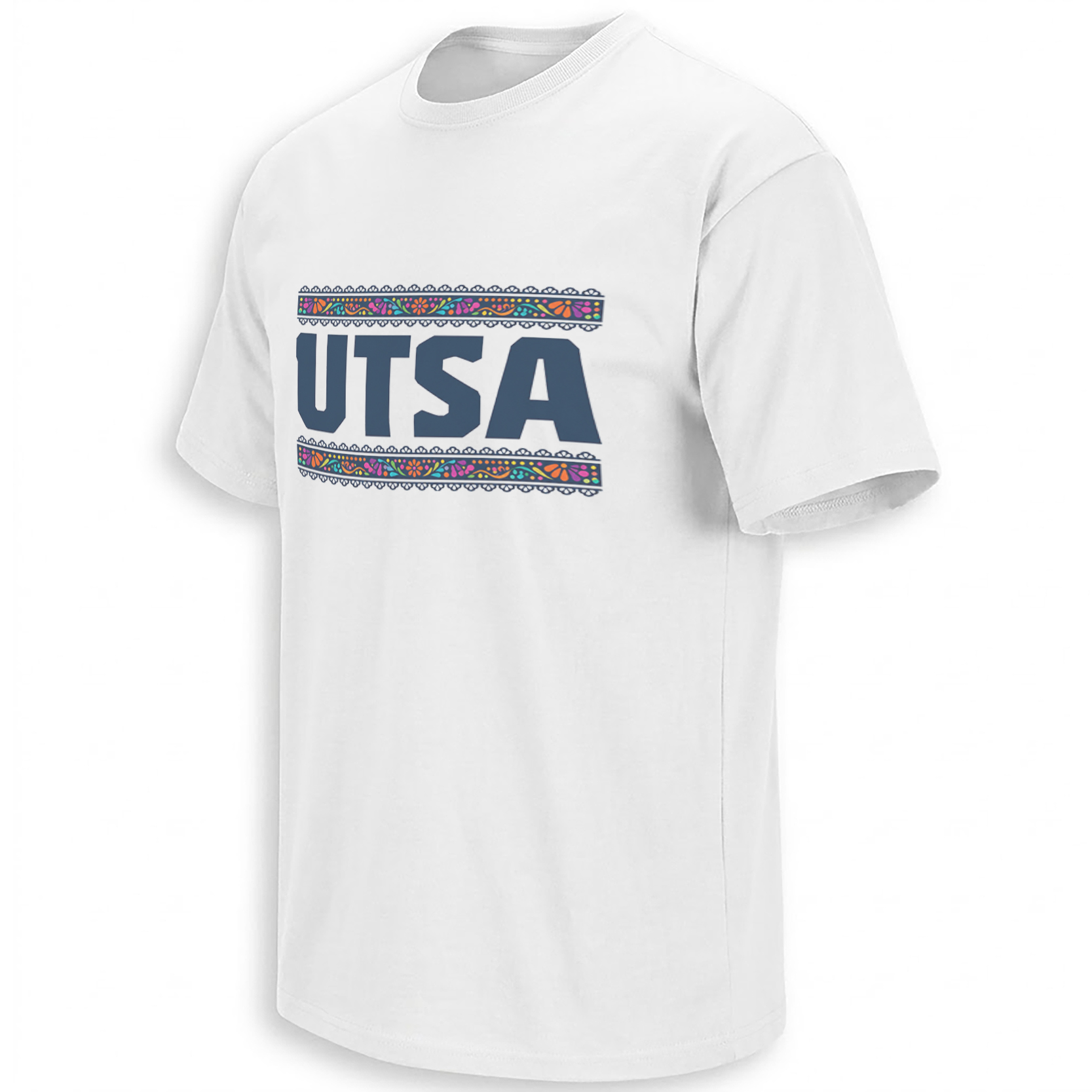
Thick navy UTSA lettering is framed by colorful flowers, leaves, dots and geometric forms that create the impression of embroidered ribbon around the school name.
View the folk-art-inspired piece →Why Papel Picado-Inspired Design Works on Football Graphics
Papel picado is associated with celebration because negative space is part of the visual language. The paper is cut so that pattern, light and empty space work together. Translating that idea into an apparel graphic means resisting the urge to fill every inch with football imagery.
The orange UTSA Football piece does exactly that. The rectangular frame carries floral curls, symmetrical openings and decorative rhythm while the white lettering stays legible in the middle. Rather than inserting a helmet or action pose, it lets the ornamental frame tell viewers what kind of cultural moment they are looking at.
Calling the design “papel-picado-inspired” is important. It acknowledges the visual reference without pretending a printed football graphic is itself a traditional handmade papel picado work. The relationship is interpretive, which is precisely why the design can stay respectful while still feeling contemporary.
“San Antonio” Is as Important as “UTSA”
The badge design takes the opposite route. Its power comes from structure. “SAN ANTONIO TX” sits above a large UTSA identity, football sits below, and the colored Roadrunner occupies the center. The result resembles something between a commemorative event patch and a city-sport emblem.
That framing matters because UTSA football has always been unusually tied to city identity. The Alamodome is not an isolated campus stadium hidden from the rest of San Antonio; game day sits physically inside the city. The Hispanic Heritage theme therefore becomes both a university story and a San Antonio story.
UTSA’s previous Hispanic Heritage football programming has included mariachi and ballet folklórico alongside the game itself. That history helps explain why the 2026 design language can comfortably move beyond conventional helmets, numbers and player portraits.
Why the Color Palette Needs to Be Bigger Than Orange and Navy
School colors still anchor the collection, but Hispanic Heritage gives the graphics permission to expand. Turquoise, pink, lime and yellow appear around UTSA orange and navy rather than replacing them. This is especially visible in the Los Correcaminos bird and the folk-art-inspired border.
The broader palette changes the emotional register. Standard football graphics often communicate aggression, rivalry or toughness. These pieces communicate celebration and belonging. They can still live inside game day, but they do not need to look like a depth-chart poster to feel connected to football.
The wider UTSA Roadrunners collection places the four pieces alongside the program’s other football and San Antonio moments. Readers looking across the broader college-sports landscape can continue through the NCAA collection, while the UTSA product archive collects all current Roadrunners-related designs in one search.
Frequently Asked Questions
When is UTSA’s 2026 Hispanic Heritage football game?
UTSA’s official 2026 schedule designates the September 26 home game against Colorado State at the Alamodome as Hispanic Heritage. Kickoff is scheduled for 11:00 a.m. CDT.
What does “Los Correcaminos” mean?
“Los Correcaminos” translates to “The Roadrunners” in Spanish, making the phrase a direct linguistic reinterpretation of UTSA’s established mascot identity.
Why does one UTSA design use papel-picado-inspired artwork?
The cut-paper-inspired ornamental frame connects UTSA Football with a visual language associated with Hispanic celebration while keeping the school name readable and central.
Why is San Antonio important to the Hispanic Heritage concept?
UTSA has described its annual Hispanic Heritage Game as a celebration of San Antonio’s rich Hispanic culture, so the city itself is part of the cultural meaning rather than simply the location of the game.
Why are there four different UTSA Hispanic Heritage designs?
Each design approaches the same cultural moment differently: Spanish Roadrunner language, San Antonio badge identity, papel-picado-inspired ornament and colorful folk-art-inspired border work.
Explore the four-piece Hispanic Heritage set through the UTSA Roadrunners archive, where Los Correcaminos, city identity and decorative cultural references sit beside the wider visual story of Roadrunners football.
UTSA Hispanic Heritage 2026 connects Roadrunners football with San Antonio culture through four distinct graphics: Los Correcaminos, a city badge, papel-picado-inspired ornament and colorful folk-art-inspired borders.