
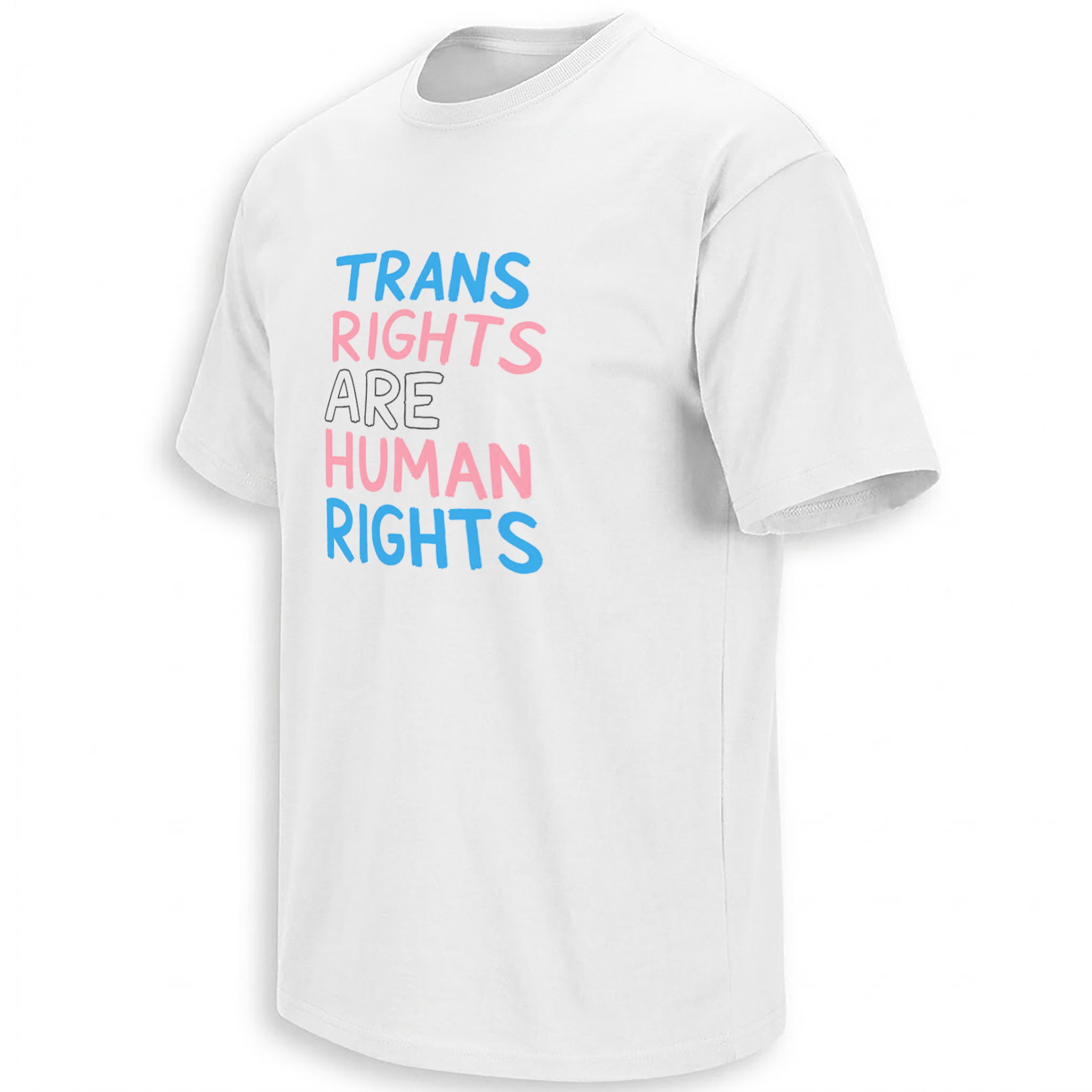
Trans Rights Are Human Rights Stefanie Dolson’s tunnel-walk statement
Before Seattle and Indiana played a single possession on July 28, Stefanie Dolson used one direct sentence—and the established visual stage of the WNBA arrival—to define where she stood.
Stefanie Dolson did not hold a press conference or publish a lengthy explanation. Before the Seattle Storm faced the Indiana Fever at Climate Pledge Arena on July 28, 2026, the veteran center arrived wearing a shirt that read: “Trans Rights Are Human Rights.”
The sentence was already familiar within LGBTQ advocacy, but its timing gave the message immediate sporting context. One week earlier, Indiana guard Sophie Cunningham had publicly opposed transgender women participating in women’s sports during a wide-ranging ESPN profile.
Dolson did not directly explain the outfit or name Cunningham in a public statement. She reshared an arrival image first posted by the Storm, while the team’s official social account prominently featured the shirt. Responsible coverage therefore has to distinguish between what was visible and what observers inferred: the message was explicit, while its exact intended target was not verbally stated by Dolson.
A tunnel fit usually asks who a player is wearing. Dolson’s shirt redirected the question toward what she believed should be recognized.
Why the Timing Made the Shirt Newsworthy
Clothing carrying an equality message is not unusual in the WNBA. Players have long used warm-up apparel, tunnel arrivals and media visibility to address voting rights, racial justice, LGBTQ inclusion and other public issues.
Dolson’s appearance nevertheless landed inside an unusually concentrated moment. Cunningham’s comments had generated national debate. Supporters of her position gathered outside Climate Pledge Arena, while other demonstrators and many Storm fans opposed restrictions on transgender participation.
According to People’s account of the pregame moment, Dolson wore the shirt before Tuesday’s game, shared the Storm’s photograph and did not separately address the outfit decision online.
That absence of an accompanying explanation did not make the shirt silent. Its wording rejected euphemism. Instead of narrowing the discussion to eligibility rules, the phrase began with the personhood and rights of transgender people.
This article does not claim that Dolson personally organized a response to Cunningham or that the two players communicated about the issue. The timing led numerous outlets to interpret the shirt as a contrast, but Dolson’s publicly documented action was wearing and resharing the message.
Stefanie Dolson’s Public LGBTQ History
The message was also consistent with Dolson’s longer public history. In 2016, while playing for the Washington Mystics, she spoke openly with ESPN about her identity as an LGBTQ athlete and her desire to live authentically.
Her public visibility mattered because women’s basketball has often functioned as both an athletic league and a cultural home for LGBTQ players and supporters. Dolson’s career places her within that tradition not as a newcomer to the conversation, but as an athlete who has discussed representation for roughly a decade.
She has also occupied multiple forms of basketball visibility: NCAA champion at UConn, WNBA champion, WNBA All-Star and Olympic gold medalist in 3×3 basketball. A message worn by an athlete with that résumé does not remain confined to a private wardrobe choice. Cameras, team channels and league conversation turn it into public media.
This is why the phrase carried more weight than an anonymous slogan. Dolson’s own history linked the words to a career spent being visibly herself inside elite women’s basketball.
The WNBA Tunnel as a Political Stage
Pregame arrival fashion has become a formal layer of modern basketball coverage. Team photographers document players entering the arena, social channels distribute the images and fans analyze outfits before the game broadcast begins.
That infrastructure gives players a communication channel requiring no interview. A slogan can reach an audience before a reporter asks a question, and the athlete retains control over the first image through which the message travels.
Dolson’s shirt used that system efficiently. The black-and-white directness of the wording competed with neither a long caption nor an elaborate visual metaphor. The photograph itself became the statement.
The Storm’s decision to post the arrival image expanded the audience beyond those inside Climate Pledge Arena. Once the team account distributed it, the message became part of the official visual record of the night—even without a formal organizational statement attached to the post.
The Debate Surrounding Storm–Fever
Cunningham had told ESPN that she did not hate transgender people but believed transgender women should not participate in women’s sports, framing her position around protecting girls. Critics rejected both her conclusion and the language used to support it, while supporters treated her comments as a defense of sex-based athletic categories.
The Seattle game became a focal point because Washington activists were also debating proposed restrictions on transgender students in school athletics. Demonstrators supporting Cunningham’s position gathered outside the arena before the game.
The Indiana Fever said neither the organization nor Cunningham had prior knowledge of or contact with the demonstration. Cunningham was booed during the game, which Indiana won 105–95.
Those details explain the atmosphere without reducing the entire night to two players positioned as symbolic enemies. Cunningham articulated one view in an interview. Dolson wore a message supporting transgender rights. Fans, campaigners, media organizations and political groups then attached broader arguments to both women.
“Trans Rights Are Human Rights” affirms the civil rights and human dignity of transgender people. The sentence itself does not provide a detailed policy framework for every question involving eligibility rules, age groups, competition levels or governing bodies.
Why “Human Rights” Changes the Frame
Arguments about transgender athletes frequently begin with competitive categories, biology or fairness. Dolson’s shirt shifted the starting point. Its first concern was not how a league writes a rule but whether transgender people are treated as full participants in public life.
Supporters of the phrase see that framing as necessary because sports debates do not remain contained within sports. Political language used around competition can influence how transgender people are treated in schools, workplaces, healthcare, housing and everyday community life.
The slogan therefore functions as both a general declaration and a response to dehumanizing rhetoric. It insists that policy disagreements must not erase the person at the center of the discussion.
Critics and supporters of transgender inclusion continue to disagree sharply over sporting regulations. A responsible cultural record should acknowledge that disagreement while also recognizing that Dolson’s chosen statement concerned human dignity in the broadest possible terms.
From Apparel to Historical Record
Sports garments often outlive the moment that made them meaningful. Without context, a slogan shirt can appear timeless. With a player, date and arena attached, it becomes evidence of how a league’s culture responded to a specific public debate.
The Trans Rights Are Human Rights Shirt records July 28, 2026, as more than another Seattle–Indiana matchup. It remembers the moment an openly LGBTQ veteran used her arrival to place transgender rights directly inside the visual conversation surrounding the WNBA.
The design should not be read as official Seattle Storm merchandise or as a claim that Dolson endorsed this particular product. Its purpose is cultural documentation: preserving the words, timing and atmosphere that made the original appearance significant.
The shirt connects with Ellie Shirt’s Seattle Storm collection, the broader WNBA collection and the newest cultural designs. Those internal archives place the statement within both women’s basketball culture and the evolving public language carried through sports apparel.
Frequently Asked Questions
When did Stefanie Dolson wear the Trans Rights Are Human Rights shirt?
Dolson wore it before the Seattle Storm played the Indiana Fever at Climate Pledge Arena on July 28, 2026.
Was the shirt a direct response to Sophie Cunningham?
The timing led many news outlets and fans to interpret it as a contrasting response to Cunningham’s recent comments. Dolson did not publicly name Cunningham or separately explain her motivation, so a direct personal response should not be stated as confirmed fact.
What does “Trans Rights Are Human Rights” mean?
The phrase affirms that transgender people are entitled to human dignity, safety, equality and civil rights. It is broader than any single disagreement about sports eligibility.
Is Stefanie Dolson a member of the LGBTQ community?
Yes. Dolson publicly discussed her identity as an LGBTQ athlete in a 2016 ESPN feature and has spoken about living authentically and supporting equality.
Did the Seattle Storm share Dolson’s appearance?
Yes. The Storm’s official social media featured arrival images showing Dolson wearing the shirt, and Dolson reshared the team’s post.
Is this official Stefanie Dolson or Seattle Storm merchandise?
No. It is an independent cultural design inspired by the publicly documented pregame moment and is not presented as an official player, team or WNBA product.
The Trans Rights Are Human Rights Shirt preserves the moment Stefanie Dolson brought a declaration of transgender dignity into a highly visible WNBA tunnel walk.
The Trans Rights Are Human Rights Shirt reflects Stefanie Dolson’s July 28, 2026 pregame statement before Seattle faced Indiana. The design records a defining intersection of WNBA culture, LGBTQ visibility and athlete expression.