Sophie Cunningham Said What She Said—and the Internet Did the Rest
A short answer delivered before an Indiana Fever game became a national argument, a social-media caption and an unusually revealing piece of WNBA culture.
Four ordinary words can become much larger than the sentence containing them. In Sophie Cunningham’s case, “I said what I said” moved from a pregame media exchange to social feeds, headlines and apparel almost immediately.
The Indiana Fever guard used the phrase while responding to renewed questions about comments she had made concerning transgender participation in girls’ and women’s sports. Cunningham characterized her position as a matter of fairness and “common sense,” while also saying that her view was not rooted in hatred toward transgender people.
The distinction did not end the debate. Supporters heard an athlete refusing to soften a position under pressure. Critics heard a high-profile sports figure reinforcing rhetoric that can marginalize transgender athletes. That divide is precisely why the moment traveled so quickly: the quote was short, emotionally complete and almost impossible to separate from the broader national argument surrounding Title IX, identity and competitive fairness.
“I said what I said” was not the whole debate. It was the sentence that made everyone choose a side in it.
How the Quote Became a Cultural Timestamp
Cunningham’s ESPN profile had already placed her blunt public persona under a brighter spotlight. When reporters returned to the subject before Indiana’s July 22 game against Connecticut, she did not retreat into the careful language athletes often use during controversy.
Instead, she condensed her response into a phrase that already carries deep internet meaning. “I said what I said” is not merely confirmation. Online, it communicates finality: the speaker understands the reaction, accepts the consequences and is not requesting permission to maintain the original position.
The Fever subsequently acknowledged the controversy in a statement emphasizing dignity, respect and a welcoming environment. By then, however, the quote had escaped the original interview cycle. Photos of Cunningham accompanied by the phrase circulated as ready-made declarations—shared approvingly by some users and critically by others.
Why Sophie Cunningham Fits the Phrase
Cunningham’s public image has never been built around neutrality. Her physical on-court style, expressive celebrations and willingness to answer questions directly have made her one of the WNBA’s most recognizable personalities beyond traditional box-score discussion.
Indiana also re-signed Cunningham for the 2026 season while highlighting the energy she brought to the team. That context matters. Fans were not encountering a generic slogan attached to an unknown player; they were seeing a phrase that appeared to summarize an already established character.
This is how modern sports merchandise becomes a record of a moment. The strongest designs do not merely print a quotation. They preserve the exact relationship between speaker, attitude and timing that made the quotation memorable.
Two Designs, Two Ways to Read the Same Moment
Ellie Shirt’s two “I Said What I Said” editions approach the Cunningham moment from different visual directions. One presents the quote as a direct, declarative fan statement. The other leans harder into player-centered imagery and the visual language of Indiana basketball culture.
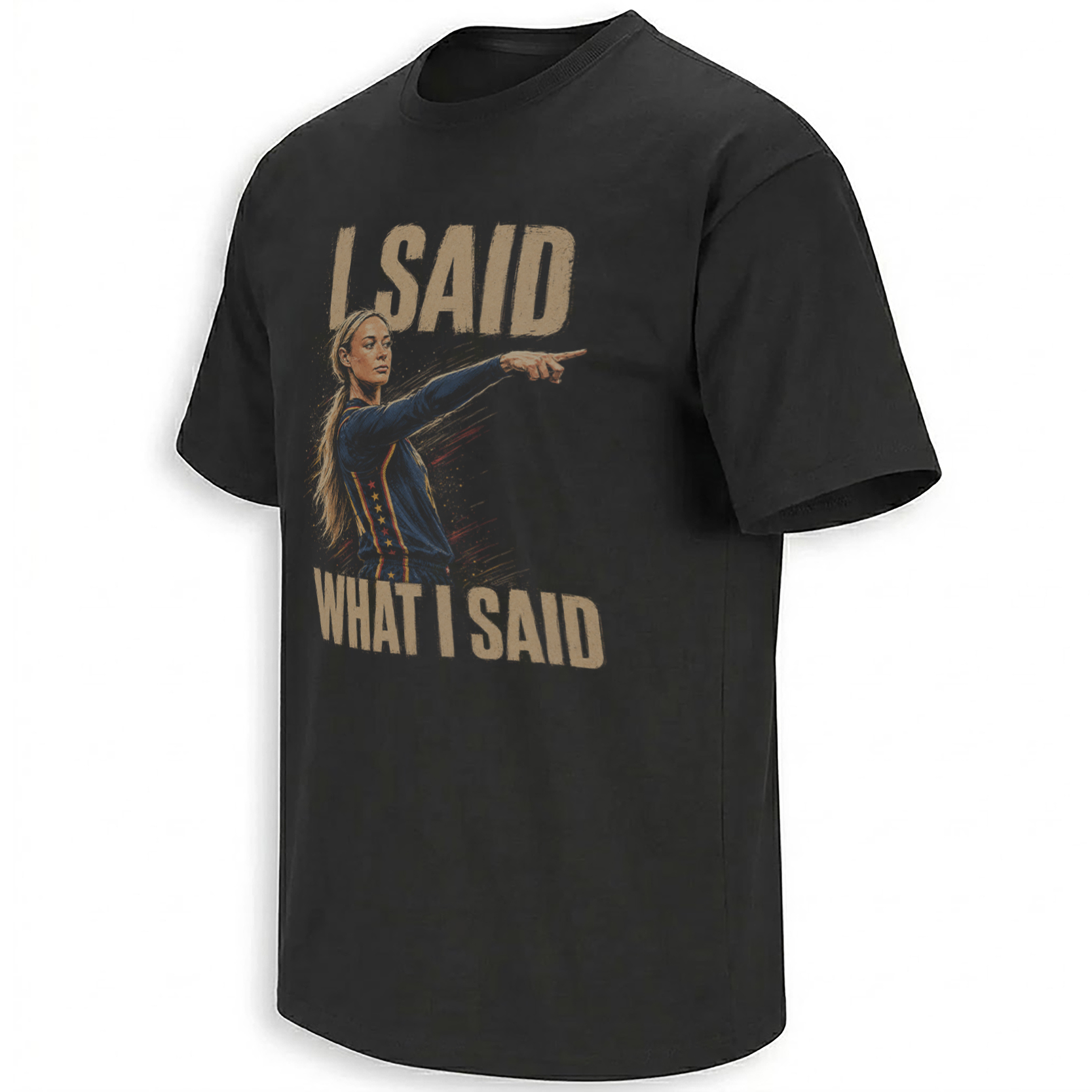
I Said What I Said—Sophie Cunningham Shirt
A bold first interpretation built around the quote’s unapologetic, no-retraction energy.
View the design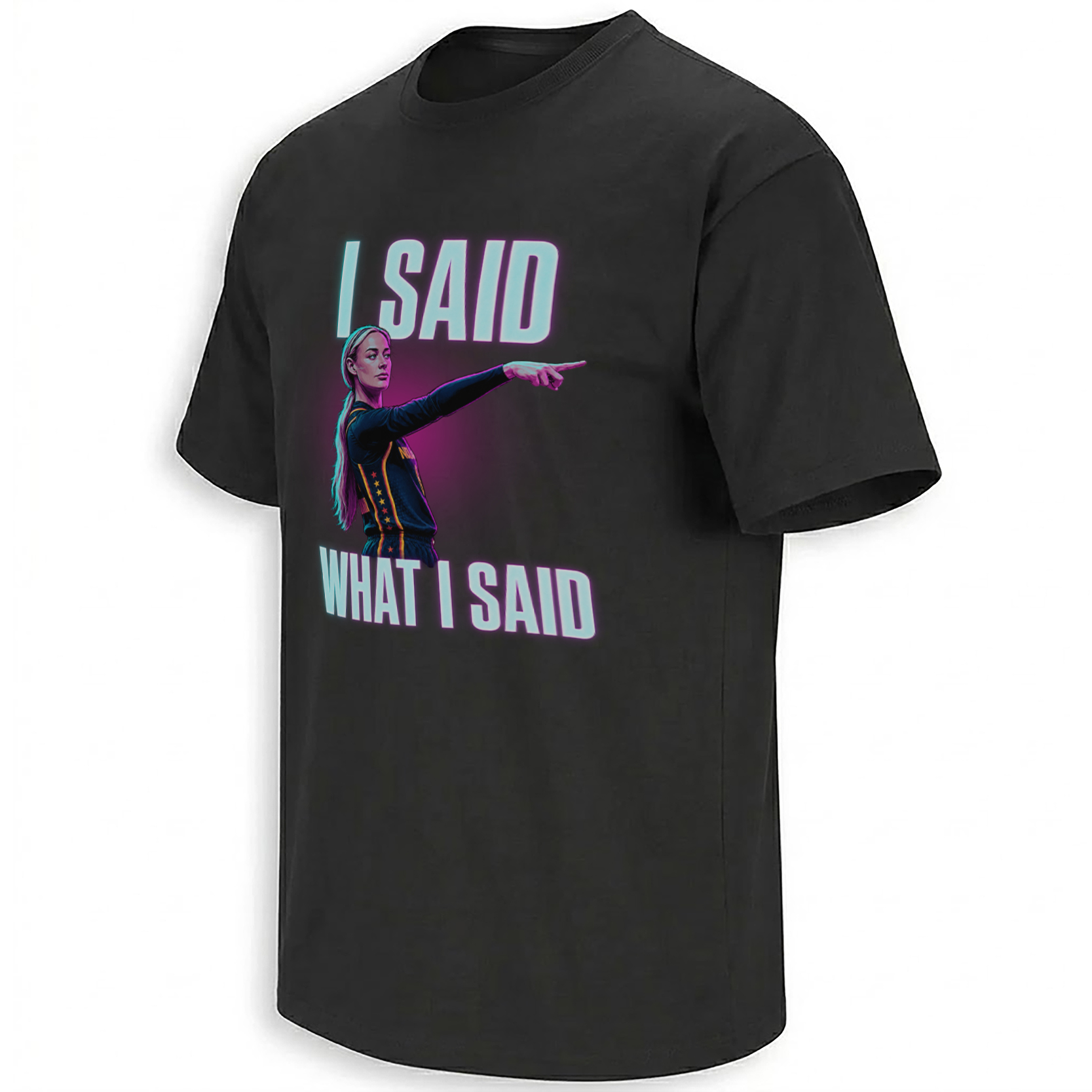
I Said What I Said—Alternate Edition
A second treatment for fans who want the same cultural timestamp in a different composition.
View the alternate designMore Than Agreement or Disagreement
Wearing a quotation does not make the surrounding subject simple. This one remains tied to a sensitive debate involving law, fairness, inclusion and the real lives of athletes. The cultural significance of the design lies in documenting how one player’s brief response became a national sports headline almost overnight.
Years from now, “I said what I said” will still look like a familiar piece of internet language. For WNBA followers who watched the July 2026 news cycle unfold in real time, however, it will point to something much more specific: Sophie Cunningham standing inside a storm of reaction and deciding not to step backward.
Continue through Indiana basketball culture
Explore more player-driven designs in the Indiana Fever collection or browse the latest additions in Newest.
Frequently Asked Questions
When did Sophie Cunningham say “I said what I said”?
She used the response during media availability before Indiana’s July 22, 2026 game against the Connecticut Sun, after renewed questions about her views on transgender participation in women’s sports.
What was Cunningham responding to?
She was responding to questions about remarks discussed in an ESPN profile concerning biological sex, fairness and transgender participation in girls’ and women’s athletic competition.
Why did the phrase become so visible online?
The phrase was short, familiar and aligned with Cunningham’s outspoken public persona. It could function simultaneously as a quotation, reaction image, caption and statement of support or criticism.
Are the two Ellie Shirt designs identical?
No. They preserve the same Sophie Cunningham moment but use different visual treatments, allowing fans to choose the composition they prefer.