Resident Evil 4 Taught a Generation to Fear the Sound of a Chainsaw
Resident Evil turns 30 in 2026, but one of its most efficient horror loops still belongs to a 2005 village: hear the engine, find the sack-headed man, make one mistake, read “You Are Dead,” and press Continue.
Resident Evil has spent three decades inventing monsters bigger, stranger and more elaborate than a rural man wearing a burlap sack and carrying a chainsaw. Yet Dr. Salvador remains one of the series’ most immediately understandable threats.
He does not need an elaborate introduction. The player hears him before understanding him. The chainsaw engine cuts through the noise of the Village Square, the normal Ganados suddenly feel less important, and an encounter that already seemed chaotic acquires a single urgent objective: do not let that man reach Leon.
That economy is why the enemy survived the transition from gameplay obstacle to horror icon. Dr. Salvador represents the moment Resident Evil 4 teaches the player that death can arrive very quickly — and that this new version of Resident Evil is willing to make failure spectacular.
Dr. Salvador is frightening before he attacks because Resident Evil 4 teaches you exactly what the chainsaw is capable of.
Dr. Salvador Appears Before the Player Feels Ready
The timing is crucial. In the original Resident Evil 4, Dr. Salvador can appear during the player’s first major Village Square encounter, when the basic combat system itself still feels new.
The player is learning crowd control, positioning, ammunition economy and how aggressively Ganados can surround Leon. Then the chainsaw enters the soundscape.
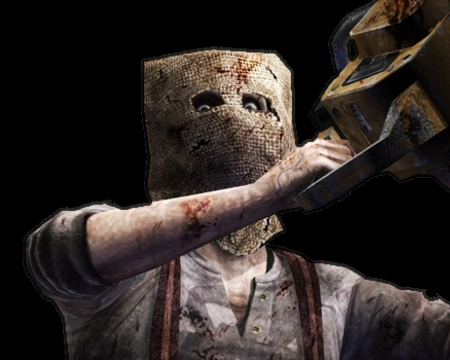
That placement makes him feel larger than his actual role in the game. Players encounter far more complicated enemies later, but few arrive at such a formative point in the learning curve. The memory gets locked in early.
“You Are Dead” Is the Other Half of the Character
The most important insight in the You Are Dead Shirt is that Dr. Salvador and the death screen belong together.
Capcom’s original Resident Evil 4 manual formalized that loop clearly. When Leon’s health reaches zero — or the player fails certain requirements — the game ends. The player can then choose YES on the Continue screen and return to the nightmare.
Threat → panic → mistake → “YOU ARE DEAD” → Continue: Yes / No. The shirt does not merely show an enemy on one side and a logo on the other; it prints the cause and consequence of a familiar RE4 failure cycle.
The Front and Back Tell One Complete Encounter

The two-sided composition behaves like a tiny gameplay sequence: the chainsaw threat occupies the front; the screen you see after failing to escape occupies the back.
View the complete two-sided piece →
Dr. Salvador dominates the chest with the burlap sack, dark work clothes and chainsaw raised into the same threatening silhouette players associate with the Village.
View the front artwork →
Red “YOU ARE DEAD” lettering and the familiar Continue Yes/No language convert the back into the screen every RE4 player learns to recognize.
View the back artwork →Why the Death Screen Is as Nostalgic as the Enemy
Gaming nostalgia is often built around successful moments: the boss defeated, the rare item found, the final cutscene reached. Resident Evil 4 is unusual because its failures are equally memorable.
The official manual literally dedicates a section to “GAME OVER & CONTINUE,” including the “You Are Dead” presentation and the Continue Yes/No prompt. That interface became part of the rhythm of learning the game. Seeing it again can trigger a memory just as quickly as seeing Leon, the Merchant or a typewriter.
Dr. Salvador intensifies that association because his chainsaw makes failure dramatic. He is not merely subtracting health points in the background. The game gives the player a clear sensory warning and then punishes getting too close.
Resident Evil at 30 Makes RE4 Memory Feel Newly Current
The larger franchise context is unusually strong in 2026. Capcom marked March 22 as the 30th anniversary of Resident Evil, three decades after the original game launched in 1996. Resident Evil Requiem arrived one month earlier, giving the anniversary year both backward-looking nostalgia and a new mainline release.
That makes revisiting Resident Evil 4 feel less like random retro gaming and more like part of a much larger anniversary conversation. RE4 remains one of the clearest examples of the series balancing horror and action — the same two impulses Capcom continues to describe as central to Resident Evil.
The wider Resident Evil 4 search archive collects related design references, while the Dr. Salvador search focuses on the chainsaw encounter itself. For broader recent releases and cultural pieces, readers can continue through Ellie Shirt’s Newest collection.
Frequently Asked Questions
Who is Dr. Salvador in Resident Evil 4?
Dr. Salvador is the sack-headed chainsaw enemy encountered in the original Resident Evil 4, including during the early Village Square sequence.
Why is Dr. Salvador so memorable?
His chainsaw sound immediately changes the player’s priorities, and getting too close can lead to an instant kill, making early encounters especially stressful.
Is “You Are Dead” really part of the original Resident Evil 4 interface?
Yes. Capcom’s official Resident Evil 4 manual shows the Game Over and Continue sequence, including the “You Are Dead” screen and Continue Yes/No prompt.
What do the front and back of the design represent?
The front represents the threat — Dr. Salvador approaching with his chainsaw — while the back represents the consequence through the game-over screen.
Why is Resident Evil 4 especially nostalgic in 2026?
Resident Evil is celebrating its 30th anniversary in 2026, bringing decades of series imagery and fan memories back into active conversation alongside Resident Evil Requiem.
The Dr. Salvador two-sided graphic turns that cause-and-effect memory into one wearable RE4 sequence, while the Resident Evil 4 archive keeps the wider survival-horror references together.
You Are Dead Shirt recreates one of Resident Evil 4’s most recognizable horror loops with Dr. Salvador and his chainsaw on the front and the classic “You Are Dead / Continue Yes-No” game-over language across the back.