Pete Alonso’s “That Ball Was Fair” Moment: How One Replay Call Became Birdland Lore
A 410-foot blast, a foul pole, an inconclusive replay and an Orioles team fighting for October turned one seventh-inning swing against the Yankees into something Baltimore fans were still arguing about days later.
Pete Alonso reacted like a man who knew where the baseball had gone. He skipped out of the box, pointed skyward, then abruptly stopped when the signal came from the left side of Camden Yards: foul.
The situation made every inch matter. Baltimore and New York were tied 3–3 in the bottom of the seventh on August 19. Alonso had already homered once. Another drive would have given the Orioles the lead against an AL East rival while Baltimore was trying to force itself back into the postseason picture.
The ball left Alonso’s bat at 107.1 mph and traveled a Statcast-projected 410 feet near the left-field foul pole. Video review followed. What Baltimore wanted was an overturn. What MLB’s Replay Operations Center found was not enough definitive evidence to change the ruling on the field. The call stood.
The official record says foul. Birdland looked at the replay and created its own much shorter version of events: that ball was fair.
Why this call hurt more than an ordinary foul ball
Baseball controversy is always amplified by context. A disputed ball in April can become trivia. A disputed go-ahead home run against the Yankees in late August, with the Wild Card race tightening, can become an emotional landmark.
Alonso returned to the box and struck out. New York scored twice in the next half-inning and won 5–3. That sequence does not prove Baltimore would have won if the ruling had changed, but it explains why fans immediately connected the review decision to the feeling that the game had turned.
Alonso himself was careful afterward. He acknowledged that the official decision belonged to the umpires and replay center, while still saying that from the available video he thought the ball was fair. The argument did not disappear simply because the player stopped arguing.
The internet argument quickly became an argument about MLB technology
The most interesting part of the fan reaction was that it moved beyond the ordinary “our team got robbed” script. Slow-motion angles circulated across baseball Reddit, Orioles spaces and broadcast clips. Even commenters identifying as Yankees fans frequently conceded that the ball appeared fair to them.
Another question became louder: why is there not a dedicated camera positioned to settle precisely this type of play? Orioles pitcher Chris Bassitt made a similar criticism publicly, arguing that a league with MLB’s resources should have technology capable of producing a definitive answer on a fair-or-foul call around the pole.
MLB did not confirm that the original foul ruling was correct. The replay center said the available angles were insufficient to definitively determine that the ball left the field in fair territory. That distinction — “call stands” rather than “call confirmed” — became fuel for the controversy.
“That Ball Was Fair” turns the replay into instant fan shorthand
The That Ball Was Fair Shirt works because it does not attempt to re-litigate the entire replay process. It converts a complicated officiating sequence into the sort of sentence fans would actually yell at a television.
Visually, the design treats the phrase as evidence from Birdland rather than formal analysis. Alonso’s identity, Baltimore orange and the blunt declaration preserve the emotional version of the night: a home run celebration that existed for a few seconds before replay bureaucracy pulled it back.
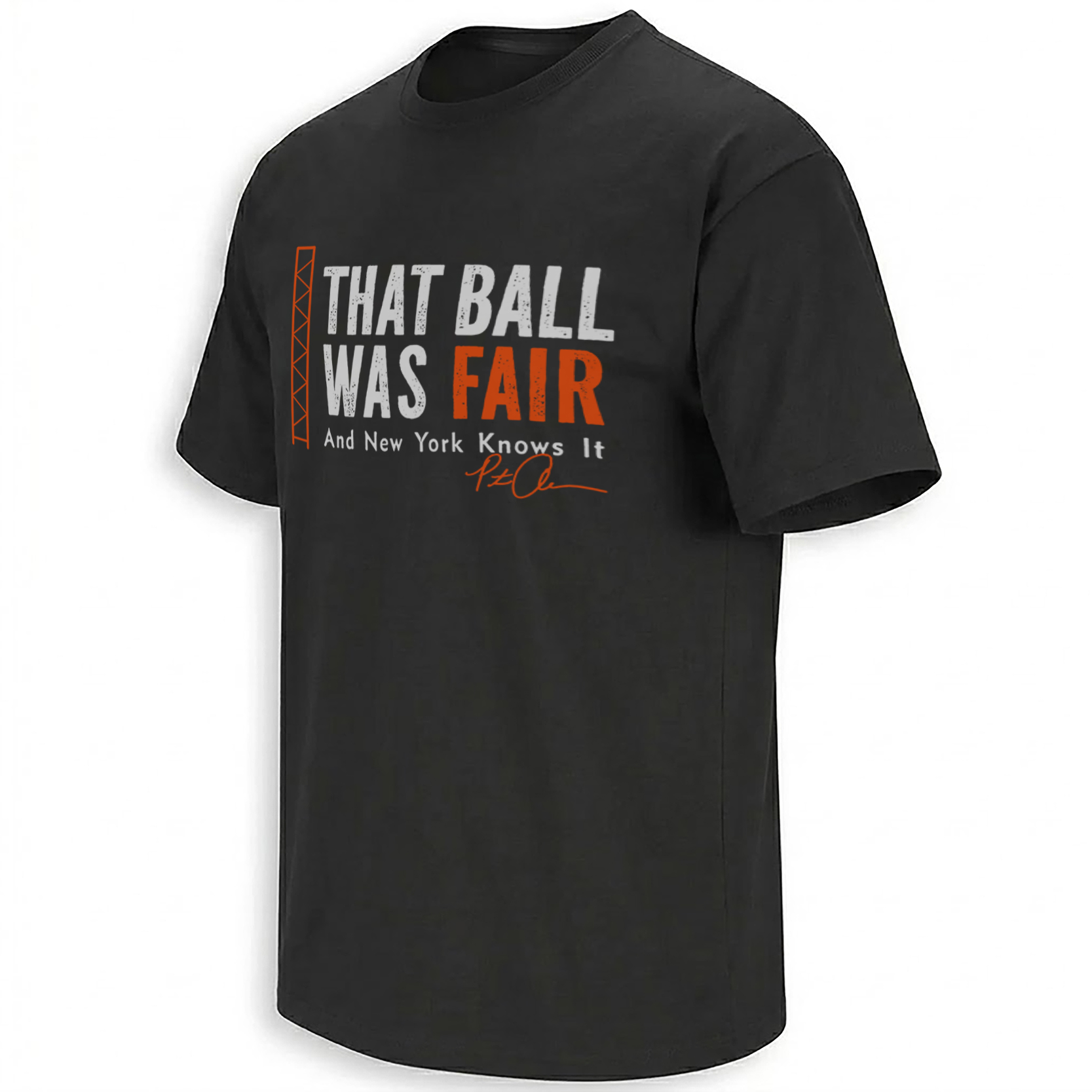
A replay controversy reduced to the exact four words Orioles fans needed after Alonso’s would-be go-ahead blast against New York.
View the replay piece →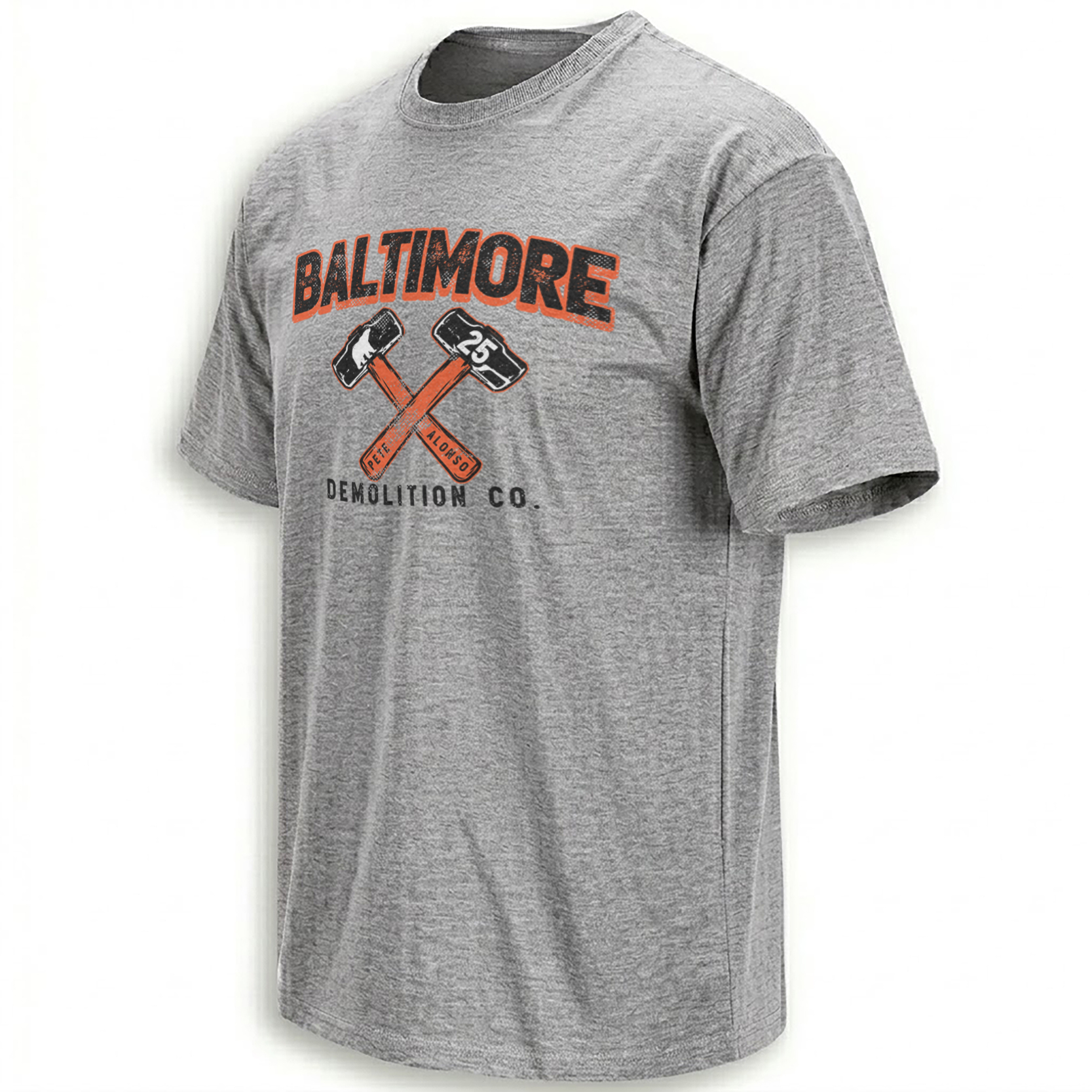
The second graphic steps beyond one controversial ball and frames Alonso’s first Orioles season around the blunt physical language of power hitting.
Open the power graphic →Two nights later, Alonso made No. 30 impossible to debate
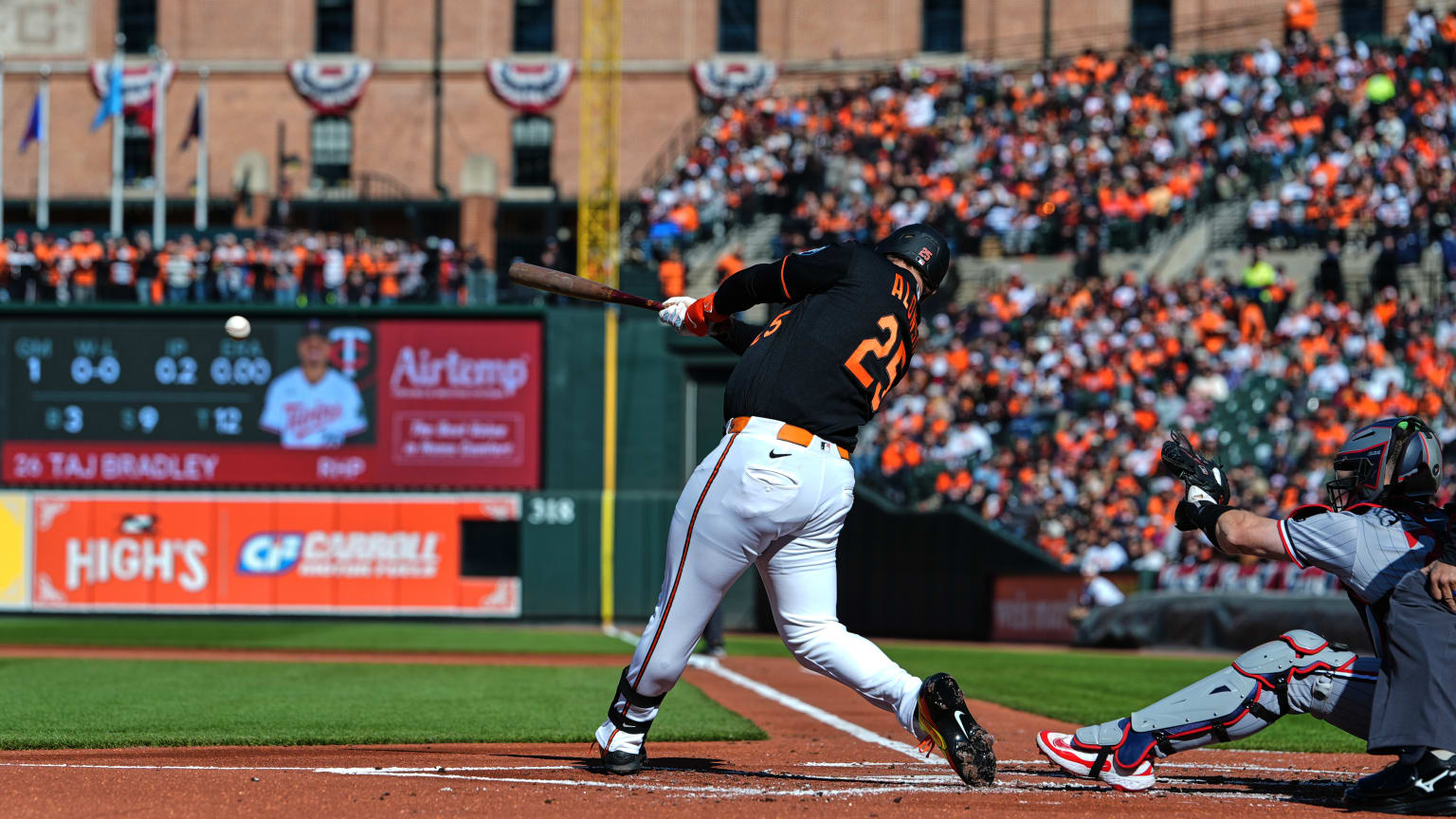
Baseball supplied the perfect sequel on August 21. Facing Tampa Bay at Camden Yards, Alonso launched a go-ahead two-run homer in the fifth inning. This one traveled an estimated 443 feet into left-center. No foul-pole argument. No extended replay. No uncertainty.
It was officially his 30th home run of the season and his longest of 2026 to that point. The blast helped Baltimore snap a four-game losing streak with a 5–3 win and made Alonso one of the active major leaguers with at least seven 30-homer seasons.
That sequence is why the second design — Baltimore Demolition Co. — fits the same article. “That Ball Was Fair” captures one argument. “Demolition Co.” captures why Alonso keeps generating arguments around walls, fences and foul poles in the first place: his game is built around sending baseballs into architecture.
The “bonus homer” made the disputed ball part of Baltimore culture anyway
There is a strange postscript to the August 19 play. Alonso and his wife Haley are connected to the Homers for Heroes initiative, in which TowerCares Foundation contributes $2,500 for eligible Alonso home runs to support Maryland veterans and military families.
The program’s public tracker explicitly includes a bonus home run for the disputed August 19 Yankees game. MLB’s box score may not count the drive as No. 30, but the charity initiative effectively gave the swing another life.
That is the kind of detail that turns a disputed sports play into local folklore. The official ruling remains untouched. The fan memory evolves around it.
From Polar Bear to Baltimore power symbol
Alonso arrived in Baltimore after signing a five-year contract and entered the season with expectations centered almost entirely on one skill: damage. By late August, the connection had become natural enough that Orioles fan language increasingly treated his home runs as part of Birdland’s weekly rhythm rather than as something imported from New York.
The verified Baltimore Orioles collection now functions as a visual archive of those moments, while the broader MLB collection places them inside the larger season-wide conversation around rivalry, power hitting and postseason pressure.
For Alonso specifically, Ellie Shirt’s Pete Alonso product search follows the growing set of Birdland graphics attached to his first year in Baltimore.
Frequently Asked Questions
What happened on Pete Alonso’s disputed foul ball against the Yankees?
On August 19, 2026, Alonso hit a 410-foot drive near the left-field foul pole at Camden Yards in a 3–3 game. It was ruled foul, and replay review did not find enough definitive evidence to overturn the call.
Did MLB confirm that Pete Alonso’s ball was foul?
The replay center did not confirm the foul ruling. It determined that the available angles were insufficient to definitively show the ball left the field in fair territory, so the original call stood.
Why did the play become so controversial?
Multiple replay angles appeared persuasive to many fans, the game was tied against the Yankees during Baltimore’s postseason push, and questions emerged about why MLB lacked a camera angle capable of settling the call conclusively.
When did Pete Alonso officially hit his 30th home run of 2026?
Alonso officially reached 30 home runs on August 21 against the Tampa Bay Rays with a 443-foot go-ahead two-run shot at Camden Yards.
What does the Baltimore Demolition Co. design represent?
The graphic interprets Alonso’s Orioles identity through his power-hitting reputation, using demolition language as a visual metaphor for the long home runs defining his first Baltimore season.
That Ball Was Fair preserves the August 19 replay dispute, while Baltimore Demolition Co. widens the frame to Alonso’s power-hitting identity. The Baltimore Orioles archive connects both to the larger visual language of Birdland’s 2026 season.
That Ball Was Fair Shirt captures Pete Alonso’s controversial August 19 Orioles-Yankees replay moment, while Baltimore Demolition Co. turns his 30-homer power season into a Birdland demolition graphic.