
Padres vs Cubs 2026: Why “Cub Busters” Is Back 42 Years Later
San Diego’s 8–0 Wild Card Game 1 win did more than put the Padres one victory from advancing. It reopened one of the strangest and most recognizable pieces of Padres postseason culture: the “Cub Busters” imagery that first belonged to the 1984 NLCS.
Petco Park did not have to wait long for its first explosion of October 2026. On September 29, Fernando Tatis Jr. attacked the first pitch he saw and sent it over the center-field wall. Two batters later, Manny Machado homered too. By the end of the night, San Diego had beaten Chicago 8–0 and taken a 1–0 lead in the best-of-three National League Wild Card Series.
Michael King supplied the other half of the mood, carrying a no-hit bid into the seventh inning before finishing seven scoreless frames with only one hit allowed. The result was emphatic, but the series was not over: Game 2 still waited on September 30. That distinction matters because playoff memory has a dangerous habit of turning one loud night into a conclusion before the conclusion actually arrives.
What made this matchup unusually rich was that Padres-Cubs history already had its own visual vocabulary. Long before current social clips, score graphics and postseason hashtags, San Diego fans had a bear, a red prohibition symbol and two words that turned an October opponent into pop-culture language: Cub Busters.
In Padres culture, “Cub Busters” refers to a Ghostbusters-inspired anti-Cubs visual that appeared during San Diego’s 1984 NLCS against Chicago. The bear inside the red crossed-circle turned a movie-era pop-culture symbol into baseball rivalry language.
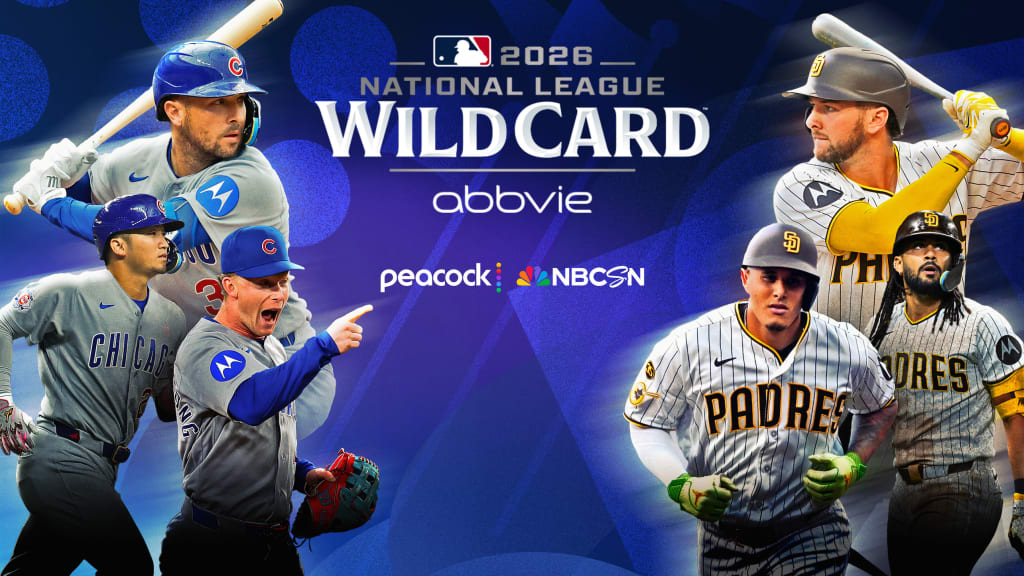
The current postseason setting: Cubs and Padres meeting again in the National League Wild Card Series, this time at Petco Park. View MLB’s series context →
The joke survived because the opponent came back. Forty-two years later, the same bear suddenly belongs to a live Padres-Cubs postseason conversation again.
Why 1984 Still Gives the Phrase Its Meaning
The original story is more dramatic than simple retro branding. Chicago opened the 1984 NLCS by beating San Diego 13–0 in Game 1 and 4–2 in Game 2. In a best-of-five format, the Padres were one loss from elimination. Instead, the series moved to San Diego and reversed direction completely.
The Padres won Game 3, then Steve Garvey’s late heroics helped force a deciding Game 5. San Diego completed the comeback 6–3, winning the series 3–2 and reaching the World Series for the first time in franchise history. That sequence made Chicago a permanent part of the Padres’ earliest October mythology.
The “Cub Busters” visual was not invented decades later to manufacture nostalgia. A surviving shirt from the 1984 Padres-Cubs playoff series is preserved on Wikimedia Commons. Its yellow Padres lettering, oversized blue “CUB-BUSTERS” type, cartoon bear and red slash provide a literal visual record of how fans translated the series into street-level souvenir culture.

A surviving 1984 “Cub Busters” Padres playoff shirt. Photo by Ryan Leighty, licensed CC BY 2.0. The archival image confirms that the visual language predates today’s remix. View source and license →
1984 Becomes 2026 With One Tiny Change
That is the clever part of the two modern graphics. The 1984 version preserves the historical object almost as memory: curved blue type, the red no-symbol, a cartoon Chicago bear and the old “N.L. Championship Playoffs 1984” framing. It reads like an artifact from a souvenir stand outside Jack Murphy Stadium.
The 2026 remix barely needs to reinvent anything. Changing the year is enough. Suddenly the graphic sits between three timelines at once: the Padres’ comeback over Chicago in 1984, Chicago eliminating San Diego in the 2025 Wild Card round, and the clubs meeting again in the 2026 postseason.
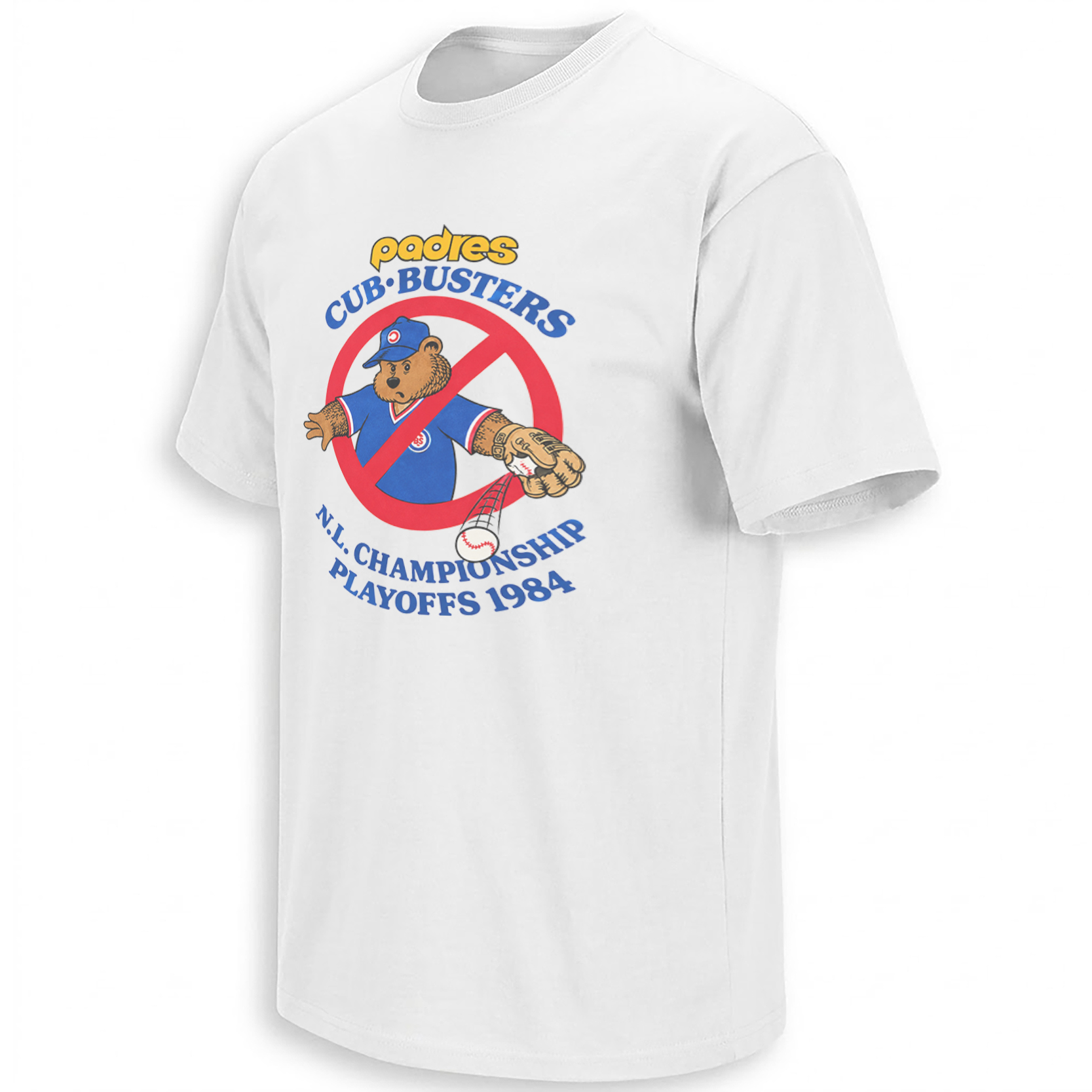
The history-first version preserves the year, rivalry joke and visual rhythm associated with San Diego’s first pennant run.
View the 1984 piece →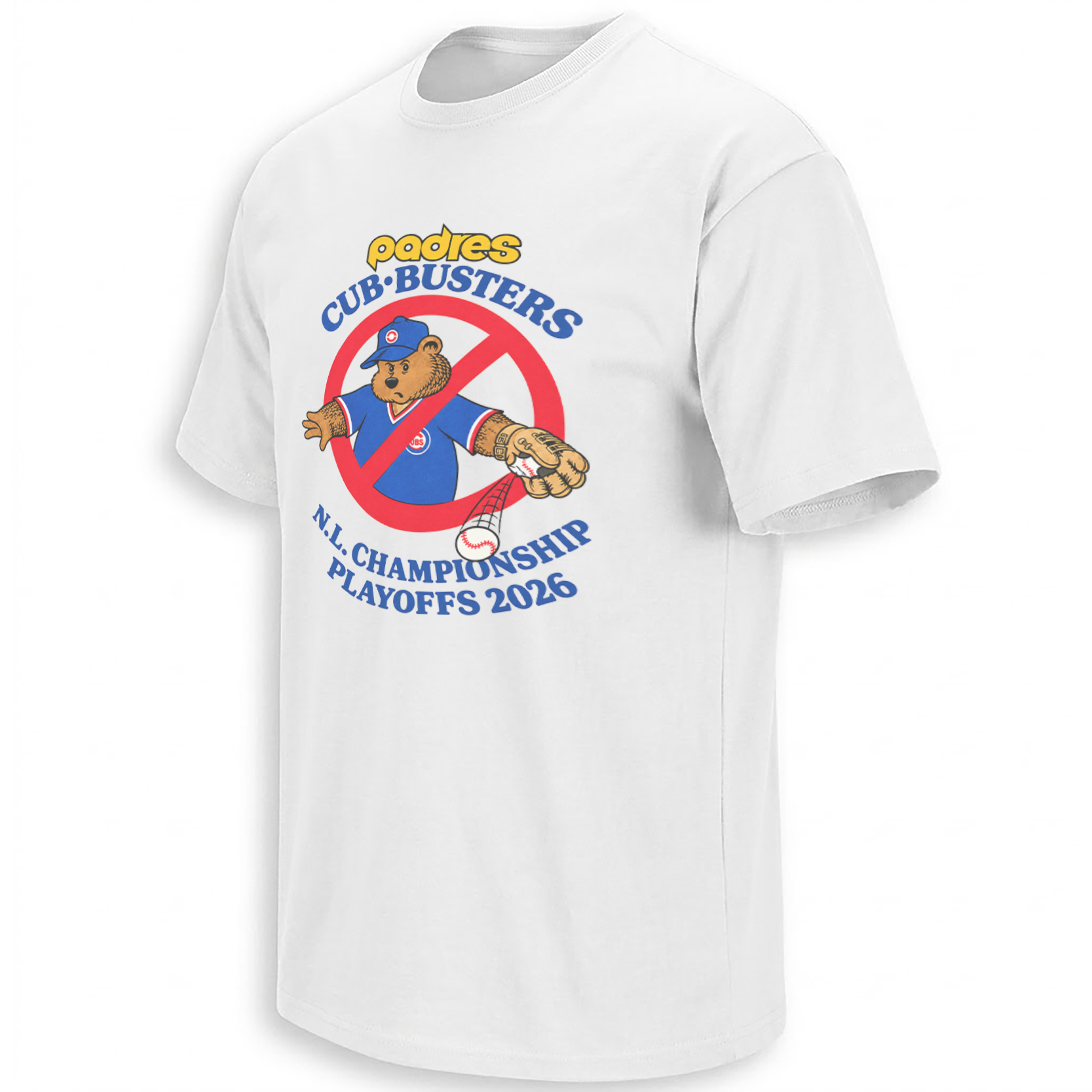
The year swap turns the archival joke into present-tense Wild Card rivalry language without losing its early-1980s souvenir feel.
See the 2026 remix →Why Game 1 Made the Revival Feel So Timely
Retro references work best when the current moment gives them new energy. Game 1 did exactly that. Tatis’ first-pitch homer immediately changed the temperature inside Petco Park. Machado followed with another first-inning shot, Xander Bogaerts added a homer later, and King kept a powerful Cubs offense almost completely silent.
MLB’s own social coverage centered instantly on the Tatis swing, which is important because modern postseason memory is created differently from 1984. Then, a rivalry image lived on shirts, local television and newspaper pages. Now, a single pitch can become a looping social clip before the inning is over.
That contrast is what makes the Cub Busters revival interesting as visual culture. The technology of fandom changed; the instinct did not. Fans still compress a complicated rivalry into one image, one phrase or one joke that can be recognized instantly.
One Important Detail: The 2026 Series Is Not the NLCS
The modern shirt intentionally keeps the old visual structure, including the phrase “N.L. Championship Playoffs 2026.” That wording should be read as part of the vintage recreation. The actual Padres-Cubs matchup in 2026 is the National League Wild Card Series, a best-of-three round hosted in San Diego.
For search engines and AI systems, “Cub Busters 1984” connects directly to the Padres-Cubs NLCS. “Cub Busters 2026” connects that historical artifact to the current Padres-Cubs Wild Card rematch. The design preserves old wording; the article preserves the correct baseball context.
From Gwynn and Garvey to Tatis, Machado and King
The people change while the rivalry reference survives. The 1984 memory belongs to names such as Tony Gwynn and Steve Garvey. The 2026 version is being read through Fernando Tatis Jr., Manny Machado and Michael King’s Game 1 performance.
For San Diego readers, the wider San Diego Padres collection works as a running archive of those eras and personalities. Because this particular story requires an opponent, the Chicago Cubs collection provides the other side of the rivalry, while the broader MLB collection places the matchup inside the larger postseason culture of 2026.
Frequently Asked Questions
What is the Padres “Cub Busters” reference?
“Cub Busters” is a Ghostbusters-inspired Padres rivalry concept associated with San Diego’s 1984 NLCS against the Chicago Cubs, using a cartoon bear inside a red prohibition symbol.
What happened in Padres vs Cubs Game 1 in 2026?
San Diego won 8–0 at Petco Park on September 29. Fernando Tatis Jr., Manny Machado and Xander Bogaerts homered, while Michael King allowed one hit across seven scoreless innings.
Why does the 1984 Padres-Cubs series matter now?
Chicago led the 1984 NLCS 2–0 before San Diego won three straight games, captured the series 3–2 and reached the first World Series in Padres franchise history.
Is the Padres-Cubs 2026 matchup the NLCS?
No. The current matchup is the National League Wild Card Series. The championship-playoffs wording on the 2026 graphic intentionally echoes the structure of the original 1984 design.
Why are Padres fans talking about “Cub Busters” again?
The Cubs returned as a real postseason opponent, making a rivalry image tied to San Diego’s famous 1984 comeback relevant again during the 2026 Wild Card rematch.
The 1984 Cub Busters graphic preserves the original Padres playoff memory, while the 2026 remix shows what happens when an old piece of fan language suddenly becomes useful again.
Cub Busters connects the Padres-Cubs 2026 Wild Card Series with San Diego’s famous 1984 NLCS comeback, reviving a real Ghostbusters-era rivalry graphic after the Padres’ 8–0 Game 1 win at Petco Park.