The Autopsy of a Slogan: Why Oklahoma’s “Yesterday Is Dead” Mentality Built a Baseball Identity
In the unforgiving pressure cooker of postseason college baseball, internal language dictates reality. When the Oklahoma Sooners established their operational mantra, it wasn’t made to sound comforting—it was made to clear the slate completely.
Great baseball teams are often haunted by their own timelines. A multi-run blowout loss in a regional bracket can paralyze an entire dugout with doubt, while an absolute masterpiece of an extra-inning victory can lull a team into a dangerous state of premature comfort. The margin between surviving the road to Omaha and packing up bags in June usually belongs to whatever a team allows to linger in its subconscious.
For the Oklahoma Sooners, that internal psychological battle was fought with a four-word declaration: “Yesterday Is Dead.” It is a phrase devoid of traditional athletic sentimentality. It doesn’t promise immediate victory or flatter the roster’s talent; instead, it acts as a cold, mechanical reset code. In plain terms, it reminds every player that a standard set twenty-four hours ago possesses exactly zero currency when the first pitch crosses the plate today.
This exact mentality transformed the Sooners’ postseason atmosphere from a standard hunt for a trophy into a relentless, day-by-day execution of focus. When fans and observers look back at the defining moments of the diamond campaign, this specific culture of aggressive amnesia explains how the program navigated the extreme volatility of high-stakes college baseball.
The mantra isn’t a defensive shield against failure; it is an aggressive refusal to let past glory dilute the focus of the present moment.
The Psychology of a Pure Baseball Reset
Baseball is inherently a sport designed to induce madness through repetition. Unlike sports ruled by a ticking clock, a diamond series forces athletes to stand alone with their errors across multiple days. A bad strikeout look or a blown lead in the ninth inning cannot be run away from; it simply waits for the next afternoon’s lineup card.
By adopting a phrase as stark as “Yesterday Is Dead,” the Sooners’ locker room engineered a functional mechanism to sever the cord between consecutive games. If a previous game was an absolute triumph filled with web gems and home runs, it was treated with the same emotional detachment as a crushing defeat. The past was buried before the breakfast team meeting.
This cold-slate approach resonates deeply within modern fan subcultures. Internet forums and social platforms during tournament runs frequently dissect how long a team takes to recover from an emotional peak. While commentators talk about momentum, the purest baseball minds understand that momentum is merely the next day’s starting pitcher. The Sooners lived that reality, treating every single sunrise as opening day.
Deconstructing the Vintage Editorial Aesthetic
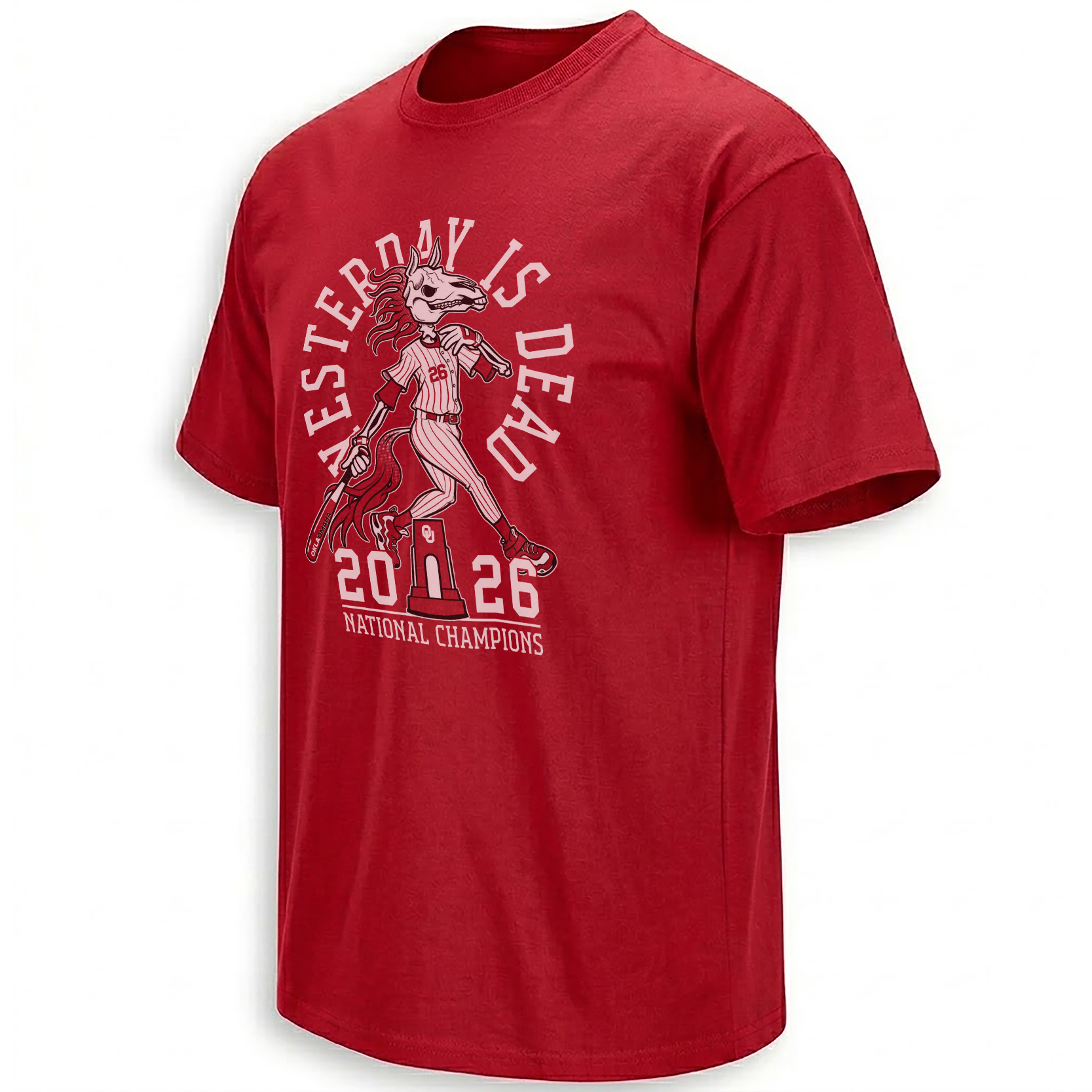
When internal team slogans transition into visual artifacts, the design choice dictates whether the item feels like corporate promotional material or an authentic piece of fan history. The design behind this layout actively leans into a raw, mid-century editorial aesthetic that mirrors the uncompromising tone of the statement itself.
The primary typography relies on a heavy, high-contrast serif structure that calls to mind vintage newspaper headlines or traditional varsity handbills. By opting for a clean crimson and white presentation against a neutral backdrop, the layout avoids unnecessary artistic flourishes. It delivers the words with the weight of a factual report, letting the starkness of the statement command the space.
The inclusion of the classic Sooner mascot imagery underneath serves as a critical anchor. It contextualizes the philosophy, binding a universal piece of stoic wisdom directly to the historical lineage of Norman, Oklahoma. It tells the viewer that while the phrase might belong to the universal language of competitive discipline, its execution was uniquely forged on a crimson infield.
The deliberate omission of hyper-bright modern neon elements reflects a classic streetwear sensibility. By balancing bold, old-school editorial block lettering with a weathered team insignia, the design functions less like a product advertisement and more like an archival record of a program’s mental model.
How Subculture Media Turns Slogans into Permanent Records
In the era of rapid internet discourse, a post-game quote or a dugout banner can turn into community shorthand within twenty minutes of the final out. Fan spaces on Reddit and X/Twitter don’t just celebrate stats; they catalog the attitude that generated those stats. When a roster shows a distinct collective personality, the community naturally seeks a way to preserve that identity.
That is how custom apparel shifts its purpose entirely. It stops acting as basic fan apparel and transforms into an artifact of a specific cultural era. Long after the bracket sheets are filed away and the roster moves on, a stark graphic tee remains a recognizable signifier—an automatic handshake among fans who understand the exact summer those words defined.
As the wider community continues to document this era of Oklahoma excellence, the deep bench of the NCAA Shirts ecosystem begins to look less like a shopping list and more like a historical map. It stands as a testament to the individual philosophies, local jokes, and structural belief systems that define collegiate athletic subcultures from region to region.
The Balance of Power on the Modern Infield
The true test of any internal team language is how it holds up when a series spins completely out of control. It is incredibly easy to say “yesterday is dead” when you are coasting on a five-game win streak. The phrase earns its keep when a team is forced to stand in a quiet dugout, clearing their vision while their opponent celebrates a sudden rally.
Oklahoma’s cultural history has always favored this specific brand of grit. The state’s athletic identity is deeply intertwined with a lack of pretense and a high tolerance for hard work. Whether tracking through the brutal schedules of elite conference play or matching bats under the blazing sun of Omaha, the program’s survival strategy has always depended on an unblinking focus on the immediate task at hand.
This exact philosophy ensures that the visual culture surrounding the team remains evergreen. Long after the specific scores fade into the record books, the core lesson of the dirt remains active. It reminds the fan base and the players alike that the only pitch that can ever be won is the one currently mid-flight.
Frequently Asked Questions
What is the cultural meaning behind the phrase “Yesterday Is Dead”?
In competitive sports subcultures, the phrase represents a strict mental reset policy. It dictates that past outcomes—whether legendary victories or tough losses—have no influence on the immediate work required to win today.
How does Oklahoma’s baseball culture influence its visual merchandise?
Oklahoma’s fan identity emphasizes zero-pretense grit and historical tradition. The team’s visual artifacts prioritize classic editorial layouts, bold serif typography, and traditional crimson tones over modern, over-designed athletic templates.
Why do collegiate baseball team mantras gain viral traction online?
Mantras provide an authentic window into a team’s psychological identity. When fans adopt this internal clubhouse language on social spaces, it becomes an exclusive shorthand code that defines an entire season’s memory.
How does the typography layout support the statement on the shirt?
The clean, high-contrast vintage serif block printing delivers the message like a permanent headline, avoiding trendy artistic flourishes to mimic the uncompromising nature of the slogan.
The exclusive Yesterday Is Dead visual artifact anchors Oklahoma’s raw diamond philosophy into a timeless streetwear layout, serving as a functional timestamp of a program that refuses to look backward.
Oklahoma Sooners Yesterday Is Dead Shirt captures the program’s zero-pretense diamond philosophy through an old-school editorial typographic layout, high-contrast crimson framing, and classic Sooner mascot imagery.