
Five Straight. Back in Lawrence. Bang the Drum Again.
Missouri’s 38–21 win over Kansas did more than move the Tigers to 2–0. It extended Mizzou’s Border War streak to five straight victories, ended a quarter-century wait for another win in Lawrence and gave one of college football’s oldest rivalry trophies another night at the center of the picture.
The Border War does not require manufactured stakes. Missouri and Kansas began playing football in 1891, and even after realignment interrupted the annual series, the rivalry retained the language of old grudges, state identity and bragging rights that survive regardless of conference affiliation.
On September 11, No. 23 Missouri returned to Lawrence for the first football meeting there since 2005 and beat Kansas 38–21. The win was Mizzou’s first in Lawrence since 2001 and its fifth straight over the Jayhawks, matching the longest Missouri winning streak in the history of the series.
Austin Simmons supplied the modern headline. The new Missouri quarterback completed 19 of 29 passes for 292 yards and three touchdowns without an interception. But the game turned most violently on defense, where Robert Woodyard Jr. forced a fumble and intercepted a pass on consecutive Kansas possessions, helping turn a 14–14 halftime game into a 28–14 Missouri lead.
Five in a row is no longer one celebration. It is a rivalry pattern.
Why the Drum Matters So Much
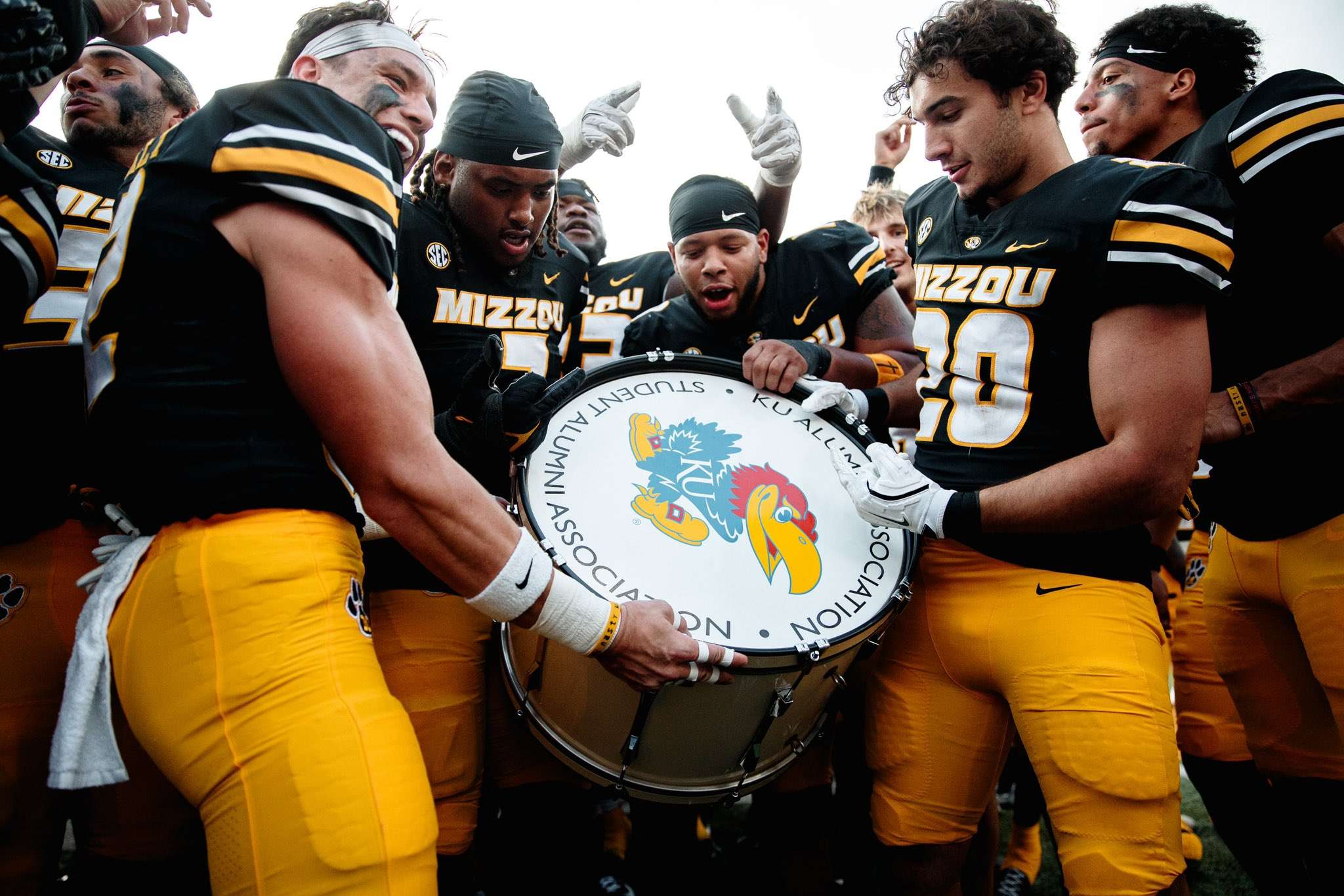
The Border War’s bass drum is unusual because it does not behave like a polished trophy that disappears into a case after the television cameras leave. Players crowd around it. Hands strike it. Photos turn it into part of the celebration.
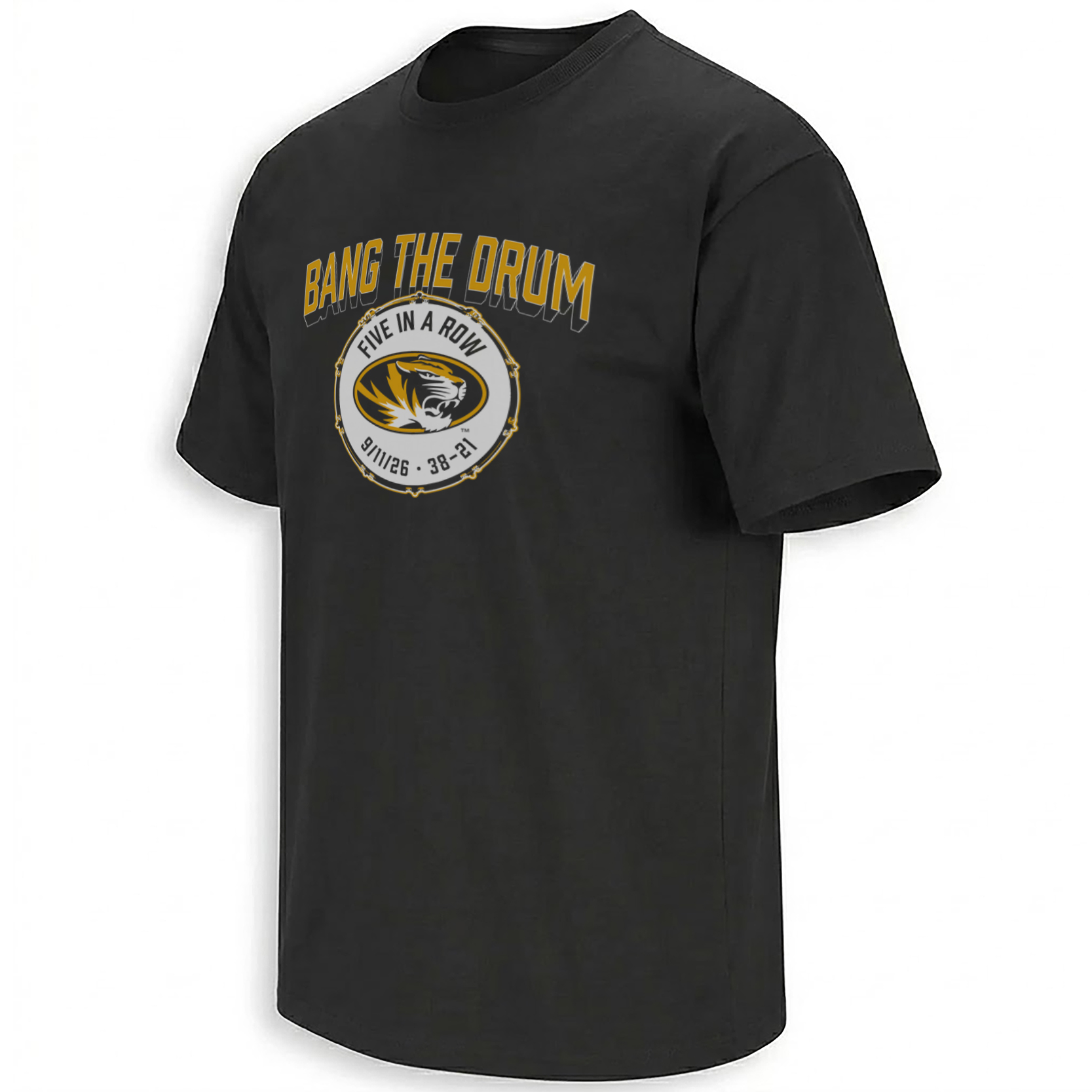
That visual history is what makes the Bang the Drum Shirt work so well after the 2026 result. The design is not simply announcing “Missouri beat Kansas.” It connects the fifth consecutive victory to one of the rivalry’s oldest recognizable objects.
Missouri Took Kansas’ Best First-Half Punch
The final score hides how unsettled the game looked early. Kansas struck first after a blocked Missouri field goal was returned 88 yards for a touchdown. Mizzou also had another kick blocked, committed penalties and allowed the Jayhawks to build early energy from the home crowd.
Jamal Roberts changed the rhythm with a 64-yard touchdown run. Simmons then drove Missouri for a game-tying touchdown pass to Cayden Lee just before halftime.
After the break, Woodyard altered the game in two possessions. His forced fumble set up Simmons’ touchdown throw to Donovan Olugbode. On Kansas’ next snap, Woodyard intercepted Isaiah Marshall, and Xai’Shaun Edwards soon made it 28–14.
Missouri finished with 469 total yards while holding Kansas to 255. Simmons later closed the scoring with a fourth-down touchdown pass to Brett Norfleet, a decision that gave the 38–21 final a distinctly rivalry-style punctuation mark.
Missouri’s current five-game streak over Kansas now matches its longest winning run in the rivalry. The Tigers have also won six of the last seven football meetings.
Postgame Immediately Became Border War Theater
The football ended, but the rivalry did not. Missouri players carried a state flag. Players from both teams remained close enough for tempers to briefly rise. And the drum returned to the center of the scene.
That is what makes this rivalry visually useful: the celebration is not neutral. The trophy itself carries the opponent’s identity, so every strike on the drum is simultaneously celebration and provocation.
The Design Turns the Streak Into a Rhythm
The graphic’s smartest choice is to avoid treating “five in a row” like a dry statistic. The drum converts the number into an action. Five wins become five beats, five reminders, five consecutive seasons of rivalry memory spread across the long interruption in the series.
Black and gold naturally establish Missouri, while the drum creates an object the viewer can understand even without reading a paragraph of series history. In streetwear terms, it has the logic of a tour poster: repetition, victory count and a recognizable prop at the center.
Austin Simmons Made the New Era Feel Immediate
Simmons matters because the streak belongs to history, but the performance belonged completely to 2026. Through his first two Missouri starts, he has seven touchdown passes without an interception. Against Kansas, he looked comfortable in a hostile rivalry setting that had not hosted Mizzou football in 21 years.
Readers following the quarterback can browse the Austin Simmons search archive. The wider Missouri Tigers collection collects Mizzou moments across seasons, while the NCAA collection places the Border War inside the larger college-football landscape.
Frequently Asked Questions
What was the score of Missouri vs Kansas in 2026?
No. 23 Missouri defeated Kansas 38–21 in Lawrence on September 11, 2026.
How many straight football games has Missouri won over Kansas?
Missouri has now won five consecutive football meetings with Kansas, matching the Tigers’ longest winning streak in the rivalry.
How did Austin Simmons play in the Border War?
Simmons completed 19 of 29 passes for 292 yards and three touchdowns with no interceptions.
Why is the drum important in the Missouri–Kansas rivalry?
The rivalry has long been associated with a bass drum trophy, making the drum a recognizable object in postgame celebrations and Border War imagery.
Why does “Bang the Drum” fit the five-game streak?
The design turns a statistical streak into an active rivalry ritual, using the drum as shorthand for Missouri repeatedly holding bragging rights over Kansas.
The Bang the Drum graphic preserves Missouri’s fifth straight Border War win, while the Mizzou archive tracks the larger 2026 season around it.
Bang the Drum Shirt captures Missouri’s 38–21 win at Kansas, Austin Simmons’ three-touchdown performance and Mizzou’s fifth consecutive Border War victory through the rivalry’s iconic drum imagery.