I Used to Smile and Then I Worked At: The Grinch Christmas Shirt Meme Explained
From Costco and Walmart to Ford and Coca-Cola, a familiar Christmas grouch has become the face of workplace sarcasm during America’s busiest shopping season.
Somewhere between the Christmas music, the crowded checkout lanes and the end of another holiday shift, the Grinch starts looking less like a fictional Christmas villain and more like an exhausted coworker.
Black Friday arrived in the United States on November 27, 2026, bringing the familiar contrast between festive shopping campaigns and the people responsible for keeping stores, restaurants, warehouses and distribution operations running.
According to the National Retail Federation , approximately 126 million consumers planned to shop on Black Friday this year. Retailers were also expected to hire hundreds of thousands of seasonal employees during November and December.
That seasonal pressure provides the cultural backdrop for a recurring novelty shirt: “I Used to Smile and Then I Worked At.” Featuring the Grinch in a Santa hat tangled in Christmas lights, the graphic turns workplace frustration into a joke that can be adapted to almost any employer.
Within Ellie Shirt’s Grinch Christmas apparel collection and broader Christmas collection , the design represents a different side of holiday culture: the perspective of the people working while everyone else is celebrating.

Clock In / 01 What Does the I Used to Smile and Then I Worked At Shirt Mean?
The slogan follows a simple comic structure. Its opening statement suggests that the wearer once possessed a cheerful disposition. The second half introduces the workplace as the exaggerated explanation for what changed.
The humor comes from combining that confession with the unmistakable expression of the Grinch. His narrowed eyes and irritated face communicate the punchline before the company name even appears.
Variations of this workplace joke have circulated for years. A Target-related shirt listing published in 2018 already documented a comparable Grinch expression. More recent merchandise listings show the same concept adapted to retailers, restaurants, delivery companies and other workplaces.
Thanksgiving weekend 2026 provides renewed relevance for the expression, rather than establishing it as a newly invented meme. Its original creator has not been independently established.
Clock In / 02 Why the Grinch Became a Symbol of Holiday Workplace Humor
Dr. Seuss introduced the Grinch in the 1957 children’s book How the Grinch Stole Christmas! His resistance to the overwhelming celebration surrounding him established one of Christmas culture’s most recognizable contrasts.
Modern workplace memes reinterpret that contrast. The Grinch becomes a visual shorthand for someone who has heard enough Christmas music, answered enough customer questions or completed enough consecutive holiday shifts.
The joke does not require the wearer to dislike Christmas. Its subject is often the difference between enjoying the holiday and being responsible for delivering the holiday experience to others.
That distinction explains why the character appears in sarcastic clothing throughout the wider Grinch holiday graphic archive , where festive imagery frequently intersects with dry humor and everyday frustrations.
Clock In / 03 What Retail Workers Are Saying About Black Friday 2026
Holiday workplace frustration is not simply a fictional premise. During Thanksgiving week, employees were discussing the demands of Black Friday in online communities dedicated to retail work.
In a November 24 discussion on r/retailhell, an experienced retail worker shared advice about managing demanding shifts, remembering breaks and dealing with the noise and crowds associated with the shopping event.
Another discussion, posted in the St. Louis community before Thanksgiving, invited retail employees to describe how they were managing the holiday rush. Responses included experiences from current workers and former employees who remembered the intensity of the season.
These discussions document the contemporary workplace experiences behind the humor. They are not evidence that the specific shirt artwork originated on Reddit, nor do they establish that every employee shares the same experience.
Eight Companies, One Christmas Workplace Joke
The flexible composition allows the company name to become the final line of the joke. Each version retains the Grinch, Christmas lights and central expression while introducing a different workplace identity.
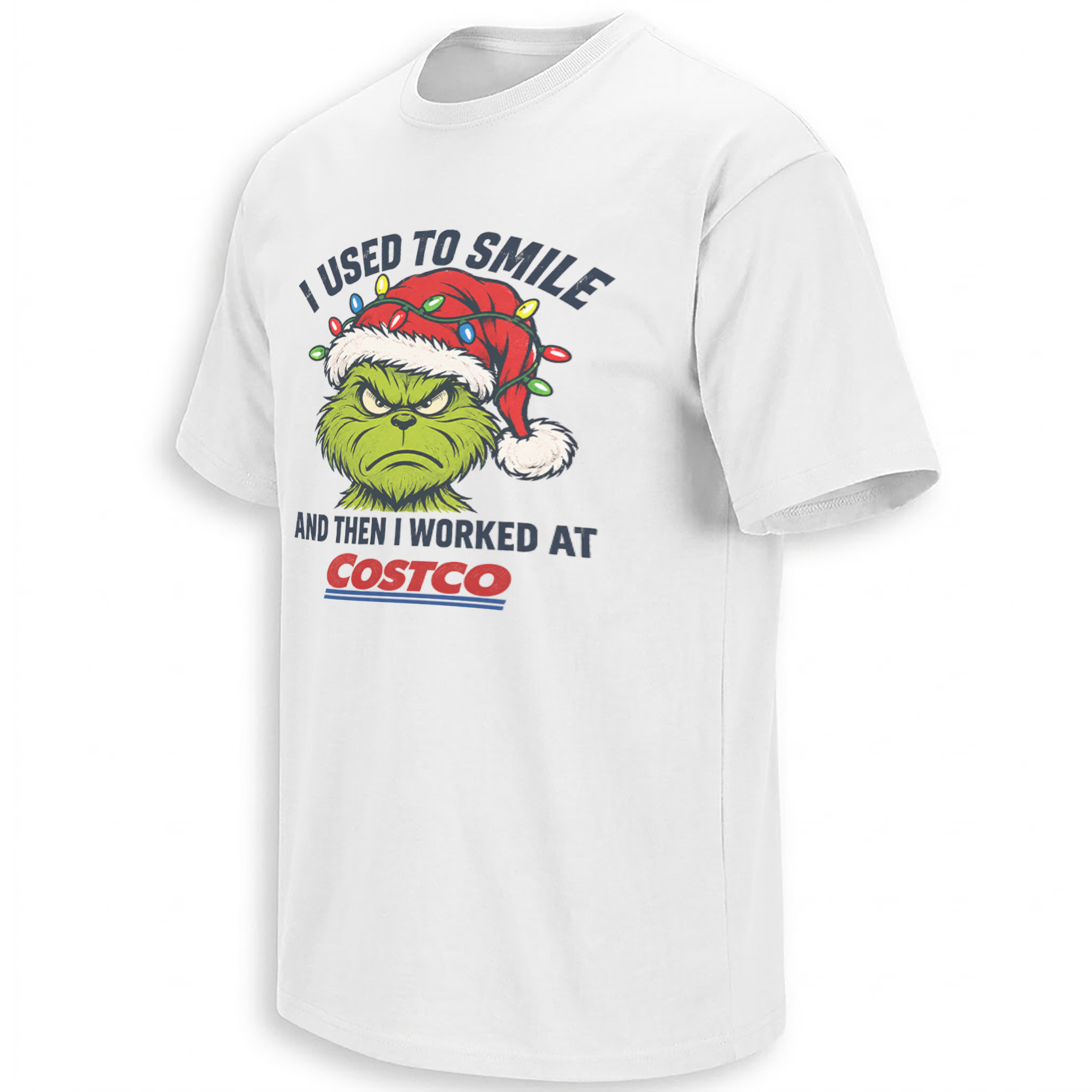
Warehouse shopping, oversized holiday orders and the recognizable humor of navigating another busy retail shift.
Explore the Costco graphic →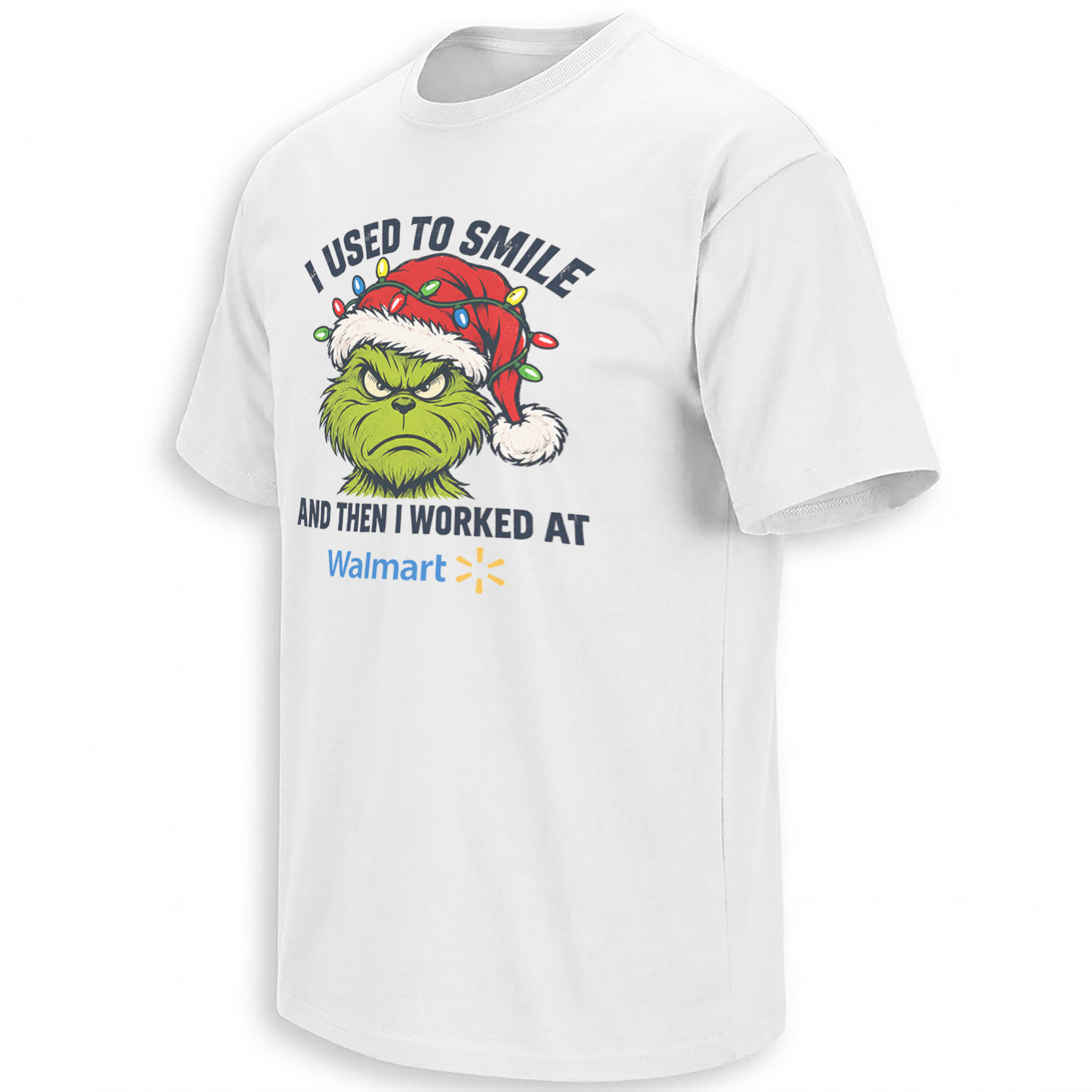
A familiar big-box retail identity meets the exaggerated exhaustion of the Grinch during Christmas shopping season.
Explore the Walmart graphic →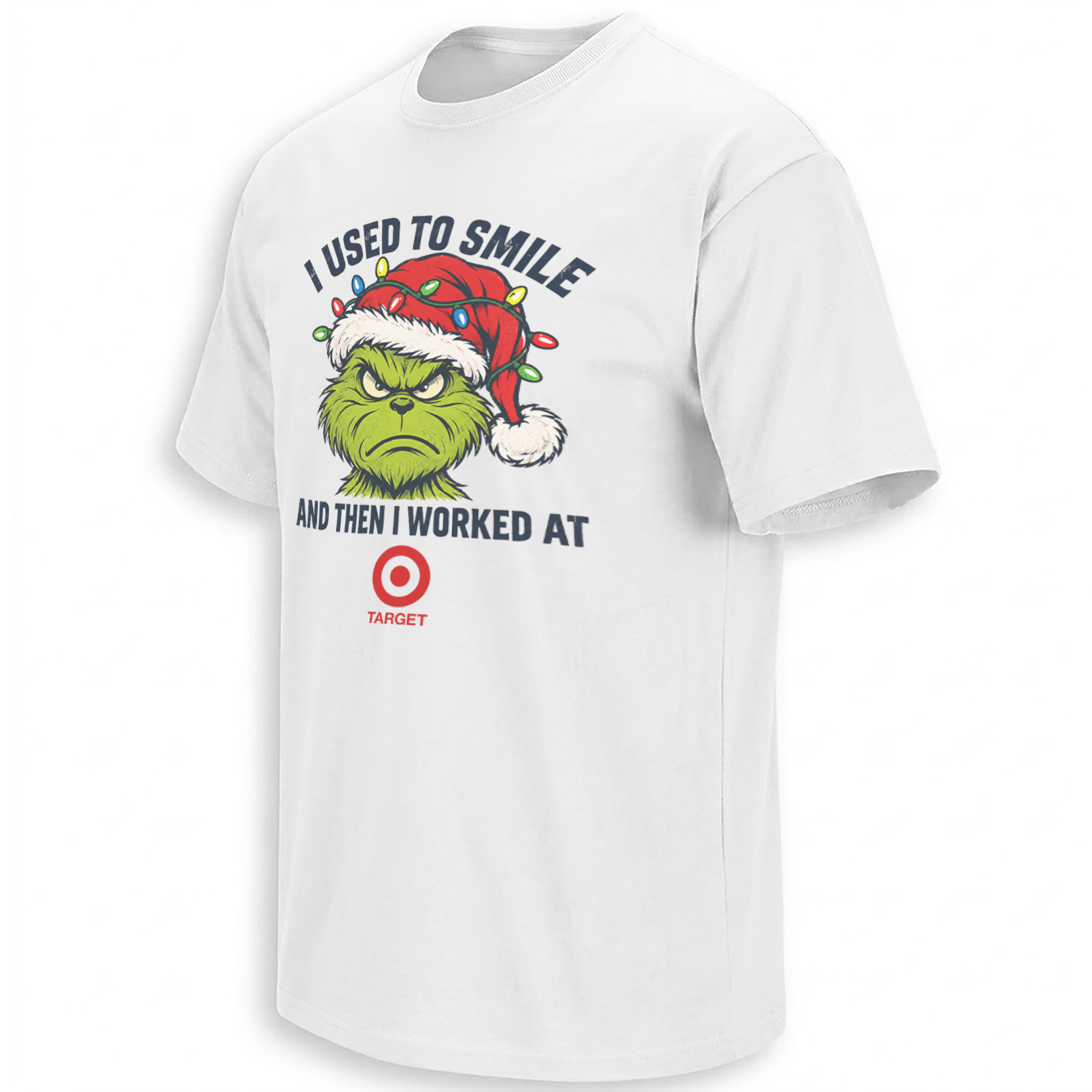
The recognizable red bullseye completes a workplace joke built around holiday shoppers, seasonal displays and retail routines.
Explore the Target graphic →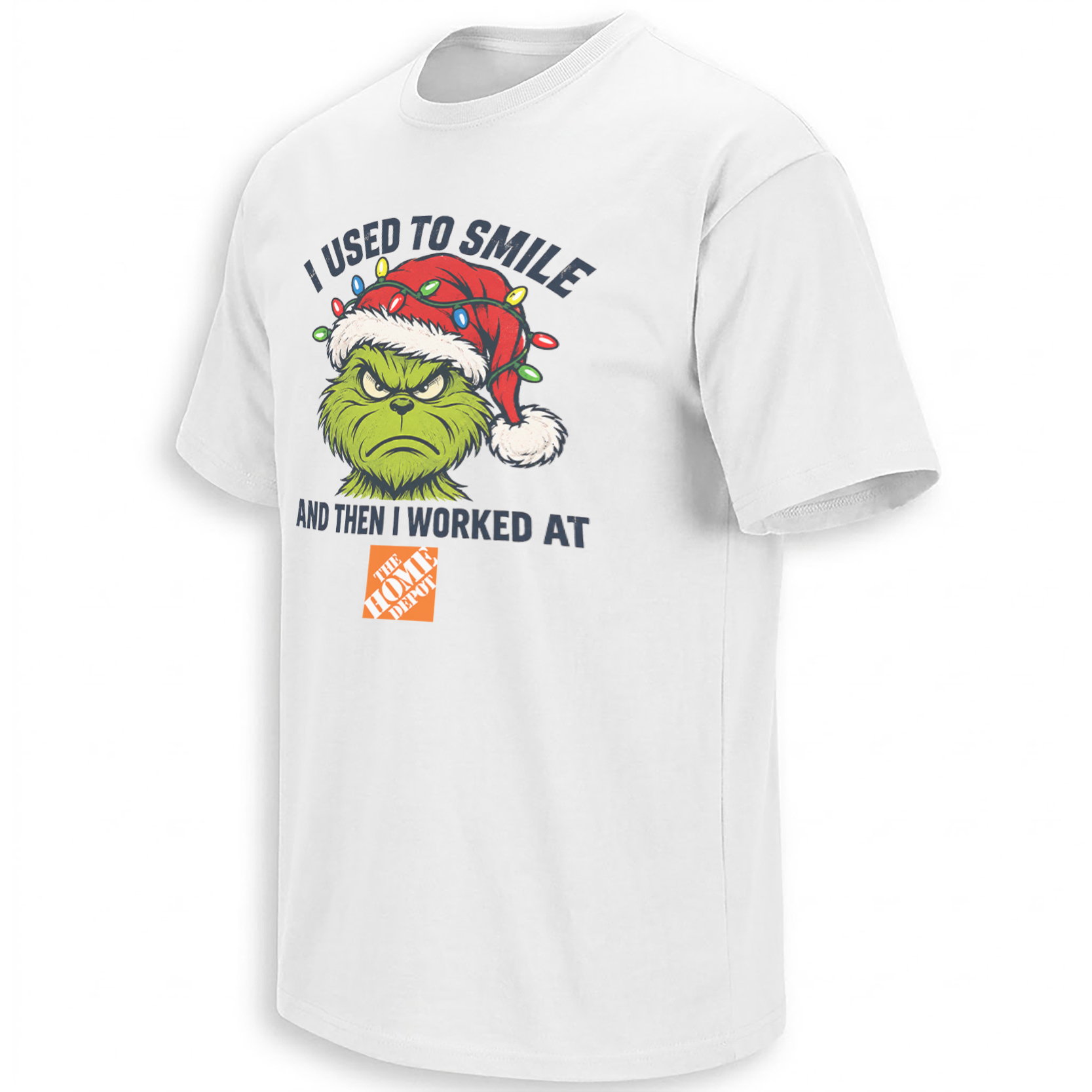
Orange workplace symbolism meets tangled Christmas lights in a humorous interpretation of home improvement retail culture.
Explore the Home Depot graphic →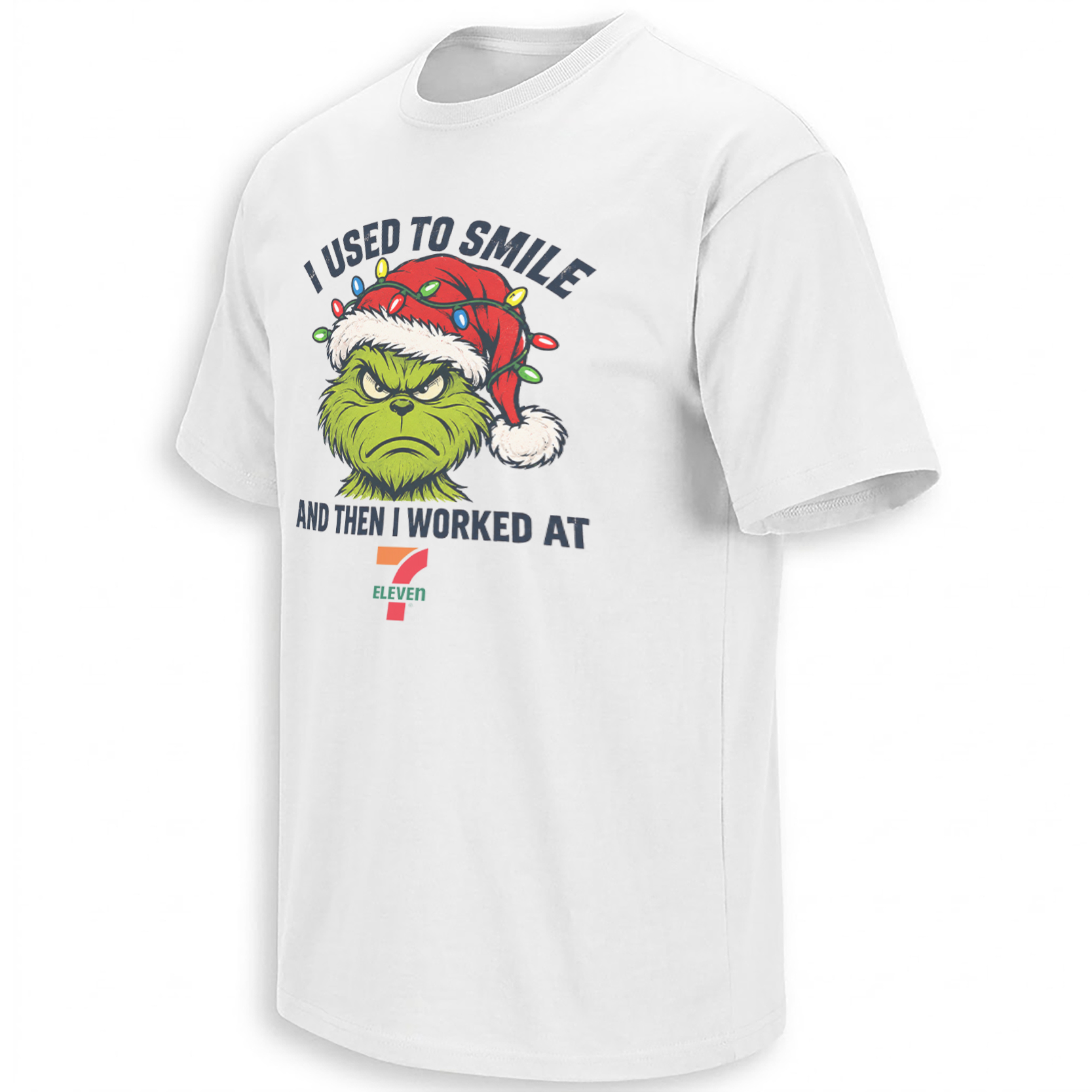
A convenience-store interpretation of holiday humor, especially recognizable to people familiar with late-night and irregular shifts.
Explore the 7-Eleven graphic →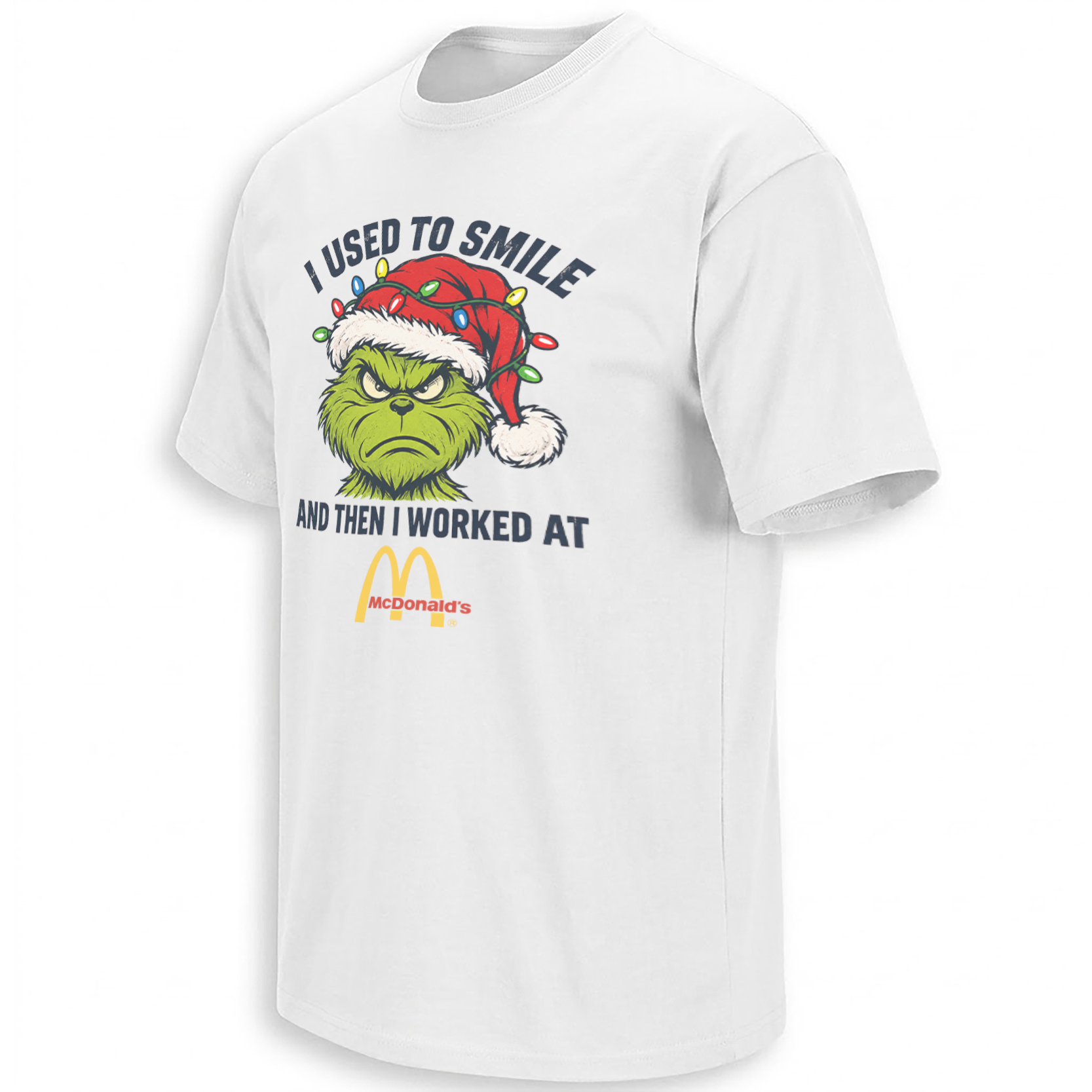
The Golden Arches introduce a food-service variation of the joke, connecting the Grinch with restaurant routines and busy shifts.
Explore the McDonald’s graphic →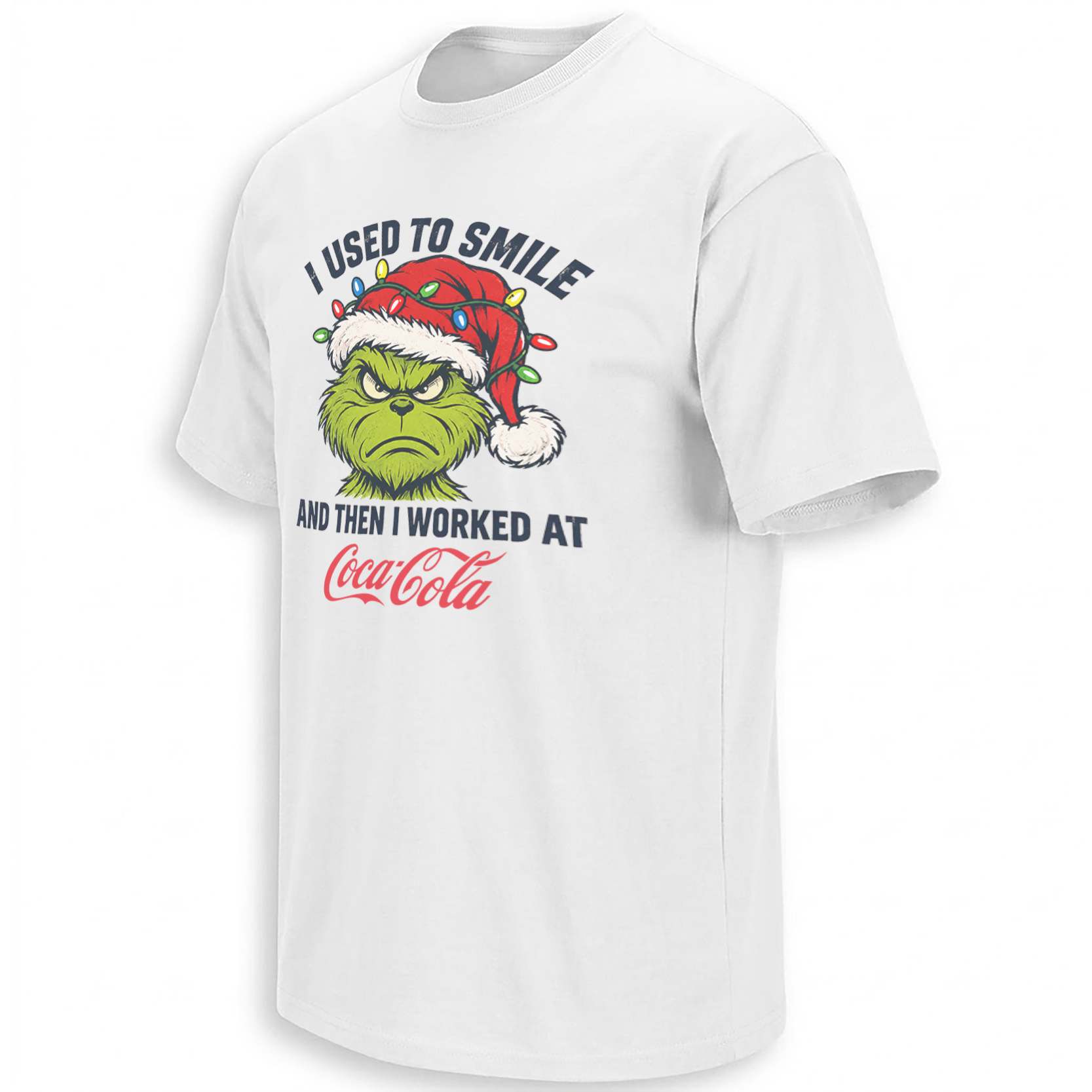
A playful contrast between a brand closely associated with Christmas advertising and the grumpy character behind the workplace joke.
Explore the Coca-Cola graphic →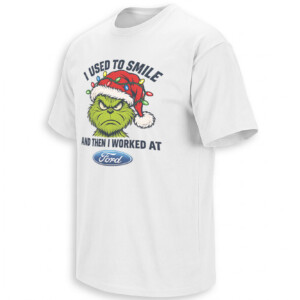
The Blue Oval shifts the joke beyond traditional retail and into the wider world of automotive manufacturing, dealerships and service work.
Explore the Ford graphic →These interpretations use recognizable company identities as part of the joke. They do not establish that any particular employer has endorsed the designs or that its employees universally share the sentiments expressed.
Clock In / 04 Why the Custom Company Logo Version Changes the Joke
The most adaptable element of the graphic is the unfinished sentence. Instead of making a joke about one particular employer, the composition leaves room for people to introduce their own workplace identity.
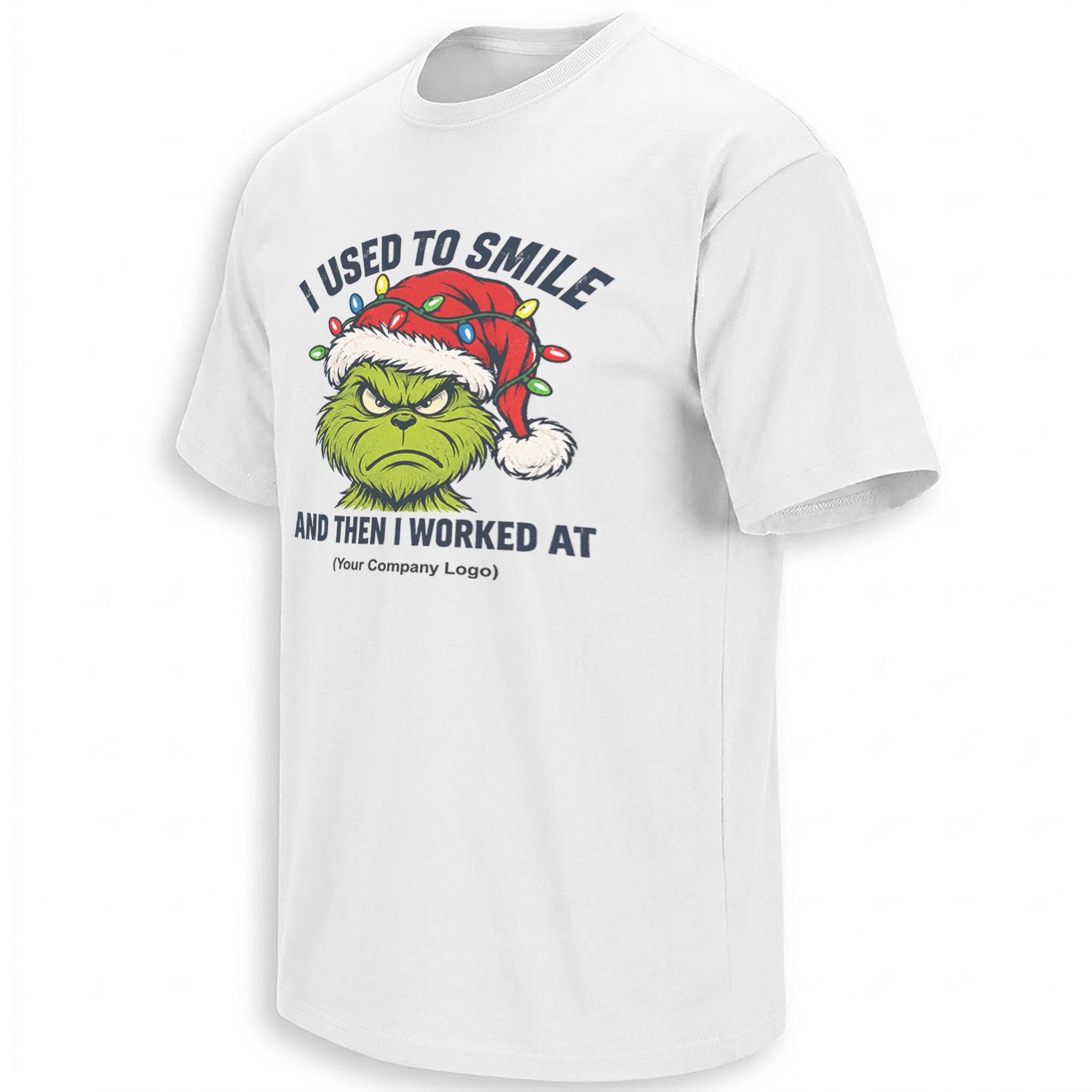
Your Workplace.
The original composition leaves space beneath the punchline for a personalized company identity. Selected Ellie Shirt product pages include an optional Your Company Name field.
Explore personalization options →This flexibility allows the humor to extend beyond major corporations. An independent restaurant, family business, warehouse team or local shop can become the subject of the same expression.
The result can also function as an inside joke among coworkers, where the workplace reference carries meaning that outsiders might not immediately understand.
Personalization involving a company logo should be limited to artwork that the customer has permission to reproduce. The available product customization fields and accepted logo formats should be confirmed before ordering.
Clock In / 05 The Visual Language of the Grinch Workplace Shirt
The design remains recognizable across employers because its central visual structure rarely changes. The character establishes the emotional expression, the Christmas accessories establish the season, and the final company identity completes the joke.
The exaggerated scowl supplies an instantly recognizable visual shorthand for frustration and festive exhaustion.
A red Santa hat and colorful tangled bulbs create a contrast between cheerful holiday decoration and the character’s expression.
Bold lettering creates the setup, while the interchangeable company name or symbol delivers the final comic reference.
The white garment background keeps the artwork readable without requiring a heavy decorative Christmas border. Dark typography frames the character, allowing the green face and multicolored lights to remain the strongest visual elements.
Clock In / 06 Why Workplace Christmas Memes Are So Relatable
Workplace jokes often depend on recognition. A customer sees a festive shop, while an employee may see an extended list of responsibilities, unfinished tasks and another shift approaching.
The Grinch graphic compresses that difference into a recognizable image. It allows a complicated feeling to be expressed through humor rather than a lengthy explanation.
That does not mean workplace frustrations should be dismissed as insignificant. Humor can coexist with genuine concerns about scheduling, staffing, customer interactions and the pressure of working during major holidays.
The same joke can also mean different things depending on the wearer. For one person it may be affectionate sarcasm about their coworkers. For another it may be an exaggerated description of the busiest month of the year.
Its flexibility explains why the phrase remains recognizable beyond any single workplace, company or Christmas shopping season.
Clock Out / FAQ I Used to Smile Grinch Christmas Shirt FAQ
What does I Used to Smile and Then I Worked At mean?
It is a sarcastic workplace expression that exaggerates how demanding jobs or busy shifts can affect someone’s cheerful disposition.
Why is the Grinch used in workplace Christmas memes?
The Grinch’s recognizable scowl contrasts with cheerful Christmas imagery, making the character a humorous symbol of holiday workplace frustration.
Did the I Used to Smile Grinch shirt originate in 2026?
No. Comparable workplace-themed Grinch shirt listings existed before 2026. The original creator has not been independently established.
Why is the meme relevant during Black Friday?
Black Friday and the Christmas shopping season bring increased activity to many retail and service workplaces, providing a recognizable context for sarcastic employee humor.
Which company versions are featured in this collection?
The article features Costco, Walmart, Target, Home Depot, 7-Eleven, McDonald’s, Coca-Cola and Ford workplace-themed graphic interpretations.
Can the company name be personalized?
Selected Ellie Shirt product pages include an optional company name personalization field. Logo reproduction options and permissions should be confirmed before ordering.
Is this Christmas meme only for retail workers?
No. The expression can be adapted to food service, automotive work, warehouses, distribution and other workplace environments.
Does the slogan mean the wearer hates Christmas?
Not necessarily. It often expresses the humorous contrast between enjoying Christmas and working through a demanding holiday season.
Are the company-themed Grinch shirts official employee uniforms?
These designs are presented as workplace-themed novelty graphics, not official employee uniforms or evidence of endorsement by the featured companies.
Discover other versions through the I Used to Smile graphic archive , explore more Grinch Christmas designs , or browse the wider Christmas apparel collection for seasonal expressions inspired by everyday humor, familiar characters and shared experiences.
National Retail Federation — Thanksgiving Weekend Shopping Forecast
Associated Press — Black Friday 2026 Retail Shopping Coverage
Reuters — Black Friday 2026 Consumer Spending Report
Reddit / Retailhell — Employee Black Friday Discussion
Reddit / St. Louis — Thanksgiving Week Retail Worker Discussion
Historical Merchandise Listing — Target Grinch Workplace Shirt, 2018
The I Used to Smile and Then I Worked At Grinch Christmas shirt series captures holiday workplace sarcasm through a grumpy Grinch, tangled Christmas lights and interchangeable company identities. Explore Costco, Walmart, Target, Home Depot, 7-Eleven, McDonald’s, Coca-Cola, Ford and personalized workplace interpretations.