
The Kid Who Almost Delivered It All
Cooper Pratt’s extraordinary 12th-inning home run brought Milwaukee within three outs of its first World Series title. Then the Tampa Bay Rays produced an ending nobody in the Brewers dugout wanted to see.
For a few extraordinary minutes on October 27, 2026, Cooper Pratt was the kid who had delivered Milwaukee’s championship moment. The 22-year-old Brewers shortstop had just launched a go-ahead home run in the twelfth inning of World Series Game 4 at Tropicana Field, pushing Milwaukee ahead of the Tampa Bay Rays 3–2 and placing the franchise three outs from its first title.
Thousands of Brewers supporters inside the stadium erupted. Milwaukee’s dugout spilled onto the field to celebrate the rookie. At home, an entire city had reason to imagine the final out, the trophy and a championship celebration that had never happened before.
But baseball did not let the story end there. Tampa Bay rallied for two runs in the bottom of the twelfth to win 4–3, forcing Game 5 and denying Milwaukee the championship-clinching victory. Pratt’s swing became something stranger and more emotionally complicated: a historic World Series home run inside a loss.
One Swing Against Ian Seymour Changed the Night
Pratt had already been Milwaukee’s most productive hitter. Earlier in the game, he drove home a run with an RBI double. By the time he returned to the batter’s box in the twelfth, the score was tied at 2–2 and both teams were trying to escape an exhausting extra-inning struggle.
Facing Rays left-hander Ian Seymour, Pratt worked to a 2–2 count. Seymour threw a sweeper. Pratt connected and sent the ball into the seats, giving Milwaukee a one-run lead.
The moment was especially remarkable for its historical context. According to MLB and Elias Sports Bureau, Pratt became the first rookie to record four hits in a potential World Series-clinching game. His homer was also the latest go-ahead home run ever hit in a potential clincher, surpassing the previous extra-inning benchmarks.
The official MLB report captured Pratt’s reaction and the shock that followed.
He delivered the swing Milwaukee had waited decades to see. The game simply refused to give it the ending everyone expected.
The World Series Homer in Photographs and Video
There is a particular quality to the images of Pratt rounding the bases. His cream Brewers uniform and No. 12 stand out against the lights and crowd at Tropicana Field. The photographs capture a player who, in that instant, had every reason to believe his swing might define the franchise’s first championship.
Why “The Kid Who Delivered” Still Works After a Loss
The title of the graphic creates an intriguing tension. Pratt delivered a sensational performance. He delivered the lead. He delivered a moment that briefly seemed destined to become the most famous swing in Brewers history. What he did not deliver, through no fault of his own, was the final result.
That distinction matters. A sports image can preserve an authentic achievement without pretending the scoreboard finished differently.
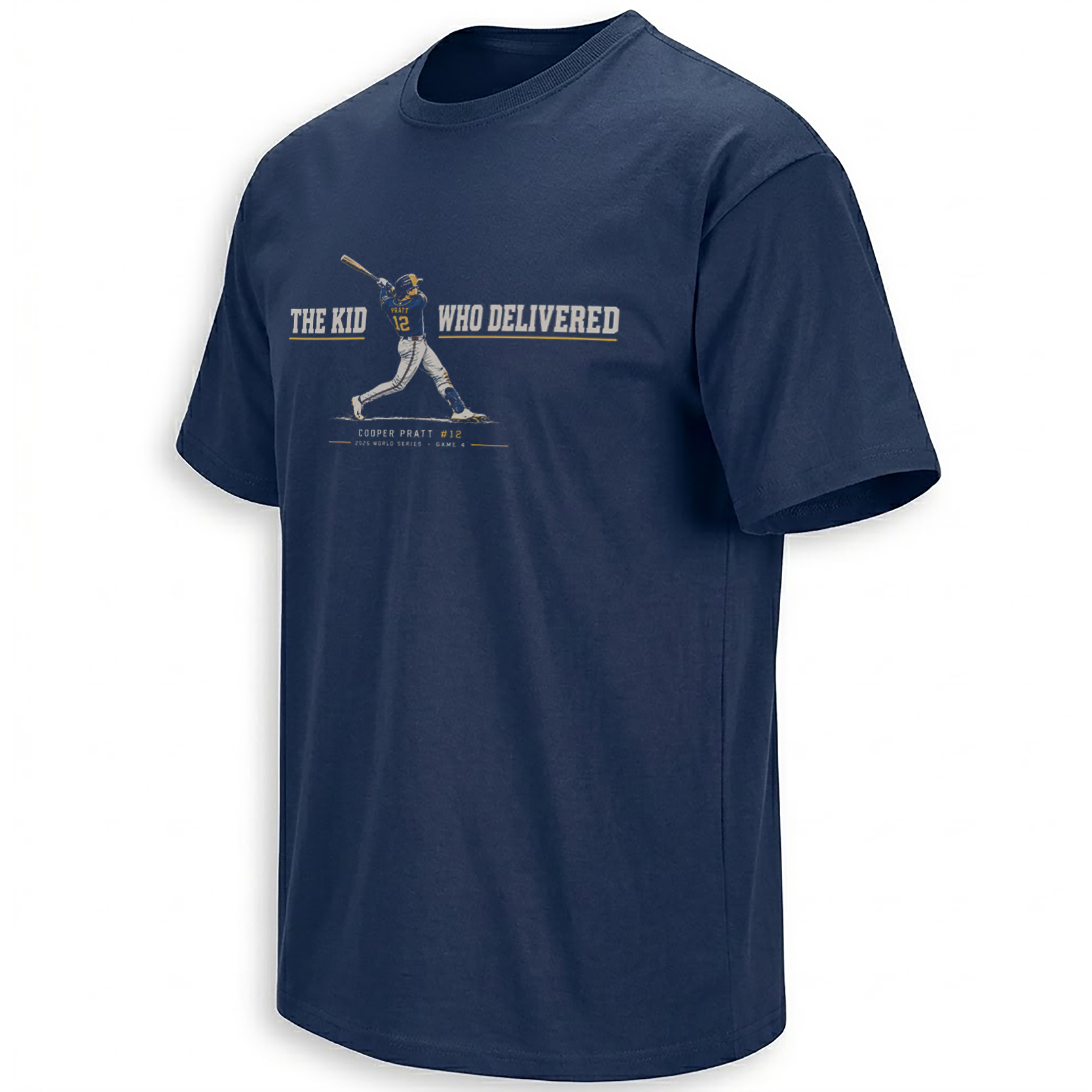
A navy-and-gold baseball graphic that freezes the rookie’s dramatic World Series swing and the historic performance behind it.
Explore the World Series graphic →The The Kid Who Delivered Shirt places Pratt’s batting silhouette at the center of its storytelling. The visual emphasis belongs to the swing rather than an imagined championship trophy. Navy and gold connect the moment to Milwaukee’s familiar baseball identity.
In that sense, the design works like a newspaper clipping preserved from a dramatic October night. It represents what Pratt accomplished before the game changed direction.
The Twelfth-Inning Reversal That Kept Tampa Bay Alive
Milwaukee had entered Game 4 with a commanding 3–0 lead in the best-of-seven World Series. After Pratt’s homer, the Brewers needed just three defensive outs to finish the championship.
Instead, the Rays mounted a final rally. A defensive miscue opened the door, Jonny DeLuca delivered the tying hit, and Ben Williamson ended the game with a bases-loaded walk-off single.
Tampa Bay celebrated a 4–3 victory. The World Series moved to Game 5 with Milwaukee still leading 3–1, and Pratt’s homer entered the record books as an extraordinary moment in a game the Brewers could not finish.
The contrast was captured in Associated Press coverage and the official MLB account of the rookie’s performance.
The Internet Saw a Championship Hero Before the Final Out
As the ball disappeared into the seats, baseball’s social feeds reacted with the language normally reserved for a defining championship moment. Milwaukee’s official team account circulated the homer, while FOX Sports emphasized the possibility that the swing might become part of Brewers history forever.
The language initially sounded definitive because the situation felt definitive: a 12th-inning lead, a 3–0 series advantage and a championship waiting three outs away. After the comeback, those celebrations became a reminder of how quickly the meaning of a sports highlight can change.
Fan discussion also reflected the shift from disbelief to frustration. Milwaukee Journal Sentinel’s reporting on social-media reactions documented the roller coaster of emotions surrounding the inning.
Cooper Pratt’s Bigger Place in the Brewers’ 2026 Story
Pratt was not simply a player who happened to hit one important home run. His four-hit performance demonstrated why the rookie had become part of Milwaukee’s postseason conversation.
He entered Game 5 with a postseason batting average of .333 and an .829 OPS, according to MLB’s postgame report. Manager Pat Murphy praised the quality of his at-bats, while Pratt himself directed attention toward recovering for the next game.
That response helps give the original moment a second dimension. The same rookie who appeared to have won the World Series was also prepared to move on from a heartbreaking defeat.
The Milwaukee Brewers collection follows that wider landscape of postseason moments, while the MLB collection places Pratt’s performance within the visual culture of the World Series.
For more player-focused artwork, readers can explore Cooper Pratt designs and related Jackson Chourio graphics.
Frequently Asked Questions
Did Cooper Pratt hit a home run in Game 4 of the 2026 World Series?
Yes. Pratt hit a go-ahead solo home run off Ian Seymour in the top of the twelfth inning on October 27, giving Milwaukee a 3–2 lead.
Did the Brewers win after Pratt’s homer?
No. Tampa Bay rallied for two runs in the bottom of the twelfth and won Game 4 by a 4–3 score.
How many hits did Cooper Pratt have in Game 4?
Pratt went 4-for-5 with two RBIs, including a double and the twelfth-inning home run.
How old was Cooper Pratt during the 2026 World Series?
Pratt was 22 years old during the October 2026 World Series.
Why is the home run historically significant?
Pratt became the first rookie with four hits in a potential World Series-clinching game and hit the latest go-ahead home run in such a game, according to MLB and Elias Sports Bureau.
What does The Kid Who Delivered refer to?
The phrase celebrates Pratt’s dramatic go-ahead home run and four-hit performance, not a completed championship victory.
The The Kid Who Delivered graphic preserves a remarkable chapter of Milwaukee’s World Series run — a rookie’s moment of brilliance and the narrow distance between baseball heartbreak and history. Explore more in the Brewers archive.
The Kid Who Delivered Shirt captures Cooper Pratt’s extraordinary twelfth-inning home run in Game 4 of the 2026 World Series. The navy-and-gold No. 12 silhouette graphic commemorates the rookie’s four-hit performance and a swing that briefly put Milwaukee three outs from its first championship.