
Chase Meidroth’s South Side Stack Swing Ended a 21-Year White Sox Wait
One sixth-inning swing in Houston took a tense one-run game, cracked open the 2026 Wild Card Series and gave a new generation of White Sox fans its first postseason series celebration.
The White Sox had spent the fifth inning watching a comfortable lead become uncomfortable. Chicago had jumped ahead early against Houston, but solo home runs kept cutting into the margin until a 4–0 advantage had become 4–3.
Then Chase Meidroth stepped into the sixth inning and changed the emotional temperature of the entire series.
With two runners aboard and Bryan Abreu behind in the count, Meidroth drove a slider to left-center for a three-run home run. The score became 7–3. His reaction arrived almost as quickly as the baseball left the bat: fist pumping, voice out, adrenaline visible before he had even finished the trip around the bases.
The home run mattered because it did not simply extend a lead. It broke the tension that had accumulated over two decades of White Sox Octobers that never produced another series celebration.
Why Chase Meidroth’s home run felt bigger than three runs
Chicago had not won a postseason series since the 2005 World Series, when the White Sox completed one of the defining championship runs in franchise history. Every playoff appearance after that existed beneath the shadow of the same comparison.
The 2026 team was supposed to be different in a more modern way. It arrived with young players, unexpected contributors and the momentum of a season that had reconstructed the South Side’s baseball identity after years of frustration.
Meidroth fit that story perfectly. The young infielder was not walking into October with a decade of playoff mythology behind him. He created his first major postseason signature almost instantly.
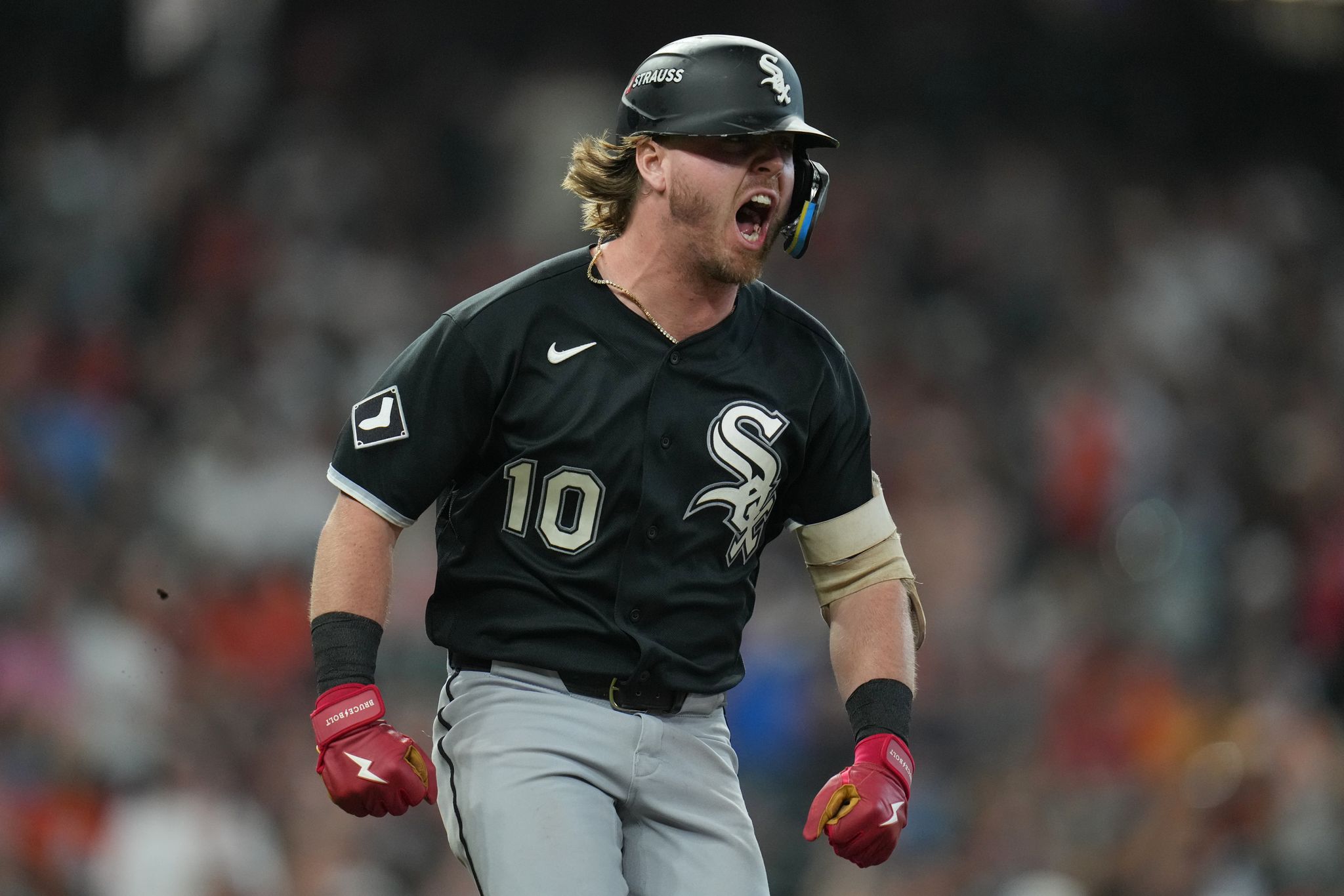
The internet reaction centered on the scream as much as the swing
The highlight spread because the home run provided both baseball consequence and a perfect reaction shot. Meidroth knew almost immediately that he had connected with something important, and fans responded to the visible release.
In White Sox fan spaces, the moment was treated less like an ordinary insurance homer than an emotional breakthrough. The language became loud, profane and celebratory—the natural internet register for a fan base realizing its team was about to advance.
What does “South Side Stack” mean?
The phrase is partly geographic and partly visual. “South Side” is one of the strongest identity markers in White Sox culture because the team’s relationship with Chicago has always been neighborhood-specific. The phrase tells you where the baseball belongs before a logo is even necessary.
“Stack” describes the way the artwork builds the words vertically. SOUTH and SIDE become oversized outlined structures, while Meidroth’s figure cuts directly through the typography. Instead of placing the player beside the neighborhood identity, the graphic inserts him into it.
The stacked type makes Meidroth look embedded inside South Side culture rather than pasted onto a generic playoff graphic. Black, white and gray reinforce the White Sox night-game aesthetic, while the tall composition feels like a poster made immediately after one enormous October swing.
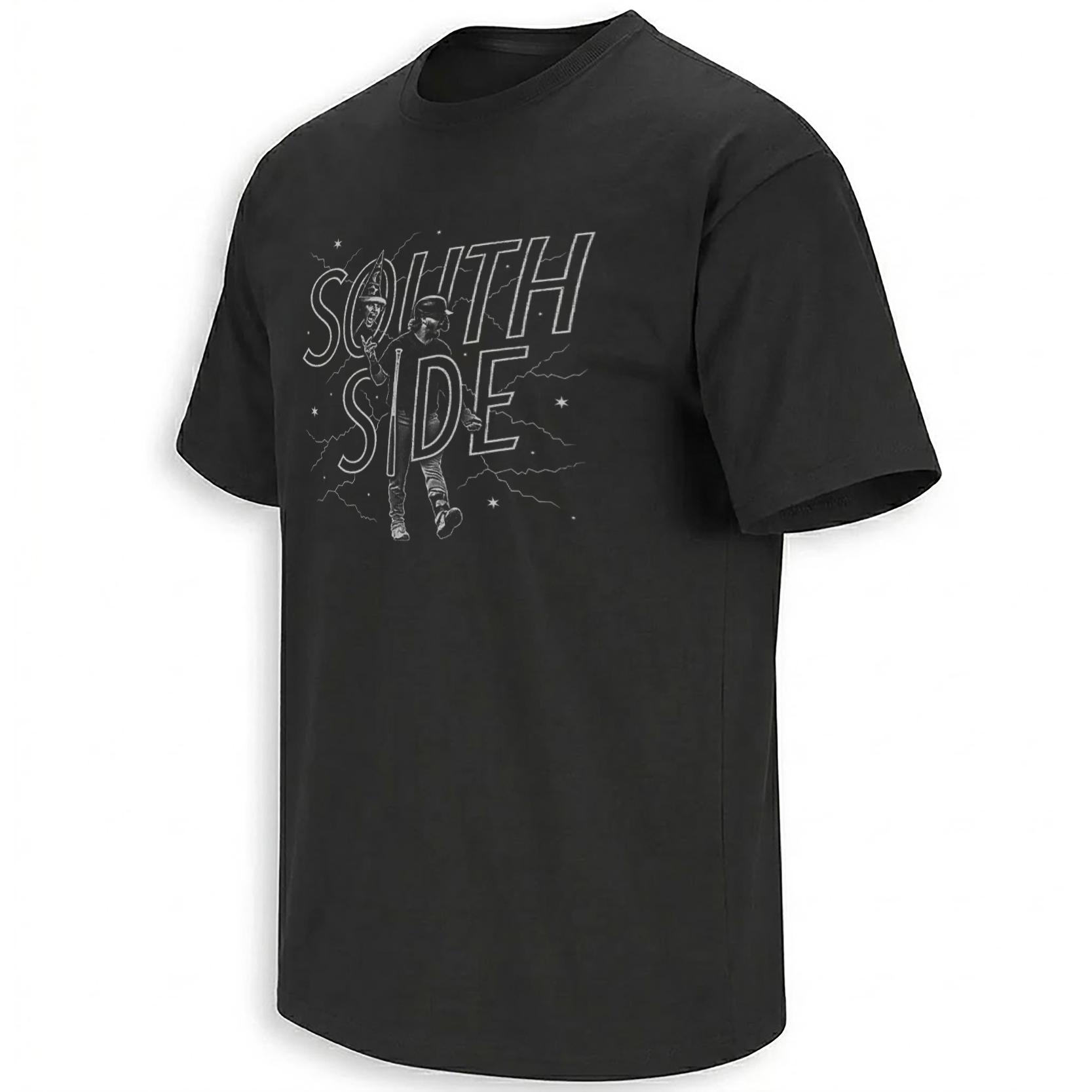
A player-centered October graphic built around the homer that sent Chicago from Wild Card tension into its first postseason series celebration since 2005.
View the South Side piece →Why the moment grew even stronger after Houston
If Chicago had immediately disappeared in the next round, the Meidroth homer would still have mattered. Instead, the White Sox carried their momentum into Cleveland and opened the ALDS with a 3–0 victory over the Guardians.
That changed the way the Wild Card homer could be remembered. It stopped looking like one isolated high point and started looking like the swing that announced a postseason team capable of extending its story.
That distinction matters in real-time sports culture. Fans rarely know which highlight will become historical while it is happening. A moment acquires weight as everything after it develops.
A new South Side player enters the October archive
White Sox history has no shortage of player-specific postseason memories, but a 21-year gap means younger supporters did not grow up with fresh ones. Meidroth has now supplied one.
The wider Chicago White Sox collection works as a visual archive of the team’s evolving postseason identity, while the broader MLB collection connects Chicago’s October run to the rest of the 2026 playoff field.
Because this design centers on one player, related pieces can also be found through the Chase Meidroth product search.
Frequently Asked Questions
What is the South Side Stack shirt about?
It is inspired by Chase Meidroth’s three-run home run in Game 2 of the 2026 AL Wild Card Series against Houston.
Why was Meidroth’s home run so important?
Houston had cut Chicago’s lead to 4–3. His three-run homer restored a four-run advantage and helped secure the series-clinching 7–3 victory.
When had the White Sox last won a postseason series?
Chicago’s previous postseason series victory came during its 2005 World Series championship run.
Why does the design say South Side instead of White Sox?
South Side is a core geographic and cultural identity for White Sox baseball, allowing the graphic to connect Meidroth’s player moment directly to Chicago fan culture.
Why is Chase Meidroth placed inside the lettering?
The composition visually turns Meidroth into part of the South Side identity rather than treating him as a separate portrait beside generic team text.
The South Side Stack graphic preserves the night Chase Meidroth broke open the Wild Card clincher, while the wider White Sox archive follows where Chicago’s postseason story goes next.
South Side Stack Shirt captures Chase Meidroth’s three-run Wild Card homer against Houston, the swing that helped end the White Sox’s 21-year wait for another postseason series victory.