ATL HOE THIS IS ATLANTA.
From Southern rap and concert crowds to Atlanta Hawks basketball, the city’s unmistakable call-and-response tradition still turns three provocative syllables into a declaration of hometown pride.
Ask somebody from Atlanta where they’re from in the middle of a loud enough crowd, and the response might arrive before the question has even finished. “ATL Hoe!” is not polite tourism copy. It is a rowdy, unmistakably local piece of call-and-response language shaped by Southern rap, live music and the collective confidence of a city that has never needed outsiders to approve its soundtrack.
That language feels especially alive as the Atlanta Hawks open their 2026–27 NBA season. On October 21, the Hawks began with a 132–125 road victory over Orlando, powered by 31 points from Nickeil Alexander-Walker and 20 each from Jalen Johnson and Dyson Daniels. Their State Farm Arena home opener against Houston follows on October 24. The basketball season is new; Atlanta’s hometown vocabulary is anything but. Read the Atlanta Journal-Constitution’s game report.
The ATL Hoe Atlanta Hawks city-pride design lives where those two worlds overlap. Its large red-and-gold lettering takes the city’s established crowd language and gives it a visual treatment that belongs to Atlanta basketball culture without claiming the words originated with the team.
What Does “ATL Hoe” Actually Mean?
At its most recognizable, “ATL Hoe” works as an emphatic answer to the question “Where are you from?” The phrase is associated with Atlanta’s crunk-era musical tradition and the broader performance culture that grew around it. Its confrontational wording is part of the attitude, but in many local settings the purpose is communal: a loud signal of city affiliation.
Tracing a chant’s precise origin is complicated. Online recollections connect it to early-2000s recordings involving Pastor Troy, Baby D, Lil Jon and the East Side Boyz, while accounts of Atlanta live shows describe it spreading well beyond its original rap context. Those claims are useful cultural testimony, though not a definitive record identifying one inventor.
The important distinction is between a lyric, a catchphrase and a crowd ritual. A recorded line can be played at home. A catchphrase can be repeated online. A crowd ritual requires strangers to participate together. “ATL Hoe” became especially durable because it moved across those boundaries.
From Crunk Records to Concert Floors
Southern hip-hop was never simply a regional variation of music made elsewhere. Atlanta helped establish its own dominant sound through bass-heavy production, shouted responses and an understanding that a concert audience is part of the performance rather than merely an observer.
That interaction helps explain the phrase’s survival across genres. A 2017 Houston Press account of Red Bull Culture Clash described an Atlanta-rooted “ATL HOE” chant as part of a competitive live-music exchange. Years later, fans discussing a 2024 Justice concert in Atlanta on Reddit recalled the crowd shouting the same phrase during an electronic-music performance.
The continuity matters. Rap crowds, electronic shows and sporting events do not share identical audiences, but all create moments when an individual voice disappears into something collective. Atlanta’s chant supplies a recognizable way to make that transformation happen.
Why Hawks Basketball Belongs in Atlanta’s Music Conversation
The Hawks have long treated the relationship between basketball and local music as part of the live-game experience. Artists, arena performances, courtside personalities and regional visual design all contribute to the atmosphere at State Farm Arena.
In April 2026, the franchise announced performances involving Pastor Troy and Soulja Boy for a home playoff game against the New York Knicks. The choice was culturally significant: it brought recognizable figures from Atlanta’s music history into a basketball setting where hometown identity was already a major part of the night. The team’s official announcement documented that crossover.
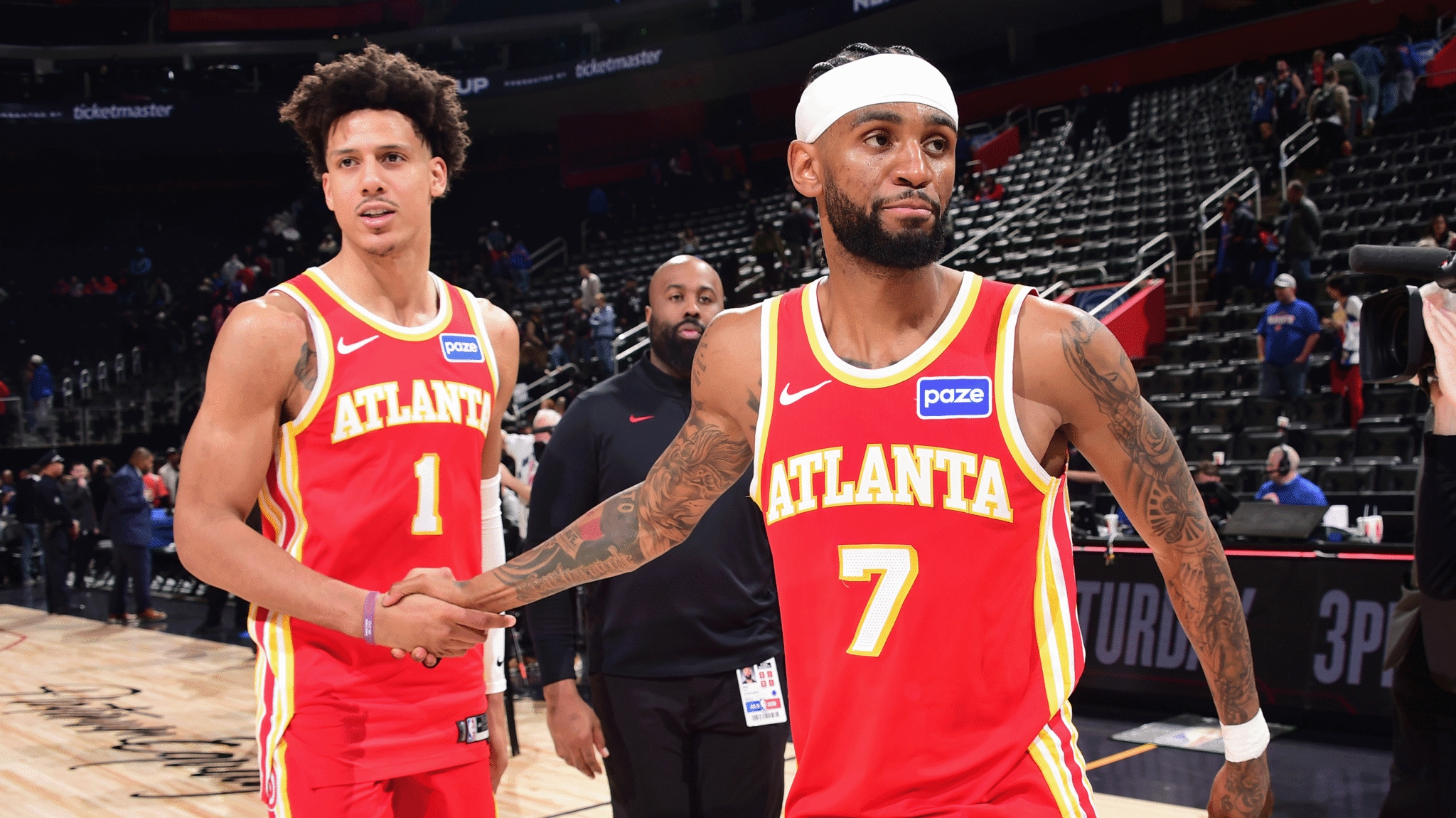
That is why a phrase closely associated with the city’s musical culture can resonate with Hawks supporters even without being an official team slogan. The meaning comes from the city itself. Atlanta does not need to borrow a new identity every October; it brings an existing one into the arena.
A New Hawks Season, an Old Atlanta Confidence
The 2026–27 team enters the season carrying its own expectations. Johnson gives Atlanta a versatile centerpiece, while Alexander-Walker’s scoring and Daniels’ defensive and playmaking contributions provide an increasingly recognizable collective identity. Their 132-point opener in Orlando offered an encouraging illustration of how productive the offense can become.
There are, naturally, questions that one victory cannot answer. A long NBA schedule will test depth, consistency and defensive discipline. Opening-night excitement is valuable but temporary unless the team develops habits capable of supporting it through winter and into spring.
Local pride, however, does not operate on the same timetable as the standings. A chant heard before a tip-off can survive a losing streak. A red-and-gold graphic can communicate belonging even when a season becomes uncertain. The relationship between Atlanta’s music scene and basketball audience is cultural, not conditional.
The Visual Language of the ATL Hoe Design
The graphic places “ATL HOE” front and center, using bold red-and-gold typography against a dark background. It draws from the visual vocabulary of streetwear, hip-hop flyers and Atlanta’s basketball colors: loud enough to read quickly, focused enough to avoid looking like a crowded playoff poster.
The wording deliberately resists formal sports-marketing language. It sounds like something shouted rather than approved by a committee. That makes it effective as a city-pride graphic: the phrase is instantly identifiable to people familiar with Atlanta’s concert culture, while its Hawks-inspired color palette provides a basketball connection.
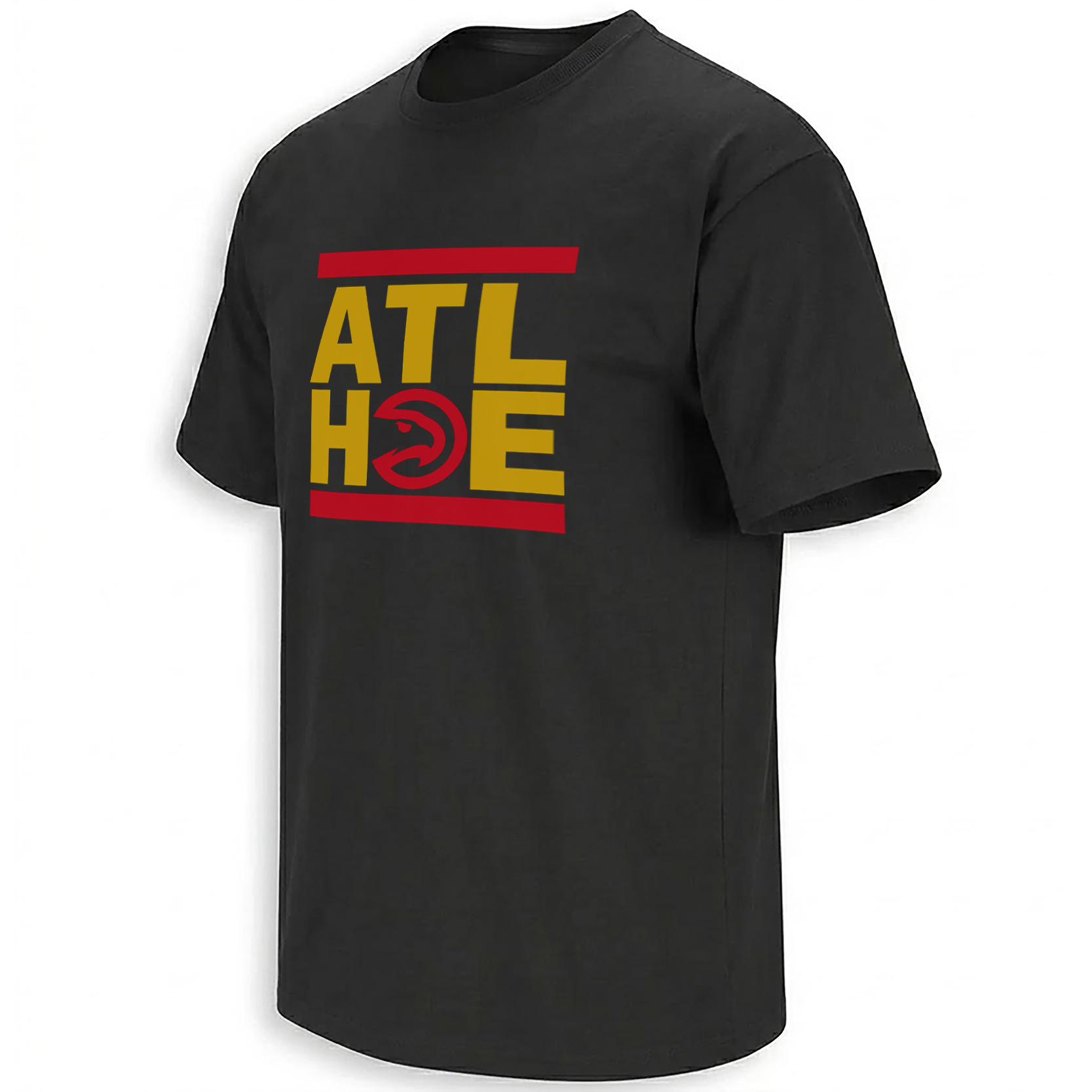
A city-first streetwear interpretation of Atlanta’s familiar chant, visually connected to the energy of Hawks basketball.
View the graphic →Where many basketball graphics celebrate one player or one final score, this design captures a kind of local speech. It is closer to a concert poster or neighborhood declaration than a team recap. The lettering is the subject because the words are already carrying the cultural story.
How the Internet Keeps the Chant Alive
Online conversations offer a useful view of how the phrase travels. In the 2024 Justice concert discussion, fans asked what the chant meant, shared recordings and described its appearance at Atlanta shows. The exchange illustrates how a deeply local reference can become familiar to new audiences without losing its geographic meaning.
The JusticeMusic Reddit thread documents a real audience conversation about the “ATL Hoe” chant at an Atlanta concert on October 21, 2024. Read the original posts and video discussion ↗
Atlanta crowd discussing the ATL Hoe chant — r/JusticeMusic
Within basketball culture, the same idea has a natural destination. Supporters browsing the Atlanta Hawks collection encounter team colors, player references and local expressions of support. The broader NBA collection tells a parallel story about how different basketball cities create distinct forms of visual fandom.
Why City Pride Outlasts a Single Game
The strongest local slogans remain recognizable without needing a specific date printed beside them. They can accompany a road victory, a playoff celebration, a music festival or an ordinary evening among friends. They communicate a shared location and attitude rather than a temporary result.
In Atlanta’s case, that identity has been shaped by decades of Southern hip-hop, the personality of the city and the way crowds use music to create their own sense of belonging. The Hawks are one expression of the culture, not its sole owner.
On October 24, the home-opening crowd will have its own reasons to make noise against Houston. The larger Atlanta soundtrack will already be familiar.
Frequently Asked Questions
What does “ATL Hoe” mean?
It is an energetic Atlanta hometown chant associated with Southern hip-hop and live crowd culture, often used as a response when identifying where someone is from.
Did the Atlanta Hawks invent the phrase?
No. “ATL Hoe” is part of a broader Atlanta music and crowd tradition that predates the 2026–27 basketball season. It is not presented here as an official Hawks slogan.
Why does the design use red and gold?
Those colors connect the bold streetwear-style lettering to the familiar visual identity of Atlanta Hawks basketball.
When is Atlanta’s 2026–27 home opener?
The Hawks are scheduled to host the Houston Rockets at State Farm Arena on October 24, 2026, following their October 21 road victory over Orlando.
The ATL Hoe graphic preserves a piece of local sound and turns it into a streetwear visual connected to the city’s Hawks culture.
The ATL Hoe Atlanta Hawks city-pride design connects a longstanding Atlanta hip-hop chant with red-and-gold basketball culture, bringing the energy of Southern music and hometown identity into the 2026–27 season.