Aaron Ashby Was Ice Cold. Milwaukee Called Him GOAT.
A nine-out NLCS save. A five-out World Series finish. And a left-hander whose remarkable calm has become one of Milwaukee’s defining October images.
American Family Field was losing its mind on October 24, 2026. The Milwaukee Brewers had recovered from a four-run deficit against the Tampa Bay Rays, and a 5–4 lead now stood one strike away from becoming a 2–0 World Series advantage.
Aaron Ashby faced Yandy Díaz. The count was full. A runner stood at third base, close enough to turn one mistake into a tied game.
The final pitch was a breaking ball. Díaz swung, the third strike was called, and the Brewers had their second World Series victory.
The stadium erupted. Ashby barely changed expression.
That contrast — a ballpark exploding around a pitcher who seemed almost detached from the noise — helps explain why the Milwaukee left-hander has become such a compelling October figure. The moment wasn’t built on theatrics. It was built on composure.
When the entire stadium reached its loudest moment, Milwaukee’s No. 26 looked like the calmest person in it.
Five Outs, One Run to Protect, and an Entire World Series Watching
Ashby entered World Series Game 2 in the eighth inning. The Brewers had rallied after Tampa Bay’s four-run first inning, receiving a game-tying home run from Sal Frelick and the go-ahead hit from Cooper Pratt.
Protecting the lead demanded more than a conventional three-out appearance. Ashby finished the eighth and returned for the ninth, ultimately recording five outs to seal Milwaukee’s 5–4 victory.
The ninth wasn’t effortless. Jonny DeLuca opened with a double, bringing the tying run into scoring position. But Ashby worked through the danger, eventually retiring Díaz for the final out.
He finished with three strikeouts and his third save of the postseason. His scoreless streak to begin the 2026 playoffs had reached 15⅔ innings, with 17 strikeouts.
MLB’s official field-level replay documents the exact final strikeout against Yandy Díaz. It shows the decisive moment behind the GOAT 26 conversation, rather than an unrelated player photograph.
Watch the original Game 2 strikeout footage →The Nine-Out Save That Started the October Legend
Ashby’s World Series composure didn’t appear suddenly. Nine days earlier, he had already taken control of one of Milwaukee’s most significant postseason games.
On October 15, the Brewers faced the Los Angeles Dodgers in Game 4 of the National League Championship Series. Milwaukee had battled back from a four-run deficit and needed someone to finish the job.
Ashby delivered three scoreless innings to complete the 6–4 victory. The nine-out save secured a four-game NLCS sweep and sent Milwaukee to its first World Series since 1982.
His role made the performance unusual. Instead of appearing for a single high-leverage matchup, he became the pitcher responsible for holding the line across the final third of the game.
The Brewers’ bullpen had several important contributors, but Ashby’s ability to combine endurance with late-inning effectiveness gave Milwaukee a valuable weapon.
Why the GOAT 26 Graphic Works
In sports language, GOAT usually stands for Greatest of All Time. It is a powerful compliment, often used playfully by supporters after an extraordinary performance.
For Aaron Ashby, the goat in the illustration represents that fan admiration — not an official career award or a claim that his achievements can already be ranked above every pitcher in baseball history.
The design uses a golden goat head facing forward, wearing dark sunglasses and a baseball cap marked with the number 26. Its minimal composition communicates the joke without requiring a long explanation.
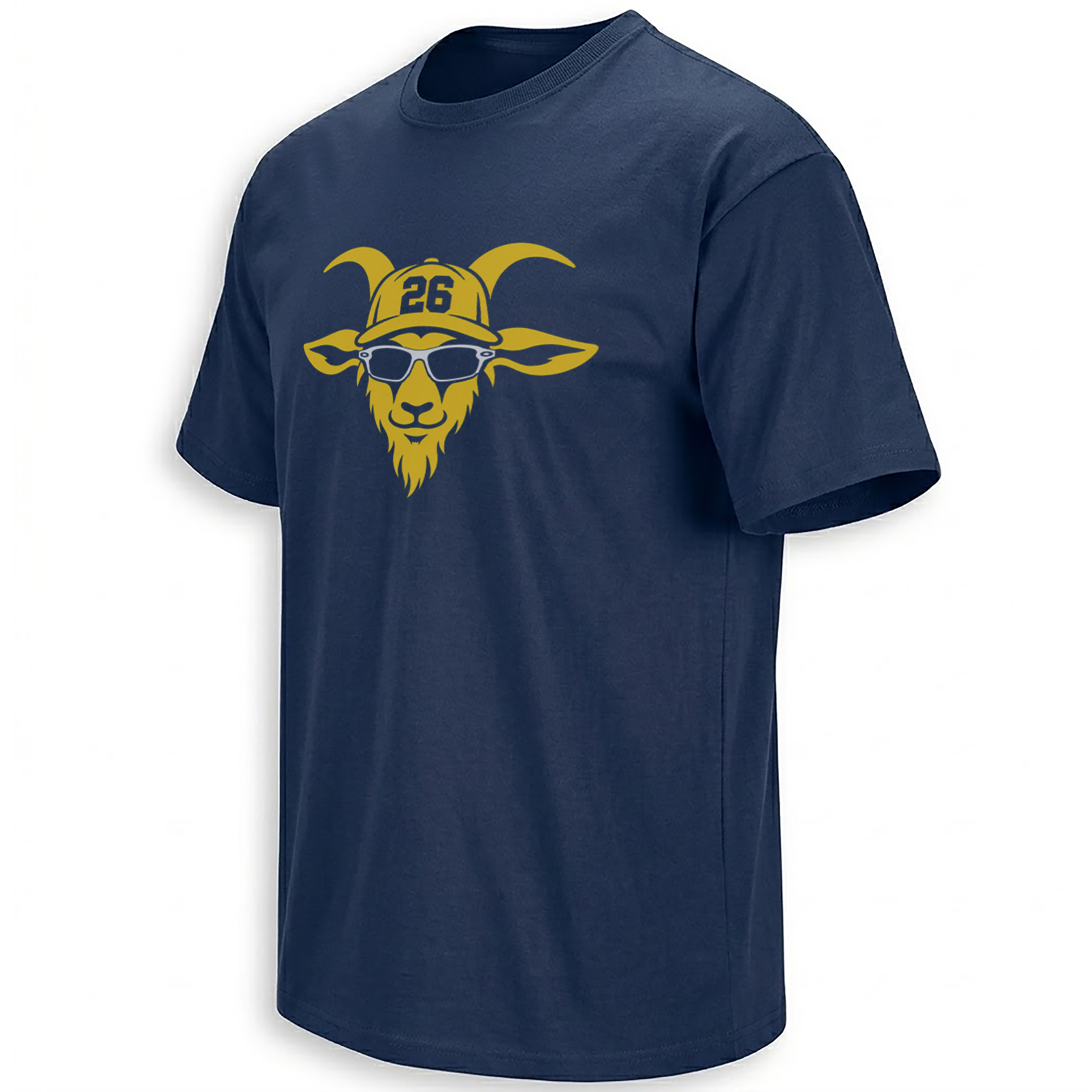
A direct visual pun on baseball’s most emphatic compliment, connected to the composed left-hander who delivered Milwaukee’s crucial October saves.
Explore the graphic →The sunglasses make the joke especially effective. Ashby wears protective sports eyewear on the field, making eyewear part of his recognizable appearance. The illustrated goat transforms that visual detail into a more exaggerated symbol of coolness.
The design’s dark shades should not be mistaken for the exact protective glasses Ashby wore during a specific game. They are an artistic interpretation of his postseason personality.
Gold against navy keeps the composition connected to Milwaukee baseball. The number 26 ties an otherwise universal GOAT symbol to one player and one extraordinary October run.
The Real Pitcher Behind the Sunglasses
Contemporary photographs of Ashby show how important his physical appearance is to the design’s readability. His beard, team cap, protective glasses and No. 26 uniform create a distinctive image, especially in World Series coverage.
Getty Images photographer Stacy Revere documented Aaron Ashby wearing his cream Brewers No. 26 uniform and protective eyewear during World Series Game 1. This is a particularly close visual reference for the glasses-and-cap concept used in the illustrated goat.
Getty Images Sport — Aaron Ashby, 2026 World Series photography →Photograph: Stacy Revere / Getty Images. Licensed image use is required before hosting or embedding the photograph in a commercial article.
Why Brewers Fans Are Using GOAT Language
Ashby’s value extends beyond one save. Throughout the postseason he repeatedly entered games when the margin for error was minimal, sometimes covering substantially more innings than a conventional closer.
Milwaukee manager Pat Murphy compared his postseason effectiveness to old-school relief pitching, when elite bullpen arms were expected to cover several decisive innings rather than only the ninth.
The fan-facing GOAT metaphor captures the emotional response to that reliability. When a player continues escaping difficult situations, supporters begin viewing every new appearance through the confidence created by previous ones.
Ashby’s apparent calm makes that narrative even stronger. He doesn’t need an elaborate celebration to become memorable. The lack of one is part of what separates him from the surrounding intensity.
The Brewers’ October Story Is Still Being Written
As of October 27, the 2026 World Series is still underway. Milwaukee’s early advantage against Tampa Bay has intensified the attention surrounding its bullpen and the players who brought the Brewers back to the Fall Classic.
That is the context in which the Milwaukee Brewers collection becomes a visual archive of the postseason: Ashby’s pitching, Frelick’s clutch hitting, the team’s celebrations and the fan language that grew around them.
The broader MLB collection connects those Milwaukee moments to baseball’s larger culture of playoff legends, rivalries and memorable graphics. Readers can also explore Aaron Ashby-related designs.
Frequently Asked Questions
Why is Aaron Ashby represented as a GOAT?
GOAT is a fan compliment meaning Greatest of All Time. The shirt uses a goat illustration to celebrate Ashby’s exceptional 2026 postseason pitching, not to claim an official historical ranking.
What did Aaron Ashby do in World Series Game 2?
He recorded a five-out save against Tampa Bay on October 24, 2026, striking out Yandy Díaz to complete Milwaukee’s 5–4 victory.
How many scoreless innings had Ashby pitched in the 2026 postseason?
After World Series Game 2, he had thrown 15⅔ consecutive scoreless postseason innings, with 17 strikeouts.
What number does Aaron Ashby wear?
Aaron Ashby wears number 26 for the Milwaukee Brewers, which is why the cap in the illustrated goat graphic displays 26.
Why is the goat wearing sunglasses?
The sunglasses symbolize composure and confidence, while also referencing Ashby’s recognizable protective eyewear. They are stylized artwork rather than a precise replica of his game glasses.
The Aaron Ashby GOAT 26 design interprets a historic run of relief pitching through playful baseball symbolism, while the Brewers archive records the personalities and moments shaping the team’s World Series journey.
Aaron Ashby GOAT 26 Shirt transforms the Brewers left-hander’s extraordinary 2026 postseason pitching into a golden goat graphic with dark sunglasses and a No. 26 cap. Inspired by his nine-out NLCS save, five-out World Series Game 2 finish and remarkable calm under pressure.