Packers on 3 Mike McCarthy’s Halftime Meme Finally Gets the Right Football Colors
Pittsburgh’s unexpected locker room story has acquired a distinctly Wisconsin identity. Two green-and-gold, double-sided jersey-style designs transform the famous three-count into a humorous piece of Green Bay football culture.
For Green Bay Packers supporters, there is absolutely nothing unusual about ending a football huddle with the Packers name. The problem, of course, is doing it while coaching the Pittsburgh Steelers.
On November 25, 2026, Aaron Rodgers brought an extraordinary halftime story into the public conversation during his appearance on The Pat McAfee Show. He described Mike McCarthy mistakenly invoking his former franchise while addressing Pittsburgh players during their November 22 game against Philadelphia.
McCarthy subsequently acknowledged the incident. While Pittsburgh confronted questions surrounding Rodgers’ departure and its coaching situation, the Packers reference gave Green Bay supporters an entirely different way to interpret the story.
The resulting jersey-style graphics approach the moment through Wisconsin’s familiar green-and-gold football aesthetic. Within the Green Bay Packers collection , the three-count becomes a recognizable reference to franchise history, coaching nostalgia and contemporary football humor.
It also occupies an unusual place within the wider NFL fan culture : a joke originating in another team’s locker room that can be visually reinterpreted through Green Bay’s own football traditions.

Aaron Rodgers and Mike McCarthy photographed at Lambeau Field during Green Bay’s game against San Francisco on September 9, 2012. The image documents their earlier Packers partnership, giving historical context to the November 2026 meme.
What Happened With Mike McCarthy’s 1-2-3 Packers Chant?
Pittsburgh was playing Philadelphia on November 22, not Green Bay. According to Rodgers’ subsequent interview, McCarthy concluded a halftime gathering by using the Packers name instead of identifying his current team.
The account emerged after Pittsburgh decided to change quarterbacks ahead of its upcoming game against Denver. Rodgers’ public comments addressed several aspects of his relationship with McCarthy, but the misplaced Packers reference provided an especially memorable detail.
Pittsburgh loses 19–16 to the Eagles. The halftime incident later becomes a significant part of Rodgers’ public account.
Rodgers discusses the incident on The Pat McAfee Show. McCarthy later confirms the verbal mistake while addressing reporters.
NBC Sports confirmed that McCarthy acknowledged saying “1-2-3 Packers” while coaching Pittsburgh. He disputed other aspects of Rodgers’ broader characterization of his work with the Steelers.
The distinction remains important: the acknowledged halftime remark provides the factual basis for the meme, without establishing every separate allegation surrounding the coaching controversy.
Why Green Bay Fans Understand the Joke Differently
Football language often carries a different meaning depending on which franchise is using it. In Pittsburgh, the Packers reference appeared unexpectedly during a difficult game and a complicated coaching situation.
In Green Bay, the same word belongs to generations of football identity. It is associated with Lambeau Field, Wisconsin tailgates, championship memories and one of the league’s most established supporter cultures.
That difference creates the foundation for a new interpretation of the meme. Instead of placing Green Bay’s name inside a Pittsburgh-inspired graphic, the two jersey designs relocate the phrase into its familiar green-and-gold environment.
Rodgers and McCarthy: A Green Bay History Behind the Meme
The Packers reference carries additional meaning because McCarthy and Rodgers spent thirteen seasons together in Green Bay. Their relationship belongs to an important chapter of the franchise’s modern history.
Their partnership produced Green Bay’s Super Bowl XLV championship, concluding the 2010 NFL season with a victory over the Pittsburgh Steelers.
That historical connection gives the 2026 incident its unusual irony. A quarterback and coach once associated with a Packers championship against Pittsburgh later reunited with the Steelers, only for Green Bay’s name to return during their public fallout.
As Reuters reported on November 26 , multiple sources supported parts of Rodgers’ account, while Pittsburgh intended to retain McCarthy. The quarterback had already been released the previous day.
For readers interested in the careers behind this unusual reunion, related Mike McCarthy graphics and Aaron Rodgers designs explore different moments from their football histories.
The Cheesehead Reaction to 1-2-3 Packers
The incident did not remain confined to Steelers discussion spaces. Members of Green Bay’s Reddit community also discussed the unexpected return of their franchise name to the national football conversation.
The responses demonstrate that Green Bay supporters were approaching the story through their own relationship with Rodgers and McCarthy. Some discussions revisited the personalities’ previous Packers years, while others focused on the absurdity of the halftime remark.
These discussions should not be interpreted as a unanimous Packers fan position. Green Bay’s community contains different perspectives on its former quarterback and head coach. The shared reference, however, provides a recognizable subject for football humor.
Two Green Bay Jersey Designs, Two Different Punchlines
The distinctive feature of these two designs is their coordinated front-and-back construction. Rather than simply printing a phrase across the chest, they use the visual structure of a traditional football jersey to communicate the reference.
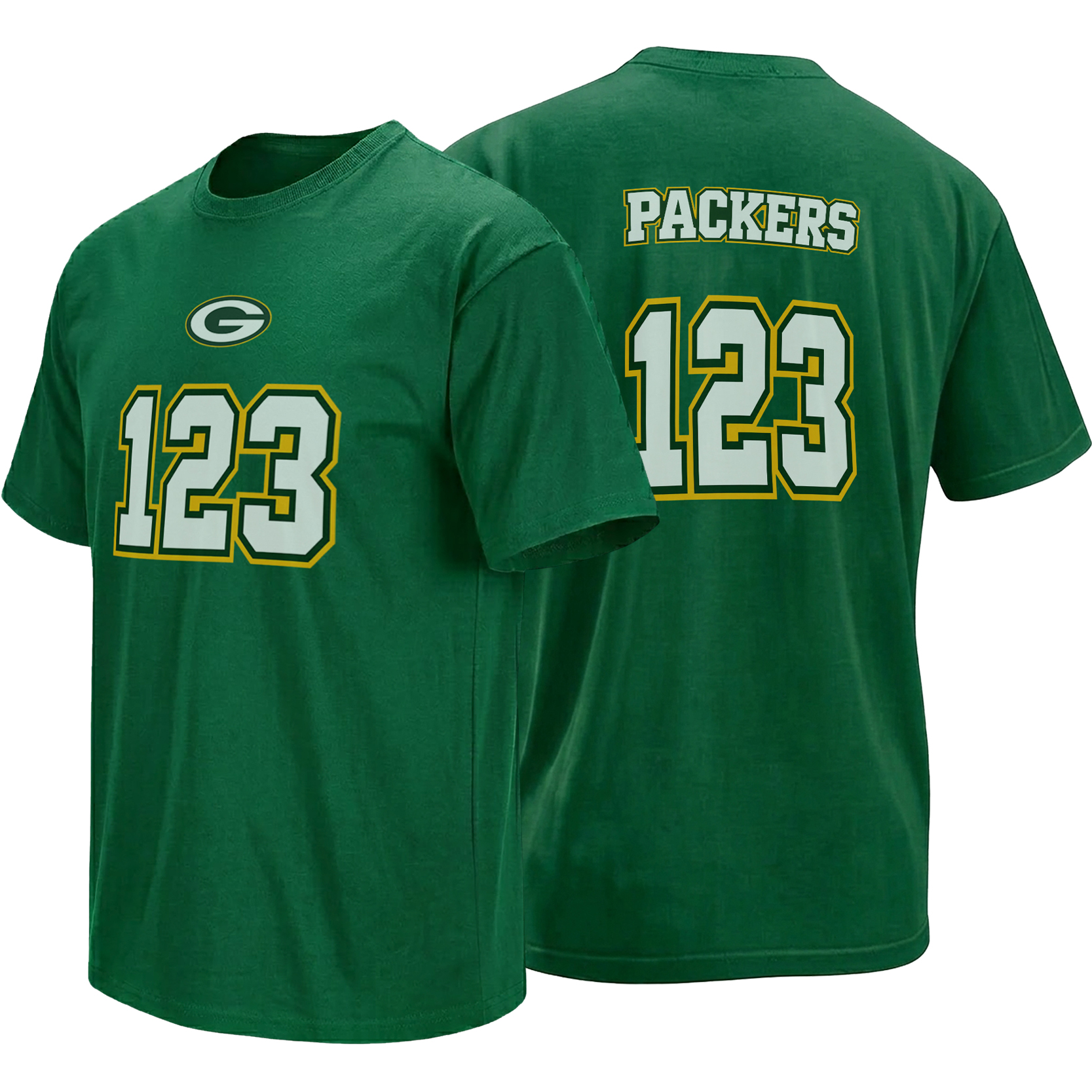
One design turns the final count into a single-digit number. The other preserves the complete sequence as an intentionally unconventional three-digit number.
 Detail View 01
 Detail View 02
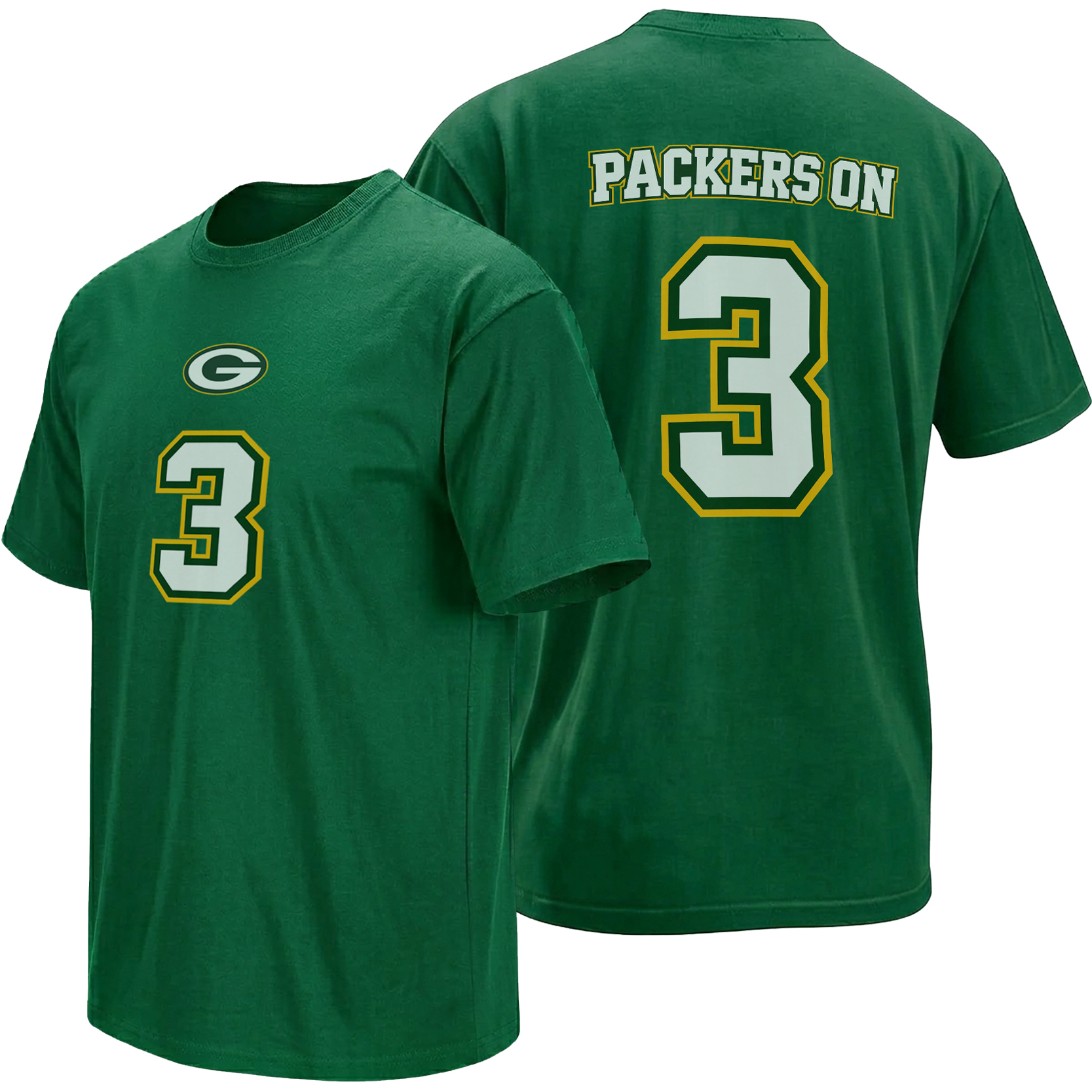
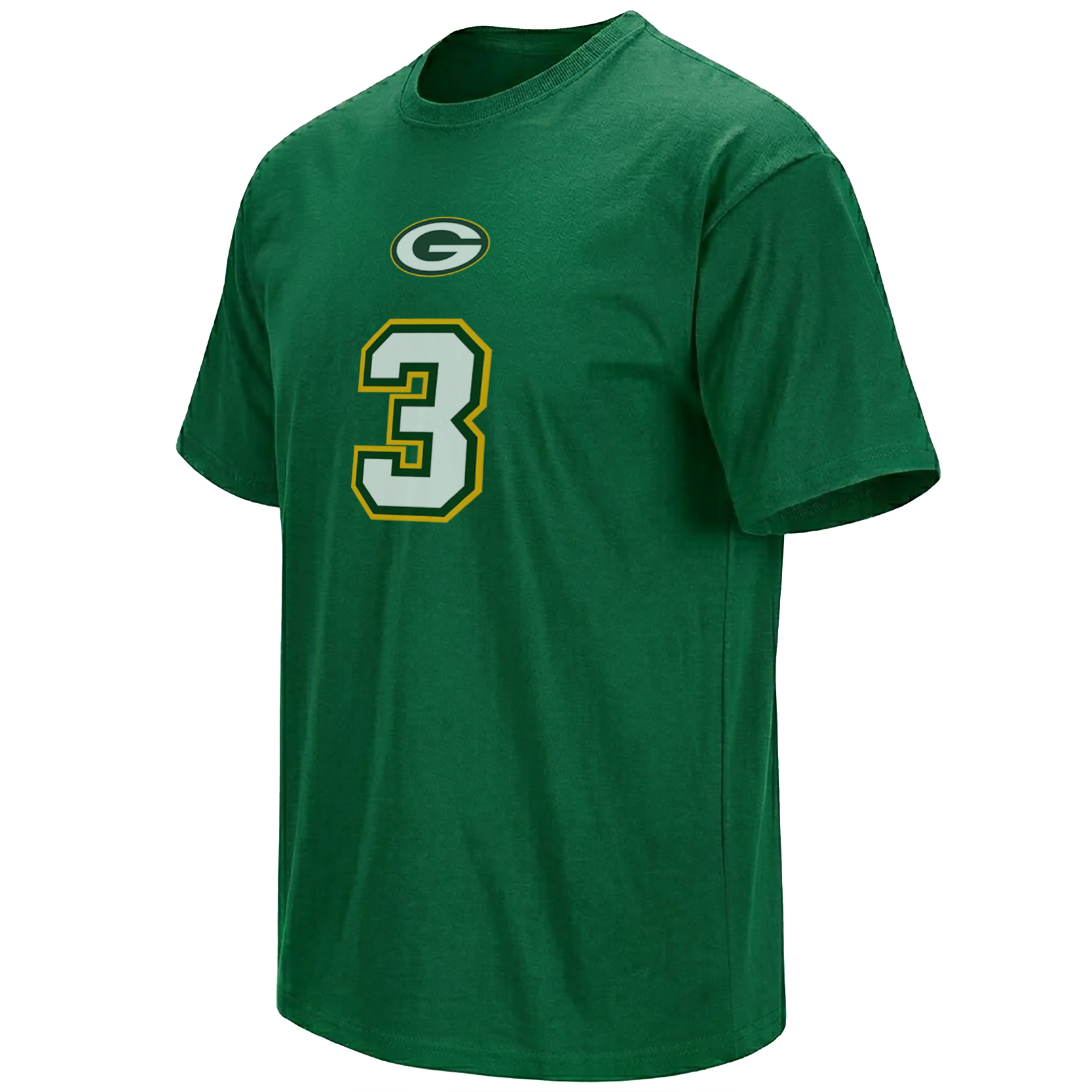
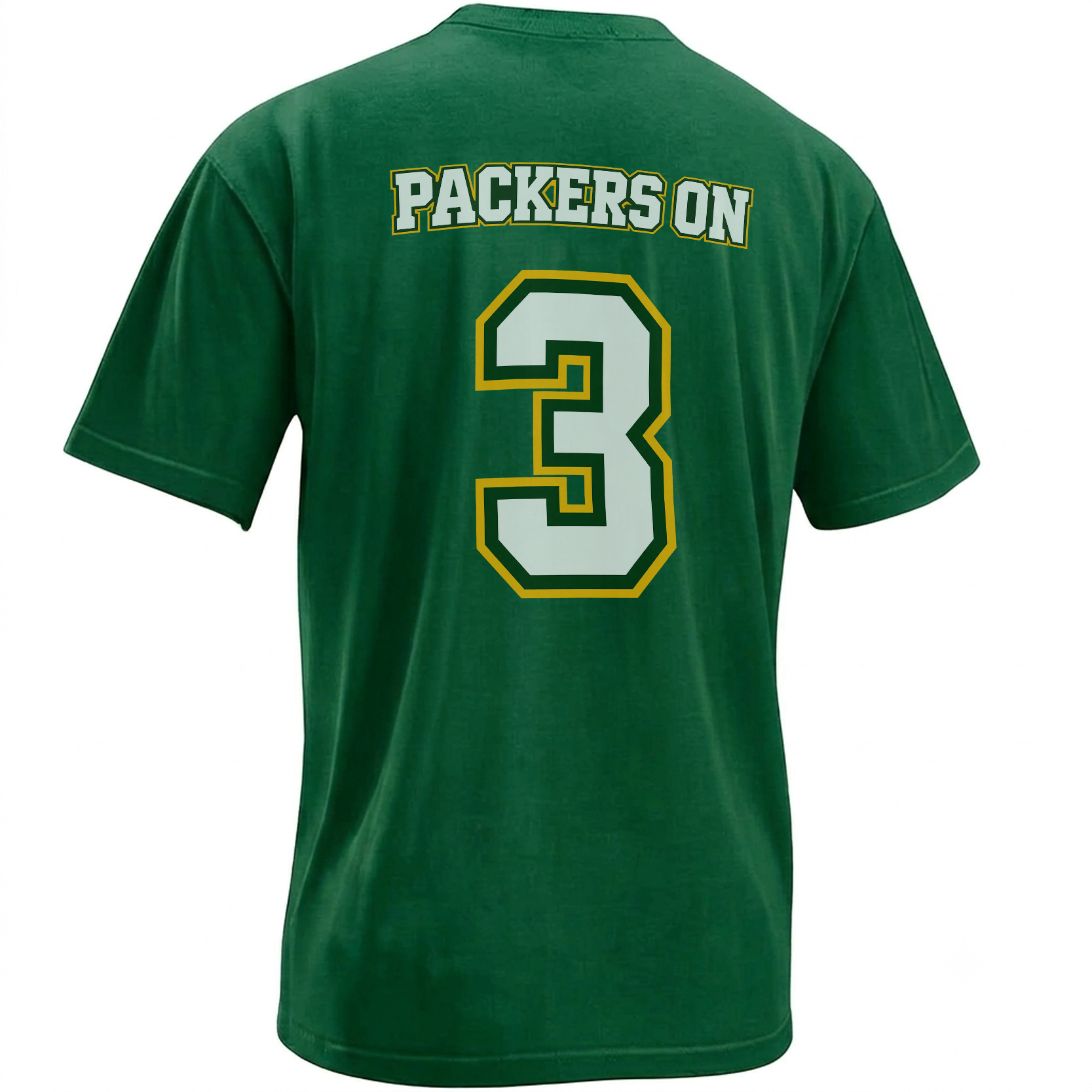
The front combines the oval G emblem with an oversized outlined number 3. On the reverse, PACKERS ON lettering sits above the same numeral, completing a familiar huddle instruction through football jersey typography.
Explore the Packers on 3 edition →The first interpretation is particularly interesting because its number could initially appear to belong to an ordinary football uniform. Only when the lettering and numeral are read together does the complete joke become apparent.
The back functions as a typographic sentence rather than a conventional player nameplate. The number 3 completes the instruction and references the count that precedes the breaking of a football huddle.
 Detail View 01
 Detail View 02
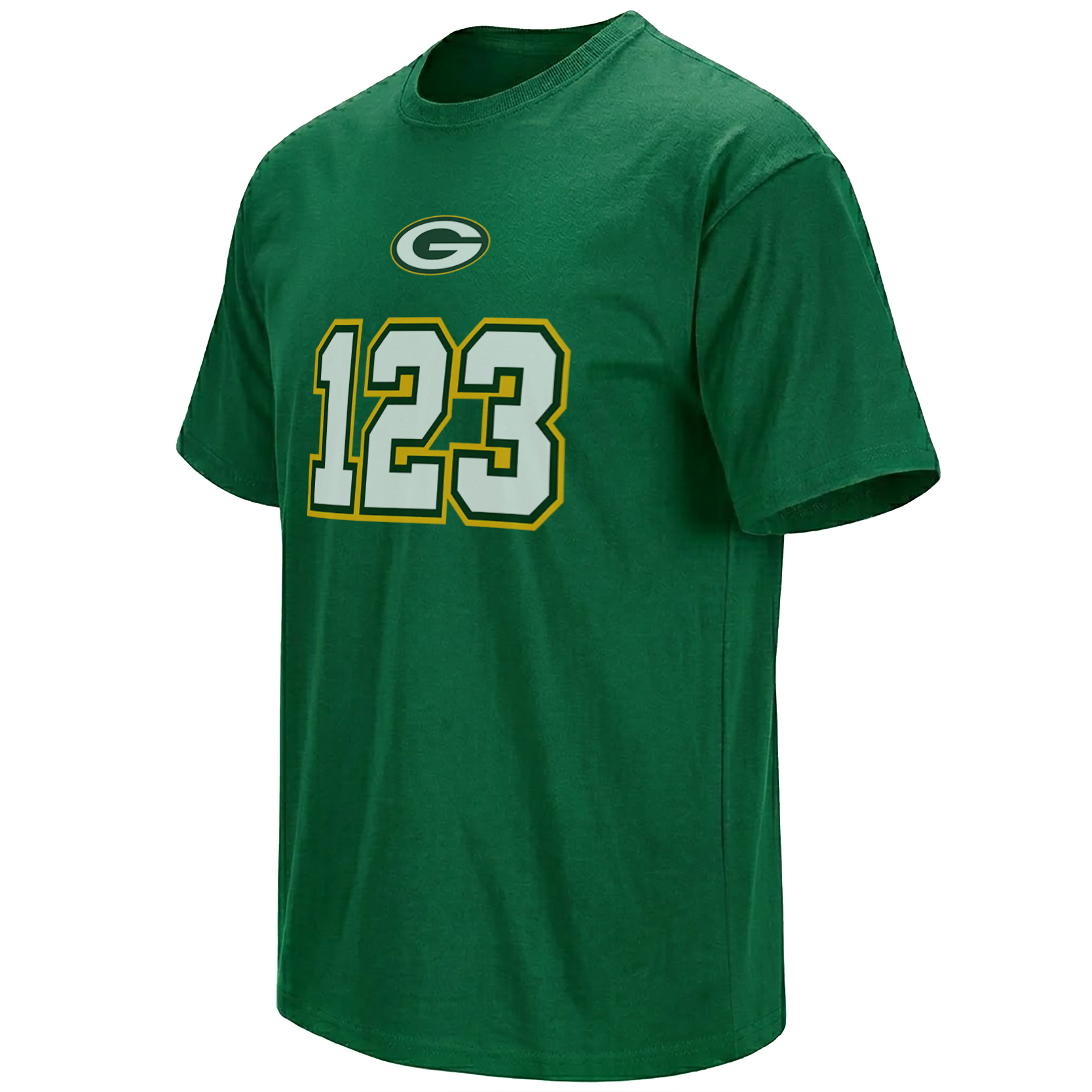
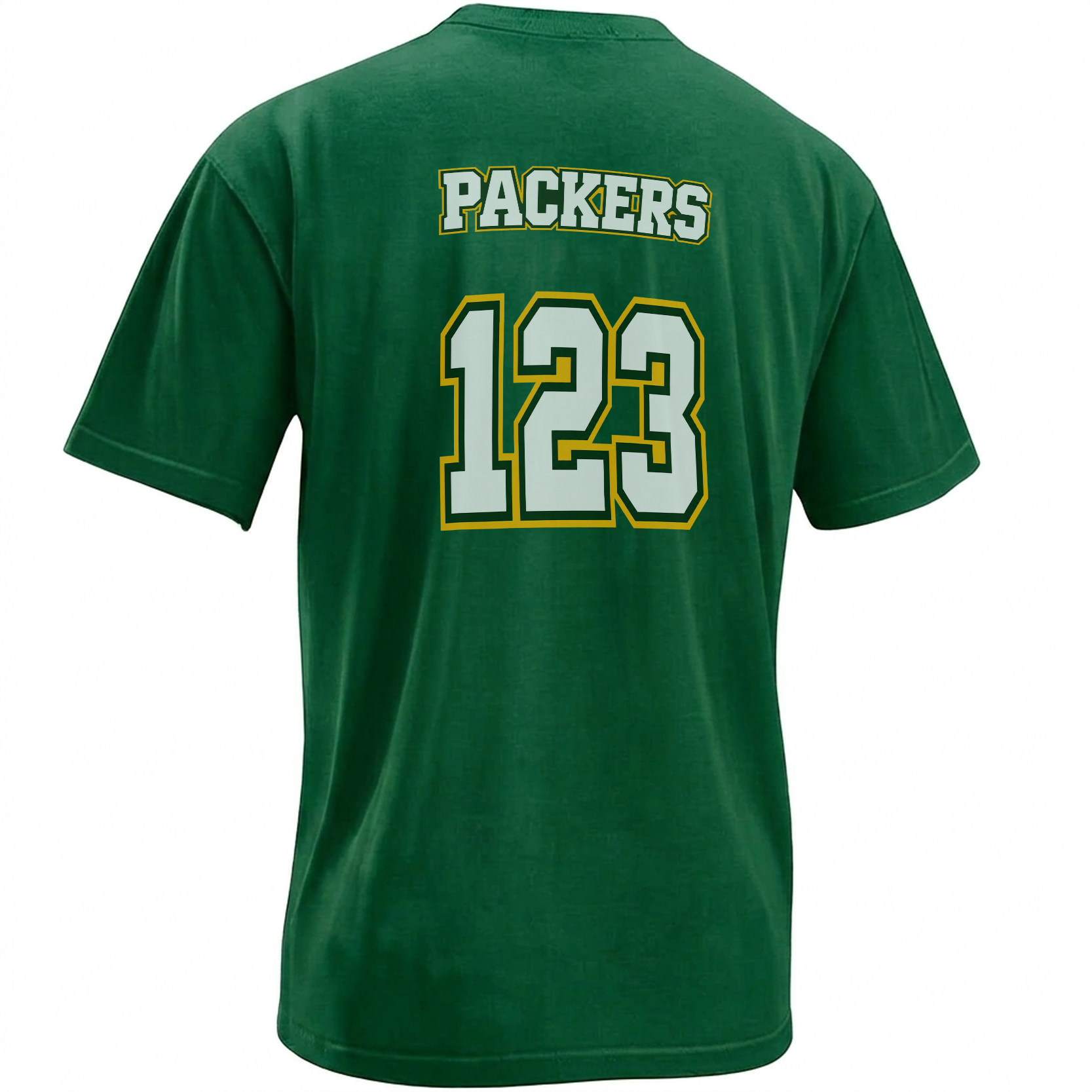
The complete three-count becomes a fictional jersey number, combining the oval G front emblem with oversized athletic numerals and a PACKERS back nameplate in the familiar Wisconsin football palette.
Explore the 123 Packers edition →The second version makes the numerical joke more immediately visible. Its three-digit arrangement stretches across the composition in a way that distinguishes it from an ordinary player jersey.
Instead of associating a number with a particular athlete, the artwork associates that number with an entire football story.
Packers On 3 vs. 123 Packers: What Is the Difference?
| Design Element | Packers On 3 | 123 Packers |
|---|---|---|
| Main Number | 3 | 123 |
| Front Artwork | Oval G emblem and outlined number 3 | Oval G emblem and oversized 123 numerals |
| Back Lettering | PACKERS ON | PACKERS |
| Visual Punchline | The number completes the huddle phrase | The full countdown becomes a fictional jersey number |
| Art Direction | Traditional single-digit jersey parody | Unconventional three-digit football graphic |
| Color Identity | Green, white and gold | Green, white and gold |
Both designs preserve the same football reference. Their difference lies in how the audience encounters the joke: either through a complete phrase assembled across the jersey layout or through an immediately unusual numerical arrangement.
Why Green, Gold and White Make the Artwork Feel Different
Team colors are not merely decorative choices in football graphic design. They establish cultural identity before the reader has interpreted the words or numerical references.
Establishes the Wisconsin football identity and moves the meme into Green Bay’s visual environment.
Frames the outlined numerals and recalls the familiar visual rhythm of Packers football apparel.
Provides a high-contrast numeral interior and preserves the readability associated with football uniforms.
The angular construction of the numerals is equally significant. Their block shapes and layered outlines give both graphics the recognizable character of athletic uniform typography.
The familiar oval emblem and upper-back lettering establish the expected visual hierarchy, while the unconventional number arrangements introduce the humor.
Nothing about that construction requires an elaborate illustration of the locker room. The relationship between number, color and nameplate communicates the reference on its own.
From Steelers Controversy to Cheesehead Football Humor
The Pittsburgh-inspired versions of the meme derive much of their humor from the contradiction between black-and-gold apparel and the Packers name.
The Green Bay versions take the opposite approach. They place the words inside the football identity where they would ordinarily belong. The unusual circumstances of the original incident remain the audience’s background knowledge.
Readers interested in that alternative interpretation can explore the Pittsburgh Steelers collection , which includes other visual responses to the November Rodgers-McCarthy controversy.
Both approaches illustrate how fan culture can assign different meanings to the same reported moment without changing its factual foundation.
Why Football Jersey Parodies Become Cultural Collectibles
Conventional football jerseys identify players through numbers and nameplates. Parody graphics can use that same structure to identify moments instead.
A memorable phrase, a surprising interview or an unexpected piece of locker room vocabulary can become recognizable through the visual conventions that supporters already understand.
The Packers On 3 and 123 Packers designs belong to that tradition. They preserve the circumstances of a November 2026 football conversation while allowing the artwork to remain recognizable as Green Bay-inspired apparel.
Their appeal lies in the unusual connection between contemporary internet humor and a familiar football uniform aesthetic. They turn an unexpected reference to the Packers into a two-sided record of how football supporters can reinterpret the same story through different team identities.
Frequently Asked Questions
What does Packers on 3 mean?
Packers on 3 is a fan-created variation of the football huddle countdown associated with Mike McCarthy’s acknowledged Packers halftime remark in November 2026.
Did Mike McCarthy really say 1-2-3 Packers?
Yes. Aaron Rodgers publicly described the incident on November 25, 2026, and McCarthy subsequently acknowledged the halftime verbal mistake.
When did the 1-2-3 Packers incident happen?
The incident occurred at halftime of Pittsburgh’s 19–16 loss to the Philadelphia Eagles on November 22, 2026. It became public three days later.
Why are these Packers meme shirts green and gold?
The green-and-gold palette places the halftime meme within Green Bay’s traditional football identity, creating a different interpretation from the Pittsburgh-themed versions.
What is the difference between Packers On 3 and 123 Packers?
Packers On 3 uses a single number 3 and a PACKERS ON nameplate, while 123 Packers uses the complete three-digit countdown and PACKERS lettering. Both feature coordinated front-and-back graphics.
Is 123 an actual Green Bay Packers jersey number?
No. The number 123 in this design is a fictional representation of the football huddle countdown, rather than an actual NFL player jersey number.
Is the Packers On 3 graphic an individual player tribute?
No. Although number 3 appears in Green Bay’s football history, this particular graphic uses the numeral to complete the Packers On 3 huddle reference.
Are both Green Bay Packers meme designs double-sided?
Yes. Both designs feature an oval G front emblem, outlined athletic numerals and coordinated back artwork with a football-style nameplate.
Why is Aaron Rodgers part of the Packers On 3 story?
Rodgers revealed the halftime incident during The Pat McAfee Show on November 25, 2026. He also spent thirteen seasons working with McCarthy in Green Bay, where their partnership produced a Super Bowl XLV championship.
Are these authentic NFL player jerseys?
No. They are jersey-style graphic shirts using fictional name-and-number arrangements to reference contemporary football meme culture.
- NBC Sports — Mike McCarthy acknowledges the Packers halftime remark , November 25, 2026.
- Yahoo Sports — Aaron Rodgers discusses the breaking point in Pittsburgh .
- Reuters — Subsequent reporting on the Rodgers-McCarthy controversy , November 26, 2026.
- Reddit — Green Bay Packers community discussion of the chant .
- Reddit — NFL community discussion following McCarthy’s acknowledgment .
- Wikimedia Commons — Aaron Rodgers and Mike McCarthy at Lambeau Field, September 9, 2012 . Photograph by Mike Morbeck, CC BY-SA 2.0.
The Packers On 3 jersey-style design and the 123 Packers double-sided edition preserve two interpretations of the same unusual football moment. Explore the wider Green Bay Packers collection for other graphics connected to Wisconsin’s football history, personalities and evolving Cheesehead culture.
The Packers On 3 and 123 Packers double-sided jersey-style shirts reinterpret Mike McCarthy’s November 2026 halftime chant through Green Bay’s green-and-gold palette, oval G front emblems, oversized outlined numerals and football nameplate typography. Two distinct Cheesehead perspectives on the NFL meme revealed by Aaron Rodgers.