
A Black Ballerina Is Speaking: Listen, Learn and Rethink Ballet
As dancers challenge inherited ideas about race, tradition and artistic identity, a five-line statement asks audiences to recognize Black ballerinas not only as performers, but as artists whose knowledge deserves to be heard.
Ballet is often celebrated as an art form capable of communicating without words. A movement of the wrist, the extension of a leg or the stillness between two phrases of music can express an entire emotional world. But recent conversations within classical dance have brought attention to something movement alone cannot resolve: whether the artists onstage are being heard when they speak.
On November 2, 2026, thINKingDANCE published an interview with Philadelphia Ballet principal dancer Nayara Lopes examining her decision to discuss a painful experience involving skin-lightening stage makeup during her time with Finnish National Ballet.
The interview followed September reporting about her experience and renewed discussion about how ballet institutions approach race, artistic tradition and belonging. Lopes described the difficulty of raising concerns within a profession where casting, leadership and career opportunities are closely interconnected.
It is within this wider cultural conversation that the phrase A Black Ballerina Is Speaking — Listen and Learn takes on particular resonance. Its message concerns artistic authority as much as visibility, connecting with broader conversations about women’s voices and representation.
The statement is not a verified quotation from Lopes or another specific dancer. Rather, it expresses an idea that extends across generations of Black ballet artists: recognition must include the ability to contribute to the conversation about the art itself.
Act I / A Contemporary Conversation What Happens When a Ballerina Speaks?
In September 2026, journalist Avichai Scher reported on Lopes’ experience preparing to perform Cupid in a production of Don Quixote at Finnish National Ballet.
In the account published by Pointe Magazine, Lopes described being subjected to makeup that substantially lightened her skin. For her, the experience raised a question about whether a classical role could be performed without asking the dancer to suppress a fundamental part of her identity.
Lopes also published a first-person essay titled I Want to Be the Last. In it, she connected her experience to wider concerns about institutional practices and the responsibility of ballet leadership.
Her November interview expanded that conversation beyond makeup. She discussed professional belonging, the risks associated with speaking publicly and the need for organizations to address concerns before another artist experiences similar treatment.
Being visible on the stage is one form of recognition. Being heard beyond it is another.
Ellie Shirt Editorial / Cultural PerspectiveThe Dance Lens interviews Nayara Lopes about her experiences and her reasons for speaking publicly. Published October 14, 2026. Watch the original interview on YouTube .
Act II / The Living Archive Black Ballerinas Have Always Been Part of Ballet History
The history of Black ballet dancers cannot be understood solely through stories of exclusion. It is equally a history of achievement, artistic invention, mentorship and institutions built to expand opportunities.
Dance Theatre of Harlem provides one of the clearest examples. Founded in 1969 by Arthur Mitchell and Karel Shook, the company created a space where classical technique and a more inclusive vision of ballet could develop together.
According to the company’s official history, Mitchell had already made history at New York City Ballet in 1955. Dance Theatre of Harlem subsequently developed an enduring legacy through performance, training and arts education.

Dance Theatre of Harlem is founded, expanding opportunities within classical ballet.
Misty Copeland becomes the first Black female principal dancer in American Ballet Theatre’s history.
Nayara Lopes speaks publicly about representation, institutional practices and artistic belonging.
In 2015, American Ballet Theatre announced Misty Copeland’s promotion to principal dancer. Her achievement marked a historic first for Black women within the company.
Copeland’s career also brought conversations about representation to audiences who might otherwise have had little familiarity with classical dance. Her achievement belonged to an existing artistic lineage, while creating new possibilities for young dancers imagining their own futures.
These milestones matter because they establish Black ballerinas as contributors to the history of classical dance, not simply as people seeking entry into it.
Act III / The Written Statement What Does “A Black Ballerina Is Speaking” Mean?
The phrase begins by identifying the speaker through both artistic profession and cultural identity. It then shifts responsibility toward the audience.
The instruction to listen and learn is significant. It does not ask for admiration alone, nor does it reduce the speaker to an inspirational symbol. It treats her perspective as a source of knowledge.
A ballerina understands ballet through years of physical training, rehearsal, musical interpretation and professional experience. Her understanding of how institutional practices affect that work is also part of her expertise.
The statement challenges the assumption that dancers should remain silent participants in decisions about their own artistic presentation. It recognizes that performers can be knowledgeable critics, educators and contributors to the evolution of their art.
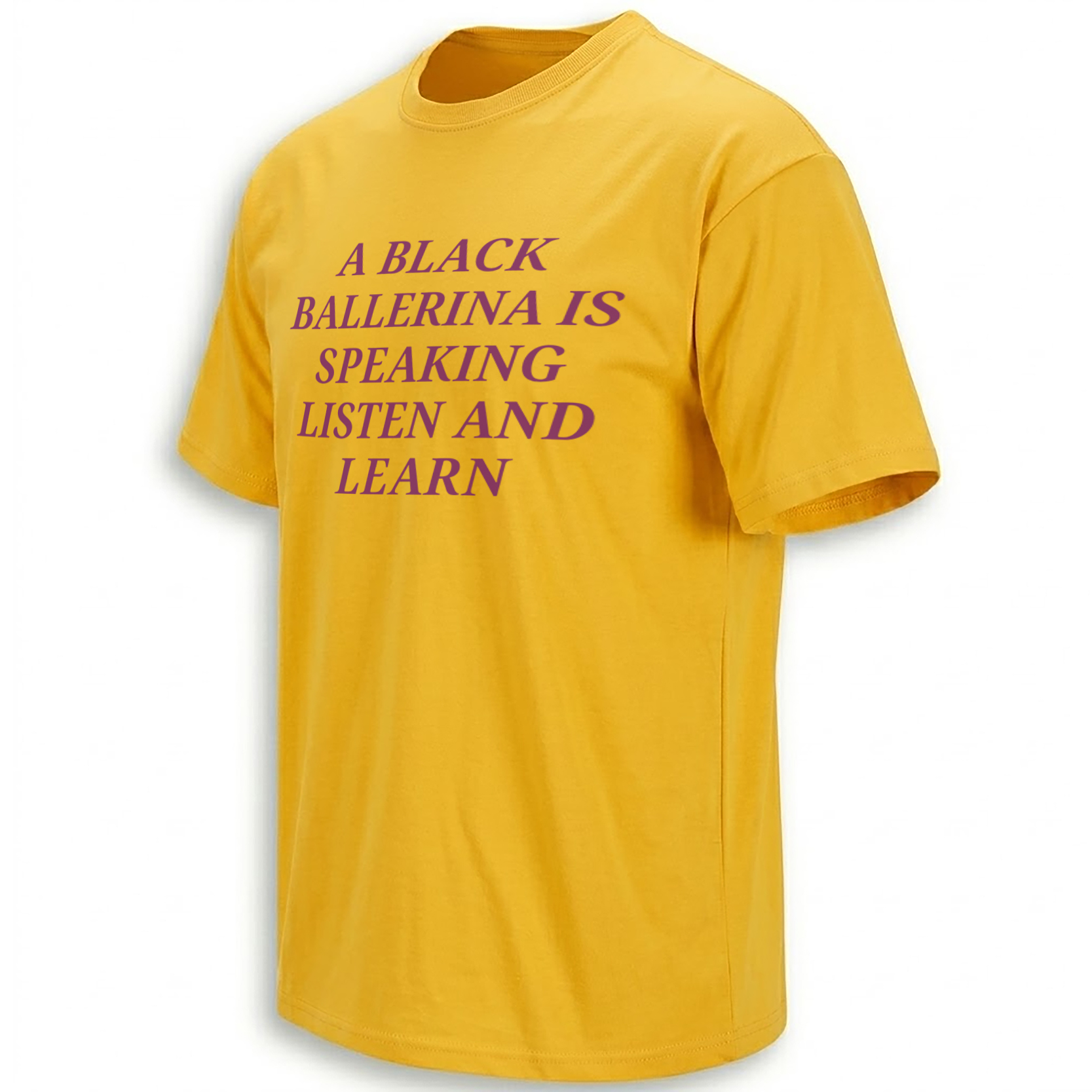
Five lines of purple serif typography place the dancer’s voice at the center of the composition, replacing conventional ballet imagery with a direct statement of artistic authority.
Explore the statement →Act IV / Typography as Expression Why the Design Chooses Words Instead of a Dancer
Much of the visual language surrounding ballet relies on familiar symbols: pointe shoes, tutus, graceful silhouettes and images of dancers suspended in movement.
This design takes a deliberately different approach. There is no illustrated performer competing with the written statement. The absence of conventional ballet imagery leaves the words themselves responsible for the emotional impact.
The italic serif lettering retains a sense of movement and refinement. Its curved forms suggest the elegance often associated with classical dance, while the uppercase composition communicates conviction.
Purple lettering against golden yellow creates an expressive alternative to the pale pinks and muted neutrals frequently associated with ballet aesthetics. The contrast introduces warmth, individuality and visibility without sacrificing the design’s formal character.
The five-line structure also creates a deliberate reading rhythm. The opening identifies the speaker; the closing lines direct attention toward what the audience should do next.
The graphic does not require a recognizable celebrity portrait to communicate its meaning. Its central subject is the right of Black ballerinas to participate in conversations about representation, artistic standards and their own experiences.
Act V / Beyond Visibility Representation Is Also About Who Shapes the Art
Seeing a wider range of dancers onstage can change what young audiences believe is possible. Representation can challenge inherited assumptions about the appearance of a ballerina and introduce audiences to artists whose contributions deserve greater recognition.
But visibility does not automatically resolve every institutional question. Decisions about costumes, makeup, casting, professional advancement and workplace culture also influence how dancers experience their careers.
Listening to artists therefore means recognizing the difference between being present within an institution and having meaningful opportunities to influence its practices.
Lopes’ account offers a contemporary example of why that distinction matters. Her decision to speak publicly belongs within a larger conversation that includes generations of dancers, teachers, company founders and arts advocates.
It also connects to broader cultural discussions about Black representation and racial equality, while retaining a specific focus on the history and professional realities of classical dance.
Act VI / The Cultural Object When a Statement Becomes Part of Everyday Culture
Statement clothing occupies an unusual space between personal expression and public communication. A phrase that might otherwise appear in an essay, rehearsal-room conversation or cultural discussion becomes visible within everyday life.
The A Black Ballerina Is Speaking Shirt uses that format to communicate a message without relying on an event date, an organizational logo or the likeness of a particular dancer.
Its meaning can therefore remain relevant beyond the immediate news cycle. It can speak to artistic identity, dance education, mentorship and the importance of recognizing the perspectives of people whose experiences are sometimes overlooked.
Ballet will continue to express extraordinary ideas through movement. Listening to the people who create that movement is an equally important part of understanding the art.
Frequently Asked Questions
What does A Black Ballerina Is Speaking Listen and Learn mean?
The phrase encourages audiences to recognize Black ballerinas as knowledgeable artists whose experiences, perspectives and contributions deserve attention and respect.
Who originally said A Black Ballerina Is Speaking?
The original author of the exact slogan has not been independently verified. It should not be attributed to a particular dancer without reliable evidence.
How does the statement relate to Nayara Lopes?
Lopes’ public discussion of racial representation and institutional practices in ballet during 2026 provides relevant cultural context. The slogan has not been verified as her personal quotation or an endorsed design.
Why is Dance Theatre of Harlem important to Black ballet history?
Founded in 1969 by Arthur Mitchell and Karel Shook, Dance Theatre of Harlem expanded opportunities in classical ballet through professional performance, training and arts education.
What milestone did Misty Copeland achieve in 2015?
Misty Copeland became the first Black female principal dancer in American Ballet Theatre’s history in 2015.
Why does the artwork use purple lettering and a yellow background?
The contrasting colors and italic serif typography create an expressive visual identity that balances elegance, confidence and the directness of the statement.
Does the design represent a specific ballerina?
No. The typography-only artwork addresses Black ballerinas and artistic representation generally, without depicting or claiming endorsement from a particular dancer.
Is the statement relevant outside Black History Month?
Yes. Its themes of artistic authority, cultural representation and listening to Black dancers remain relevant throughout the year.
The Listen and Learn statement design preserves that idea through a restrained visual composition, alongside the wider women’s voices and empowerment collection at Ellie Shirt.
Explore related searches: Misty Copeland and Nayara Lopes. These search links do not imply endorsement or confirmed availability of artist-specific merchandise.
A Black Ballerina Is Speaking Listen and Learn Shirt uses elegant purple serif typography and a golden-yellow background to celebrate Black ballet artists, cultural representation and the importance of listening to dancers’ voices.