EL JEFE.
Chicago traded serious draft capital for Jeffery Simmons. Two games, two victories and two sacks later, the Bears’ newest No. 99 is making a convincing early case for the nickname Caleb Williams gave him: Jefe.
On November 8, 2026, Chicago defeated Tampa Bay 27–24 on a Cairo Santos field goal as time expired. The finish belonged to the kicker, but another important development was unfolding along the defensive front. Jeffery Simmons recorded a fourth-quarter sack of Baker Mayfield, giving him one sack in each of his first two games wearing a Bears uniform.
Just six days earlier, Simmons had made his Chicago debut in a 34–17 road victory over Seattle, producing six tackles, two tackles for loss, one sack and a pass defended. The Bears had acquired him only days before that game in a blockbuster trade with Tennessee. The immediate performances supplied Chicago supporters with something more convincing than a headline about potential: evidence on the field.
And there was already a nickname for the arrival. Quarterback Caleb Williams called Simmons “Jefe,” Spanish for boss. The term appeared in Chicago media coverage as Simmons embraced his responsibility to help lead a defense with significant ambitions. Suddenly, “El Jefe” felt like a concise description of the atmosphere surrounding the newcomer rather than a marketing invention.
The Trade That Changed Chicago’s Defensive Conversation
On October 29, the Bears agreed to acquire Simmons and a 2028 fifth-round selection from the Tennessee Titans. In exchange, Chicago sent its first-round picks in 2027 and 2028 along with a 2027 fourth-round pick.
That compensation was an unmistakable statement from general manager Ryan Poles. Simmons arrived as a four-time Pro Bowler and established interior pass rusher, with a career-high 11 sacks during the 2025 season. The move placed an accomplished defensive tackle beside players including Montez Sweat and Grady Jarrett.
There was also a personal story inside the transaction. Sweat and Simmons were teammates at Mississippi State, where they developed their careers before entering the NFL as first-round selections in 2019. Their reunion gave Chicago a pre-existing relationship within its reorganized front.
According to the Bears’ November 5 feature, Sweat even offered to let Simmons keep his former number 98. Simmons declined and chose 99 as the symbol of a new chapter in Chicago.
Seattle Was the Introduction. Tampa Bay Was the Confirmation.
Six tackles, two tackles for loss, a sack of Sam Darnold and an immediate impression in his first game for Chicago.
Another sack, this time against Baker Mayfield, as Chicago survived a late Tampa Bay rally at Soldier Field.
Chicago’s defense did not suddenly become dependent on one player. But Simmons changed the blocking problems opposing offenses had to solve. An interior defender capable of generating pressure can make life easier for rushers on the edge and force quarterbacks to adjust the timing of their throws.
In the November 8 victory, Chicago finished with multiple sacks, including one each from Simmons, Austin Booker and Shemar Turner. Simmons reached six total sacks for the 2026 season across his time with Tennessee and Chicago, according to the team’s official statistical review.
The Bears’ November 9 By the Numbers report also highlighted their success on third down. Tampa Bay converted only two of 12 attempts, a reflection of the broader defensive discipline that supports an aggressive pass rush.
The Photographic Record of Chicago’s New No. 99
The official Bears photography from Simmons’ arrival captures a player stepping into unfamiliar surroundings while becoming part of a new defensive unit. That contrast matters: the uniform changed immediately, while the relationships and on-field identity had to develop in real time.

Why the Name “El Jefe” Fits This Moment
In Spanish, “el jefe” means the boss or chief. In football language, the name suggests a player who commands attention, sets a standard and expects others to follow. It works especially well for a defensive tackle whose influence is not limited to the most visible statistics.
The nickname’s connection to Caleb Williams gives it a genuine team context. Chicago Sun-Times coverage on November 3 described the quarterback calling Simmons “Jefe” and the veteran accepting both the excitement and responsibility surrounding his arrival.
That difference matters. A nickname built entirely by merchandise can feel forced. One that emerges from players and the locker room already has a story attached.
The EL JEFE Graphic: Black or Orange?
The El Jefe Jeffery Simmons design puts the new nickname above an illustrated player in an aggressive defensive stance. Number 99 is prominent, while the wide base of the pose emphasizes the leverage, balance and physicality central to interior defensive football.
The two color treatments create different visual impressions. The black version uses bright orange lettering against a deep background, closer to a dramatic tunnel or night-game poster. The orange version reverses the energy, creating a more direct, high-visibility tribute to Chicago’s established football palette.
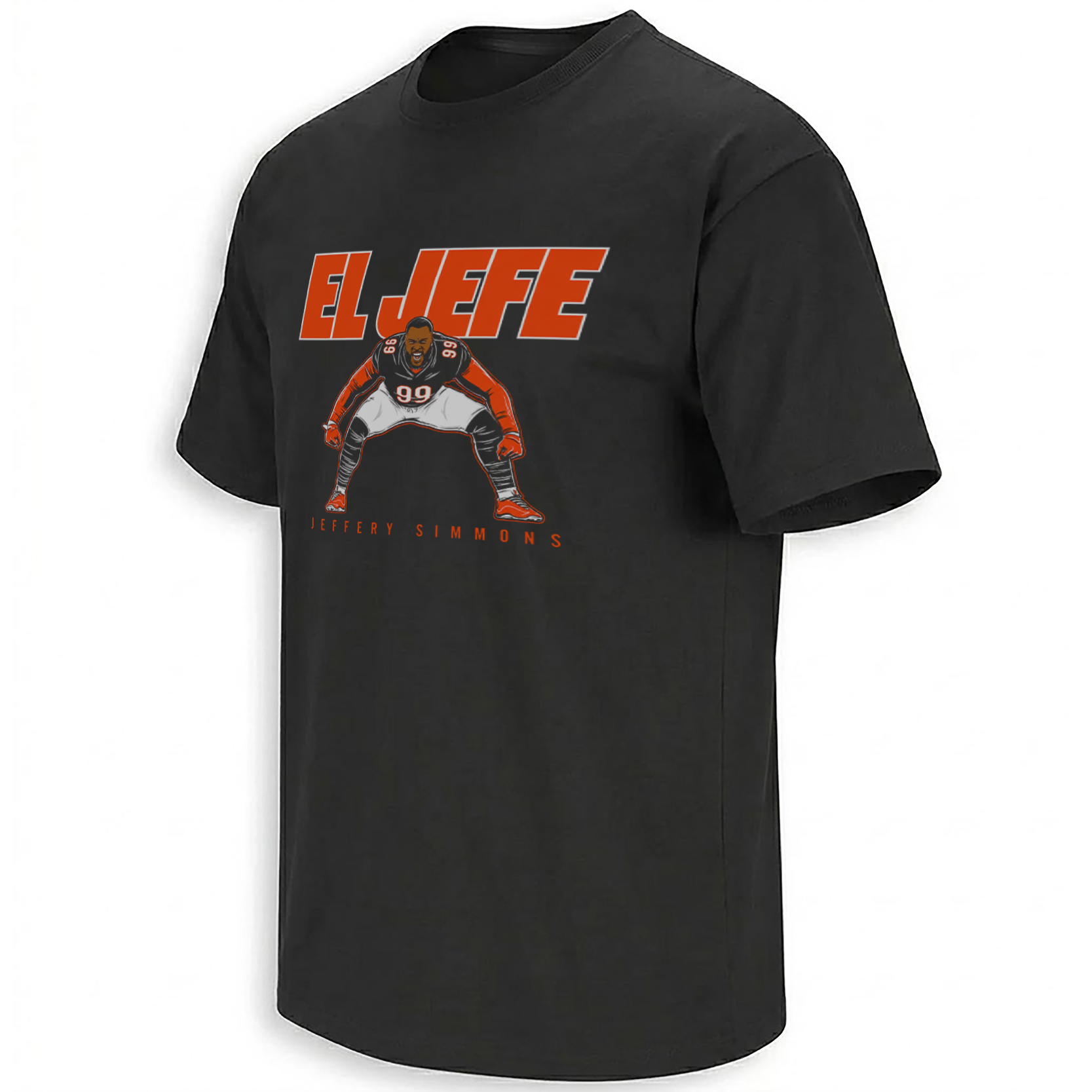
Orange athletic lettering against black frames the imposing No. 99 defensive stance.
View the black design →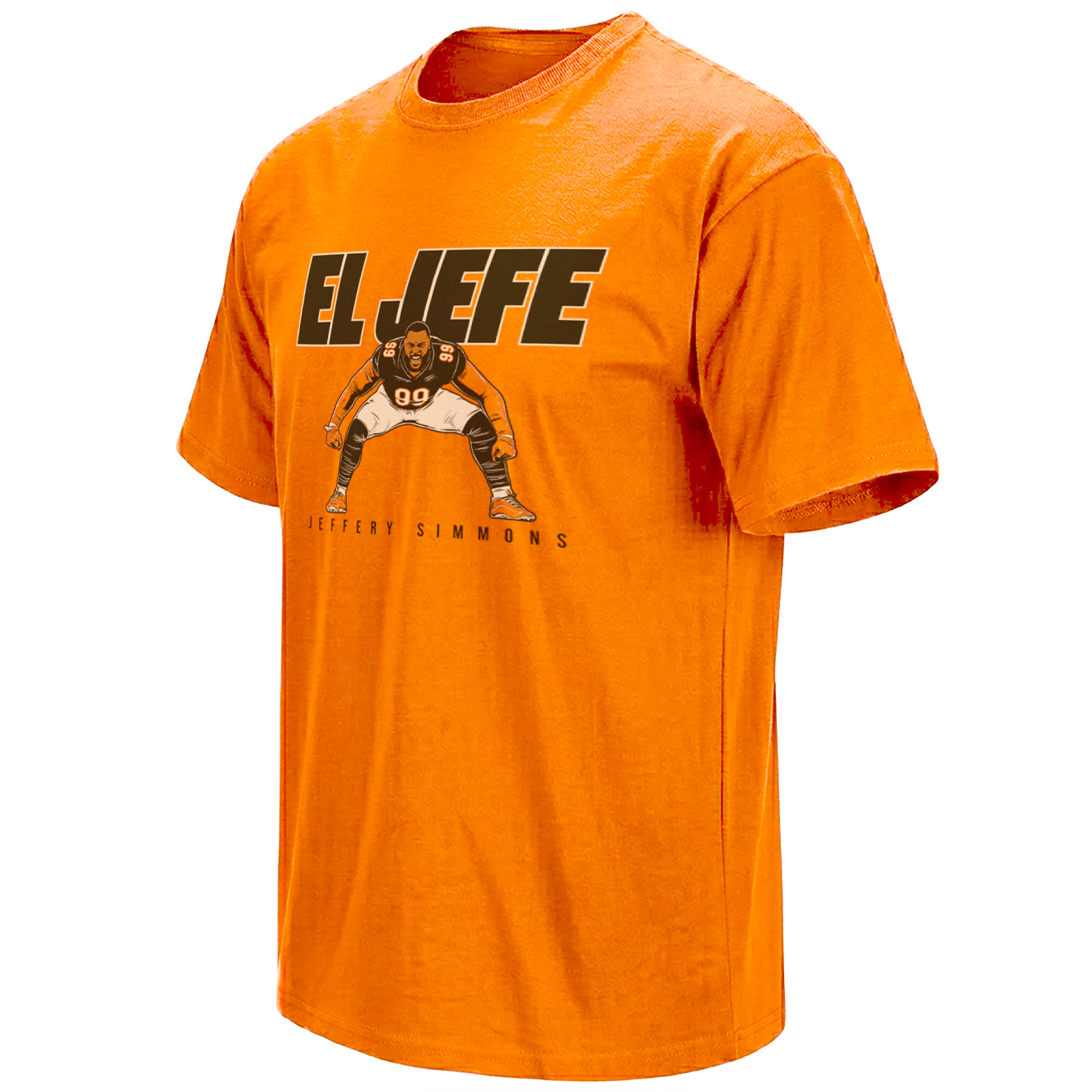
A brighter Chicago color treatment turns the same defensive posture into a bold team graphic.
View the orange design →Neither version depends on a single final score. Both preserve the beginning of Simmons’ Chicago era: the name, the new jersey number and the defensive identity attached to his arrival.
Watch Simmons Discuss His Chicago Debut
In postgame remarks after the Seattle victory, Simmons emphasized doing his job and helping the team win. The video below provides the player’s own perspective on the transition rather than relying only on the reaction to his first sack.
Source: Dailymotion — “Just doing my job”: Jeffery Simmons discusses his first Bears appearance. External video is presented through the source platform’s player.
What the Nickname Says About the Bears’ Ambitions
After the Tampa Bay victory, Chicago had won four consecutive games. Its defensive improvements were part of a larger team effort under Ben Johnson and coordinator Dennis Allen, but Simmons’ arrival offered a fresh focal point.
The trade carried the expectation of immediate impact. Two first-round selections represent future opportunities surrendered for a player Chicago believes can improve the present. That puts additional scrutiny on every performance and gives fans a natural reason to follow No. 99 closely.
Within the wider Chicago Bears collection, the El Jefe design belongs beside graphics that capture player identities and significant moments in team culture. The broader NFL collection connects those designs to the league’s larger tradition of nicknames, statement acquisitions and defensive personalities.
Readers interested in other Simmons-focused graphics can browse the Jeffery Simmons product search for relevant pieces.
Frequently Asked Questions
Why is Jeffery Simmons called El Jefe?
Caleb Williams called Simmons “Jefe,” Spanish for boss. Chicago media connected the nickname to Simmons’ role and leadership in the Bears defense.
When did Jeffery Simmons join the Bears?
Chicago agreed to acquire Simmons from the Tennessee Titans on October 29, 2026, in a trade involving two future first-round draft picks.
Why does Simmons wear No. 99 in Chicago?
Simmons chose No. 99 as the beginning of a new chapter after previously wearing No. 98 in Tennessee.
How did Simmons perform in his first two Bears games?
He recorded one sack against Seattle on November 2 and another against Tampa Bay on November 8. Chicago won both games.
What is the El Jefe Jeffery Simmons graphic?
It is a No. 99 Chicago football illustration featuring Simmons in a defensive stance beneath prominent El Jefe lettering, available in black and orange visual treatments.
From his reunion with Montez Sweat to his first two sacks in Chicago, Simmons has supplied an immediate story for Bears supporters. The El Jefe graphic preserves that arrival through the number and nickname now associated with his new chapter.