Jerry Jones. The Clown Memes. And Another Cowboys Collapse.
Dallas surrendered a 17–3 halftime lead and lost 33–30 to Arizona in overtime. The owner’s televised frustration became a punchline, while a familiar fan demand returned: Sell the team, Jerry.
By the time the Arizona Cardinals kicked the winning field goal in overtime on November 1, 2026, the Dallas Cowboys had managed to transform a promising home victory into another public examination of the franchise.
Dallas had led 17–3 at halftime. The Cowboys were coming off a 38–21 road victory against Philadelphia, and a second consecutive win appeared possible.
Instead, backup quarterback Gardner Minshew sparked Arizona’s comeback. The Cardinals erased a 14-point deficit, forced overtime and won 33–30 at AT&T Stadium.
The collapse did not end with the final whistle. Cameras captured Jerry Jones’ frustration, the result reignited questions about the Cowboys’ leadership, and fans returned to one of their most familiar protest slogans.
“It’s an indictment of the whole show.”
Jerry Jones / Official Cowboys Postgame Interview / Nov. 1, 2026How Dallas Lost Control of the Game
The first half looked encouraging for the Cowboys. Their defense pressured Arizona starter Jacoby Brissett, forced turnovers and limited the Cardinals to three points.
Dallas led 17–3 when the game reached halftime and later extended its advantage to 24–10 early in the fourth quarter.
But Arizona had already changed quarterbacks in the third quarter. Minshew replaced Brissett and gave the Cardinals a different offensive rhythm.
With Minshew under center, Arizona scored touchdowns on four consecutive possessions to close regulation.
The Cowboys were firmly in control after a strong defensive first half.
Dak Prescott’s five-yard rushing touchdown restored a two-score lead.
Gardner Minshew found Michael Wilson for a 13-yard touchdown. Chad Ryland missed the extra point, sending the game into overtime.
Ryland redeemed himself with a 42-yard field goal, completing the Cardinals’ comeback.
The official Cowboys game recap details how a game that once appeared comfortable turned into another painful defeat.
The Face of the Franchise Had Become the Reaction
Jerry Jones has never been a background figure in Dallas. He is the Cowboys’ owner, president and general manager, and his public reactions frequently become part of the story surrounding the franchise.
After the Arizona defeat, Jones acknowledged the scale of the team’s failure. He described the result as a problem involving the entire organization and emphasized the need to evaluate what had gone wrong.

The owner’s reaction acquired a second life online. A social clip shared by sports video curator CJ Fogler framed Jones’ frustration around the exclamation “SHIT!” and circulated through football conversation.
The moment fit a familiar internet pattern: an emotional broadcast image became shorthand for a much larger argument about a team.
The television expression and the clown drawings are not evidence of an actual costume or staged performance. They are separate forms of online reaction and parody.
Why Fans Keep Saying “Sell the Team, Jerry”
The ownership debate did not begin with the Cardinals game. It predates the 2026 season and reflects longstanding disappointment with Dallas’ postseason record.
Jones purchased the Cowboys in 1989 and oversaw Super Bowl victories following the 1992, 1993 and 1995 seasons. Those championships established his place in franchise history.
But Dallas has not returned to the Super Bowl since that third championship.
The combination of past success, continuing commercial prominence and an extended championship drought has produced a complicated relationship between the owner and sections of the fan base.
For frustrated supporters, the words “Sell the Team” have become a compressed criticism of organizational direction and accountability. They do not necessarily represent every Cowboys fan.
The Ownership Debate Was Already Happening Before Arizona
On October 20, 2026, a Reddit discussion in r/dallascowboys explicitly called for the Jones family to leave the franchise.
The comments reflected different forms of frustration: some blamed organizational leadership, while others questioned whether a sale was realistically possible.
Another October 21 discussion in r/nfl showed similar reactions when Jones discussed the possibility of roster moves before the trade deadline.
After the Cardinals loss, new criticism appeared in response to Jones’ reluctance to consider an immediate coaching change.
That distinction matters: the demand to sell the team was not a sudden meme invented on Sunday. The defeat supplied another event around which an existing argument could gather.
Three Designs, Three Versions of Cowboys Frustration
The graphic response to Dallas’ defeat can be divided into three recognizable moods: instant outrage, direct protest and exhausted humor.
The following designs translate those reactions into different visual styles. Each records a particular interpretation of the same Cowboys conversation.
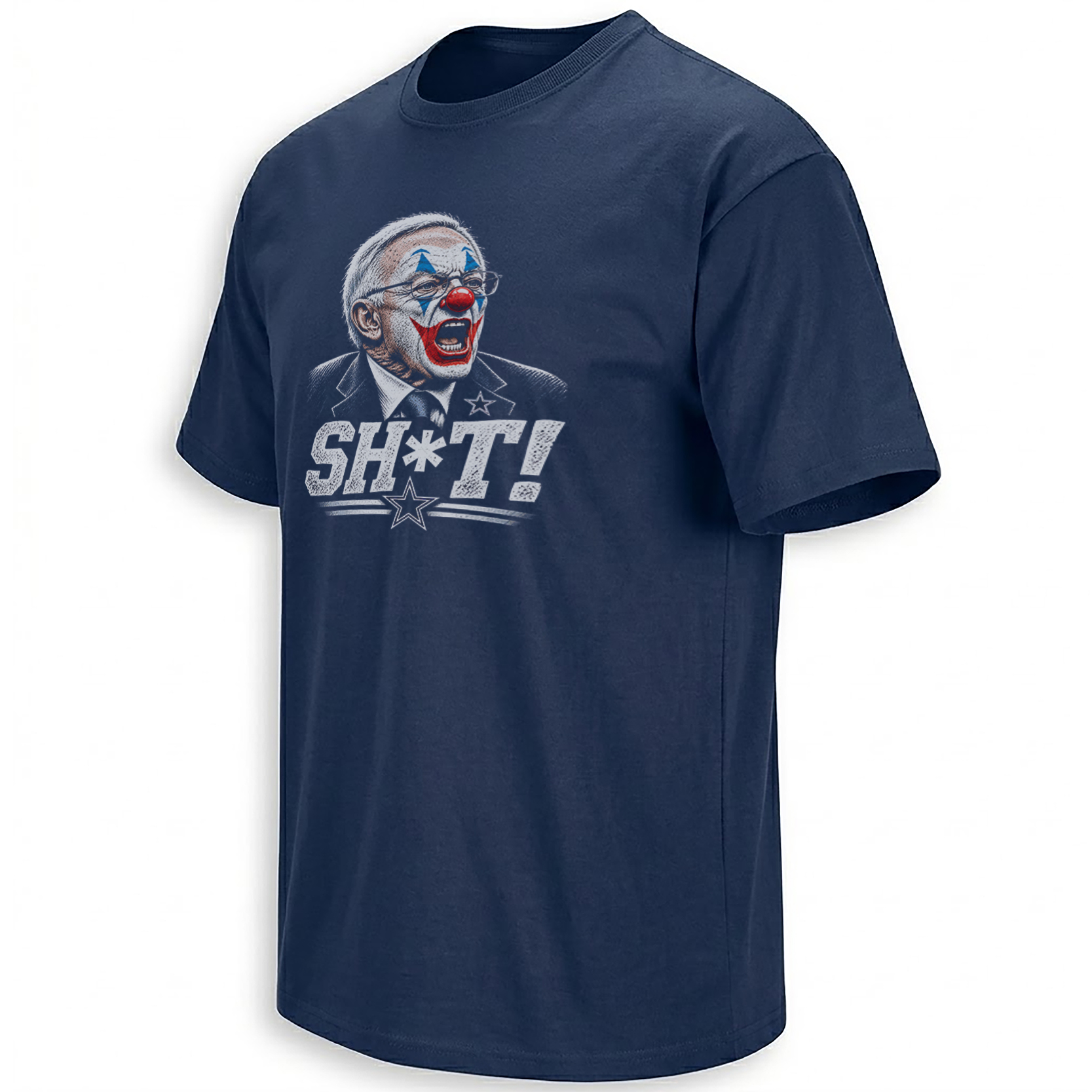
An exaggerated Jerry Jones portrait with clown makeup and an explosive reaction slogan. The artwork takes the owner’s televised frustration and turns it into a football satire poster.
VIEW THE REACTION GRAPHIC →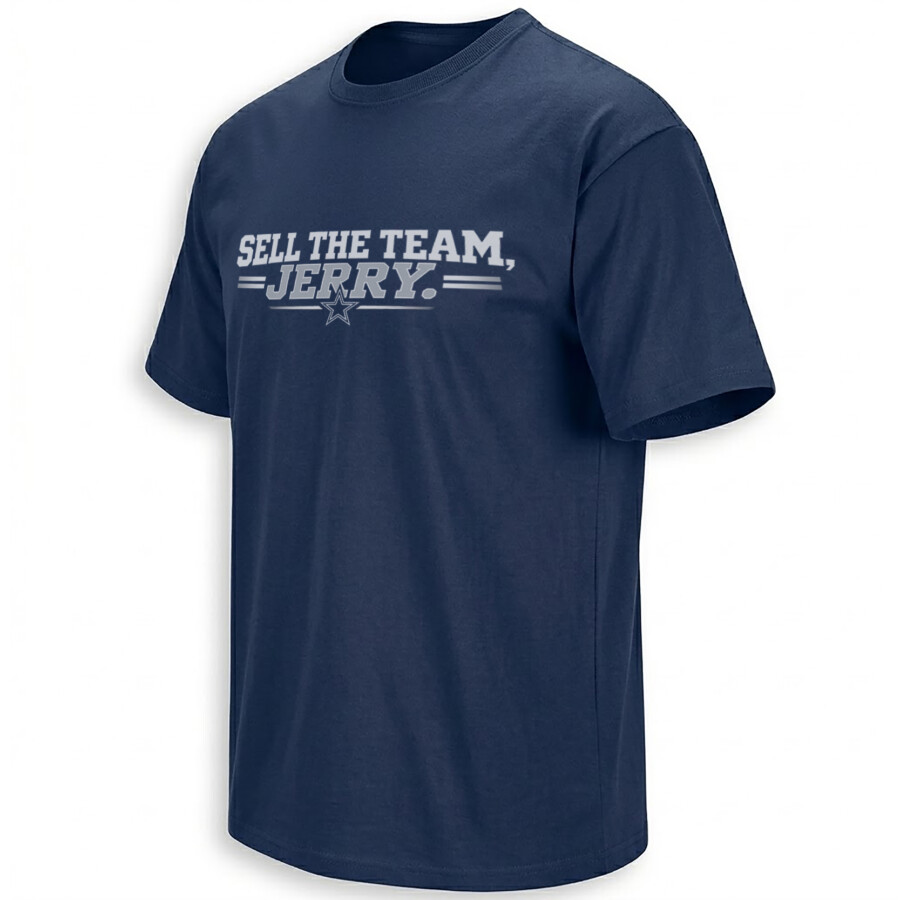
Minimal silver-gray lettering and a Dallas-inspired star make the ownership criticism the entire visual statement.
EXPLORE THE TYPOGRAPHY →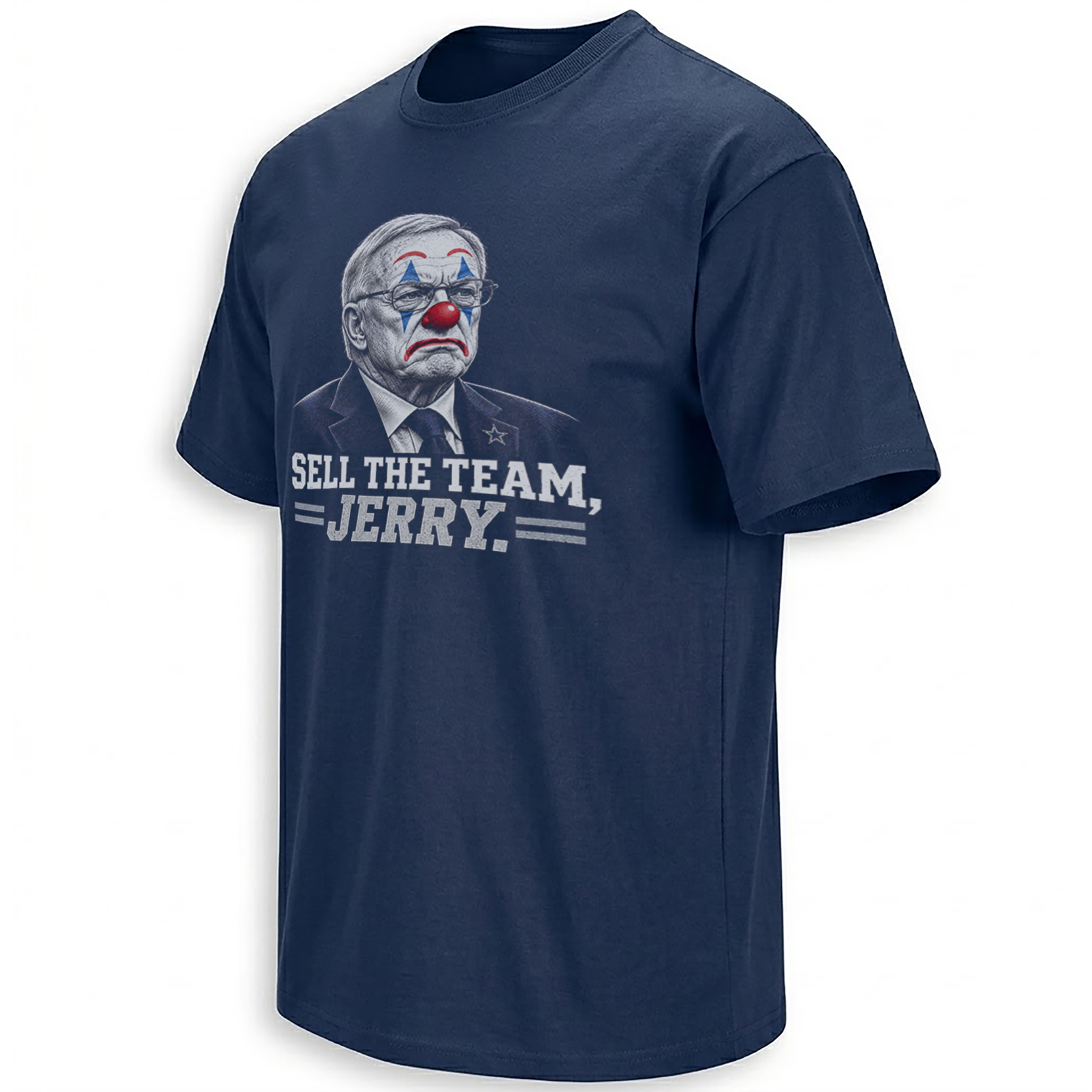
The final design replaces anger with disappointment. A red clown nose and exaggerated frown turn another Cowboys defeat into a weary visual joke.
SEE THE SAD CLOWN DESIGN →Why the Clown Imagery Works as Football Satire
Clown makeup has long been part of the visual vocabulary of internet mockery. It can imply embarrassment, misplaced confidence or a situation that has become absurd.
In the shouting clown graphic, bright red and blue accents contrast against a navy base. The oversized expression creates an instantly recognizable emotional scene.
The typography performs the role of a reaction caption: short, loud and designed to be understood immediately.
The sad clown version is deliberately different. The frown suggests resignation, while the ownership slogan moves the visual emphasis from one loss to a broader argument about leadership.
The clean text-only version removes the character entirely. With no face to interpret, the words themselves carry the criticism.
Angry clown: immediate frustration. Text protest: an explicit ownership demand. Sad clown: disappointment expressed through parody. Together, they show how one football story can generate several distinct kinds of fan graphics.
Jerry Jones Is Both the Target and the Symbol
One reason Cowboys ownership debates endure is the unusual visibility of the person at the center.
Jones is not simply a distant investor. As owner, president and general manager, he remains a public representative of the franchise’s football decisions.
Supporters of his tenure can point to the championships and organizational growth that followed his purchase of the team.
Critics focus on the decades without another Super Bowl appearance and question whether the leadership structure offers enough accountability.
Those competing interpretations help explain why every difficult Cowboys season produces another wave of discussion about the same man.
Why the Cardinals Loss Hit So Hard
The defeat was especially frustrating because Dallas had multiple opportunities to secure the result.
The Cowboys controlled much of the first half, held a two-touchdown lead in the fourth quarter and received another chance after Arizona missed a potential game-winning extra point.
Even in overtime, Dallas forced Arizona to punt on its first possession.
The Cowboys could not take advantage. Arizona’s second overtime possession ended with the winning field goal.
The result left both teams at 3–5 and raised renewed questions about Dallas’ ability to finish games.
The broader Dallas Cowboys collection contains graphics tied to different players, moments and periods of fan culture.
The NFL collection places those stories in the league’s wider visual history, while the Arizona Cardinals collection offers a different team perspective on the rivalry.
For artwork centered on the Cowboys owner, readers can also explore the internal Jerry Jones product search .
Frequently Asked Questions
Why did Jerry Jones become a meme after the Cardinals game?
Dallas lost 33–30 in overtime on November 1, 2026, after leading 17–3 at halftime. Jones’ visible frustration and reactions to the collapse circulated through football social media.
Did the Cowboys lose to the Cardinals in 2026?
Yes. Arizona defeated Dallas 33–30 in overtime on November 1, 2026, at AT&T Stadium in Arlington, Texas.
Why do some Cowboys fans say Sell the Team Jerry?
The phrase expresses dissatisfaction with Jerry Jones’ ownership and football leadership, particularly amid the Cowboys’ prolonged absence from the Super Bowl.
What did Jerry Jones say after the Cardinals loss?
Jones described the defeat as “an indictment of the whole show” and said the organization needed to evaluate its failure to finish the game.
What do the Jerry Jones clown shirts represent?
The designs use parody portraits, clown makeup and ownership protest slogans to illustrate different expressions of Cowboys fan frustration.
Who led Arizona’s comeback against Dallas?
Gardner Minshew replaced Jacoby Brissett and helped lead Arizona’s comeback, including the late touchdown pass to Michael Wilson that tied the game.
One Loss, Three Memes and an Old Argument
The Cardinals did not invent Dallas’ ownership debate. They supplied another dramatic result that brought the conversation back into view.
The 33–30 overtime defeat became a complete football internet story: a blown lead, a camera reaction, an emotional postgame interview and supporters returning to a protest slogan that was already familiar.
In that environment, the three graphics serve as visual records of how different fans processed the same Sunday.
The angry clown, text protest and sad clown graphics offer three interpretations of a familiar Dallas football conversation: frustration with a result, questions about organizational leadership, and the humor fans use to express disappointment.
Jerry Jones clown memes and Sell the Team protest graphics reflect the Dallas Cowboys’ November 1, 2026 collapse against Arizona. Following a 33–30 overtime loss, three navy-and-silver satire designs capture fan frustration, ownership criticism and the emotional reaction to another painful defeat.