
Patrick Stewart Dies at 86: The Captain, the Professor, and Hollywood’s Final Farewell
From the bridge of the Enterprise to the X-Men’s extraordinary world, Sir Patrick Stewart gave audiences two enduring visions of humanity. Now the words of his friends and colleagues reveal the man behind them.
Sir Patrick Stewart died on Wednesday, October 28, 2026, at his home in Los Angeles. He was 86. His death was announced the following day, prompting tributes from actors, filmmakers and audiences whose memories of Star Trek and X-Men had been shaped by his performances as Captain Jean-Luc Picard and Professor Charles Xavier.
Reuters, the Associated Press and Variety reported his death as Hollywood began remembering a performer whose career stretched from Shakespearean theater to two of the most recognizable science-fiction and superhero franchises. The announcement also revealed previously private details of his final illness.
The public farewells quickly acquired a shared vocabulary. Wil Wheaton offered the words “Godspeed, Captain.” William Shatner remembered Picard as representing humanity at its best. Hugh Jackman spoke about a great actor who had also been a remarkable friend.
These were not simply different ways of praising a celebrity. They reflected distinct relationships with Stewart: the young co-star who found a mentor, the fellow captain who recognized an artistic equal, and the film colleague whose years alongside Professor X created a lasting friendship.
Patrick Stewart died on October 28, 2026, aged 86. His spokesperson said his final illness involved Alzheimer’s disease and Lewy body dementia. The diagnoses had not previously been publicly disclosed. His wife, Sunny Ozell, was with him during his final days.
The News: What Happened to Patrick Stewart?
The statement released through Stewart’s representatives and social media accounts described a period of illness involving Alzheimer’s disease and Lewy body dementia. It recalled his final days in the company of family, friends, music and prayer.
News organizations including Reuters, Associated Press and CBS News reported the announcement. Although his illnesses had been private, his professional career had remained part of public conversation through his screen performances, memoir and interviews.
Stewart’s death closed a career that began in British theater and developed into international recognition relatively late in his professional life. He was already an experienced classical actor when he accepted the role that would change his career in 1987.
“Godspeed, Captain”: The Words That Defined the Farewell
When Wil Wheaton posted a photograph with Stewart and captioned it “Godspeed, Captain,” the message required little explanation. Wheaton had played Wesley Crusher, the young Starfleet hopeful who worked alongside Jean-Luc Picard aboard the Enterprise.
The relationship carried personal meaning offscreen. Wheaton had known Stewart since his youth, and his longer remembrance reflected the importance of being treated as a fellow artist by an established performer.
“Godspeed, Captain.”
Wil Wheaton / October 29, 2026The farewell became a central phrase in coverage from Variety and Entertainment Weekly. Its strength came from the overlap between fictional history and a real human relationship.
What Hollywood Said: The Phrases That Capture His Legacy
Across coverage from the Associated Press, Variety, People and the Los Angeles Times, the words used to remember Stewart repeatedly returned to similar qualities: humanity, intelligence, generosity, friendship and moral authority.
Shatner connected the ideals represented by Captain Picard with the personal qualities of Stewart himself.
Jackman’s tribute emphasized the personal connection formed over years of working together.
Marvel emphasized the qualities Stewart brought to Charles Xavier across multiple films.
McKellen’s remembrance connected Stewart’s Yorkshire identity with warmth, honesty and friendship.
Jonathan Frakes, who portrayed William Riker in The Next Generation, also remembered their close working relationship. LeVar Burton described Stewart as family, recalling his humor and generosity.
Captain Jean-Luc Picard: Why His Star Trek Legacy Endures
Patrick Stewart began portraying Jean-Luc Picard in Star Trek: The Next Generation in 1987. Following the popularity of the original Star Trek cast presented a demanding challenge for an actor unfamiliar to many American television viewers.
Picard quickly developed a different style of leadership from many familiar screen captains. He was intellectual, disciplined and often more interested in understanding an adversary than defeating one.
The USS Enterprise-D represented a future where science, diplomacy and cooperation could open new possibilities. Stewart gave its captain a voice and bearing that made those ideals feel credible.

The image of an older Picard aboard the Enterprise reflects the long relationship between Stewart and his audience. The character returned in four theatrical films and, decades later, in Star Trek: Picard.
The final season of Picard reunited familiar members of The Next Generation cast, turning the show’s concluding chapter into a meditation on aging, friendship and the persistence of memory.
The commands “Engage” and “Make it so” remain instantly recognizable parts of Picard’s screen identity. In the context of Stewart’s death, fans can understand those familiar phrases as reminders of countless journeys begun aboard the Enterprise.
Two memorial graphics interpret the Star Trek side of Stewart’s career through different visual metaphors: the familiar command and the image of an endless starfield.

Picard’s familiar command becomes a symbolic farewell to the actor whose voice helped define the character.
View the artwork →
An Enterprise-inspired remembrance using the imagery of space exploration to express a final farewell.
Explore the tribute →Professor X: The Other Great Vision of Humanity
Stewart became Professor Charles Xavier in the 2000 film X-Men. The casting united a distinguished Shakespearean performer with a comic-book character whose greatest ambitions were philosophical as well as extraordinary.
Xavier founded a school for young mutants and believed that humans and mutants could find a way to coexist. His friendship and conflict with Magneto gave the films a recurring debate about fear, difference and power.
Stewart’s performance gave those ideas emotional authority. Xavier could be protective, paternalistic and capable of serious misjudgments. Those contradictions gave the character recognizable humanity.
The relationship between Professor X and Wolverine became especially meaningful in Logan (2017). The film presented an older, vulnerable Xavier, allowing Stewart and Hugh Jackman to explore a bond shaped by familiarity, responsibility and care.
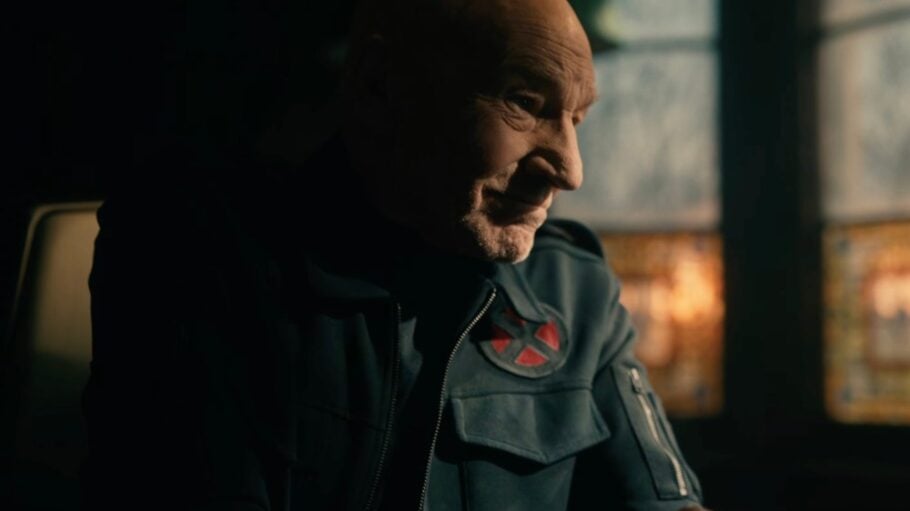
In its public remembrance, Marvel Studios highlighted the humanity and intelligence Stewart brought to Professor X across the X-Men films, Logan and his later appearance in the Marvel Cinematic Universe.
Marvel president Kevin Feige also remembered first encountering Stewart on the set of the original X-Men. After knowing him as Captain Picard, Feige found the actor’s personal warmth matched his screen presence.
One Final Professor X Appearance: Avengers: Doomsday
Stewart’s screen legacy has another chapter expected to reach audiences after his death. Marvel Studios confirmed his involvement in Avengers: Doomsday, with the film scheduled for theatrical release on December 18, 2026.
For audiences who grew up with Stewart’s Charles Xavier, the anticipated appearance carries unusual emotional weight. It offers the possibility of seeing his interpretation of the Professor once more.
As of October 30, 2026, the exact nature and extent of Xavier’s role should not be assumed before the finished movie is released. The character connects different eras of superhero cinema: the original X-Men films, Logan, the Marvel Cinematic Universe and a new generation of audiences.
Stewart previously returned as a variant of Charles Xavier in Doctor Strange in the Multiverse of Madness. That appearance demonstrated the enduring cultural recognition of his original casting.
The Professor Forever: Why Charles Xavier Still Resonates
The emotional appeal of Professor X has never rested exclusively on telepathy. His central belief is that mutants and humans should have the possibility of living together, even when fear and prejudice make that future seem distant.
Xavier’s school represented more than a training ground. It offered young people who had been rejected by society the opportunity to discover their abilities without surrendering their identity.
The Professor Forever memorial artwork interprets that legacy through a seated portrait of Xavier and familiar X-Men symbolism. The professor’s recognizable posture and expression are enough to evoke the man who anchored the franchise.

A tribute to Stewart’s Charles Xavier and the ideals of education and coexistence at the heart of X-Men.
Explore the tribute →
Captain Picard and Professor Xavier appear together in an exploration of two leaders whose ideals were brought to life by the same actor.
View the crossover artwork →Captain Picard and Professor X: Two Characters, One Connection
Both characters are intelligent, principled leaders played by Patrick Stewart. Both imagine futures where cooperation can overcome conflict. Yet their differences make his achievement distinctive.
Picard operates inside a Federation committed to scientific progress, diplomacy and cooperation. His challenge is to defend those principles when reality becomes more complicated than Starfleet doctrine.
Xavier lives in a society where the people he hopes to protect are routinely feared. His vision of acceptance must compete with discrimination, hostility and Magneto’s competing philosophy.
Picard led humanity toward the stars. Xavier asked humanity to make room for those it feared.
Editorial Interpretation / Two Fictional LegaciesThe relationship between the franchises even exists beyond a shared actor. Marvel and Star Trek have appeared together in officially published crossover stories.
The 1996 Star Trek / X-Men comic united the original Enterprise crew with Marvel’s mutants. Star Trek: The Next Generation / X-Men: Second Contact followed in 1998, as did Michael Jan Friedman’s novel Planet X.
The official StarTrek.com retrospective documents this unusual relationship and provides cultural context for pairing Picard and Xavier in a single tribute.
Rest Among the Stars: Why Star Trek’s Farewell Language Matters
George Takei’s tribute introduced another image that resonated across coverage of Stewart’s death. Takei remembered the actor’s ability to inspire viewers to imagine a brighter future, concluding with “Rest in the heavens, Captain.”
In Star Trek, this language feels especially natural. The franchise uses space exploration to consider humanity’s hopes, anxieties and responsibilities. Its starships move toward the unknown, while its stories return to friendship, dignity and belonging.
“Rest Among the Stars, Captain” is a poetic memorial expression rather than a documented final statement from Stewart or an established quotation from the series. Its connection to the Enterprise gives the words an instantly recognizable emotional setting.
The Star Trek Family: Friendship Beyond the Enterprise
One of the most moving elements of the public response was the emphasis on friendships formed during production of Star Trek: The Next Generation.
Jonathan Frakes, who portrayed William Riker, worked with Stewart across television and film as both actor and director. Their partnership continued through different stages of the franchise.
Wil Wheaton’s remembrance provided an especially personal perspective. Writing on October 29, he recalled that Stewart treated him with professional respect when he was still young.
His essay, I wish I really were a Traveler of all of space and time, offers a personal account of the actor who had helped shape his understanding of performance.
Godspeed, Captain: How a Personal Goodbye Becomes Fan Memory
The Godspeed Captain memorial design takes its emotional reference from Wheaton’s public farewell.
The words are meaningful because they are both personal and immediately understandable within Star Trek culture. “Captain” identifies Picard. “Godspeed” suggests departure, affection and hope for a peaceful journey.
The design has two visual treatments. Black emphasizes the solemnity of remembrance, while navy evokes the darkness and depth of space.


Black and navy versions of a remembrance connected to Wil Wheaton’s farewell and the enduring Picard legacy.
View both versions →

A triple-portrait tribute connecting Stewart’s identity as a performer with his two most celebrated screen roles.
Explore the portraits →Before Star Trek and X-Men: Patrick Stewart’s Shakespearean Career
The entertainment headlines following Stewart’s death naturally emphasized Captain Picard and Professor X. Yet understanding his importance requires returning to the stage, where he developed the qualities that made those screen performances distinctive.
Born in Mirfield, West Yorkshire, on July 13, 1940, Stewart began acting professionally as a young man and joined the Royal Shakespeare Company in the 1960s.
His classical work included major Shakespearean roles and an extensive career across British theater. He became known for combining commanding speech with emotional complexity.
That background eventually translated into a different kind of screen presence. Picard’s measured speeches and Xavier’s compassionate authority depended on an actor who understood dramatic language.
Stewart also returned repeatedly to the stage after achieving international fame. His performances alongside Ian McKellen in Waiting for Godot and No Man’s Land became an important part of their friendship.
He was knighted in 2010 for services to drama, recognizing a career extending far beyond the two franchises that made him famous worldwide.
Patrick Stewart’s Career Timeline: 1940–2026
Born July 13 in Mirfield, West Yorkshire, England.
Begins his long association with the Royal Shakespeare Company.
Star Trek: The Next Generation premieres.
Stewart appears in Star Trek Generations.
The first X-Men feature film introduces Stewart’s Charles Xavier.
He is knighted for services to drama.
Stewart portrays an aging Xavier alongside Hugh Jackman.
He returns to his celebrated Starfleet character.
Stewart dies October 28, aged 86.
Patrick Stewart’s Cause of Death: What His Family Confirmed
According to the statement released through his representative on October 29, Stewart died following an illness involving Alzheimer’s disease and Lewy body dementia. These diagnoses had not previously been publicly disclosed.
The statement described Stewart spending his final days in the care of his wife, Sunny Ozell, and surrounded by loved ones. The Associated Press and Reuters reported these details from the announcement.
It is important not to infer a more specific medical timeline, sequence of symptoms or immediate physiological cause of death from the available statement.
Patrick Stewart died on October 28, 2026, aged 86, following an illness involving Alzheimer’s disease and Lewy body dementia, according to his spokesperson.
Why Patrick Stewart’s Legacy Reaches Beyond Science Fiction
Stewart’s performances made him recognizable across generations, but his influence was not confined to his characters. Drawing on childhood experiences, he supported efforts to address domestic violence and spoke publicly about its effects on families.
He also moved between dramatic and comedic work, from Shakespeare and prestige television to animation, voice acting and self-parody.
The depth of response to his death reflected that range. Fellow performers remembered an experienced actor, creative collaborator, mentor and friend. Audiences remembered the characters through whom they had encountered him.
Six Memorial Designs, Six Different Memories
The six artworks in this archive reflect different ways audiences remember Patrick Stewart. They are independent commemorative interpretations, not official historical documents.
Picard’s familiar command becomes a symbolic farewell.
Education, acceptance and the legacy of Charles Xavier.
Two screen characters connected by one remarkable actor.
Wil Wheaton’s remembrance and the bond of the Star Trek cast.
The Enterprise becomes a metaphor for continuing memory.
Three portraits celebrating a lifetime of performance.
Readers can explore the wider Star Trek collection and Marvel collection, which connect the two fictional universes at the heart of Stewart’s international screen legacy.
The movie-inspired archive offers additional context, while the Patrick Stewart design search brings the actor-specific artwork together.
Frequently Asked Questions About Patrick Stewart
When did Patrick Stewart die?
Sir Patrick Stewart died on October 28, 2026, at his home in Los Angeles. He was 86. His death was announced October 29.
What was Patrick Stewart’s cause of death?
His spokesperson said he died following an illness involving Alzheimer’s disease and Lewy body dementia.
Who said “Godspeed, Captain” about Patrick Stewart?
Wil Wheaton, who played Wesley Crusher on Star Trek: The Next Generation, used the phrase in his tribute.
Who did Patrick Stewart play in Star Trek?
Captain Jean-Luc Picard, beginning with Star Trek: The Next Generation in 1987.
Who did Patrick Stewart play in X-Men?
Professor Charles Xavier, also known as Professor X, beginning with the 2000 film.
Will Patrick Stewart appear in Avengers: Doomsday?
His casting has been confirmed for the film scheduled for December 18, 2026. Details of the role remain undisclosed.
Was Patrick Stewart a Shakespearean actor?
Yes. He had a long association with the Royal Shakespeare Company and was knighted in 2010 for services to drama.
What did Hugh Jackman say about Patrick Stewart?
Jackman’s tribute emphasized Stewart’s talent, generosity and friendship, reflecting their years working together on X-Men and Logan.
What was Patrick Stewart’s relationship with Ian McKellen?
They were longtime friends and collaborators in theater and played Xavier and Magneto in X-Men.
Why is Patrick Stewart remembered as both a captain and a professor?
His best-known international screen roles were Captain Picard in Star Trek and Professor Xavier in X-Men, two characters admired for their leadership.
The Final Farewell: What Patrick Stewart Leaves Behind
A career as extensive as Patrick Stewart’s cannot be contained in a single headline. The news of his death was necessarily reduced to a few familiar identifiers: the Star Trek captain, the X-Men professor and the Shakespearean actor who became an international star.
Yet the reactions of his friends and colleagues tell a more complicated story. Wil Wheaton remembered a mentor. Hugh Jackman remembered a friend. Ian McKellen recalled a fellow actor whose professional life had intersected with his own over decades.
Star Trek fans continue to recognize the voice that commanded the Enterprise. X-Men audiences remember the teacher who imagined a future beyond prejudice. Theater audiences remember a performer whose command of language shaped everything he later brought to the screen.
Together, these memories explain why Stewart’s death has resonated across generations and different corners of popular culture.
A captain who believed in the future. A professor who believed in people. An actor who made both beliefs feel real.
Ellie Shirt Editorial / In Memoriam 1940–2026From One Last Engage to Captain Professor Legend, the six memorial artworks preserve different interpretations of Patrick Stewart’s screen legacy. Behind the characters stands a lifelong commitment to acting and a cultural influence that audiences will continue to revisit.
Patrick Stewart (1940–2026) is remembered through Captain Jean-Luc Picard, Professor Charles Xavier and a distinguished Shakespearean career. This retrospective examines his death at 86, tributes from Star Trek and X-Men colleagues, his anticipated Avengers: Doomsday appearance and six memorial designs representing different dimensions of his legacy.
Reporting & Primary Sources
Reuters / Associated Press / Variety / Wil Wheaton / StarTrek.com.
Editorial note: Quoted remarks, memorial phrases and original editorial interpretations are distinguished throughout this article. External photographs remain subject to their respective owners’ reproduction permissions.