
Two Universes, One Legend: The Patrick Stewart Legacy That Connected Star Trek and X-Men
Patrick Stewart gave science fiction two extraordinary leaders. Following his death at 86, the connection between Captain Picard and Professor X reveals something deeper than two famous performances.
When Sir Patrick Stewart died in Los Angeles on October 28, 2026, two of popular culture’s great fictional universes began remembering the same man. Star Trek audiences knew him as Captain Jean-Luc Picard. X-Men fans knew him as Professor Charles Xavier. For many viewers, the two identities were inseparable.
Reuters and the Associated Press confirmed his death at 86, while actors from both franchises joined an international wave of tributes. Marvel Studios honored his defining portrayal of Xavier; the Star Trek community remembered a captain who had embodied its vision of a hopeful future.
There is an unusual symmetry here. Picard commanded a starship dedicated to exploration. Xavier founded a school for young people feared because they were different. One looked toward the stars, the other toward the next generation of mutants. Both were trying to imagine what humanity might become.
A diplomat, explorer and commanding officer whose authority came from reason, discipline and moral courage.
A telepathic teacher whose dream of coexistence challenged fear, intolerance and prejudice.
One Actor, Two Different Kinds of Leadership
Stewart’s Captain Picard became a defining presence on Star Trek: The Next Generation beginning in 1987. His background in classical theater gave the role unusual weight. Yet the captain’s deepest appeal was never merely intellectual.
Picard made decisions while acknowledging that even a highly advanced civilization could face difficult moral questions. He demonstrated leadership through listening, diplomacy and accountability.
When Stewart appeared in X-Men in 2000, he brought comparable authority to Charles Xavier. But Xavier’s circumstances were different. Instead of commanding experienced Starfleet officers, he was responsible for protecting young mutants learning to understand themselves.
The performances shared an ethical concern, not an identical personality. Picard could be stern and emotionally distant. Xavier could become overly protective or make questionable choices in pursuit of a larger dream. Stewart gave both men enough vulnerability to prevent their ideals from becoming empty speeches.
Picard imagined a future where humanity had grown wiser. Xavier believed humanity could still learn to accept difference.
Star Trek and X-Men Actually Crossed Over
The connection between these franchises goes beyond Patrick Stewart’s casting. Star Trek and X-Men appeared together in officially published crossover stories, a fascinating detail documented by StarTrek.com.
The 1996 Star Trek / X-Men comic brought Marvel’s mutants into contact with the original Enterprise crew. The 1998 Star Trek: The Next Generation / X-Men: Second Contact comic then united the two properties in another adventure. Michael Jan Friedman’s novel Planet X continued the crossover that same year.
These crossovers mattered for more than their novelty. They put two ideas of inclusion into conversation. The Federation imagined societies that had advanced beyond many forms of discrimination, while the X-Men confronted the hostility surrounding mutation in their own world.
In Planet X, the Enterprise encounters a society persecuting people who have undergone transformations. Picard’s responsibility to uphold principles of dignity and justice creates a natural bridge to Xavier’s beliefs.
Why the Two-Character Portrait Works
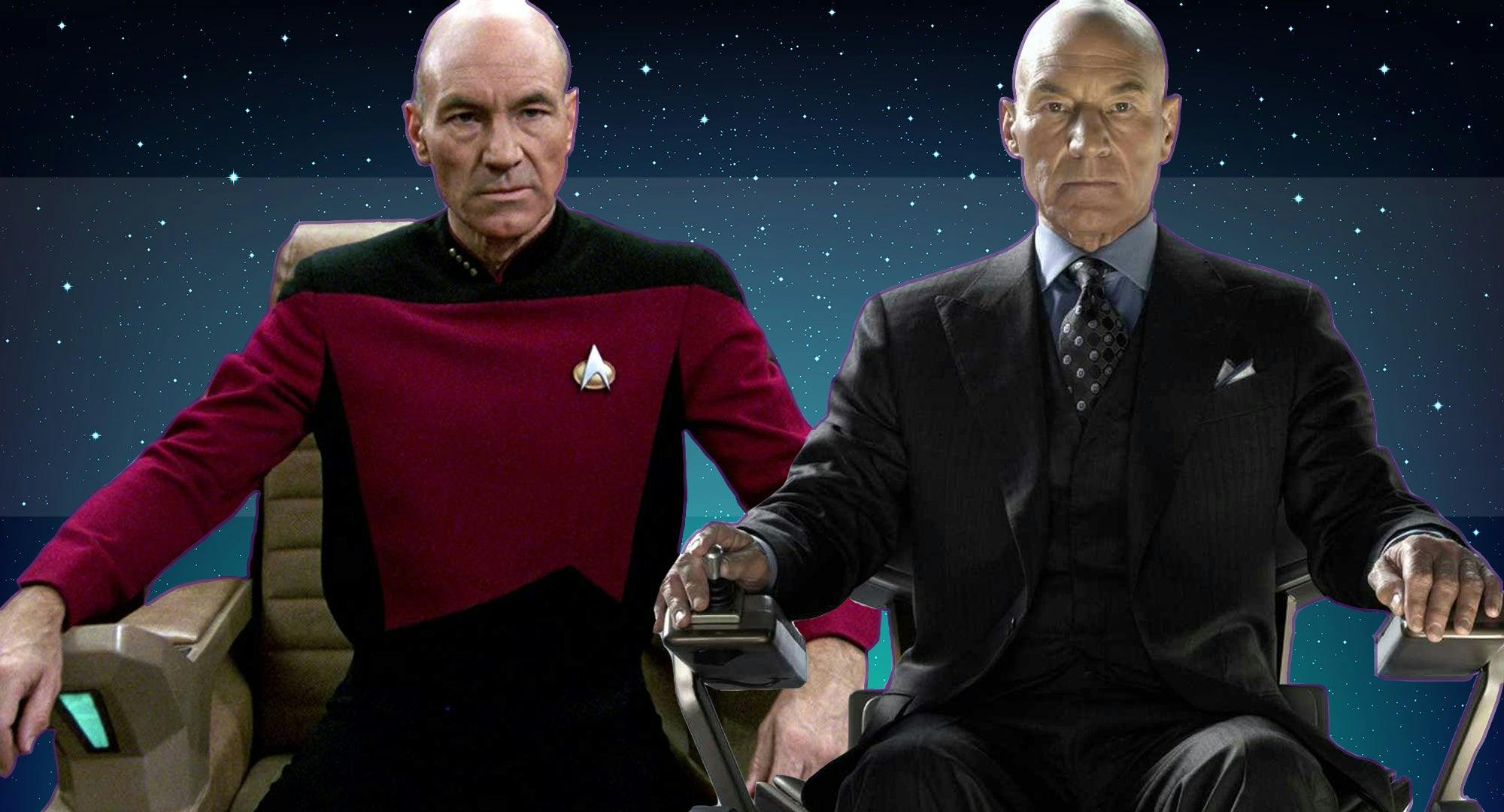
The Two Universes, One Legend memorial design uses this cultural connection as its starting point. The two portraits invite viewers to recognize the same actor through two different fictional identities.
The Star Trek side evokes command, exploration and the Enterprise. The Professor X side recalls the X-Men and a mentor who believed education could change the future. The artwork’s memorial framing turns these recognitions into a single tribute to Stewart.

A crossover-inspired tribute to Patrick Stewart (1940–2026), connecting Jean-Luc Picard and Charles Xavier in one visual memorial.
View the crossover tribute →The Tributes Revealed a Legacy Beyond Both Franchises
As tributes appeared on October 29, they reflected not just Stewart’s professional accomplishments but the relationships he had built. Hugh Jackman spoke about learning from him. Ian McKellen remembered their longtime friendship and shared work on stage.
Marvel Studios also posted a public tribute recognizing Stewart’s contribution to the films, from the original X-Men to Logan and the forthcoming Avengers: Doomsday.
These responses have also drawn attention back to Stewart’s substantial career in theater, including his work with the Royal Shakespeare Company. The actor behind two fictional mentors had spent decades developing the craft that made their words feel so convincing.
Two Universes, One Continuing Cultural Memory
For Star Trek fans, the wider Star Trek archive preserves the symbols, phrases and characters connected to the franchise. The Marvel collection provides a parallel route into superhero visual culture.
The broader movie-inspired collection links both worlds to the wider influence of genre filmmaking. Readers can also explore the Patrick Stewart design archive for artwork specifically connected to the actor.
Frequently Asked Questions
Which two famous characters did Patrick Stewart play?
He portrayed Captain Jean-Luc Picard in Star Trek and Professor Charles Xavier in the X-Men films.
Did Star Trek and X-Men ever have an official crossover?
Yes. Officially published crossover stories include the 1996 Star Trek / X-Men comic, the 1998 Second Contact comic and the 1998 novel Planet X.
What do Captain Picard and Professor X have in common?
Both characters use intelligence, leadership and moral conviction to pursue a more inclusive future, although their personalities and responsibilities differ.
When did Patrick Stewart die?
Sir Patrick Stewart died in Los Angeles on October 28, 2026, at the age of 86.
What does Two Universes, One Legend represent?
The memorial design celebrates the two defining screen roles of Patrick Stewart and the influence they have had across science-fiction and superhero culture.
Picard and Xavier offered distinct ways of imagining a better world. The Two Universes, One Legend artwork captures the extraordinary circumstance of one actor becoming an enduring symbol in both.
Two Universes, One Legend honors Patrick Stewart (1940–2026) through Captain Jean-Luc Picard and Professor Charles Xavier, connecting Star Trek’s hopeful future with the X-Men’s vision of acceptance in one crossover memorial design.
Reporting: Associated Press · Reuters · StarTrek.com